
Resources
Explore a wide range of valuable resources on GCED to deepen your understanding and enhance your research, advocacy, teaching, and learning.
6 Results found
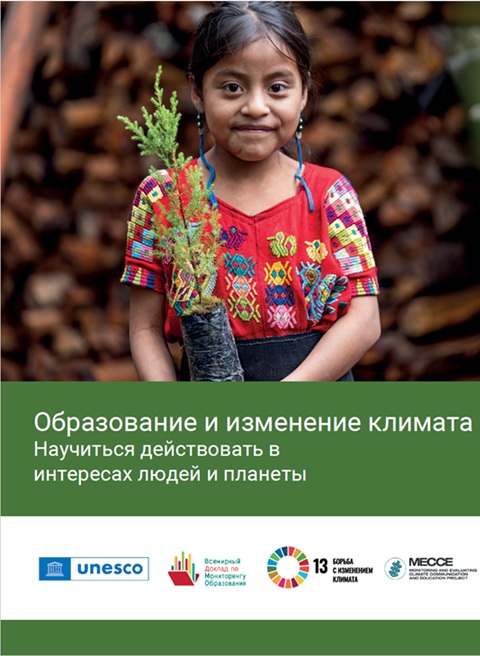 Образование и изменение климата: Научиться действовать в интересах людей и планеты Year of publication: 2024 Corporate author: Global Education Monitoring Report Team | Monitoring and Evaluating Climate Communication and Education Project (MECCE) | University of Sakatchewan Как образование может стимулировать деятельность в связи с изменением климата?Несмотря на убедительные факты, свидетельствующие о влиянии образования на достижение других результатов в области развития и о его роли в укреплении профессионального потенциала для перехода к устойчивому развитию, образование зачастую не учитывается при рассмотрении другими секторами вопросов, касающихся стратегических аспектов, политики, планирования и финансирования. В рамках Всемирного доклада по мониторингу образования предлагается новая серия публикаций, призванных содействовать диалогу на тему взаимосвязи образования с другими целями в области устойчивого развития.Первая публикация в этой серии посвящена изменению климата. Сначала в ней рассматривается растущее влияние изменения климата на образование, а затем – роль образования в деятельности в области климата. Вклад образования в развитие профессионального потенциала для перехода к «зеленой» экономике во многом недооценен. Принято считать, что формальное, неформальное и информальное обучение также играют важнейшую роль в создании мотивации для действий по смягчению последствий изменения климата и адаптации к ним.Однако положительная корреляция между уровнем образования и неустойчивыми моделями потребления, а также неоднозначность многих исследований на тему непосредственного влияния образования на меры по адаптации к изменению климата и смягчению его последствий, в некоторой степени способствуют тому, что образованию уделяется недостаточно внимания в глобальных и национальных программах действий в области изменения климата.В настоящей публикации показано, что для успешной реализации потенциала образования в области изменения климата его необходимо адаптировать. Парадигма образования не может быть основана только лишь на передаче знаний – она должна быть нацелена на формирование социально-эмоциональных навыков и обучение, ориентированное на действия.Значительная доля проведенных исследований посвящена влиянию уровня образования и когнитивного обучения, в связи с чем требуется проведение дополнительных исследований для оценки других факторов, позволяющих образованию оказывать воздействие на модели поведения и создавать мотивацию для деятельности в связи с изменением климата. Такие исследования необходимы для разработки эффективных пакетов образовательных реформ, направленных на совершенствование учебных программ, повышение готовности школ и систем образования к изменению климата, обеспечение вовлеченности учащихся и соответствующую подготовку педагогов.
 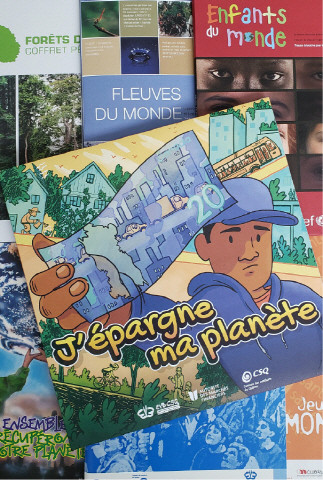 I Spare My Planet Year of publication: 2019 Corporate author: Quebec Labour Congress Produced by the ACTES movement and the Unions Central of Quebec, these vignettes are sure to make you smile, while creating important links between the way we consume and the social and environmental issues that concern us all.They can be viewed on their own or used in conjunction with the activities in the educational kit of the same name, which you can find on the Actes movement website. The themes of the 5 vignettes are:1 - Consumerism2 - Public services3 - Personal debt4 - Ecological limits5 - Thinking the world differently
  Hydro Resilience: Citizen and Open Science for Climate Adaptation Year of publication: 2024 Corporate author: UNESCO Human-induced climate change is affecting weather and climate extremes worldwide and causing changes in the atmosphere, ocean, cryosphere and biosphere leading to widespread adverse impacts on people and nature. These conditions have exposed people to reduced water security and negatively affected food security and ecosystem services. Despite advances in climate and water sciences, there is still a significant gap between information availability and its uptake by stakeholders. Although there is abundant data and information available on the potential impacts of climate change, there is a lack of expert knowledge on the user side, which limits the development and implementation of effective adaptation strategies at the local level. There is also an opportunity to bring communities more on board to manage their climate risk through citizen engagement and to ensure that vulnerable communities can benefit from climate science foresight. To address these challenges, a new project was developed called ‘Hydro Resilience: Citizen and Open Science for Climate Adaptation’ to pilot citizen and open science applications for climate risk management and to support water management under climate change uncertainty.
 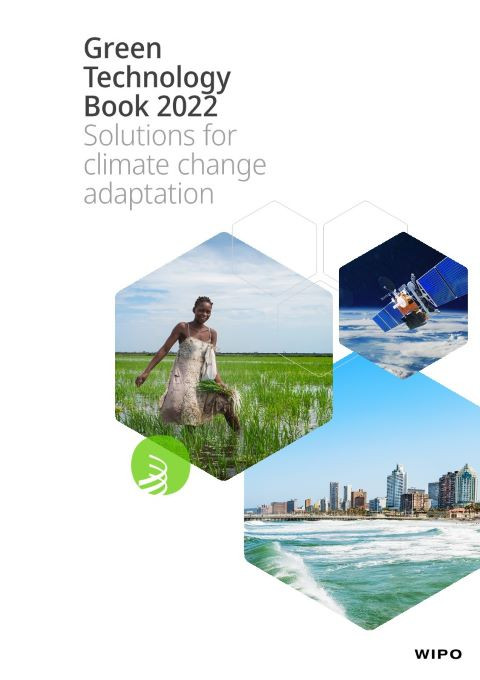 Green Technology Book 2022: Solutions for Climate Change Adaptation Year of publication: 2022 Corporate author: World Intellectual Property Organization WIPO’s new Green Technology Book puts innovation, technology and intellectual property at the forefront in the fight against climate change. This inaugural edition focuses on available solutions for climate-change adaptation, which aim to reduce vulnerability and increase resilience to climate impacts. The Green Technology Book comes at a time when we are all experiencing the effects of climate change. It concentrates on three areas where climate impacts are important: agriculture and forestry, water and coastal regions, and cities. A practical guide for those struggling with climate change firsthand, the book showcases 200 solutions for climate-change adaptation that are readily available or in the making. The findings build on the WIPO GREEN Technology Database, which connects green technology providers from around the world with those seeking environmentally friendly solutions. The Green Technology Book is a source of encouragement and inspiration, demonstrating the diversity of solutions available and ready to be scaled up.1. Climate change adaptation and technology2. Innovation and transfer of solutions3. Agriculture and forestry4. Water and coastal regions5. Cities6. Conclusion and recommendations
 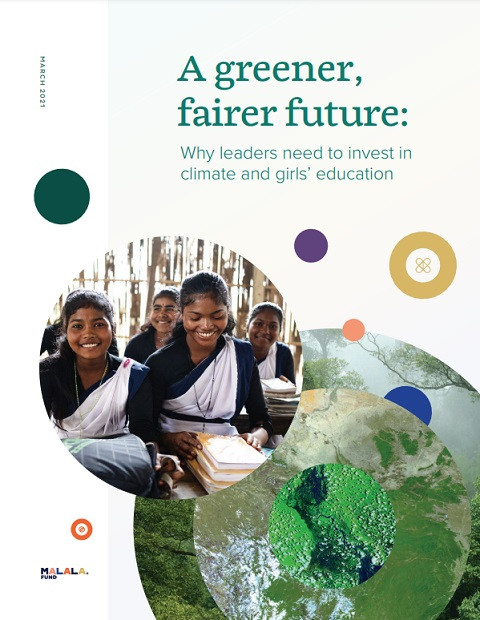 A Greener, Fairer Future: Why Leaders Need to Invest in Climate and Girls’ Education Year of publication: 2021 Author: Lucia Fry | Philippa Lei Corporate author: Malala Fund The world is on the brink of a climate catastrophe — and girls are disproportionately bearing the impact. Climate-related events like flooding, droughts and increased exposure to zoonotic diseases amplify the inequalities girls face and further limit their ability to access and complete their education. Malala Fund’s new report, A greener, fairer future: Why leaders need to invest in climate and girls' education, estimates that in 2021 climate-related events will prevent at least four million girls in low- and lower-middle-income countries from completing their education. If current trends continue, by 2025 climate change will be a contributing factor in preventing at least 12.5 million girls from completing their education each year.Yet evidence shows that closing gender gaps in education can help countries better adapt to the effects of climate change and decrease the rate and impact of global warming.“Girls in lower-income countries are the least responsible for the climate crisis, so it’s a travesty that it now threatens their very lifeline to a brighter future: quality education,” said Lucia Fry, Director of Research and Policy at Malala Fund. “Malala Fund wants leaders at COP26 to hear young people’s demands around education. They know that climate action helps girls stay in school, which in turn helps countries tackle the climate crisis. Young people are demanding an education that will prepare them to adapt to the effects of climate change and challenge the root causes of the crisis.”A greener, fairer future outlines the origins of the climate emergency and explains how confronting issues like the legacy of colonialism, racial discrimination and gender inequality through education is key to finding a sustainable solution to the crisis. The paper introduces the Gender-Equal Green Learning Agenda, a new framework to help leaders address the climate crisis through education.In this report, Malala Fund recommends how leaders can take urgent climate action at meetings this year, like COP26. This includes reducing carbon emissions, improving girls’ access to education, helping communities adapt to the realities of climate change and transforming education systems to provide all students with the knowledge, skills and values needed to challenge the social and economic inequalities fuelling the climate crisis.For more about the links between climate change and girls’ education, read the full paper below.
 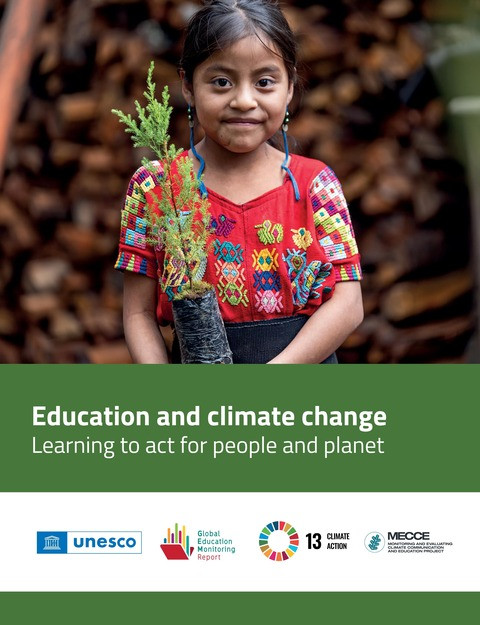 Education and Climate Change: Learning to Act for People and Planet Year of publication: 2024 Corporate author: Global Education Monitoring Report Team | Monitoring and Evaluating Climate Communication and Education Project (MECCE) | University of Sakatchewan How can education lead to climate change action?Despite strong evidence on the impact of education on other development outcomes and the role it plays in developing professional capacity for sustainable development transitions, education is often absent from other sectors’ strategic, policy, planning and financing considerations. The Global Education Monitoring Report is introducing a new series to advance dialogue on the interrelationship of education with the other Sustainable Development Goals.The first paper in the series focuses on climate change. It starts by reviewing the growing impact of climate change on education before turning to the role of education in climate action. Education has a somewhat underappreciated contribution to developing professional capacities for the transition to a green economy. Formal, non-formal and informal learning are also commonly believed to be playing a critical role in motivating actions on climate change mitigation and adaptation.Yet a positive association between education attainment and unsustainable consumption levels, as well as inconclusiveness of much research on the direct impact of education on climate change adaptation and mitigation actions has in part contributed to education receiving low priority in global and national climate change agendas.This paper argues that climate change education needs to adapt to fulfil its potential. The education paradigm cannot rely solely on knowledge transfer but needs to focus on social and emotional, and action-oriented learning.Much of the research has focused on the impact of education attainment and cognitive learning. More research is therefore needed to assess other drivers through which education can influence behaviours and motivate climate change action. Such research is needed to formulate viable education reform packages that improve the curriculum, strengthen climate-readiness of schools and education systems, engage learners and prepare educators accordingly.