
Resources
Explore a wide range of valuable resources on GCED to deepen your understanding and enhance your research, advocacy, teaching, and learning.
29 Results found
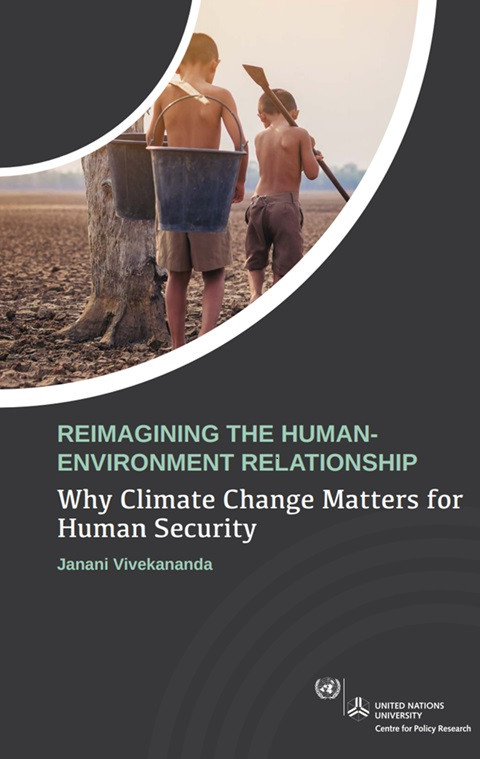 Why Climate Change Matters for Human Security Year of publication: 2022 Author: Janani Vivekananda Corporate author: United Nations University | United Nations Environment Programme (UNEP) This paper outlines the state of knowledge regarding security risks related to climate change, synthesizing the existing scientific evidence to set out five broad pathways of risk. Climate change itself is rarely a direct cause of conflict. Yet, there is ample evidence that its effects exacerbate important drivers and contextual factors of conflict and fragility, thereby challenging the stability of states and societies. Climate change impacts such as coral bleaching, diversity loss, and erratic rainfall can stress livelihoods and drive displacement, increase resource conflicts, and challenge the security and stability of people and states worldwide. Managing these security risks requires action across the entire impact chain: work to mitigate climate change; reducing its consequences on ecosystems; adapting socioeconomic systems; better management of climate-induced heightened resource competition; and strengthening governance and conflict management institutions. And every dimension of the response must be conflict-sensitive and climate proof. Without the right responses, climate change will mean more fragility, less peace and less security. But this paper sets out illustrative examples of how, with a greater understanding of how climate change interacts with social, political, economic and environmental drivers of conflict and fragility, we will be better placed to make the kind of risk-informed decisions is integral to achieving international peace and security.
  To live together: shaping new attitudes to peace through education Year of publication: 1997 Author: Daniel S. Halpérin Corporate author: UNESCO International Bureau of Education (IBE) The ‘To live together’ initiative was born at a meeting in February 1996 with Professor Emeritus Antoine Cuendet, a pediatric surgeon, former Dean of the Faculty of Medicine at Geneva University, and chairman of the Geneva Foundation to Protect Health in War (hereafter the Geneva Foundation). His foundation was in a process of trying to better define its scope of action within the large theme of ‘health and war’, and to identify areas of research that would deserve priority support. We agreed that, at a time when politicians had entered an era of peacemaking in the Middle-East, the situation might be suitable for Palestinians and Israelis to venture into joint research projects. In particular, a potentially fruitful project could be to examine the effects of long term, protracted conflicts-such as the Israeli-Palestinian one-on the mental and social health of children. Little was known about how much of their anxiety, psychosomatic complaints, agressivity, behavioural disorders or school failures may be linked with direct or indirect consequences of the conflict. What were the interventions or instruments that may counterbalance, or even correct such problems? Was there any kind of an educational programme, for instance, that might be demonstrated to be efficacious in counteracting those putative effects of the conflict; and that might prove of value in actually accelerating the healing of the traumatisms, while simultaneously strengthening the construction of peace? Pour vivre ensemble: l'élaboration de nouvelles attitudes à la paix par l'éducation Year of publication: 1997 Author: Daniel S. Halpérin Corporate author: UNESCO International Bureau of Education (IBE) L'initiative «Pour vivre ensemble» est né lors d'une réunion en Février 1996 avec le professeur Emeritus Antoine Cuendet, un chirurgien pédiatrique, ancien doyen de la Faculté de médecine de l'Université de Genève et président de la Fondation de Genève pour la protection de la santé dans la guerre (ci-après Fondation de Genève). Sa fondation était en train d'essayer de mieux définir son champ d'action au sein du grand thème de «la santé et de la guerre», et d'identifier les domaines de recherche qui mériterait un soutien prioritaire. Nous avons convenu que, à un moment où les politiciens étaient entrés dans une ère de rétablissement de la paix au Moyen-Orient, la situation pourrait être appropriée pour les Palestiniens et les Israéliens à se lancer dans des projets de recherche conjoints. En particulier, un projet potentiellement fructueux pourrait consister à examiner les effets de long terme, les conflits prolongés, tels que celui sur la santé israélo-palestinien mental et social des enfants. On ne savait pas combien de leur anxiété, troubles psychosomatiques, agressivité, troubles du comportement ou des échecs scolaires peuvent être liés avec des conséquences directes ou indirectes du conflit. Quelles ont été les interventions ou les instruments qui peuvent contrebalancer, voire corriger ces problèmes? Y avait-il tout type d'un programme d'éducation, par exemple, qui pourrait être démontré pour être efficace dans la lutte contre les effets putatifs du conflit; et qui pourrait se révéler utile pour accélérer effectivement la guérison des traumatismes, tout en renforçant simultanément la construction de la paix? Inter-agency peace education programme: skills for constructive living; overview of the programme Year of publication: 2005 Author: Antonella Verdiani Corporate author: UN. Office of the United Nations High Commissioner for Refugees (UNHCR) | Inter-agency Network for Education in Emergencies (INEE) This manual is one of the components of the “Inter-Agency Peace Education Programme”. The programme is designed for education managers of ministries dealing with both formal and non-formal education and for agencies which implement education activities on behalf of the government. The implementation structure is based on the experience acquired over the eight years the programme has been in use, from 1998 to 2005. The programme has been evaluated by external experts and the new revised materials (2005) incorporate both the suggestions made in the evaluation and the feedback from the specialists who implemented it in the field. Programme Interinstitution d'éducation pour la paix: compétences pour la vie constructive; aperçu du programme Year of publication: 2005 Author: Antonella Verdiani Corporate author: UN. Office of the United Nations High Commissioner for Refugees (UNHCR) | Inter-agency Network for Education in Emergencies (INEE) Ce manuel est l'une des composantes du «Programme Interinstitution d'éducation pour la paix». Le programme est conçu pour les gestionnaires de l'éducation des ministères chargés de l'éducation formelle et non-formelle et pour les organismes qui mettent en œuvre des activités d'éducation au nom du gouvernement. La structure de mise en œuvre est basée sur l'expérience acquise au cours des huit années, le programme a été utilisé, de 1998 à 2005. Le programme a été évalué par des experts externes et les nouveaux matériaux révisés (2005) intègrent à la fois les suggestions formulées dans l'évaluation et les réactions des spécialistes qui œuvre dans le domaine.
  Education for conflict prevention and peacebuilding: meeting the global challenges of the 21st century Year of publication: 2012 Author: Phyllis Kotite Corporate author: UNESCO International Institute for Educational Planning (IIEP) The 21st century is witnessing global concern over the interrelated effects of climate change, the economic crisis, energy depletion, food and water shortages, natural disasters and conflicts all of which have devastating effects on humanity and the future of the planet. These events impact education systems and can impair the ability of governments to provide quality education for their citizens. However, when governments and ministries of education analyse and anticipate the risk of such events through careful planning, education can play an important role in preventing violent conflict, and in supporting peacebuilding efforts. An estimated 1.5 billion people live in countries affected by repeated cycles of political and other forms of violence, and the same population is often affected by hunger and poverty. Furthermore, such countries have difficulty meeting development goals. For example, no low-income fragile or conflict-affected country has yet achieved a single MDG (World Bank, 2011). In 2010 world military expenditures reached US$1.6 trillion as a result of fifteen ongoing conflicts (SIPRI, 2011). Yet, it is estimated that only US$16 billion is needed to fill the education gap to reach the EFA goals (UNESCO, 2011b: 11). This paper argues that we have the knowledge, legal instruments and mechanisms to prevent conflict and to transfer resources to sustainable development and education to meet the challenges of the 21st century. The paper describes a range of conflict prevention initiatives and examines the role of policy-makers, youth, women, and the media in maintaining and restoring peace as part of a holistic vision of education. International institutions, governments and civil society are increasingly developing conflict prevention mechanisms and utilizing political and economic incentives to avoid conflicts. They are also creating new technology for sustainable development, adaptation to climate change and renewable forms of energy. Educational planning must therefore go beyond traditional mechanisms. It must take into consideration the unpredictable nature of our times; be flexible and rapid in implementation and responsive to local needs. Training and research in sustainable development; and skills for peaceful inter-human relations, good governance, the prevention of conflict and peacebuilding are priorities elaborated in the paper. In addition, specific recommendations are highlighted such as: capacity development for conflict prevention within the education sector and other ministries, analysing the root causes of conflict and the role that education can play in mitigating tensions. This paper is an elaboration of Chapter 1.2 of the IIEP-UNESCO Guidebook for Planning Education in Emergencies and Reconstruction (IIEP-UNESCO, 2010). A brief treatment of additional global challenges (e.g. water scarcity, food insufficiency, energy depletion and economic instability), which are beyond the educational focus of this paper, may be found in Annex I. Education for conflict prevention and peacebuilding: meeting the global challenges of the 21st century Year of publication: 2012 Author: Phyllis Kotite Corporate author: UNESCO International Institute for Educational Planning (IIEP) Le 21ème siècle est témoin de préoccupation mondiale sur les effets interdépendants du changement climatique, la crise économique, l'épuisement de l'énergie, la pénurie de nourriture et d'eau, les catastrophes naturelles et les conflits qui ont tous des effets dévastateurs sur l'humanité et l'avenir de la planète. Ces événements influent sur les systèmes d'éducation et peuvent nuire à la capacité des gouvernements à fournir une éducation de qualité pour leurs citoyens. Toutefois, lorsque les gouvernements et les ministères de l'éducation analysent et anticipent le risque de ces événements à travers une planification minutieuse, l'éducation peut jouer un rôle important dans la prévention des conflits violents, et à soutenir les efforts de consolidation de la paix. On estime que 1,5 milliard de personnes vivent dans des pays touchés par des cycles répétés de formes politiques et autres de la violence, et la même population est souvent affectée par la faim et la pauvreté. En outre, ces pays ont des difficultés à atteindre les objectifs de développement. Par exemple, aucun pays à faible revenu fragiles ou touchés par un conflit n'a encore atteint un seul OMD (Banque mondiale, 2011). En 2010 dépenses militaires mondiales ont atteint US $ 1,6 trillions en raison de quinze conflits en cours (SIPRI, 2011). Pourtant, on estime que seulement 16 milliards $ US est nécessaire pour combler le déficit de l'éducation pour atteindre les objectifs de l'EPT (UNESCO, 2011b: 11). Ce document fait valoir que nous avons les connaissances, les instruments juridiques et des mécanismes de prévention des conflits et de transférer des ressources pour le développement durable et l'éducation pour relever les défis du 21e siècle. Le document décrit une série d'initiatives de prévention des conflits et examine le rôle des décideurs politiques, les jeunes, les femmes et les médias dans le maintien et le rétablissement de la paix dans le cadre d'une vision holistique de l'éducation. Les institutions internationales, les gouvernements et la société civile sont de plus en plus de développer des mécanismes de prévention des conflits et de l'utilisation des incitations politiques et économiques pour éviter les conflits. Ils créent également une nouvelle technologie pour le développement durable, l'adaptation aux changements climatiques et les énergies renouvelables. Planification de l'éducation doit donc aller au-delà des mécanismes traditionnels. Il doit prendre en considération la nature imprévisible de notre temps; être flexible et rapide et répondre aux besoins locaux. Formation et recherche dans le développement durable; et les compétences pour les relations inter-humaines pacifiques, la bonne gouvernance, la prévention des conflits et de consolidation de la paix sont des priorités élaborées dans le document. En outre, des recommandations spécifiques sont mis en évidence, tels que: le renforcement des capacités de prévention des conflits dans le secteur de l'éducation et d'autres ministères, l'analyse des causes profondes des conflits et le rôle que l'éducation peut jouer pour atténuer les tensions. Ce document est une élaboration du Chapitre 1.2 du Guide de l'IIPE-UNESCO pour l'Éducation de la Planification en situation d'Urgence et de Reconstruction (IIPE-UNESCO, 2010). Case Study - Pakistan: Education, Religion and Conflict Year of publication: 2015 Author: Raza Rumi Corporate author: Tony Blair Faith Foundation | McGill University Pakistan is in the midst of crisis. It is threatened by virulent extremist groups and is suffering from a failing education system that is poorly funded and politically manipulated. It promulgates an undefined Islamo-nationalist ideology that lays the foundations for widespread acceptance of ideologically motivated violence. Reforms to the curriculum have been legislated but are badly implemented by the country's politicians; the international community has largely turned a blind eye to these shortcomings. Unless aid and advocacy are specifically focused on far-reaching educational reform that directly tackles extremism, the long-term consequences will be extremely severe. Case Study - Pakistan: Education, Religion and Conflict Year of publication: 2015 Author: Raza Rumi Corporate author: Tony Blair Faith Foundation | McGill University Le Pakistan traverse une crise. Il est menacé par des groupes extrémistes virulents et souffre d'un système éducatif défaillant, mal financé et manipulé politiquement. Il promulgue une idéologie islamo-nationaliste vague qui jette les bases d'une large acceptation de la violence idéologique. Il y a une législation sur les réformes du programme mais celles-ci sont mal appliquées par les politiciens du pays ; la communauté internationale dans son ensemble a fermé les yeux sur ces lacunes. Si l'assistance et le plaidoyer ne sont pas spécifiquement axés sur une vaste réforme de l'éducation abordant directement l'extrémisme, les conséquences à long terme seront extrêmement graves. Learning to live together: education for conflict resolution, responsible citizenship, human rights and humanitarian norms Year of publication: 2013 Author: Margaret Sinclair Corporate author: Education Above All (Qatar) Education cannot offer immediate remedies to the local and global problems that we see on the news screens every day, but it can contribute to solving them over the longer term. This book examines specifically the contribution that education for learning to live together can make, even in countries where teacher training and classroom resources are limited. Many countries have diverse populations (ethnic, linguistic, religious, etc) and seek to maintain harmony among the different groups. In some countries, however, especially where economic stress or climate change have intensified arguments over resources, tensions have led to armed conflict. This brings with it all the misery of death, injury, displacement and poverty, along with disruption of education systems. In some instances education itself has been a contributory factor to the outbreak of conflict, notably through unequal education opportunities for different groups, and through biased school curricula.Civil conflict has brought untold suffering in recent years, and in a globalised world it has negative spill-over effects to neighbouring and other countries. It is vital to develop education policies and curricular reforms that can help convey values and skills for learning to live together to young people, to help lessen tensions, within and between countries.Education policy-makers can help lay the foundations for a better future by adjusting the content and process of education to reflect skills and values for human rights, humanitarian norms, peaceful resolution of conflicts, sustainable development and other issues as elements of local, national and global citizenship.Education reform is not enough, of course, to resolve the numerous problems of our times. The focus of this volume is on the contribution that can be made through aligning the content of education to the goal of learning to live together. This work will have greater impact when it takes place within education systems and policies that are consistent with human rights values and of course when other sectors besides education make their respective contributions.This book shows that transformative education for conflict resolution and peace, for local, national and global citizenship, for human rights and humanitarian values can be implemented even under difficult conditions if there is a policy commitment to do so. Authors have provided examples and lessons learned from their own experiences as eminent practitioners in the field.