
Resources
Explore a wide range of valuable resources on GCED to deepen your understanding and enhance your research, advocacy, teaching, and learning.
19 Results found
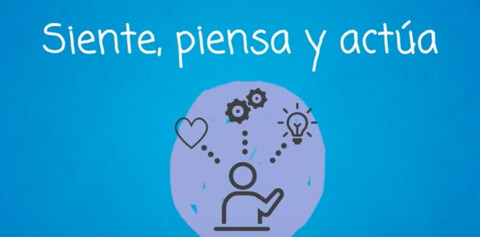 Thinking Beyond What I See: What Is Critical Thinking? Year of publication: 2018 Corporate author: Siente, Piensa y Actua This video is intended to exemplify critical thinking. We also share some strategies that will allow you to promote it in boys and girls. Pensando más allá de lo que veo: ¿Qué es el pensamiento crítico? Year of publication: 2018 Corporate author: Siente, Piensa y Actua Este video tiene la finalidad de ejemplificar el pensamiento crítico. Además te compartimos algunas estrategias que te permitirán promoverlo en niños y niñas.
 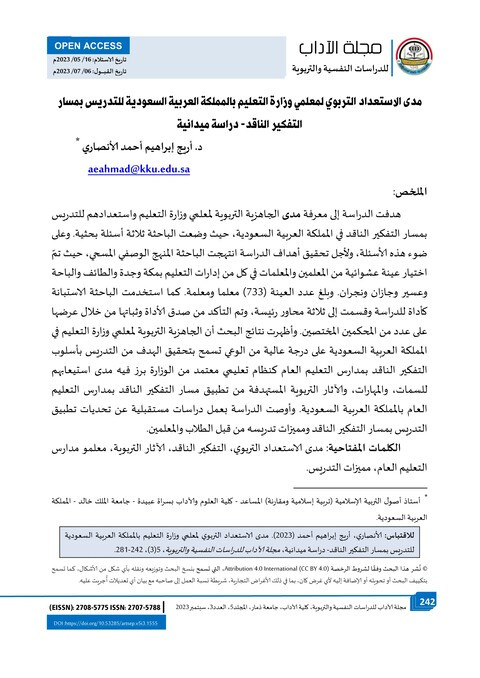 The Extent of Educational Readiness of Using Thinking Skills Strategy among Teachers at the Ministry of Education, Saudi Arabia: A Field Study (Arts for Educational & Psychological Studies; Vol.5, No.3) Year of publication: 2023 Author: Areej Ibrahim Ahmed Al Ansari Corporate author: Dhamar University This study aimed to identify educational readiness and willingness of teachers affiliated to the Ministry of Education to use critical thinking in their teaching, in Saudi Arabia. To achieve the study objectives, the descriptive survey method was adopted, and a questionnaire was used to collect data from the study sample which consisted of (733) male and female teachers, randomly selected from education directorates of Makkah, Jeddah, Taif, Al-Baha, Asir, Jazan, and Najran. The questionnaire included three main dimensions;and after testing its validity, and reliability, it was administered to the sample. The study results showed that teachers’ educational readiness scored a high degree of awareness that would allow achieving the goal of teaching by using critical thinking in schools as a teaching strategy approved by the Ministry of Education. The teachers also showed their understanding of the characteristics, skills and educational effects of the application of the critical thinking strategy in schools. The study recommended conducting future studies on the challenges and advantages of applying the critical thinking strategy from the perspective of students and teachers.Keywords: Extent of educational readiness, Critical thinking, Educational effects, School teachers. مدى الاستعداد التربوي لمعلمي وزارة التعليم بالمملكة العربية السعودية للتدريس بمسار التفكير الناقد- دراسة ميدانية (مجلة الآداب للدراسات النفسية والتربوية; Vol.5, No.3) Year of publication: 2023 Author: Areej Ibrahim Ahmed Al Ansari Corporate author: Dhamar University هدفت الدراسة إلى معرفة مدى الجاهزية التربوية لمعلمي وزارة التعليم واستعدادهم للتدريس بمسار التفكير الناقد في المملكة العربية السعودية، حيث وضعت الباحثة ثلاثة أسئلة بحثية. وعلى ضوء هذه الأسئلة، ولأجل تحقيق أهداف الدراسة انتهجت الباحثة المنهج الوصفي المسحي، حيث تمّ اختيار عينة عشوائية من المعلمين والمعلمات في كل من إدارات التعليم بمكة وجدة والطائف والباحة وعسير وجازان ونجران. وبلغ عدد العينة (733) معلما ومعلمة. كما استخدمت الباحثة الاستبانة كأداة للدراسة وقسمت إلى ثلاثة محاور رئيسة، وتم التأكد من صدق الأداة وثباتها من خلال عرضها على عدد من المحكمين المختصين. وأظهرت نتائج البحث أن الجاهزية التربوية لمعلمي وزارة التعليم في المملكة العربية السعودية على درجة عالية من الوعي تسمح بتحقيق الهدف من التدريس بأسلوب التفكير الناقد بمدارس التعليم العام كنظام تعليمي معتمد من الوزارة برز فيه مدى استيعابهم للسمات، والمهارات، والآثار التربوية المستهدفة من تطبيق مسار التفكير الناقد بمدارس التعليم العام بالمملكة العربية السعودية. وأوصت الدراسة بعمل دراسات مستقبلية عن تحديات تطبيق التدريس بمسار التفكير الناقد ومميزات تدريسه من قبل الطلاب والمعلمين.
 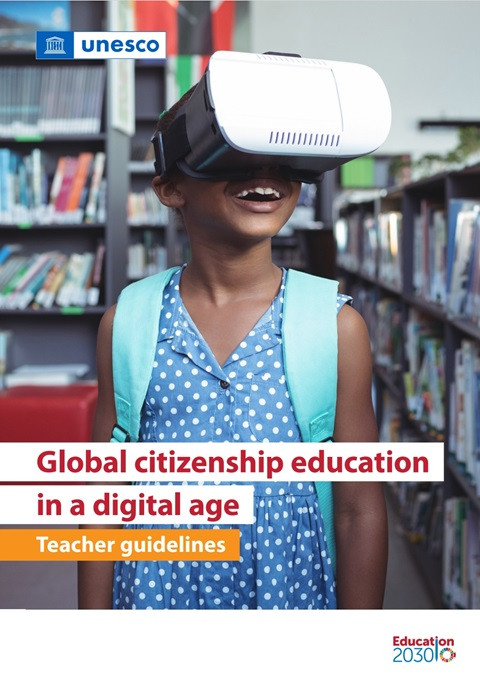 Global Citizenship Education in a Digital Age: Teacher Guidelines Year of publication: 2024 Corporate author: UNESCO This book is an essential resource for teachers seeking to understand the critical role that digital citizenship education plays in promoting a more informed, engaged, and responsible global citizenry. While digital technologies have opened up new opportunities for life-long learning, they have also given rise to emerging concerns, notably in relation to the rise of disinformation and hate speech online. Aimed at building the capacities of teachers to prepare learners to act ethically and responsibly in physical and digital environments, these guidelines stress the importance of considering how Global Citizenship Education (GCED) and related knowledge, values, skills and attitudes can be fostered for teaching, learning and engaging for a more sustainable, inclusive, just and peaceful world.
 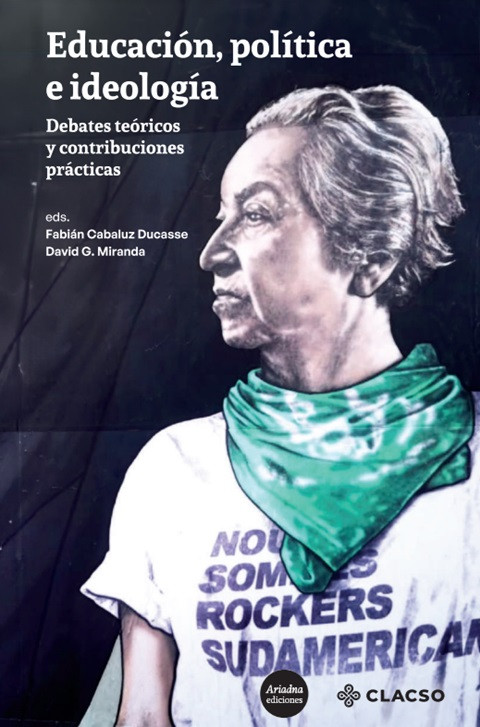 Education, Politics and Ideology: Theoretical Debates and Practical Contributions Year of publication: 2024 Author: David G. Miranda | Jorge Fabián Cabaluz Ducasse Corporate author: Latin American Council of Social Sciences (CLACSO) This book, "Education, Politics and Ideology: Theoretical Debates and Practical Contributions", is a work by the Latin American Pedagogies Research Group at the University of Playa Ancha, which is positioned from a critical perspective in the educational and pedagogical field. This currently implies, among other things, the relevance of discussing, polemizing and confronting those perspectives that have technified and instrumentalized pedagogy, reducing it to a merely practical, technical field, unrelated to epistemological, ethical, philosophical and/or political issues. In this direction, the essays that make up the book distance themselves substantially from those perspectives that conceive our field as a terrain that must advocate for neutrality, impartiality, and asepsis; and they propose clear and explicit positions with respect to social justice, democracy, equality, and dignity. Educación, política e ideología: Debates teóricos y contribuciones prácticas Year of publication: 2024 Author: David G. Miranda | Jorge Fabián Cabaluz Ducasse Corporate author: Latin American Council of Social Sciences (CLACSO) Este libro "Educación, política e ideología: debates teóricos y contribuciones prácticas", surge desde el Grupo de Investigación de Pedagogías Latinoamericanas de la Universidad de Playa Ancha, el cual se encuentra posicionado desde las perspectivas críticas del campo educativo y pedagógico, lo que implica en la actualidad, entre otras cosas, la relevancia de discutir, polemizar y confrontar aquellas perspectivas que han tecnificado e instrumentalizado la pedagogía, reduciéndola a un campo meramente práctico, técnico, ajeno a cuestiones epistemológicas, éticas, filosóficas y/o políticas. En esta dirección, los ensayos que componen el libro se distancian sustancialmente de aquellas perspectivas que conciben nuestro campo como un terreno que debe abogar por la neutralidad, la imparcialidad, la asepsia; y proponen posicionamientos claros y explícitos con respecto a la justicia social, la democracia, la igualdad, la dignidad.
 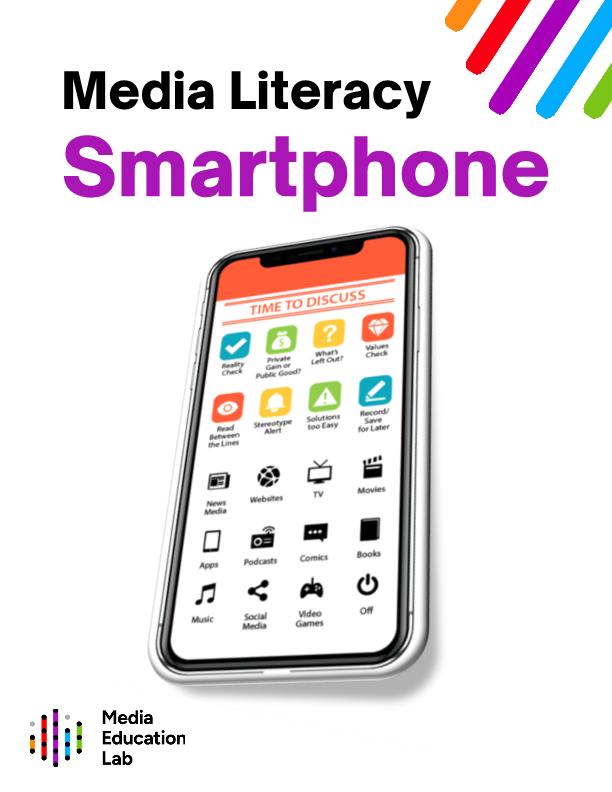 Media Literacy Smartphone Year of publication: 2020 Author: Renee Hobbs | Pam Steager Corporate author: Media Education Lab Learn how to use the Media Literacy Smartphone with learners of all ages! Download the free Learning Guide to bring the power of media literacy analysis to your learners!These easy-to-use cards, shaped exactly in the size of a smartphone, are available to educators for classroom use. You can use these simple paper cards to introduce a structured approach that helps students learn to critically analyze any media text --- web sites, books, advertising, news, TV shows, movies, video games, magazines and music. One side of the smartphone displays the various "apps" for analyzing a media text and the other side displays the "five critical questions" of media literacy developed by Renee Hobbs.Pair the smart phone with the LOVE IT OR HATE IT cards for a dynamic and fun learning experience.
  UNESCO MIL CLICKS Social Media Innovation Year of publication: 2016 Corporate author: UNESCO MIL CLICKS is a way for people to acquire media and information literacy (MIL) competencies in their normal day-to-day use of the Internet and social media and to engage peer education in an atmosphere of browsing, playing, connecting, sharing, and socializing.The acronym MIL CLICKS stands for Media and Information Literacy: Critical-thinking, Creativity, Literacy, Intercultural, Citizenship, Knowledge & Sustainability.The objectives of this social media strategy are to use social media to:1) Expose people to become more media and information literate and to2) Raise awareness about the importance of media and information literacy.
  The White Paper of EKOME on Media & Information Literacy Year of publication: 2018 Corporate author: EKOME S.A. EKOME is concluding 2018 Global UNESCO Media and Information Literacy Week celebrations with the launch of the White Paper on Media & Information Literacy available in Greek & English.The White Paper is EKOME’s viewpoint on the third pillar, Education, setting out a paradigm for a national infrastructure on media and information literacy. By highlighting the main priorities in the field, the White Paper of EKOME aims to contribute to a national strategic plan and build a constructive relationship with the creative industry.