
Resources
Explore a wide range of valuable resources on GCED to deepen your understanding and enhance your research, advocacy, teaching, and learning.
178 Results found
 In a good manner it is possible to take the untamed from the mountain III Year of publication: 2014 Author: María del Carmen Ararat Córdoba | Alexandra Riveros Rueda | Andrés Eduardo González | Arturo Grueso Bonilla | Ángela Patricia Valencia Salas Corporate author: Bogotá. Secretaría de Educación del Distrito (SED) These materials contribute with a variety of content and select activities to approach teachers to the study of the Afro-Colombian culture, helping to include this knowledge into their curricular plans. The first material is a book written by the teacher Maria del Carmen Ararat Córdoba, which studies Afro-Colombian identities in Colombia. The second one is called ethno science, a pedagogical perspective of the Afro-Colombian studies for the teaching process of natural sciences, which talks about a science that recognizes that each group of people that has inhabited our world has made a meaningful explanation to what is going on in their surroundings. The third one is called African Ethno mathematics, which seeks to recover the relation between mathematical knowledge and reality, making visible the human groups that made it possible and finding new pedagogical perspectives to make the experience of teaching mathematics as inclusive, intercultural and participative process. Bighorn mont III est retiré Avec une bonne façon Year of publication: 2014 Author: María del Carmen Ararat Córdoba | Alexandra Riveros Rueda | Andrés Eduardo González | Arturo Grueso Bonilla | Ángela Patricia Valencia Salas Corporate author: Bogotá. Secretaría de Educación del Distrito (SED) Ces matériaux contribuent avec le contenu et choisir des activités pour approcher les enseignants à l'étude de la culture afro-colombienne, en aidant à inclure ces connaissances dans leurs plans curriculaires. Le premier matériau est un livre écrit par le professeur Maria del Carmen Ararat Córdoba, qui étudie les identités afro-colombiennes en Colombie. La seconde est appelée la science ethno, une perspective pédagogique des études afro-colombiennes pour le processus d'enseignement des sciences naturelles, en ce qui soulève une science qui reconnaît que chaque groupe de personnes qui a habité notre monde a fait une explication significative de leur environnement . Le troisième est appelé mathématiques africaine Ethno, qui cherche à récupérer la relation entre la connaissance mathématique et la réalité, ce qui rend visible les groupes humains qui ont permis et de trouver de nouvelles perspectives pédagogiques pour faire l'expérience de l'enseignement des mathématiques comme processus inclusif, interculturel et participative. Con buen modo se saca el cimarrón del monte III Year of publication: 2014 Author: María del Carmen Ararat Córdoba | Alexandra Riveros Rueda | Andrés Eduardo González | Arturo Grueso Bonilla | Ángela Patricia Valencia Salas Corporate author: Bogotá. Secretaría de Educación del Distrito (SED) These materials contribute with a variety of content and select activities to approach teachers to the study of the Afro-Colombian culture, helping to include this knowledge into their curricular plans. The first material is a book written by the teacher Maria del Carmen Ararat Córdoba, which studies Afro-Colombian identities in Colombia. The second one is called ethno science, a pedagogical perspective of the Afro-Colombian studies for the teaching process of natural sciences, which talks about a science that recognizes that each group of people that has inhabited our world has made a meaningful explanation to what is going on in their surroundings. The third one is called African Ethno mathematics, which seeks to recover the relation between mathematical knowledge and reality, making visible the human groups that made it possible and finding new pedagogical perspectives to make the experience of teaching mathematics as inclusive, intercultural and participative process. Etnoscience Year of publication: 2014 Author: María del Carmen Ararat Córdoba | Alexandra Riveros Rueda | Andrés Eduardo González | Arturo Grueso Bonilla | Ángela Patricia Valencia Salas Corporate author: Bogotá. Secretaría de Educación del Distrito (SED) These materials contribute with contents and select activities to help teachers impart knowledge on the study of the Afro-Colombian culture, helping to include this knowledge into their curricular plans. The first material is a book written by the teacher Maria del Carmen Ararat Córdoba, which studies Afro-Colombian identities in Colombia. The second one is called ethno science, a pedagogical perspective of the Afro-Colombian studies for the teaching process of natural science, in which raises a science that recognizes that each group of people that have inhabited our world have made a meaningful explanation of their surroundings. The third one is called African Ethno mathematics, which seeks to recover the relation between mathematical knowledge and reality, making visible the human groups that made it possible and finding new pedagogical perspectives to make the experience of teaching mathematics as inclusive, intercultural and participative process. Ethnoscience Year of publication: 2014 Author: María del Carmen Ararat Córdoba | Alexandra Riveros Rueda | Andrés Eduardo González | Arturo Grueso Bonilla | Ángela Patricia Valencia Salas Corporate author: Bogotá. Secretaría de Educación del Distrito (SED) Ces matériaux contribuent avec le contenu et choisir des activités pour approcher les enseignants à l'étude de la culture afro-colombienne, en aidant à inclure ces connaissances dans leurs plans curriculaires. Le premier matériau est un livre écrit par le professeur Maria del Carmen Ararat Córdoba, qui étudie les identités afro-colombiennes en Colombie. La seconde est appelée la science ethno, une perspective pédagogique des études afro-colombiennes pour le processus d'enseignement des sciences naturelles, en ce qui soulève une science qui reconnaît que chaque groupe de personnes qui a habité notre monde a fait une explication significative de leur environnement. Le troisième est appelé mathématiques africaine Ethno, qui cherche à récupérer la relation entre la connaissance mathématique et la réalité, ce qui rend visible les groupes humains qui ont permis et de trouver de nouvelles perspectives pédagogiques pour faire l'expérience de l'enseignement des mathématiques comme processus inclusif, interculturel et participative. Etnociencia Year of publication: 2014 Author: María del Carmen Ararat Córdoba | Alexandra Riveros Rueda | Andrés Eduardo González | Arturo Grueso Bonilla | Ángela Patricia Valencia Salas Corporate author: Bogotá. Secretaría de Educación del Distrito (SED) These materials contribute with contents and select activities to help teachers impart knowledge on the study of the Afro-Colombian culture, helping to include this knowledge into their curricular plans. The first material is a book written by the teacher Maria del Carmen Ararat Córdoba, which studies Afro-Colombian identities in Colombia. The second one is called ethno science, a pedagogical perspective of the Afro-Colombian studies for the teaching process of natural science, in which raises a science that recognizes that each group of people that have inhabited our world have made a meaningful explanation of their surroundings. The third one is called African Ethno mathematics, which seeks to recover the relation between mathematical knowledge and reality, making visible the human groups that made it possible and finding new pedagogical perspectives to make the experience of teaching mathematics as inclusive, intercultural and participative process. African etnomathematics Year of publication: 2014 Author: María del Carmen Ararat Córdoba | Alexandra Riveros Rueda | Andrés Eduardo González | Arturo Grueso Bonilla | Ángela Patricia Valencia Salas Corporate author: Bogotá. Secretaría de Educación del Distrito (SED) These materials contribute with contents and select activities help teachers get comfortable with the study of the Afro-Colombian culture, helping to include this knowledge into their curricular plans. The first material is a book written by the teacher Maria del Carmen Ararat Córdoba, which studies Afro-Colombian identities in Colombia. The second one is called ethno science, a pedagogical perspective of the Afro-Colombian studies for the teaching process of natural science, in which raises a science that recognizes that each group of people that has habited our world has made a meaningful explanation of their surroundings. The third one is called African Ethno mathematics, which seeks to recover the relation between mathematical knowledge and reality, making visible the human groups that made it possible and finding new pedagogical perspectives to make the experience of teaching mathematics as inclusive, intercultural and participative process. Etnomatemátic un Africain Year of publication: 2014 Author: María del Carmen Ararat Córdoba | Alexandra Riveros Rueda | Andrés Eduardo González | Arturo Grueso Bonilla | Ángela Patricia Valencia Salas Corporate author: Bogotá. Secretaría de Educación del Distrito (SED) Ces matériaux contribuent avec le contenu et choisir des activités pour approcher les enseignants à l'étude de la culture afro-colombienne, en aidant à inclure ces connaissances dans leurs plans curriculaires. Le premier matériau est un livre écrit par le professeur Maria del Carmen Ararat Córdoba, qui étudie les identités afro-colombiennes en Colombie. La seconde est appelée la science ethno, une perspective pédagogique des études afro-colombiennes pour le processus d'enseignement des sciences naturelles, en ce qui soulève une science qui reconnaît que chaque groupe de personnes qui a habité notre monde a fait une explication significative de leur environnement . Le troisième est appelé mathématiques africaine Ethno, qui cherche à récupérer la relation entre la connaissance mathématique et la réalité, ce qui rend visible les groupes humains qui ont permis et de trouver de nouvelles perspectives pédagogiques pour faire l'expérience de l'enseignement des mathématiques comme processus inclusif, interculturel et participative. Etnomatemática africana Year of publication: 2014 Author: María del Carmen Ararat Córdoba | Alexandra Riveros Rueda | Andrés Eduardo González | Arturo Grueso Bonilla | Ángela Patricia Valencia Salas Corporate author: Bogotá. Secretaría de Educación del Distrito (SED) These materials contribute with contents and select activities help teachers get comfortable with the study of the Afro-Colombian culture, helping to include this knowledge into their curricular plans. The first material is a book written by the teacher Maria del Carmen Ararat Córdoba, which studies Afro-Colombian identities in Colombia. The second one is called ethno science, a pedagogical perspective of the Afro-Colombian studies for the teaching process of natural science, in which raises a science that recognizes that each group of people that has habited our world has made a meaningful explanation of their surroundings. The third one is called African Ethno mathematics, which seeks to recover the relation between mathematical knowledge and reality, making visible the human groups that made it possible and finding new pedagogical perspectives to make the experience of teaching mathematics as inclusive, intercultural and participative process.
 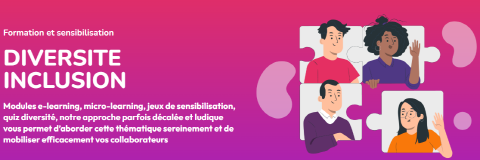 E-learning Diversité & Inclusion Corporate author: UPANDGO Sur ce site vous trouverez des modules e-learning, micro-learning, jeux de sensibilisation, quiz diversité sur la question de l'inclusion et la diversité. Cette approche parfois décalée et ludique vous permet d’aborder cette thématique sereinement et de mobiliser efficacement vos collaborateurs. On this site you'll find e-learning modules, micro-learning, awareness-raising games and diversity quizzes on the subject of inclusion and diversity. This sometimes offbeat and playful approach enables you to tackle this issue with peace of mind and effectively mobilize your employees.