
Resources
Explore a wide range of valuable resources on GCED to deepen your understanding and enhance your research, advocacy, teaching, and learning.
178 Results found
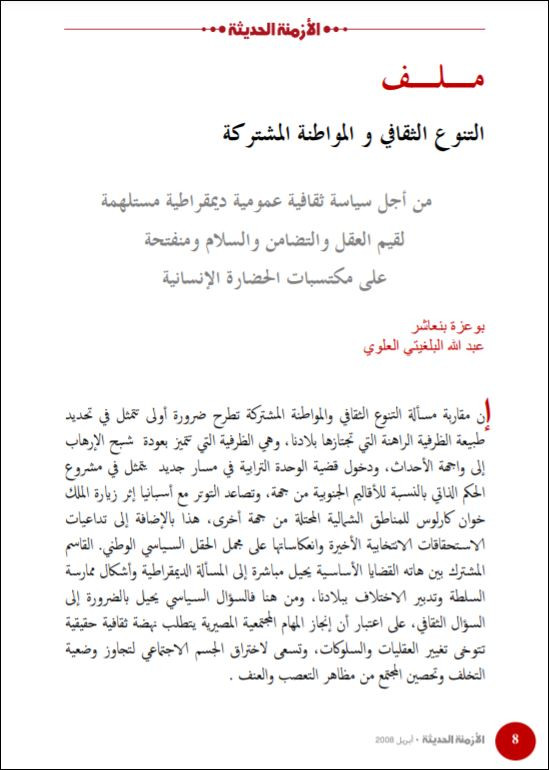 ملف التنوع الثقافي و المواطنة المشتركة Year of publication: 2008 Author: BoAzza Binasher | Abdullah Alalawai Corporate author: Modern Times Magazine يستعرض هذا الملف المتكامل من مجلة الأزمنة الحديثة قضية المواطنة والتنوع الثقافي. حيث يستعرض الملف تساؤلات كثيرة حول موضوع المواطنة المشتركة. ويسهم الملف عموما في وضع سياسة ثقافية ديموقراطية تضمن قيم التضامن والسلام من أجل الحفاظ على المكتسبات الإنسانية.
 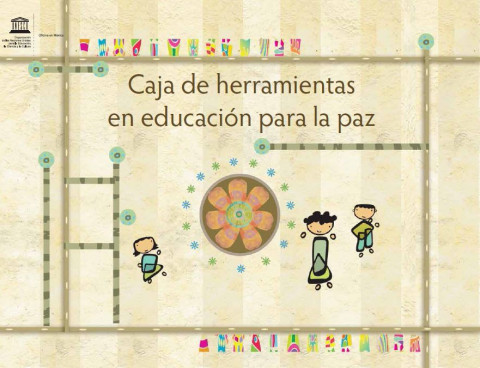 Toolbox in Education for Peace Year of publication: 2013 Author: Luz Marfa Chapela Corporate author: UNESCO Mexico The components of this box form a system in which each element has its own ends and all the elements, gathered and linked, seek the same shared goal: offer recreational materials that encourage introspective reflection, the best knowledge of the other and the environment, the collaborative study, the participation of different agents of the community in support of teachers, the use of mother tongues and the identification of resources, knowledge, talents and skills in local communities. This box is addressed in a special way to teachers and students of basic education, as well as to different agents of the civil society that support them. Its purpose is to favor the development of school communities that make the school a center of study, play, advice and work for all. Because the materials of the Toolbox can also be interesting to young people and adults of all ages. In this sense, the box invites the different agents of the communities to think and produce new playful-educational materials that collect and put into action some priority local contents, which, surely, will enrich the life and educational possibilities of school communities. Caja de Herramientas en Educación para la Paz Year of publication: 2013 Author: Luz Marfa Chapela Corporate author: UNESCO Mexico Los componentes de esta caja forman un sistema en el que cada elemento tiene sus propios fines y todos los elementos, reunidos y vinculados, buscan un mismo fin compartido: ofrecer materiales lúdicoeducativos que propicien la reflexión introspectiva, el mejor conocimiento del otro y del entorno, el estudio colaborativo, la participación de distintos agentes de la comunidad en apoyo a los maestros, el uso de las lenguas maternas y la identificación de recursos, saberes, talentos y habilidades en las comunidades locales. Esta caja se dirige de manera especial a maestros y estudiantes de educación básica, así como a distintos agentes de la sociedad civil que los apoyan. Tiene entre sus propósitos favorecer el desarrollo de comunidades escolares que hagan de la escuela un centro de estudio, juego, asesoría y trabajo para todos. Porque los materiales de la Caja de Herramientas también pueden resultar interesantes a jóvenes y adultos de todas las edades. En este sentido, la caja invita a los distintos agentes de las comunidades a pensar y producir nuevos materiales lúdico-educativos que recojan y pongan en acción algunos contenidos locales prioritarios, mismos que, seguramente, enriquecerán la vida y las posibilidades educativas de las comunidades escolares.
  Nuestra diversidad creativa: informe de la comisión mundial de cultura y desarrollo, versión resumida Year of publication: 1996 Corporate author: World Commission on Culture and Development This report is designed to address a diversified audience across the world that ranges from community activists, field workers, artists and scholars to government officials and politicians. We want it to inform the world’s opinion leaders and to guide its policy-makers. We want it to capture the attention of the world’s intellectual and artistic communities, as well as the general public. We aim to have shown them how culture shapes all our thinking, imagining and behaviour. It is the transmission of behaviour as well as a dynamic source for change, creativity, freedom and the awakening of innovative opportunities. For groups and societies, culture is energy, inspiration and empowerment, as well as the knowledge and acknowledgment of diversity: if cultural diversity is ‘behind us, around us and before us”, as Claude L&i-Strauss put it, we must learn how to let it lead not to the clash of cultures, but to their fruitful coexistence and to intercultural harmony. Just as in the tasks of building peace and consolidating democratic values, an indivisible set of goals, so too economic and political rights cannot be realized separately from social and cultural rights. The challenge to humanity is to adopt new ways of thinking, new ways of acting, new ways of organizing itself in society, in short, new ways of living. The challenge is also to promote different paths of development, informed by a recognition of how cultural factors shape the way in which societies conceive their own futures and choose the means to attain these futures. I have for some time been concerned with the “culture of peace”. There is now considerable evidence that neglect of human development has been one of the principal causes of wars and internal armed conflicts, and that these, in turn, retard human development. With government complicity and with the intention of raising export receipts, private businesses continue to sell advanced military technology, nuclear materials and equipment for the production of bacteriological and chemical warfare. The concept of state sovereignty which still prevails today has increasingly come under scrutiny. In the area of peace-keeping, the distinction between external aggression and internal oppression is often unrealistic. The predominant threat to stability are violent conflicts within countries and not between them. There is an urgent need to strengthen international human rights law. Many of the most serious troubles come from within states – either because of ethnic strife or repressive measures by governments. Conditions that lead to tyranny and large-scale violations of human rights at home sooner or later are likely to spill over into a search for enemies abroad. The temptation of repressive states to export internal difficulties is great. Consider the Soviet Union’s invasion of Hungary and Czechoslovakia after it had used domestic oppression and the persistent refusal - for many years - of the previous South African governments to grant independence to Namibia. An ounce of prevention is better than a ton of punishment. اجتماع دولي للخبراء: تعزيز الحوار بين الثقافات في الدول العربية؛ تقرير Year of publication: 2012 Corporate author: UNESCO Beirut Within the framework of the project “Fostering a Culture of Peace and Dialogue” an international meeting of experts on Fostering a Culture of Intercultural Dialogue in the Arab States took place in Beirut, Lebanon on 6 and 7 March 2012 at the Holiday Inn Hotel in Verdun. The meeting was organized by UNESCO Beirut Office in partnership with the Government of Saudi Arabia and the King Abdulaziz Center of National Dialogue and in collaboration with the Arab Thought Foundation. The 2 days event was a landmark meeting of 35 experts and professionals from more than 11 countries, representing a wide range of fields in conflict resolution, research and education, media and journalism. The meeting is the first activity of a series of regional activities and interventions to be organized within the framework of the UNESCO project “Fostering a Culture of Peace and Dialogue”.
  UNESCO international meeting of experts: fostering a culture of intercultural dialogue in the Arab States; report Year of publication: 2012 Corporate author: UNESCO Beirut Within the framework of the project “Fostering a Culture of Peace and Dialogue” an international meeting of experts on Fostering a Culture of Intercultural Dialogue in the Arab States took place in Beirut, Lebanon on 6 and 7 March 2012 at the Holiday Inn Hotel in Verdun. The meeting was organized by UNESCO Beirut Office in partnership with the Government of Saudi Arabia and the King Abdulaziz Center of National Dialogue and in collaboration with the Arab Thought Foundation. The 2 days event was a landmark meeting of 35 experts and professionals from more than 11 countries, representing a wide range of fields in conflict resolution, research and education, media and journalism. The meeting is the first activity of a series of regional activities and interventions to be organized within the framework of the UNESCO project “Fostering a Culture of Peace and Dialogue”. Réunion internationale d'experts de l'UNESCO: la promotion d'une culture du dialogue interculturel dans les États Arabes; rapport Year of publication: 2012 Corporate author: UNESCO Beirut Dans le cadre du projet «Promotion d'une culture de la paix et le dialogue » une réunion internationale d'experts sur la promotion d'une culture du dialogue interculturel dans les Etats arabes a eu lieu à Beyrouth, au Liban les 6 et 7 Mars 2012 à l'Hôtel Holiday Inn à Verdun . La réunion a été organisée par le Bureau UNESCO à Beyrouth en partenariat avec le gouvernement de l'Arabie saoudite et les Abdulaziz Centre roi de dialogue national et en collaboration avec la Fondation de la pensée arabe. L'événement de 2 jours a été une réunion historique de 35 experts et professionnels de plus de 11 pays, représentant un large éventail de domaines dans la résolution des conflits, la recherche et l'éducation, les médias et le journalisme. La réunion est la première activité d'une série d'activités et d'interventions régionales qui seront organisées dans le cadre du projet de l'UNESCO «Promotion d'une culture de la paix et le dialogue ».
  Cultural aspects in Christian and Islamic religions Year of publication: 2011 Corporate author: UNESCO Beirut | Université Saint Joseph de Beyrouth This book allows the readers the opportunity to know about the cultural aspects related to religions, mainly in Lebanon and the Near East, their meaning and their aim. This knowledge will help the reader, firstly, to grasp the meaning of these various aspects, whether they concern him directly or the people who live in the same country, with whom he shares common space and living. Secondly, the book contributes to the Lebanese understanding one another’s behaviors and their own behavior concerning these aspects. Therefore, the book also contributes to the Lebanese looking at one another with more trust before starting to criticize. This book includes chapters that cover most of the different cultural aspects in Christian and Islamic religions. The first chapter deals with time, passing through each month of the year and its days, in a chronological manner. The second chapter delves into religious occasions in the Christian then Islamic religions. It explains the meaning of Holidays and remembrances of God and their particular aspects as well as the religious reasons of each. This chapter includes a part about al-‘awliya’ and Saints who are mentioned in some of the Lebanese daily rituals. Chapter three delves into the individual’s life stages from birth to religious vows, to marriage and death. The aspects that go with these stages constitute an important part in the life of the Lebanese. This chapter details the aspects and traditions of all these stages in which people take part, thus creating a common ground in a multi-religious society. Chapter four deals with religious practices, acts of worship, and legal prescriptions. It describes them and deals with their spiritual meaning to individuals who express their faith when practicing them. Prayer, Mass, and Pilgrimage, among others, are religious practices that are detailed in a way to make the reader understand what they mean to those who perform them. Chapter five leads us into religious places and their meaning, from churches to mosques and monasteries, khalwat and husayniyyat, all of which have different and divergent meanings to visitors. Yet, they all show the importance given by man to the place when expressing his faith and his relation with the Creator. Chapter six takes us to religious habits and customs, such as the clothes worn by religious dignitaries, their symbolism and meaning. It also deals with some general habits and customs. The reader may find that some chapters overlap. In fact, we have tried to make each part related to the others yet independent from them. This method facilitates the reading and understanding of any subject on its own without the need to refer to prior or subsequent parts. Finally, those who had any – minor or major – contribution in this book – despite the lacks that some readers might see – hope that they have offered a useful work in the process of discovering others who are different and who hold rich traditions as well human and spiritual values.
 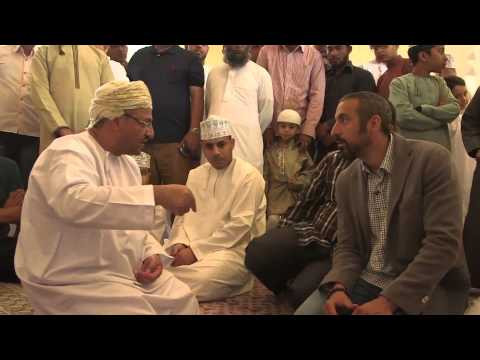 نختلف ويبقى الود-نموذج Year of publication: 2015 Author: Ahmad Al Shugairi Corporate author: Aram TV الفيديو يتحدث عن عمان كنموذج للتعايش بين المذاهب. حيث زار أحمد الشقيري عمان وصلى في مساجدها والتقى بالعمانيين، وسلط الضوء على التعايش بينهم. عمان حسب الفيديو أحد الدول التي نجحت في الانسجام بين مذاهبها الثلاث من غير مشاكل. We Are Different But We Love Each Other- Example Year of publication: 2015 Author: Ahmad Al Shugairi Corporate author: Aram TV The video talks about Oman as a model for coexistence between sects. Ahmed Al Shugairi visited Amman and prayed in its mosques and met with Omanis, highlighting the coexistence between them. Oman, according to the video, is one of the countries that succeeded in harmonizing its three sects without problems.