
Resources
Explore a wide range of valuable resources on GCED to deepen your understanding and enhance your research, advocacy, teaching, and learning.
19 Results found
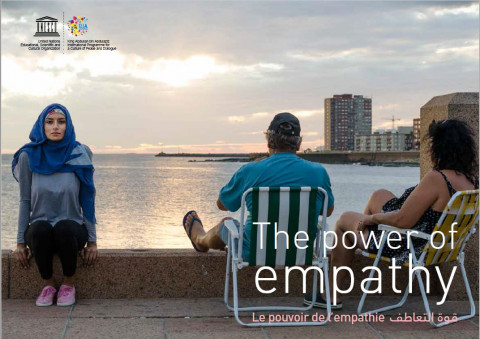 The Power of Empathy Year of publication: 2017 Corporate author: UNESCO This photobook is a tribute to the power of empathy and solidarity felt and expressed by young people. Its photographs and stories were selected from the response to the global youth contest “If I were…”, launched by UNESCO on social media in Arabic, English, French and Spanish in early 2017. UNESCO received some 837 submissions, from 117 countries, covering a wide variety of issues and experiences.Despite the gravity of the themes addressed in these beautiful pictures, hope emerges from the testaments of the young photographers which demonstrate not only a sensitivity to the situations of “others”, but, moreover, a resolve to help people recover and protect their rights and dignity.
 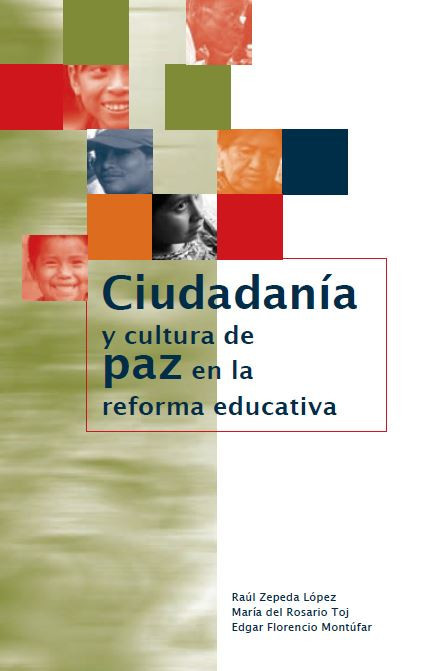 Citizenship and Culture of Peace in Educational Reform Year of publication: 2005 Author: Raúl Zepeda López, María del Rosario Toj, Edgar Florencio Montúfar Corporate author: UNESCO The concern raised by the themes and contents of civic education and the culture of peace in childhood and youth are issues that are felt in various academic sectors, in social organizations and educational authorities that sometimes translate into articles in the media, where, among other things, one speaks of "the loss of values", generally having as reference to the young generations and making invisible that this loss is mainly present in the adult generations, which are responsible for this situation. These concerns, in spite of that conscious ambiguity, are not gratuitous. They can be a starting point to become aware of the need to develop new capacities and values, the absence of which young Latin Americans identify in their political and social leaders, as has been pointed out in cited studies, carried out by UNICEF for Latin America and for Beatriz de Cazali for Guatemala. The need to respond to this concern is also present in the participants in the dialogues and municipal consensus (2000), as well as among authorities and curriculum developers of MINEDUC in the last five-years.
  International Symposium on Cultivating Wisdom, Harvesting Peace: Educating for a Culture of Peace through Values, Virtues, and Spirituality of Diverse Cultures, Faiths, and Civilizations; Symposium Recommendations Year of publication: 2005 Corporate author: Griffith University. Multi-Faith Centre On the 10-13th August 2005, over 120 delegates from 25 countries gathered at the International Symposium to share their inspirational insights and experiences on the theme of “Cultivating Wisdom, Harvesting Peace.” The Symposium was organized and hosted by the Multi-Faith Centre of Griffith University, Brisbane, Australia with the support of Pure Land Learning College, UNESCO and various UNESCO National Commissions, centres or offices, and numerous faith, interfaith, educational and civil society organizations and institutions. Reflecting a diversity of cultures, faiths and spirituality traditions, the delegates presented rich and empowering stories as well as critical analyses of how communities, institutions, civil society organizations, and international or global agencies have organized educational projects and programs to address the root causes of violence and conflicts and build a culture of peace at all levels of life. Over four intensive days of inter-faith and intra-faith dialogue, the Symposium participants engaged with humility and passion in sharing their wisdoms on ways to promote mutual understanding, solidarity, and cooperation across cultures and national boundaries. While recognizing that differences between faiths and cultures need to be understood, the dialogue also clearly showed that all faiths, cultures, and civilizations have, at their core, key values, virtues, and ethical principles that inspire and sustain peaceful relationships, communities and societies.The Symposium also highlighted the urgent need for exemplars and possibilities for transforming principles, values and visions into personal and social actions and practices in all the multiple dimensions of a culture of peace. In this first decade of the 21st century, it is clear that there are still many formidable challenges of building peace posed by prevailing realities of conflicts and violence in local, national, international and global contexts. The Symposium on “Cultivating Wisdom, Harvesting Peace” was therefore a most timely and relevant event, not only for promoting the urgent dialogue needed, but also most importantly in proposing constructive policies for educational transformation worldwide. This Summary of the Symposium Recommendations will hopefully be a very helpful document for the implementation of effective and creative strategies and practices of educating for wisdom towards a culture of peace. It is offered to government leaders, policy makers, educators, and leaders and members of diverse faith and interfaith institutions and communities in all societies and regions, in the hope that we will join our minds, hearts and spirit in solidarity to build a “one world” of peace, compassion, justice, love and diverse shared values for the well being of a common humanity and earth community
  New Citizenship, Culture of Peace and Democratic Integration: Pedagogical Guidelines and Didactic Proposals Year of publication: 2015 Corporate author: Argentina. Ministry of Education | Chile. Ministry of Education This document is an input that, in the form of a guide of pedagogical guidelines and teaching proposals, seeks to support the development of the objectives of the New Citizenship, Culture of Peace and Democratic Integration Program, promoted by the Ministry of Education of Argentina and the Ministry of Education of Chile. The first section corresponds to an introductory section, which communicates the principles on which the program is based. The second section is made up of the axes and chapters that structure the guide. Each axis (four in total) is subdivided into two chapters, articulated around the topic that the axis addresses and which is briefly presented at the beginning of it.
 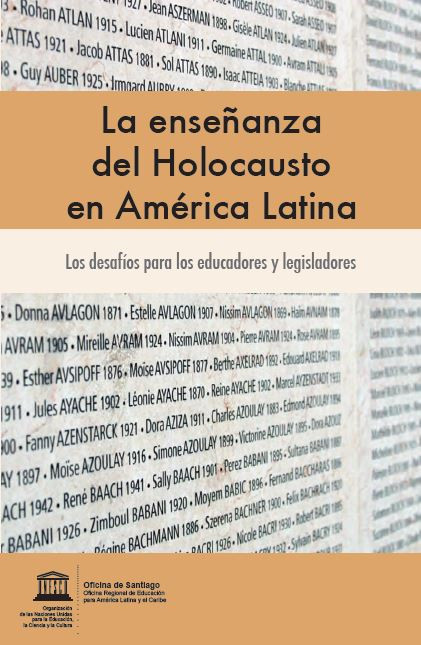 The Teaching of the Holocaust in Latin America the Challenges for Educators and Legislators Year of publication: 2017 Author: María Celeste Adamoli | Emmanuel Kahan, Pablo Luzuriaga | Ministerio de Educación Corporate author: UNESCO Santiago This book provides an overview of opportunities that may arise from educating about the Holocaust in diverse cultural contexts and educational situations, with a special focus on Latin American countries. We can actually be away from the places where the genocide against the Jewish people was perpetrated, but Latin America is still taking charge of its own past of violence and crimes against humanity. With this publication, Latin American educators will have at their fingertips an updated account of the most outstanding topics that are discussed on pedagogy and policy making. You can also explore how, even today in Europe, education about the Holocaust shapes a culture of memory. On the other hand, you can see how in other places the memory of the Holocaust can be a starting point to relate to other difficult pasts. UNESCO is convinced that the prevention of genocide begins at school. In a world where mass violence is possible, this publication will show the importance of teaching young people about the Holocaust and about other genocides in history. It is a condition to prevent similar crimes from happening in the future.
  Religion and Belief Issues in the Countries of Central Asia (Kyrgyzstan, Kazakhstan, Uzbekistan, Tajikistan) and Russia in the Media; April 2016 - April 2017 Year of publication: 2017 Author: Evgeny Zavyalov Corporate author: Open Position (Kyrgyzstan) This publication is a review of news on religion and belief issues that appeared in the media from April 2016 to April 2017, in Central Asia (Kyrgyzstan, Kazakhstan, Uzbekistan, Tajikistan) and Russia. The materials included in the publication were distributed monthly on a newsletter including members of religious communities and experts working on issues of religion and belief.
  The Program of the Government of the Kyrgyz Republic on Countering Extremism and Terrorism for 2017-2022 Year of publication: 2017 Corporate author: Government of the Kyrgyz Republic The document contains the main provisions of the program of the Government of the Kyrgyz Republic on countering extremism and terrorism for 2017-2022.The program provides a set of measures to ensure effective countering the threats of extremism and terrorism, rigorous observance of human rights and freedoms, the rule of law and others constitutional principles of the Kyrgyz Republic. Purpose of this program is changing the current situation in the field countering extremism and preventing terrorism.Successful implementation of the program depends on coherence government bodies, organizations and institutions of the Kyrgyz Republic to counter extremism and terrorism.
  World Report on the Culture of Peace: Civil Society Report at Midpoint of the Culture of Peace Decade Year of publication: 2005 Corporate author: Foundation for a Culture of Peace The year 2005 marks the midpoint of the International Decade for a Culture of Peace and Non-Violence for the Children of the World (2001-2010) as proclaimed by the United Nations General Assembly.The present report has been submitted to the UN Secretary-General for the General Assembly's consideration at its next session under the relevant agenda item which will review the midpoint of the Culture of Peace Decade. This initiative responds to the invitation contained in operative paragraph 10 of General Assembly resolution A/59/143.The report is based on the accounts submitted by 700 organizations from all regions of the world. From the information received, it can be concluded that the culture of peace is advancing.The report provides the first comprehensive view of the progress made by the global movement for a culture of peace, since it was called for in 1999 by General Assembly resolution A/53/243 (annexed to the end of this report).
  The UNESCO and the Culture of Peace Year of publication: 2008 Author: Ahmed Al-Azri Corporate author: Oman National Commission for Education, Culture and Science The author presents the projects undertaken by the Sultanate of Oman to spread the culture of peace in its educational institutions. The author links this movement with what UNESCO aims to spread the culture of peace around the world.
  Saudi University Students’ Attitude Towards a Culture of Peace Year of publication: 2019 Author: Rowaidah Abdulhameed Saman Corporate author: University of Jordan The aim of this study is to identify the attitudes of Saudi Universities’ students towards peace culture. The descriptive surveying approach was used on a sample of 1643 students. The frequency, percentages, arithmetic mean, Kay-box test, and T-test were used in the analysis. The results showed that Saudi students have a positive attitude towards (human rights, disarmament, conflict resolution skills, peace culture) while their attitudes were negative towards transferring bomb-making experience to Islamic countries. Also, females had more positive attitudes towards disarmament than male students.