
Resources
Explore a wide range of valuable resources on GCED to deepen your understanding and enhance your research, advocacy, teaching, and learning.
88 Results found
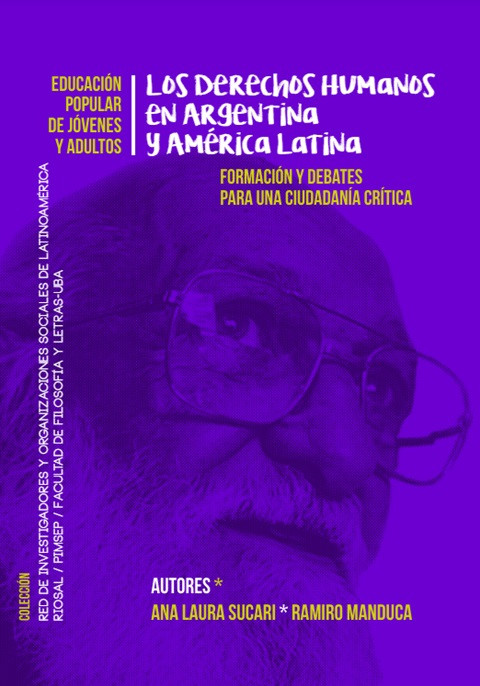 Derechos humanos en Argentina y américa latina: Formación y debates para unaciudadanía crítica Year of publication: 2022 Author: Ana Laura Sucari | Ramiro Manduca Corporate author: Red de Investigadores y Organizaciones Sociales de Latinoamérica (RIOSAL) Este libro es una invitación a estudiar sobre los Derechos Humanos. A la vez, busca ser un material que amplíe derechos abriendo debates que fomenten la enseñanza y el aprendizaje en un marco de respeto por los Derechos Humanos y para los DDHH ya que es necesario aprender cuáles son nuestros derechos con el fin de intervenir en la realidad de acuerdo a los mismos.
  Education for Global Citizenship: Promoting Democracy Year of publication: 2019 Author: Manuela Mesa Corporate author: Autonomous University of Madrid | Red Iberoamericana de Investigación sobre Cambio y Eficacia Escolar (RINACE) This paper makes a reflection on the role of education in the current international context, marked by profound changes and by a situation of uncertainty and instability and reverse in rights. It discusses the various interpretative frameworks that explain the current world and that are articulated around the global-local axis and ethnic-national identities and multiple identities. In a world characterized by the complexity and speed of changes, it is very important to overcome the the compartmentalization of knowledge in areas such as mathematics, social, language, etc and look for global approaches. Education as a transformative practice cannot be outside of the major challenges facing humanity at the national and multilateral. The 2030 Agenda and the Sustainable Development Goals gives opportunities for the consolidation of the Education for Global Citizenship. La Educación para la ciudadanía global: Una apuesta por la democracia Year of publication: 2019 Author: Manuela Mesa Corporate author: Autonomous University of Madrid | Red Iberoamericana de Investigación sobre Cambio y Eficacia Escolar (RINACE) En este artículo se hace una reflexión sobre el papel de la educación en el actual contexto internacional, marcado por profundos cambios y por una situación de incertidumbre e inestabilidad y de retroceso en derechos. Se abordan los diversos marcos interpretativos que explican el mundo actual y que se articulan en torno al eje global-local y al eje identitario. En un mundo caracterizado por la complejidad y la rapidez de cambios es muy importante superar la compartimentalización del conocimiento en áreas estanco (matemáticas, sociales, lengua, etc.) para abordarlo de manera global. La educación como práctica transformadora no puede estar al margen de los grandes retos que enfrenta la humanidad en el ámbito nacional y multilateral. La Agenda 2030 y los Objetivos de Desarrollo Sostenible abre oportunidades para consolidar la educación para la ciudadanía global.
  Living with Controversy: Teaching Controversial Issues through Education for Democratic Citizenship and Human Rights (EDC/HRE); Training Pack for Teachers Year of publication: 2015 Corporate author: Council of Europe Learning how to engage in dialogue with people whose values are different from one’s own and to respect them is central to the democratic process and essential for the protection and strengthening of democracy and fostering a culture of human rights. Yet in Europe young people do not often have an opportunity to discuss controversial issues in school because they are seen as too challenging to teach, e.g., issues to do with extremism, gender violence, child abuse, or sexual orientation. Unable to voice their concerns, unaware of how others feel or left to rely on friends and social media for their information, young people can be frustrated or confused about some of the major issues which affect their communities and European society today. In the absence of help from school, they might have no reliable means of dealing with these issues constructively and no one to guide them. The idea for this Pack came out of a call from policy-makers and practitioners in a number of European countries for more effective training for teachers in the teaching of controversial issues.
  Vivir con la controversia: Cómo enseñar temas controvertidos mediante la Educación para la ciudadanía y los derechos humanos (EDC/HRE) Módulo de formación para el profesorado Year of publication: 2015 Corporate author: European Union (EU) Learning how to engage in dialogue with people whose values are different from one’s own and to respect them is central to the democratic process and essential for the protection and strengthening of democracy and fostering a culture of human rights. ■ Yet in Europe young people do not often have an opportunity to discuss controversial issues in school because they are seen as too challenging to teach, e.g., issues to do with extremism, gender violence, child abuse, or sexual orientation. Unable to voice their concerns, unaware of how others feel or left to rely on friends and social media for their information, young people can be frustrated or confused about some of the major issues which affect their communities and European society today. In the absence of help from school, they might have no reliable means of dealing with these issues constructively and no one to guide them. ■ The idea for this Pack came out of a call from policy-makers and practitioners in a number of European countries for more effective training for teachers in the teaching of controversial issues. Guide d'utilisation du manuel d'apprentissage de la démocratie pour les jeunes en Tunisie, à l'attention des formateurs et adultes-relais Year of publication: 2013 Corporate author: UNESCO Rabat As part of its project to support education for democracy for young people in Tunisia, UNESCO has developed in cooperation with the Ministry of Education, the National Commission for Education, Science and Culture, CAWTAR, IADH, CNIPRE and UNI, a handbook on democracy for young people in Tunisia.This handbook is composed of twenty factsheets illustrated with drawings by Plantu. It popularizes the standards and universal principles, as well as major international instruments that protect and emphasize the national legal framework, key issues and challenges and good practices in Tunisia. One of the comparative advantages of this module is the fact that it highlights local issues and ongoing legal reforms in Tunisia.The present handbook has been developed as a pedagogical tool to help adult intermediaries (teachers, social educators etc…) responsible for the training of young people in school and community settings. It provides a series of exercises and situations to facilitate the learning and acquisition of knowledge in the field of democracy.The contents of this guidebook develops an approach based on "the discovery by oneself" which offers to participants activities, exercises and situations that require the mobilization of resources and contents of the training handbook on democracy for young people in Tunisia.Its use requires flexibility and creativity on the part of the trainer to enrich and/ or adapt the proposed exercises. It is in the light of the training context, prior knowledge of the concerned learners, the level of engagement of participants and according to thematic representations, that the trainer designs the training content. دليل لفائدة المكونين و الوسطاء لإستعمال " دليل شباب تونس في تعلم الديمقراطية " Year of publication: 2013 Corporate author: UNESCO Rabat As part of its project to support education for democracy for young people in Tunisia, UNESCO has developed in cooperation with the Ministry of Education, the National Commission for Education, Science and Culture, CAWTAR, IADH, CNIPRE and UNI, a handbook on democracy for young people in Tunisia.This handbook is composed of twenty factsheets illustrated with drawings by Plantu. It popularizes the standards and universal principles, as well as major international instruments that protect and emphasize the national legal framework, key issues and challenges and good practices in Tunisia. One of the comparative advantages of this module is the fact that it highlights local issues and ongoing legal reforms in Tunisia.The present handbook has been developed as a pedagogical tool to help adult intermediaries (teachers, social educators etc…) responsible for the training of young people in school and community settings. It provides a series of exercises and situations to facilitate the learning and acquisition of knowledge in the field of democracy.The contents of this guidebook develops an approach based on "the discovery by oneself" which offers to participants activities, exercises and situations that require the mobilization of resources and contents of the training handbook on democracy for young people in Tunisia.Its use requires flexibility and creativity on the part of the trainer to enrich and/ or adapt the proposed exercises. It is in the light of the training context, prior knowledge of the concerned learners, the level of engagement of participants and according to thematic representations, that the trainer designs the training content.
  Education for Democratic Citizenship and a Culture of Peace Year of publication: 2022 Author: Jéssica Marisol Vera Carrera Corporate author: University of Santiago de Cali Education for peace and citizen training as a promotion of peace construction. It is a global need in educational centers, particularly when making a comparison in Colombia and Mexico, to understand that education is a dynamic, continuous and permanent educational process by playing a fundamental role in the formation of the citizen; It is also the conducive setting for the promotion of socio-emotional skills that allow students to have sufficient tools to be a citizen agent of peace. Educación para la ciudadanía democrática y cultura de paz Year of publication: 2022 Author: Jéssica Marisol Vera Carrera Corporate author: University of Santiago de Cali La educación para la paz y formación ciudadana como fomento de construcción de paz. Es una necesidad global en los centros educativos, particularmente al realizar un comparativo en Colombia y México, comprender que la educación es un proceso educativo, dinámico, continuo y permanente al desempeñar un papel fundamental en la formación del ciudadano; además es el escenario propicio para el fomento de habilidades socioemocionales que le permitan a los estudiantes contar con las herramientas suficientes para ser un ciudadano agente de paz.
  Culture of Peace and Education for Democratic Citizenship Year of publication: 2006 Author: Jose Tuvilla Rayo The Culture of Peace understood as the synthesis concept - sum of human rights, democracy, disarmament and sustainable human development - demands, as a humanizing response of globalization, important efforts of educational systems towards the achievement of four world social contracts ( Lisbon Group, 1995): the contract of basic needs aimed at suppressing inequalities, the cultural contract aimed at promoting tolerance and dialogue between cultures, the contract of democracy aimed at a system of world government; and, the Earth contract to promote stable and lasting human development. To do this - remembering Juan Carlos Tedesco (2001) - learning to live together, one of the pillars of 21st century education, can not be maintained in the exclusive domain of merely rhetorical adherence.