
Resources
Explore a wide range of valuable resources on GCED to deepen your understanding and enhance your research, advocacy, teaching, and learning.
51 Results found
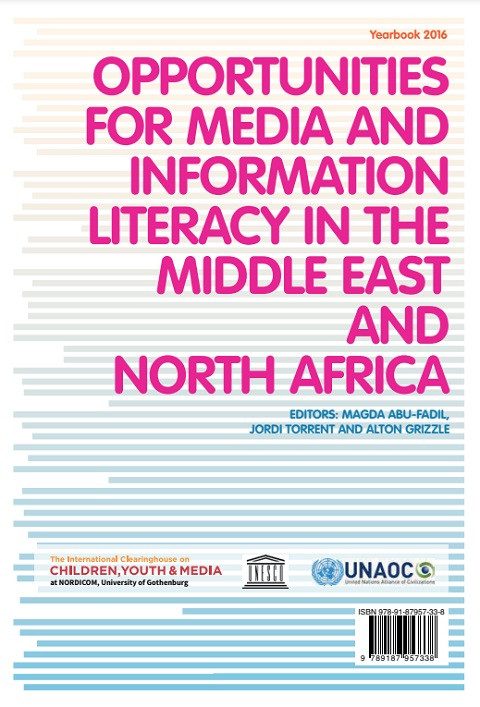 Opportunities for Media and Information Literacy in the Middle East and North Africa: Yearbook 2016 Year of publication: 2016 Author: Magda Abu-Fadil | Jordi Torrent | Alton Grizzle Corporate author: International Clearinghouse on Children, Youth and Media (Sweden) Opportunities for Media and Information Literacy in the Middle East and North Africa is the seventeenth Yearbook published by the Clearinghouse and fills a gap in the existing body of literature about the progress of media and information literacy work in different parts of the world. This book also helps educators in the Middle East and North Africa region looking for opportunities to bring to their classrooms elements of MIL education.
 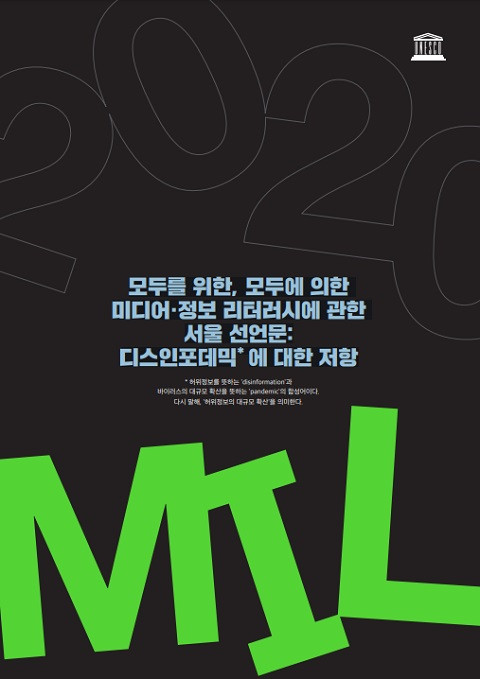 Seoul Declaration on Media and Information Literacy for Everyone and by Everyone: A Defence Against Disinfodemics Year of publication: 2020 Corporate author: UNESCO On the 10th anniversary of Global Media and Information Literacy Week, stakeholders from all over the world gave a resounding affirmation as to the urgency to strengthen people’s media and information literacy competencies. The number of celebratory events increased from one hundred events in 2019 to over three hundred events in 2020.The outcomes of the deliberations in the Feature Conference and Youth Agenda Forum have been immortalized in the Seoul Declaration on Media and Information Literacy for Everyone and by Everyone: A Defence against Disinfodemics. This Seoul Declaration benefited from a consultation with close to one thousand registered participants.Through the Seoul Declaration, partners and participants called for media and information literacy for all. They:Emphasized that “media and information literacy (MIL) is a core competency for addressing the disinfodemic, and that MIL also contributes to access to information, freedom of expression, protection of privacy, prevention of violent extremism, promotion of digital security and combating hate speech and inequality”.Recognized “UNESCO’s effort to promote a Global MIL Cities Framework to stimulate creative learning about MIL in city spaces and the involvement of non-traditional actors in promoting MIL”.Called on duty bearers at the national to city levels to “commit to advancing ‘Media and Information Literacy for Everyone and by Everyone’ through policy and resource allocation across all relevant areas, including education, health, elections, child protection, climate, gender equality, governance and regulation, to mention some examples”.Urged technological intermediaries to “play an accountable role, through institutionalized multi-stakeholder systems, as part of the social endeavor to tackle disinformation and to build communities that are media and information literate”.Requested UNESCO, in cooperation with other UN Agencies, to “maintain a focus on inclusion of disadvantaged groups in MIL engagements, and to continue to foster gender equality in relation to MIL.”
  Mapping of Media Information Literacy in Jordan Year of publication: 2018 Corporate author: UNESCO Amman This study has come out as results of conducting a regional mapping exercise in Jordan to identify organizations that operate in the field of MIL to:understand the general landscape of MIL in Jordan to pinpoint areas in which UNESCO should intervene,identify different stakeholders that operate in the field of MIL and understand the scope of their work in terms of activities, region and target,determine the areas of MIL that are considered priorities by organizations,identify the key skills covered by the different initiatives and the nature of these activities,determine the challenges organizations are facing in implementing MILThe results of the study revealed that organizations exhibit considerable enthusiasm for the field of MIL and consider the competencies that fall within its scope as paramount in building a society that is empowered to successfully navigate the increasingly complex media sphere and use this knowledge to further contribute to the societal, cultural, educational and scientific development.
  Hate Speech, Propaganda and Disinformation in Albanian Media Year of publication: 2020 Author: Ilda Londo Corporate author: South East European Network for Professionalization of Media (SEENPM) | Peace Institute | Albanian Media Institute The purpose of this paper is to highlight the main models and elements that media in Albania manifest regarding hate speech, propaganda and disinformation and also to identify ways of countering these narratives. The research focuses mainly on online media, as they are identified as the main carriers of disinformation and hate speech, with a few exceptions, but traditional media are also present.This publication was produced within project Resilience: Civil Society for Media Free of Hate and Disinformation,run by South East European Network for Professionalization of Media (SEENPM).Reasearch is available in English and Albanian.
 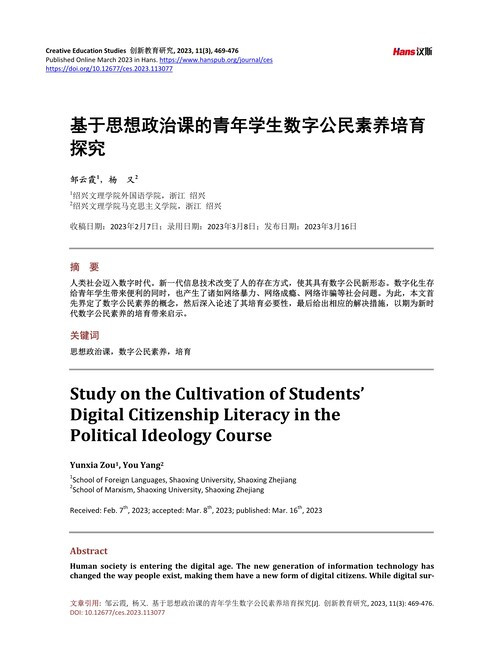 Study on the Cultivation of Students’ Digital Citizenship Literacy in the Political Ideology Course (Creative Education Studies; Vol.11, No.3) Year of publication: 2023 Author: 邹云霞 | 杨又 Human society is entering the digital age. The new generation of information technology has changed the way people exist, making them have a new form of digital citizens. While digital sur-vival brings convenience to youth students, it also brings about social problems such as cyberbullying, Internet addiction, online fraud and so on. Therefore, this paper first defines the concept of digital citizenship, then discusses the necessity of cultivating digital citizenship, and finally gives the corresponding measures to bring enlightenment for the cultivation of digital citizenship in the new era. 基于思想政治课的青年学生数字公民素养培育探究 (创新教育研究; Vol.11, No.3) Year of publication: 2023 Author: 邹云霞 | 杨又 人类社会迈入数字时代。新一代信息技术改变了人的存在方式,使其具有数字公民新形态。数字化生存给青年学生带来便利的同时,也产生了诸如网络暴力、网络成瘾、网络诈骗等社会问题。为此,本文首先界定了数字公民素养的概念,然后深入论述了其培育必要性,最后给出相应的解决措施,以期为新时代数字公民素养的培育带来启示。
 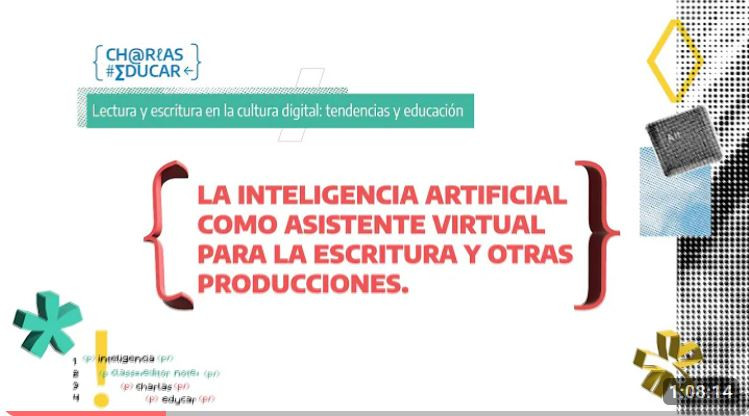 Reading and Writing in Digital Culture: Trends and Education Year of publication: 2023 Author: Carina Maguregui Corporate author: Educ.ar This video presents an expanded talk whose central theme or narrative thread, «Reading and writing in digital culture: trends and education», provides a contextual framework for three possible itineraries or expansions: a.) Artificial intelligence as a virtual assistant for writing and other productions; b) Ecosystem of screens and platforms, and c) The right to digital disconnection.Each expansion—itinerary or talk—is self-contained, has a presentation, development and closure. However, the three complement each other and, in some way, dialogue with each other. The most important thing is that they provide a much richer overview. Lectura y escritura en la cultura digital: tendencias y educación Year of publication: 2023 Author: Carina Maguregui Corporate author: Educ.ar Este video presenta una charla expandida cuyo tema central o hilo narrativo, «Lectura y escritura en la cultura digital: tendencias y educación», da marco contextual a tres itinerarios posibles o expansiones: a.) La inteligencia artificial como asistente virtual para la escritura y otras producciones; b) Ecosistema de pantallas y plataformas, y c) El derecho a la desconexión digital.Cada expansión —itinerario o charla— es autoconclusiva, tiene presentación, desarrollo y cierre. Sin embargo, las tres se complementan y, de algún modo, dialogan entre sí. Lo más importante es que brindan una visión de conjunto mucho más rica.
  Critical and Reflective Digital Literacy: Digital Citizenship Year of publication: 2024 Corporate author: Innovation Center Mineduc Coni helps her grandfather do the online shopping for the house and her grandfather helps her understand how apps work and become more aware of her privacy. Join Coni and her friends to discover what digital citizenship is and how they exercise it from home and school. This is the first of a series of four capsules that introduces us to the dimension of “Critical and reflective digital literacy”, which is understood as the acquisition of knowledge and the development of skills and attitudes to autonomously use, understand and evaluate digital technologies. Alfabetización digital crítica y reflexiva: Ciudadanía digital Year of publication: 2024 Corporate author: Innovation Center Mineduc Coni ayuda a su abuelo a hacer las compras de la casa en línea y su abuelo la ayuda a entender cómo funcionan las apps y a estar más consciente de su privacidad. Acompaña a Coni y a sus amigos y amigas a descubrir lo qué es la ciudadanía digital y cómo la ejercen desde su casa y colegio. Esta es la primera de una serie de cuatro cápsulas nos introduce en la dimensión de la “Alfabetización digital crítica y reflexiva”, la que se entiende como la adquisición de conocimientos y el desarrollo de habilidades y actitudes para usar, comprender y evaluar autónomamente las tecnologías digitales.