
Resources
Explore a wide range of valuable resources on GCED to deepen your understanding and enhance your research, advocacy, teaching, and learning.
51 Results found
 Kit de recursos para el trabajo con familias en ciudadanía digital Year of publication: 2024 Corporate author: Chile. Ministerio de Educación El rol de las familias y tutores es fundamental para ayudar a los niños, niñas y adolescentes a aprender a desenvolverse en el entorno digital aprovechando sus oportunidades y minimizando sus riesgos. Por esta razón, resulta importante que desde el espacio escolar se trabaje con las familias y tutores para realizar un acompañamiento en el entorno digital, resguardando la protección de los derechos de niños, niñas y adolescentes y favoreciendo su autonomía de forma progresiva, a través del desarrollo de la ciudadanía digital. Este kit está compuesto por: Cápsulas para apoderados/as que tratan temas relacionados con el entorno digital, Cartillas “Recomendaciones para trabajar con familias su rol mediador en el uso de dispositivos móviles” y un módulo de formación “Ciudadanía Digital”.
 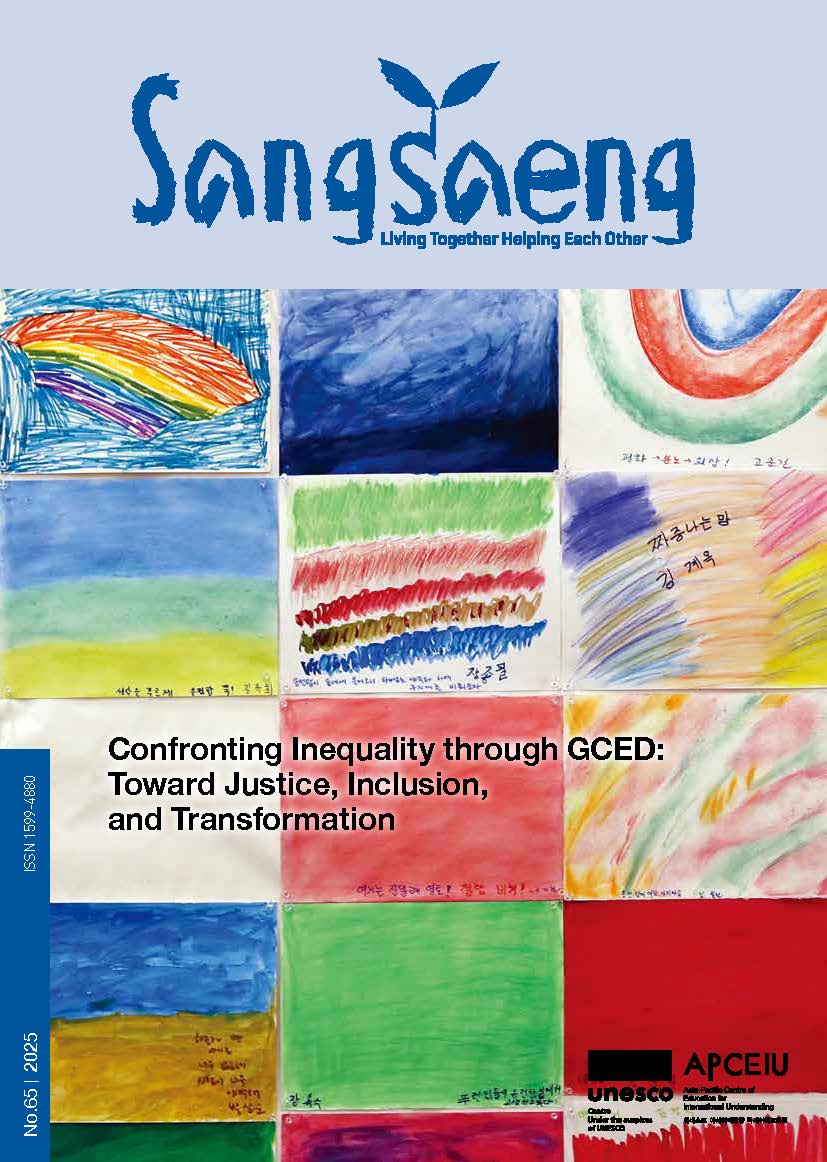 Confronting Inequality through GCED: Toward Justice, Inclusion, and Transformation (SangSaeng; No.65, 2025) Year of publication: 2025 Corporate author: APCEIU The 62nd issue of SangSaeng has been published with the theme of “Ethical AI and GCED: Exploring the Expanding Domain of Artificial Intelligence.”AI has never been as pervasive and influential as it is in today’s rapidly changing world. Despite the convenience and cutting-edge technology AI has offered us, it has the potential to pose a threat to humanity. This is where ethics for AI should come forward. In this regard, this issue will lead readers to the alarming side of AI as well as its future developments, focusing on the importance of GCED and AI ethics in tackling any potential problems.Contents03 Editor's Note 04 Special ColumnEmbracing Change to Cultivate Success — Integrating Global Citizenship Education into Tertiary Education / Dendev Badarch08 FOCUS Ethical AI and GCED: Exploring the Expanding Domain of Artificial IntelligenceRole of Ethics in the Era of AI — Protecting and Guiding AI Processes for Humanity to Flourish / Emma Ruttkamp-BloemPayingAttention to AI Ethics — An Avenue for a New Competitive Edge in Business / Myoungshin KimDriving Innovative Education — Balancing Future Possibilities and Ethical Concerns: How GCED Can be Used to Address AI Issues / Angelique Southern 20 Special ReportEmpowering a Climate Generation — From Classrooms to Climate Frontlines : The Transformative Role of Education highlighted at COP28 / Djian Sadadou 22 Best PracticesNavigating an AI Future — Ethical AI and the Importance of Critical Thought / Hannah GrantGLACE Brings the World to a City — Empowering Youth as Global Citizens: Lessons from Navotas City’s Project GLAC / Marco D. MedurandaLowering Eco-Anxiety — Teaching Climate Change Through Media and Information Literacy / Laetitia Legrand 33 GCED YOUTH NETWORKNew Wave of Youth Advocacy — Role of AI in Youth Advocacy and its Ethical Implications to Global Citizenship / Oshan M. Gunathilake and Diego Manrique36 Understanding the Asia Pacific RegionDiscovering Auroville — Where Boundaries Fade, Nature Thrives, and Global Minds Unite / Akanksha Arya 39 Peace in My MemoryHappiness without Violence — Mindanao Peace Forum Celebrates Building a Culture of Peace / Ludivina Borja-DekitPeace Scholar Passes Away Amidst Turbulent Times / Kwang-Hyun KIM 45 Story TimeThe Right Footing — My Life Has Purpose Thanks to Football / Hajar Abulfazl 48 LetterShared Challenges of Global Citizens / Natsuki Nagata 50 APCEIU in Action
 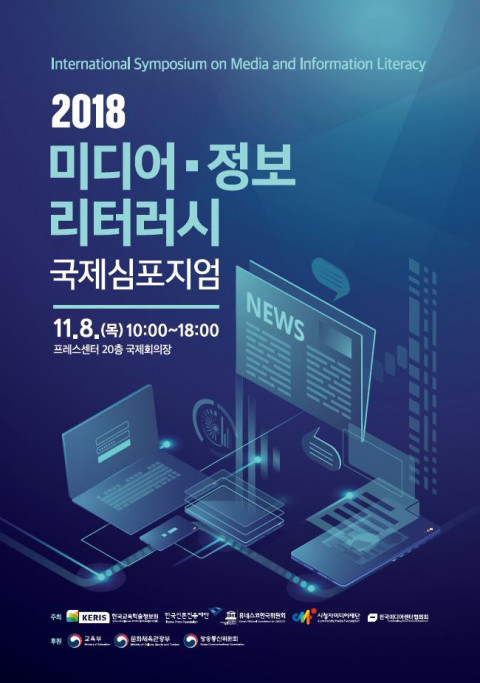 2018 International Symposium on Media and Information Literacy Year of publication: 2018 Corporate author: Korean National Commission for UNESCO | Community Media Foundation | National Association of Community Mediacenters | Korea Education and Research Information Service (KERIS) | Korea Press Foundation (KPF) This book is a conference report of 2018 International Symposium on Media and Information Literacy. The Symposium on MIL is hosted by the Korea Press Foundation (KPF), the Korea Education and Research Information Service (KERIS), and the Korean National Commission for UNESCO (KNCU), in cooperation with the Community Media Foundation, the National Association of Community Mediacenters. 2018 미디어·정보리터러시: 국제심포지엄 자료집 Year of publication: 2018 Corporate author: 유네스코한국위원회 | Community Media Foundation | National Association of Community Mediacenters | 한국교육학술정보원 | 한국언론진흥재단 이 책은 유네스코한국위원회, 한국언론진흥재단, 한국교육학술정보원, 시청자미디어재단, 전국미디어센터협의회가 공동주최하고 교육부, 문화체육관광부, 방송통신위원회가 후원한 「2018 미디어·정보리터러시: 국제심포지엄」의 자료집으로 기조연설 및 주제별 발표내용을 담고 있다.
 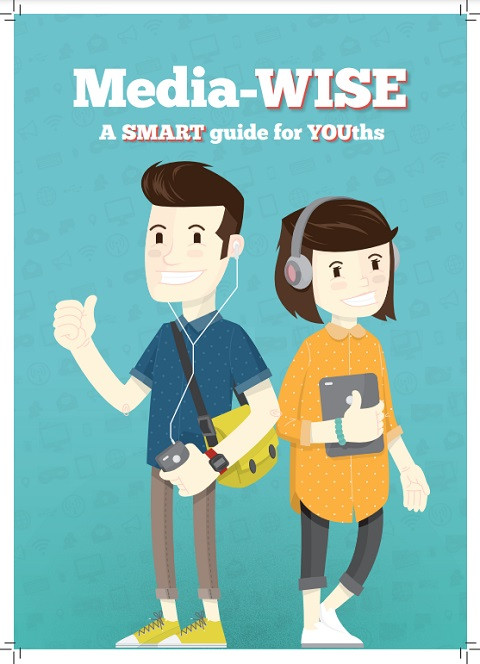 Media-Wise: A Smart Guide for Youths Year of publication: 2015 Corporate author: Media Literacy Council (MLC) Even as a digital native, you might need some help figuring out the safest and kindest route through the digital world - this guide will give you the tips and advice you need to make that journey.
  2020 미디어교육 우수사례 공모전 수상작 모음집 Year of publication: 2021 Corporate author: 시청자미디어재단 「2020 미디어 교육 우수사례 공모전」은 전국 미디어교육의 다양한 사례 발굴 및 격려를 통해 미디어교육에 대한 인식을 제고하고, 건강한 미디어 문화를 확산하기 위해 마련한 행사입니다. 지난해 12월 4일 본선심사를 통해 선발된 최종 10개의 수상작을 첨부로 공유드리니, 학교 및 사회미디어교육의 다양한 사례 분석에 참고하시기 바랍니다.※ 수상작 모음집은 분량 관계상 공모전 제출서류 및 발표자료 일부를 발췌하여 제작하였으며, 해당 내용과 사진은 시청자미디어재단의 동의없이 무단으로 사용할 수 없음을 알려드립니다.
 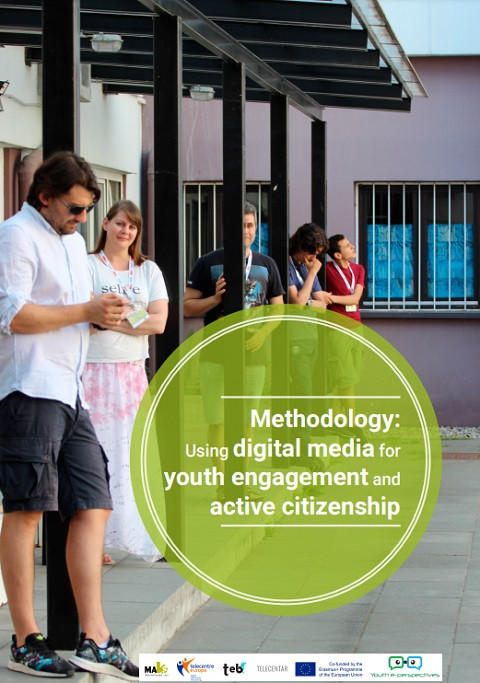 Methodology: Using Digital Media for Youth Engagement and Active Citizenship Year of publication: 2017 Corporate author: Yep4Europe Consortium The training methodology “Find-Tell-Act” is the main output of the Youth e-Perspectives on Migration project. The project aimed at empowering young people to address sensitive contemporary societal issues (in our case migration and the refugee crisis) and at the same time to improve their digital and media skills. In this way, digital and technical skills developed in parallel with social values like active citizenship.For this purpose, we developed and implemented this methodology for a non-formal training course based on blended learning. The main part of the methodology is implemented as face-to-face activities. It includes four interrelated digital media modules (or, as we call them, workshops):Digital JournalismDigital PhotographyDigital StorytellingOnline Platforms,in which refugee crisis was our main theme. The methodology can be applied to any other “hot” societal topic that young people are faced with.Learn more about the project on the project website.
  Snapshot 2019: The State of Media Literacy Education in the U.S. Year of publication: 2019 Author: Sherri Hope Culver | Theresa Redmond Corporate author: National Association for Media Literacy Education (NAMLE) Since 2015, NAMLE’s membership has grown from about 300 members to over 5,000 members, signifying a remarkable expansion of interest in and demand for media literacy education. Despite general awareness of the persuasive nature and pervasive inclusion of media in our lives, media literacy education has not been formerly prioritized in U.S. education efforts. Yet, several recent trends indicating progress and development are important to mention:– Growth– Inclusion in Standards– Legislative Involvement– AwarenessDespite broad agreement about the need to ensure that people of all ages are equipped to understand and negotiate the influence of media in their lives, the United States does not devote any significant government effort, nor funding, for media literacy education research, training, or implementation. While funding initiatives have benefits and drawbacks, decades of grassroots advocacy has not been enough to establish media literacy education as a foundational or core dimension of schooling.This SNAPSHOT is a step towards that goal.
 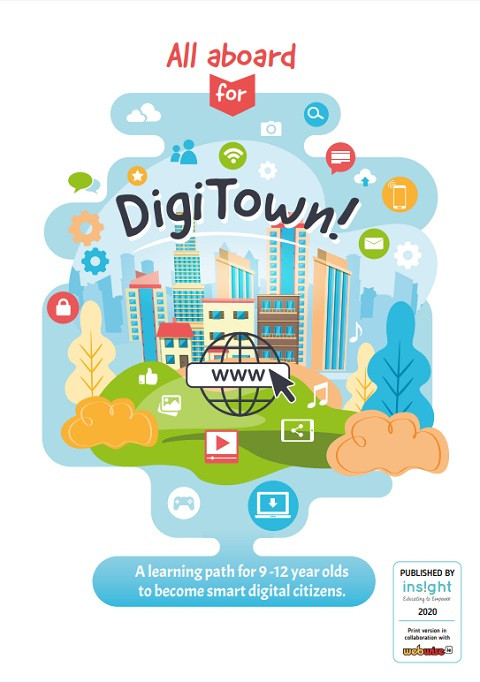 All Aboard for DigiTown: A Learning Path for 9 -12 Year Olds to Become Smart Digital Citizens Year of publication: 2020 Author: Janice Richardson | Veronica Samara Corporate author: Webwise “All Aboard for DigiTown!”is a fun, entertaining learning journey for young digital citizens through 10 digital themes centred on ‘Being online’, ‘Well-being online’ and ‘Rights online’. These are based on the Council of Europe’s successful Digital Citizenship Education model. As children progress through the stories, exercises and individual and group activities in the book, they will learn about using digital technology wisely, behaving respectfully and responsibly, and cooperating meaningfully online and offline. They end their journey with a backpack of badges to remind them of what being a digital citizen really means. A final section provides solutions, and offers teachers and parents a detailed overview of the competences their children are developing in order to better guide them on their path towards digital citizenship.The book can be used both in class, at home and in distance learning. It is adapted to the learning needs of children in the final years of elementary school (age around 9-12 years).
  Internet Literacy Handbook: Supporting Users in the Online World Year of publication: 2017 Author: Janice Richardson | Elizabeth Milovidov | Martin Schmalzried Corporate author: Council of Europe Since the first edition of the Internet Literacy Handbook was issued in 2003 the world of the Internet has changed tremendously. The number of Internet users has risen; users are increasingly younger, trends in how people use the Internet and what they are looking for evolve, and new pitfalls in, for example, personal security arise seemingly overnight.This new edition takes into account the myriad changes, although the object of the Handbook still remains, namely to offer families, educators and policy-makers sufficient technical know-how to allow them to navigate, with young people, through communication technology. The new edition also expands the scope of the Fact sheets anchoring previously “new” concepts of digital citizenship and digital parenting. This edition includes 26 Fact sheets arranged under 6 thematic headings including a heading specifically dedicated to “Looking Forward” towards the future of the Internet. The Handbook is designed to be easy to use and helpful, as illustrated by the Fact sheet entitled “Finding quality information on the Web”. It is also available online, where it can be downloaded either in its full format or per individual factsheet.