
Resources
Explore a wide range of valuable resources on GCED to deepen your understanding and enhance your research, advocacy, teaching, and learning.
51 Results found
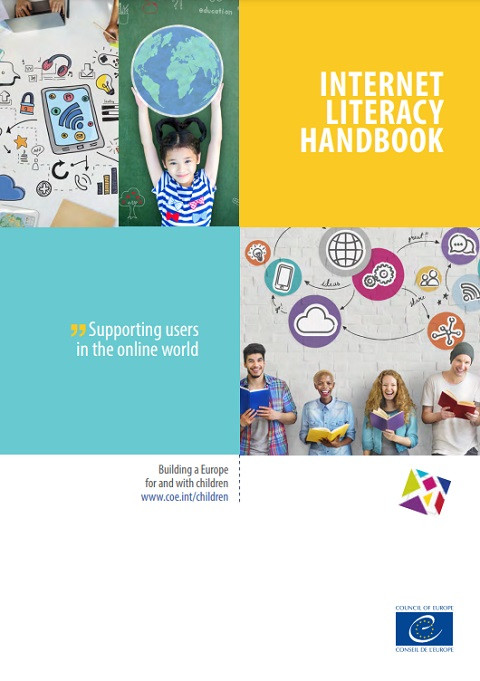 Manuel de maîtrise de l'internet: Accompagner les utilisateurs dans le monde en ligne Year of publication: 2017 Author: Janice Richardson | Elizabeth Milovidov | Martin Schmalzried Corporate author: Conseil de l'Europe Depuis la publication de la première édition du Manuel de maîtrise d’Internet en 2003, le monde en ligne a beaucoup changé. Les Internautes sont de plus en plus jeunes, leur nombre a augmenté, leurs usages d’Internet et l’objet de leurs recherches évoluent et de nouveaux dangers, par exemple en matière de sécurité individuelle, apparaissent chaque jour. Cette nouvelle édition tient compte de ces nombreux changements mais conserve son objectif, qui est de donner aux familles, aux enseignants et aux décideurs politiques des connaissances techniques suffisantes pour pouvoir naviguer, avec les jeunes, dans le monde des technologies de la communication. La nouvelle édition étend également le contenu des Fiches d’information aux concepts qui étaient alors «nouveaux» de citoyenneté numérique et de parentalité numérique, ce qui porte le nombre de fiches à 26, organisées en six thématiques dont l’une est spécialement consacrée à l’avenir d’Internet. Le manuel se veut convivial et pratique, comme l’illustre la fiche intitulée « Trouver de l’information de qualité sur le web ». Il est également accessible en ligne où il peut être téléchargé dans son intégralité ou fiche par fiche.
 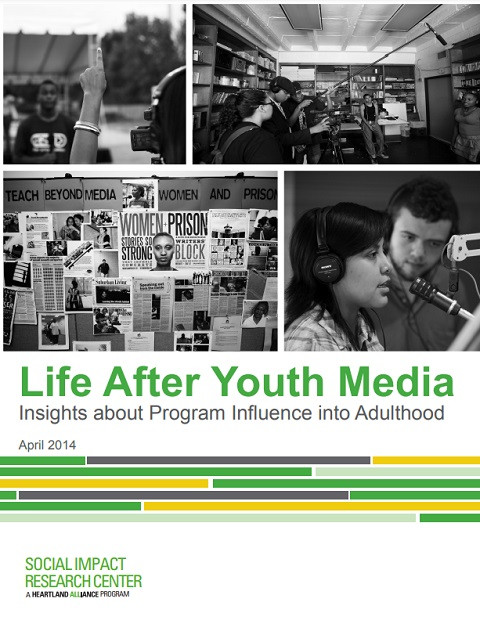 Life After Youth Media: Insights About Program Influence Into Adulthood Year of publication: 2014 Author: Suniya Farooqui | Amy Terpstra Corporate author: Social IMPACT Research Center * Do the skills, attitudes, and behaviors imparted in youth programs "stick" into adulthood? * If they do, how do they manifest in career, education, and life decisions? * How do the skills, attitudes, and behaviors that youth programs try to impart differ based on program intensity or levels of engagement? * Do these elements look different for people who went through youth media programs versus people who went through other types of youth programs? These are common questions that youth program providers, funders, public officials, and other leading thinkers regularly wrestle with. This report tells the story of a group in Chicago committed to providing quality youth media programming in the city and how, through a collective evaluation, they were able to begin to answer these critical questions.
 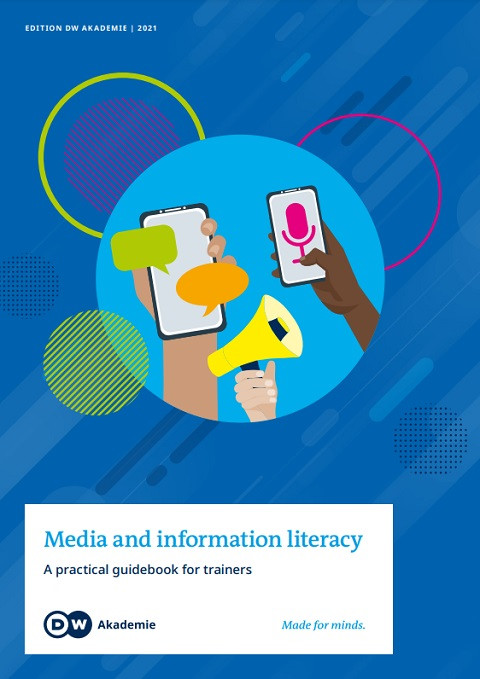 Media and Information Literacy: A Practical Guidebook for Trainers Year of publication: 2021 Author: Sylvia Braesel | Thorsten Karg Corporate author: DW Akademie Literacy is the ability to read and write. Media and information literacy (MIL) is the ability to understand how the media work and can be used to participate in public debate. MIL includes social media like Facebook, as well as traditional media like books, newspapers, radio and television.Media and information literacy - A practical guidebook for trainers provides MIL trainers with background information, training ideas, methods and worksheets. The book also provides sample training schedules to help you determine the length of time needed to teach individual aspects of media and information literacy.Download the Media and information literacy guidebook for trainers as well as the worksheets and guidelines.DW Akademie defines MIL as a composite of five core competencies:Access: The ability to find and access relevant media and information sources.Analyze: The ability to evaluate the credibility, accuracy and objectivity of media content, for example a news story.Create: The ability to create and produce media and information content, such as photos, texts, or videos.Reflect: The ability to think critically about media habits, experiences, trends, and technologies, and how they impact individuals and society.Act: The ability to use media to achieve specific goals, for example launching a social media campaign about health.Read more about DW Akademie's approach to Media and Information Literacy here.
 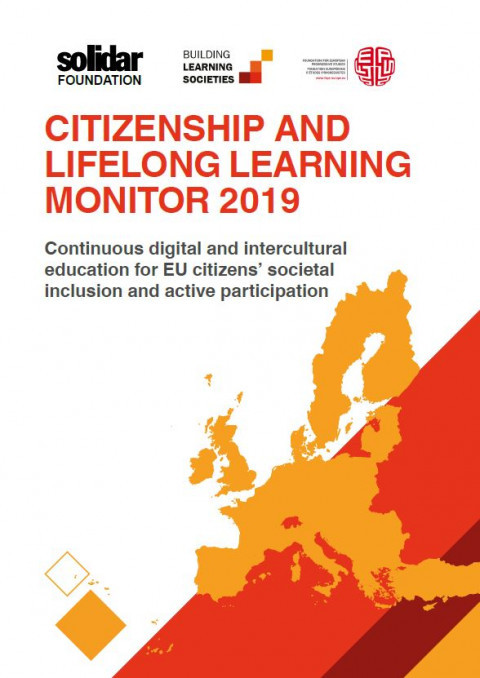 Citizenship and Lifelong Learning Monitor 2019: Continuous Digital and Intercultural Education for EU Citizens’ Societal Inclusion and Active Participation Year of publication: 2020 Author: Andrei Frank Corporate author: SOLIDAR Foundation | Foundation for European Progressive Studies (FEPS) The Citizenship and Lifelong Learning Monitor 2019 is a research report jointly released by SOLIDAR Foundation and FEPS, on the topic of policy developments in the field of attainment of skills, through lifelong learning, for active participation in society.The skills on which it focuses are:digital skillscivic competences andintercultural education competences.The document is composed of an analysis of the policies on the topic, and a presentation of best practices, coming from SOLIDAR Foundation member organisations.It culminates with recommendations, stemming from a comparative analysis of the 8 country reports conducted (featuring Austria, Croatia, Denmark, Germany, Italy, Serbia, Spain, and the UK as investigated countries).The online Conference “Civic responsibilities online and offline: Lifelong learning for digital and traditional citizenship education“, held together with FEPS, presented and discussed the outcomes of the Citizenship & Lifelong Learning Monitor.
  대학의 미디어 리터러시 교육 활성화 방안 Year of publication: 2020 Author: 김경희 | 정윤경 | 오연주 Corporate author: 한국언론진흥재단 본 연구는 한국언론진흥재단에서 공모연구로 수행한 지정주제 연구보고서로 국내외 대학의 미디어 리터러시 교육 및 관련 사업 현황과 우수 사례의 분석을 토대로 대학 내 미디어 리터러시 교육의 활성화 방안을 마련하고 대학이 미디어 리터러시 교육의 지역거점으로 거듭나기 위한 정책적 제언을 도출하는 것을 목표로 한다. 1. 서론2. 국내 대학의 미디어 리터러시 교육 현황3. 해외 대학의 미디어 리터러시 교육 우수 사례 분석4. 국내 대학의 미디어 리터러시 교육 우수 사례 분석5. 대학 미디어 리터러시 교육 활성화 및 대학 거점화 방안6. 결론
  Do You Speak MIL?: Media and Information Literacy; A Handbook for Jordanian CSOs Year of publication: 2020 Author: Milica Pesic | Lucien Michael Steinberg | Anoud Al-Zou’bi Corporate author: Media Diversity Institute | UNESCO | UN. Office of Counter-Terrorism (UNOCT) This publication, “Do You Speak MIL?: Media and Information Literacy – A Handbook for Jordanian CSOs,” provides civil society organizations (CSOs) with practical tools to integrate Media and Information Literacy (MIL) into their training programs. Each chapter includes a technical introduction, thought-provoking questions, and real-life examples to guide trainers. Published in 2020, this handbook is a valuable resource for promoting MIL within Arab countries, intending to empower communities to navigate the evolving media landscape.
  Citizenship in the Digital Age: The Model of the Kingdom of Bahrain Year of publication: 2017 Author: ندى علي حسن بن شمس Corporate author: معهد البحرين للتنمية السياسية The research answers the following main question: What is the effectiveness of a proposed program based on the global network for developing citizenship values for students of the University of Bahrain in light of the requirements of the digital age? The main question of the research is divided into the following sub-questions: 1- What is the list of citizenship values required for a student at the University of Bahrain in light of the requirements of the digital age? 2- What is the image of the proposed program based on the global network (with dialogue activities - without the dialogue activities) to develop citizenship values for students of the University of Bahrain in light of the requirements of the digital age? 3 - What is the effectiveness of the proposed program based on the global network in its two forms (with dialogue activities - without the dialogue activities) to develop Citizenship values for a University of Bahrain student in light of the requirements of the digital age?
 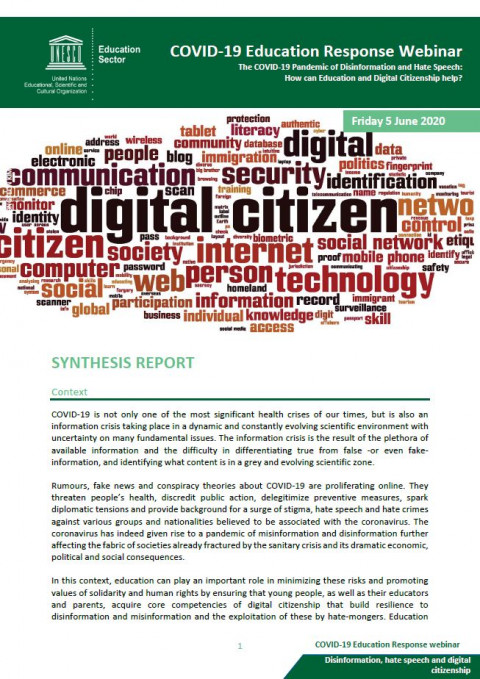 The COVID-19 Pandemic of Disinformation and Hate Speech: How can Education and Digital Citizenship Help? ; Synthesis Report Year of publication: 2020 Corporate author: UNESCO COVID-19 is not only one of the most significant health crises of our times, but is also an information crisis taking place in a dynamic and constantly evolving scientific environment with uncertainty on many fundamental issues. The information crisis is the result of the plethora of available information and the difficulty in differentiating true from false -or even fake- information, and identifying what content is in a grey and evolving scientific zone.In this context, education can play an important role in minimizing these risks and promoting values of solidarity and human rights by ensuring that young people, as well as their educators and parents, acquire core competencies of digital citizenship that build resilience to disinformation and misinformation and the exploitation of these by hate-mongers. Education can also help young people engage in the online environment in a safe, sensitive, critical, ethical and accountable way as well as encourage them to play a role in pioneering educational initiatives that contribute to promoting digital citizenship.
 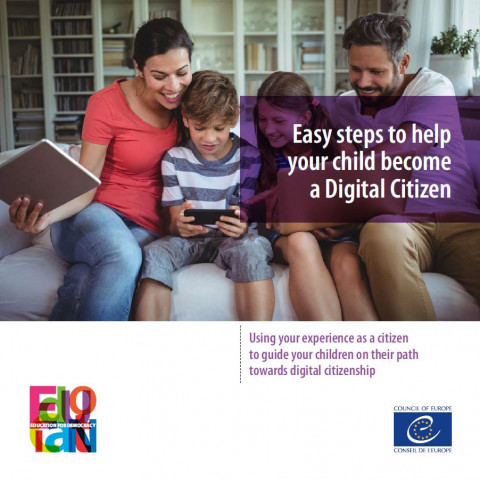 Easy Steps to Help Your Child Become a Digital Citizen Year of publication: 2020 Author: Janice Richardson | Veronica Samara Corporate author: Council of Europe A guide to help you use your experience as a citizen to guide your children on their path towards digital citizenship.Young people today inhabit a world that has been transformed by digital technologies, effortlessly enabling connectedness through social media and access to vast quantities of information. Making sense of this hyper rich information and engaging effectively and responsibly poses a whole set of new challenges for educators as they seek to prepare young people as citizens, exercising their rights and participating effectively in the affairs of the community.Parents, and “non-tech” grandparents too, can help children become digital citizens. In this guide, we explain some of the easy steps to follow, to help children master what it takes to act responsibly and respectfully online. Étapes simples pour aider votre enfant à devenir un citoyen numérique Year of publication: 2020 Author: Janice Richardson | Veronica Samara Corporate author: Conseil de l'Europe Un guide pour vous aider à utiliser votre expérience en tant que citoyen pour guider vos enfants sur la voie de la citoyenneté numérique.Les jeunes habitent aujourd'hui un monde qui a été transformé par des technologies numériques, permettant la connexion sans effort via les médias sociaux et l'accès à de vastes quantités d'informations. Etre capable de décortiquer cette information hyper riche et s’engager de manière efficace et responsable pose toute une série de nouveaux défis pour les éducateurs dans la mesure où ils cherchent à préparer les jeunes en tant que citoyens, à exercer leurs droits et à participer efficacement aux affaires de la communauté.Les parents et les grands-parents (même les profanes en technologie), peuvent aider les enfants à devenir des citoyens numériques. Dans ce guide, nous présentons quelques étapes faciles à suivre afin d’aider les enfants à maîtriser l’essentiel pour agir de façon responsable et respectueuse en ligne.