
Resources
Explore a wide range of valuable resources on GCED to deepen your understanding and enhance your research, advocacy, teaching, and learning.
6 Results found
 Asia-Pacific Digital Transformation Report 2024: Digital Innovation for Smarter Climate Action Year of publication: 2024 Corporate author: UN. Economic and Social Commission for Asia and the Pacific (UN. ESCAP) In Asia and the Pacific, the climate crisis intersects with digital transformations through a complex mix of challenges and opportunities, creating a series of vicious but also potentially virtuous cycles. The Asia-Pacific Digital Transformation Report 2024 considers how digital transformations will structurally and irreversibly affect the trajectory of climate change. It presents a digital-growth-climate nexus to better understand the diverse and dynamic picture and considers ways in which the region can follow the most positive trajectory to avert a climate catastrophe. The Report showcases good practices and country examples of digital applications in addressing climate change, in terms of mitigation and adaptation. These can involve the use of artificial intelligence, the Internet of Things, big data, digital twins, geospatial technologies and others, which have been employed in infrastructure, government, mobility, industry and trade, digital data centres, disaster risk reduction, agriculture and biodiversity ecosystems. The Report then explores key drivers of digital transformation for climate change and outlines three future scenarios. It concludes with the key findings of the Report and proposes policy actions aligned with the five actors of the Digital Transformation Index Framework.
  Leveraging Digitalization for Productivity and Decent Employment: Asia-Pacific Countries with Special Needs Development Report 2024 Year of publication: 2024 Corporate author: UN. Economic and Social Commission for Asia and the Pacific (UN. ESCAP) The Asia-Pacific Countries with Special Needs Development Report is a recurrent ESCAP annual publication that discusses issues of interest for Asia-Pacific least developed countries (LDCs), landlocked developing countries (LLDCs) and small island developing States (SIDS), collectively referred to as countries with special needs (CSN). The Asia-Pacific Countries with Special Needs Development Report 2023: Strengthening Regional Cooperation for Seamless and Sustainable Connectivity examines how regional cooperation on seamless and sustainable connectivity can facilitate a long-term transformation towards a net zero carbon emissions future. Recognising ongoing efforts and existing initiatives and considering the large financing gaps in the countries in special situations, the Report underscores the need to seek synergies between transport, energy, and digital connectivity initiatives in the region.
 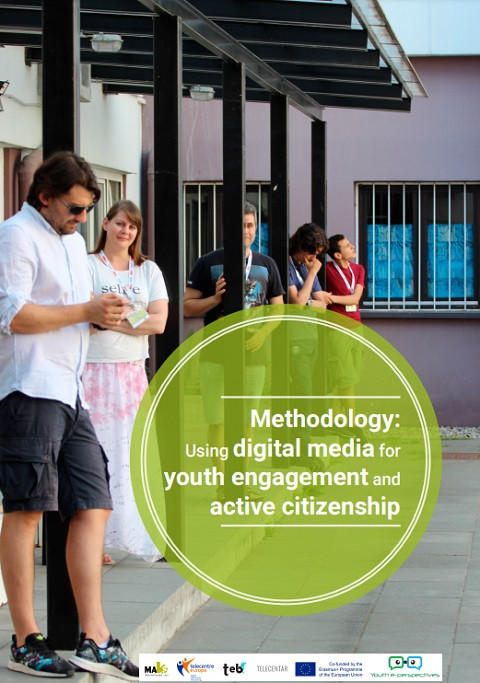 Methodology: Using Digital Media for Youth Engagement and Active Citizenship Year of publication: 2017 Corporate author: Yep4Europe Consortium The training methodology “Find-Tell-Act” is the main output of the Youth e-Perspectives on Migration project. The project aimed at empowering young people to address sensitive contemporary societal issues (in our case migration and the refugee crisis) and at the same time to improve their digital and media skills. In this way, digital and technical skills developed in parallel with social values like active citizenship.For this purpose, we developed and implemented this methodology for a non-formal training course based on blended learning. The main part of the methodology is implemented as face-to-face activities. It includes four interrelated digital media modules (or, as we call them, workshops):Digital JournalismDigital PhotographyDigital StorytellingOnline Platforms,in which refugee crisis was our main theme. The methodology can be applied to any other “hot” societal topic that young people are faced with.Learn more about the project on the project website.
 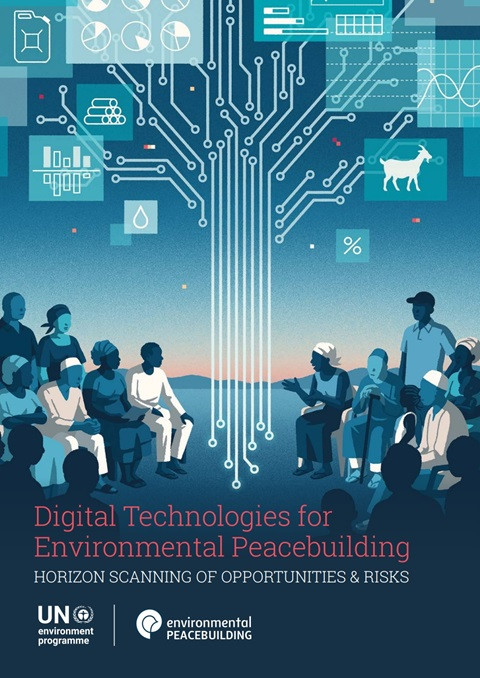 Digital Technologies for Environmental Peacebuilding: Horizon Scanning of Opportunities and Risks Year of publication: 2024 Corporate author: United Nations Environment Programme (UNEP) This report specifically delves into how digital technologies can be harnessed to manage environmental and natural resource risks that contribute to insecurity and social conflict, as well as the opportunities they present for peacebuilding, cooperation, and social cohesion. It examines relevant use cases spanning the peace and security continuum and concludes with a set of important policy and governance recommendations. The report is designed to inform and contribute to significant upcoming frameworks addressing digital technologies, including the Summit of the Future and the Global Digital Compact.
 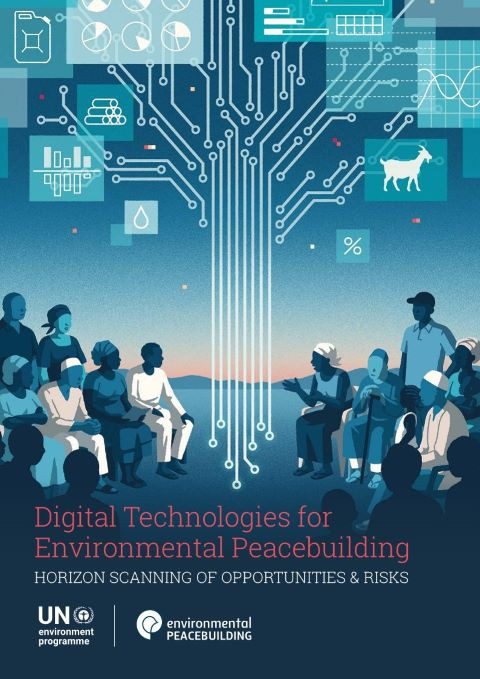 Digital Technologies for Environmental Peacebuilding : Horizon Scanning of Opportunities and Risks Year of publication: 2024 Corporate author: United Nations Environment Programme (UNEP) This report specifically delves into how digital technologies can be harnessed to manage environmental and natural resource risks that contribute to insecurity and social conflict, as well as the opportunities they present for peacebuilding, cooperation, and social cohesion. It examines relevant use cases spanning the peace and security continuum and concludes with a set of important policy and governance recommendations. The report is designed to inform and contribute to significant upcoming frameworks addressing digital technologies, including the Summit of the Future and the Global Digital Compact.
  Developing Global Guidance for Child Rights Impact Assessments in Relation to the Digital Environment: Summary of Initial Project Findings Year of publication: 2024 Corporate author: United Nations Development Programme (UNDP) | German Institute of Development and Sustainability (IDOS) The age of technology and the Internet have brought tremendous benefits, including for children. However, the spread of digital technologies also comes with a broad spectrum of risks and harms to which children can be particularly vulnerable. Under the UN Guiding Principles on Business and Human Rights and the Children’s Rights and Business Principles, businesses have a responsibility to identify, assess, and address relevant human rights risks, including risks to children’s rights. With respect to the digital environment, a rapidly evolving landscape and the emergence of new technologies has changed the nature and severity of actual and potential child rights risks relating to business activities. In response, UNICEF has initiated a project to assess the current child rights impact assessment (CRIA) landscape in relation to digital business activities and develop new guidance to support robust implementation going forward. A summary of initial project findings is now available here. Further project outputs including the updated guidance (currently under development) are anticipated in late 2024.