
Resources
Explore a wide range of valuable resources on GCED to deepen your understanding and enhance your research, advocacy, teaching, and learning.
17 Results found
 For a Transnational History of Disability: Argentina, Brazil and Spain 20th Century Year of publication: 2022 Author: Gildas Bregain Corporate author: Latin American Council of Social Sciences (CLACSO) Publications on disability have been mostly limited to health, rehabilitation and education editorials. On the other hand, this new Editorial Series, open to social movements, platforms of struggle, academic groups, collaboration networks, public policy makers, citizens of all of our Latin America and the Caribbean and other latitudes of the global South, combines a multiplicity of edges, perspectives and approaches. This volume comes to occupy a vacant place in critical studies on disability in Latin America, which is to record the struggles for the rights of these people in our region. Introducing a historical problematization in this regard not only has an epistemological and political relevance, but also makes a contribution to the present and to contemporary disability policies. Para una historia transnacional de la discapacidad: Argentina, Brasil y España Siglo XX Year of publication: 2022 Author: Gildas Bregain Corporate author: Latin American Council of Social Sciences (CLACSO) Las publicaciones sobre discapacidad han estado circunscriptas mayoritariamente a las editoriales de salud, rehabilitación y educación. En cambio, esta nueva Serie Editorial, abierta a los movimientos sociales, a las plataformas de lucha, a los grupos académicos, a las redes de colaboración, a los hacedores de políticas públicas, a los ciudadanos y ciudadanas de toda nuestra América Latina y el Caribe y otras latitudes del Sur global, conjuga una multiplicidad de aristas, perspectivas y enfoques. El presente volumen viene a ocupar un lugar de vacancia en los estudios críticos sobre discapacidad en América Latina, que es el historiar las luchas por los derechos de dichas personas en nuestra región. Introducir una problematización histórica al respecto no solo posee una relevancia espistemológica y política, sino que también realiza una contribución al presente y a las políticas contemporáneas de discapacidad.
  Disability Discrimination in the Digital Realm: How the ICRPD Applies to Artificial Intelligence Decision-Making Processes and Helps in Determining the State of International Human Rights Law (Human Rights Law Reivew; Volume. 23, Issue. 3) Year of publication: 2023 Author: Tetyana Krupiy | Martin Scheinin Scholars have identified challenges to protecting individuals from discrimination in contexts where organisations deploy artificial intelligence decision-making processes. While scholarship on ‘digital discrimination’ is growing, scholars have paid less attention to the impact of the use of artificial intelligence decision-making processes on persons with disabilities. This article posits that while the use of artificial intelligence technology can be beneficial for some purposes, its deployment can also construct a disability. The article demonstrates that the Convention on the Rights of Persons with Disabilities can be interpreted in a manner that confers a wide variety of human rights on persons with disabilities in the context when entities deploy artificial intelligence decision-making processes. The article proposes a test for digital discrimination based on disability and shows how it can be incorporated into the treaty through legal interpretation. Thereafter, it moves to developing an analogous general test for digital discrimination under international human rights law, applicable beyond a catalogue of protected characteristics.
  طرق تدريس ذوي الاحتياجات الخاصة " تخصص علوم" Year of publication: 2010 Author: Marwa El-Baz Corporate author: Port Said University هذا الملف يحتوي على المادة العلمية المستخدمة في تدريس مقرر طرق تدريس ذوي الاحتياجات الخاصة " تخصص علوم". تم تقسيم المقرر على مواضيع متعددة تعرف المتعلم بذوي الاحتياجات الخاصة وطرق تدريسهم. Methods of Teaching People with Special Needs "Specialization in Science" Year of publication: 2010 Author: Marwa El-Baz Corporate author: Port Said University This report contains the scientific material used in the teaching methodology for people with special needs course "Specialization Science". The course was divided into multiple topics that familiarize the learner with people with special needs and methods of teaching them.
 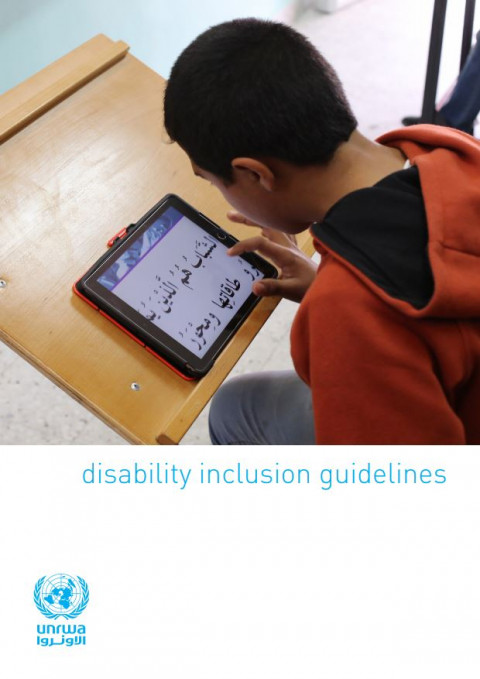 دليل دمج الإعاقة Year of publication: 2017 Corporate author: United Nations Relief and Works Agency for Palestine Refugees in the Near East (UNRWA) يوفر هذا الدليل الارشادي معلومات عن النهج الذي يوصى باتباعه في دمج الإعاقة داخل األونروا. والغرض من هذا الدليل هو: بناء فهم ثابت على نطاق الوكالة ككل لأهم مبادئ وممارسات دمج الاعاقة، وإسداء المشورة بشأن كيفية تعميم دمج الاعاقة في برامج األونروا وخدماتها. Disability Inclusion Guidelines Year of publication: 2017 Corporate author: United Nations Relief and Works Agency for Palestine Refugees in the Near East (UNRWA) These Guidelines provide information about the recommended approach to disability inclusion within UNRWA. While this document does not provide tools for identifying the particular service provision needs of persons with disabilities in a given sector or context, staff can apply the principles and recommendations in this document to develop specific project- and programme- level actions to further enhance the inclusion of persons with disabilities in UNRWA programmes and services.
  اتجاهات طلبة جامعة السلطان قابوس نحو دمج اقرانهم ذوي الإعاقة Year of publication: 2015 Author: Ibrahim Al Qaryouti | Jokha Al Shukaili Corporate author: Sultan Qaboos University هدفت الدراسة إلى التعرف على اتجاهات طلبة جامعة السلطان قابوس نحو دمج أقرانهم ذوي الإعاقة. ولتحقيق ذلك، استخدم الباحثان مقياس اتجاهات الطلبة نحو دمج أقرانهم ذوي الإعاقة، وتكون المقياس بصورته النهائية من 34 فقرة بعد التحقق من صدقه وثباته، مقسمة على ثلاثة أبعاد (العاطفي، المعرفي، السلوكي). بينت النتائج عدم وجود فروق ذوات دلالة إحصائية بين طلبة الكليات العلمية والإنسانية، في اتجاهاتهم نحو دمج أقرانهم ذوي الإعاقة؛ وبينت النتائج أيضاً أن هناك فروقاً ذوات دلالة إحصائية في الاتجاهات نمو دمج الطلبة ذوي الإعاقة بين الطلبة الذكور والإناث، ولصالح الإناث على بُعد الأداة الثاني، وعلى المجموع الكلي؛ كما بينت نتائج الدراسة أن هناك فروقاً في الاتجاهات نحو دمج الطلبة ذوي الإعاقة لدى طلبة الكليات العلمية الذكور والإناث ولصالح الإناث، وعلى جميع أبعاد الأداة. في حين لم يظهر وجود فروق ذوات دلالة إحصائية في الاتجاهات بين طلبة الكليات الإنسانية الذكور والإناث على أبعاد الأداة باستثناء البعد السلوكي، حيث كانت اتجاهات الطالبات أفضل من اتجاهات الطلاب الذكور. كما أظهرت النتائج عدم وجود فروق ذوات دلالة إحصائية بين الطلبة في المستويات الدراسية الخمسة، وكذلك للتفاعل بين النوع والمستوى الدراسي. وفي ضوء هذه النتائج، أوصت الدراسة بضرورة دراسة اتجاهات الهيئة الإدارية والتدريسية نحو دمج الطلبة ذوي الإعاقة في جامعة السلطان قابوس. Sultan Qaboos University Students’ Attitudes towards Inclusion of Their Peers with Disabilities Year of publication: 2015 Author: Ibrahim Al Qaryouti | Jokha Al Shukaili Corporate author: Sultan Qaboos University The present study aimed to identify attitudes of students of Sultan Qaboos University towards the inclusion of disabled peers. To achieve the objective of the study, the researchers used a scale to measure students’ attitudes towards inclusion. The final version of the scale consisted of 34 items after verification of validity and reliability. The results showed no significant difference between students of colleges of science and humanities in their attitudes towards the inclusion of their disabled peers. However, there were statistically significant differences in attitudes towards the inclusion of students with disabilities in terms of gender; in favor of females’ domain and the total score. There were differences in attitudes towards the inclusion of students with disabilities among males and females in the college of science, and in favor of females on all domains of the scale.Also, there was significant interaction effect (gender by academic level). Meanwhile, the results of the study did not show statistically significant differences in attitudes between male and female students in the College of Humanities the exception was in behavioral domain, where female students’ attitudes were more positive towards inclusion than male students. In light of these results, the study recommended to study the attitudes of both administration and academic staff towards the inclusion of students with disabilities in Sultan Qaboos University.
  دمج الطلبة ذوي الإعاقة في المدرسة العادية: تجربة الأردن Year of publication: 2017 Author: Lama Ghoneim Corporate author: Al Fayoum Universit الورقة ترتكز حول فكرة دمج الطلبة ذوي الاعاقة في المدارس العامة للطلاب الأسوياء. وقد إستخدم الباحث التجربة الأردنية في عرض إمكانية الدمج.