
Resources
Explore a wide range of valuable resources on GCED to deepen your understanding and enhance your research, advocacy, teaching, and learning.
15 Results found
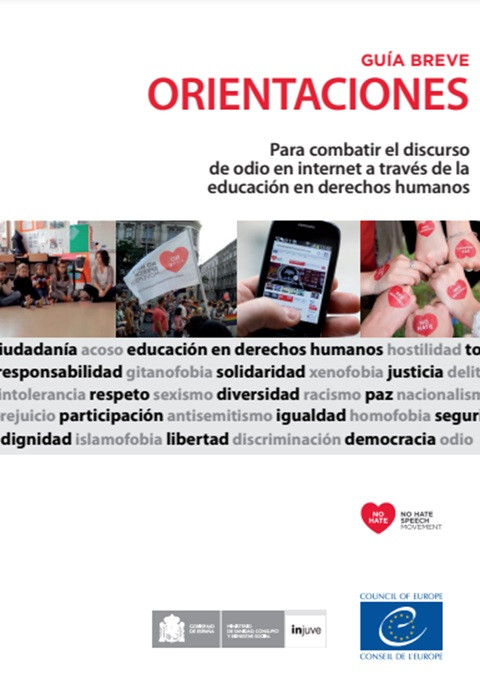 Brief Guidance Guide: To Combat Hate Speech on the Internet Through Human Rights Education Year of publication: 2016 Author: Ellie Keen | Mara Georgescu Corporate author: Youth Institute | Council of Europe The Youth Institute has published “Bookmarks”, a guide to combat hate speech on the Internet, which aims to be a brief and useful manual for the dissemination of concepts related to human rights and freedom of expression, as well as to raise and face the challenge of defending these rights on the Internet from a young perspective. It also aims to become a practical tool for action, training and awareness-raising work, aimed at both young people themselves and trainers, to establish in a simple way the essential concepts related to online hate speech and provide mechanisms to combat it. Guía breve orientaciones: Para combatir el discurso de odio en internet a través de la educación en derechos humanos Year of publication: 2016 Author: Ellie Keen | Mara Georgescu Corporate author: Youth Institute | Council of Europe El Instituto de la Juventud ha editado “Orientaciones”, una guía para luchar contra el odio en internet que pretende ser un breve manual útil para la difusión de los conceptos relacionados con los derechos humanos y la libertad de expresión, así como plantear y afrontar el reto de defender estos derechos en internet desde una perspectiva joven. También nace con el objetivo de convertirse en una herramienta práctica para la acción, el trabajo formativo y de sensibilización, dirigida tanto a los propios jóvenes como a los formadores, para fijar de manera sencilla los conceptos esenciales relacionados con el discurso de odio online y aportar mecanismos para combatirlo.
  Podcast: Right to Education Against Hate Speech (SAME 2024) Year of publication: 2024 Corporate author: Global Campaign for Education (GCE) The Global Action Week for Education (GAE) 2024 has been the perfect setting for children and adolescents to contribute their voice and perspective to the issue of hate speech. Through awareness-raising and reflection workshops, children and adolescents have shared complex personal situations and cases of hate that they have witnessed, reproduced or experienced first-hand. Guided by their reflections, the participants designed a two-chapter podcast, where they addressed the issues that concern them most. This process not only allowed them to deepen their understanding of the normalization of hate speech and structural violence, but also to prepare for the production of the podcast, where they were able to express their thoughts and proposals in a creative and accessible way for a wider audience. Podcast: Derecho a la educación contra los discursos de odio (SAME 2024) Year of publication: 2024 Corporate author: Global Campaign for Education (CME) La Semana de Acción Mundial por la Educación (SAME) 2024, ha sido el escenario perfecto para que las niñas, niños y adolescentes aporten su voz y perspectiva a la problemática sobre los discursos de odio. A través de talleres de sensibilización y reflexión, las niñas, niños y adolescentes han compartido situaciones personales complejas y casos de odio que han presenciado, reproducido o vivido en sus propias carnes. Guiados por sus reflexiones, los participantes diseñaron un podcast, de dos capítulos, donde abordaron los temas que más les preocupan. Este proceso no solo les permitió profundizar en su comprensión de la normalización de discursos de odio y violencia estructural, sino también a prepararse para la producción del podcast, donde pudieron expresar sus pensamientos y propuestas de una manera creativa y accesible para un público más amplio.
  Social Education in the Face of Hate Speech: Intercultural Competences in University Education (Journal of Supranational Policies of Education; Vol. 1, No. 19) Year of publication: 2024 Author: Teresa Rebolledo Gámez | Rocío Rodríguez-Casado Corporate author: Autonomous University of Madrid The spread of hate speech against immigrants, people of foreign origin or ethnic minorities is one of the most serious threats to peaceful coexistence in today's society. This is especially true in media contexts and social networks, where the boundaries between the right to freedom of expression and hate speech or hate crimes are often blurred. Therefore, we need educational professionals with intercultural competences whohave strategies to combat these discourses. In this article, we present an experience of a pedagogical innovation that works on these competences in the Degree in Social Education, which received very positive evaluations in terms of improving conceptual and attitudinal learning, as well as the acquisition of socio-educational strategies to act against the emergence of hate speech. On the basis of this experience, we reflect on different aspects that should be present in intercultural university training in the field of hate speech and hate crimes, concluding that there is still an urgent need for universities to promote the training of socio-educational professionals based on a human rights, equality, justice, culture of peace and non-violence approach. Educación social ante los discursos de odio: Competencias interculturales en la formación universitaria (Journal of Supranational Policies of Education; Vol. 1, Núm. 19) Year of publication: 2024 Author: Teresa Rebolledo Gámez | Rocío Rodríguez-Casado Corporate author: Autonomous University of Madrid La propagación de discursos de odio hacia las personas inmigrantes, de origen extranjero o pertenecientes a minorías étnicas son uno de los peligros más graves para la convivencia pacífica en la sociedad actual. Existe una gran preocupación sobre las consecuencias discriminatorias e incluso delictivas que generan la propagación de los discursos de odio. Las normas legales establecen cuándo se traspasa la línea que convierte estas expresiones en actos condenables como delito, si bien en el ámbito de las redes sociales y los medios de comunicación, a veces, encontramos límites difusos entre el derecho a la libertad de expresión y los discursos o delitos de odio. Es por ello que necesitamos profesionales educativos con competencias interculturales que dispongan de estrategias para combatir estas situaciones. A partir de una experiencia de innovación docente en el Grado en Educación Social, en este trabajo reflexionamos sobre distintos aspectos que deberían estar presente en la formación universitaria intercultural en el ámbito de los discursos y delitos de odio, concluyendo que sigue existiendo una necesidad acuciante de que los profesionales del ámbito socioeducativo estén preparados para abordar esta realidad.
 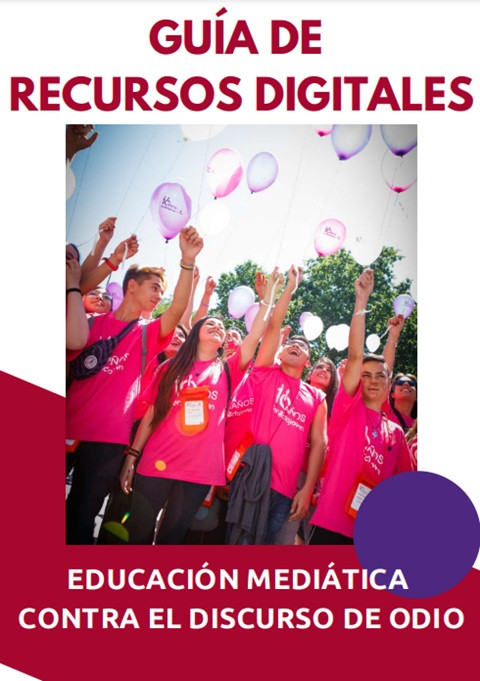 Digital Resource Guide: Media Education Against Hate Speech Year of publication: 2022 Corporate author: Esplai Foundation We could define hate speech as the set of communicative actions aimed at defending, promoting or instigating hatred, humiliation or contempt of a person or group of people. Although hate speech is not something exclusive to the Internet, but is part of the reality beyond the networks, it is true that the potential of the networks facilitates the movement of communication flows, because it facilitates both the production and the creation of messages. Hate speech has also benefited from this and, in addition, has found in the networks other characteristics such as anonymity, brevity, free messaging services or legitimacy granted by the number of followers. With this guide we want to provide digital tools for the creation of this counter-discourse that allows for the creation of messages that offer a positive alternative to extremist propaganda. Guía de recursos digitales: Educación mediática contra el discurso de odio Year of publication: 2022 Corporate author: Esplai Foundation Podríamos definir el discurso de odio como el conjunto de acciones comunicativas orientadas a la defensa, promoción o instigación al odio, la humillación o el menosprecio de una persona o grupo de personas. Si bien el discurso de odio no es algo exclusivo de Internet, sino que es parte de la realidad más allá de las redes, es cierto que el potencial de las redes facilita el movimiento de los flujos comunicativos, porque facilita tanto la producción como la creación de mensajes. Los discursos de odio también se han visto beneficiados por esto y, además, han encontrado en las redes otras características como el anonimato, la brevedad, los servicios gratuitos de mensajería o la legitimidad otorgada por número de seguidores. Con esta guía queremos aportar herramientas digitales para la creación de ese contradiscurso que permita realizar mensajes que ofrecen una alternativa positiva a la propaganda extremista.
  Addressing Hate Speech Through Education: A Guide for Policy-Makers Year of publication: 2023 Corporate author: UNESCO | UN. Office on Genocide Prevention and the Responsibility to Protect Hate speech is spreading faster and further than ever before as a result of social media user growth and the rise of populism. Both online and offline, hate speech targets people and groups based on who they are. It has the potential to ignite and fuel violence, spawn violent extremist ideologies, including atrocity crimes and genocide. It discriminates and infringes on individual and collective human rights, and undermines social cohesion. Education can play a central role in countering hateful narratives and the emergence of group-targeted violence. Educational responses to hate speech and all forms of hateful communication include:• Training teachers and learners on the values and practices related to being respectful global and digital citizens;• Adopting pedagogical and whole-school approaches to strengthening social and emotional learning;• Revising and reviewing curricula and educational materials to make them culturally responsive and to include content that identifies hate speech and promotes the right to freedom of expression;This policy guide developed by UNESCO and the United Nations’ Office on Genocide Prevention and the Responsibility to Protect explores these educational responses and provides guidance and recommendations to policy-makers on how to strengthen education systems to counter hate speech.
 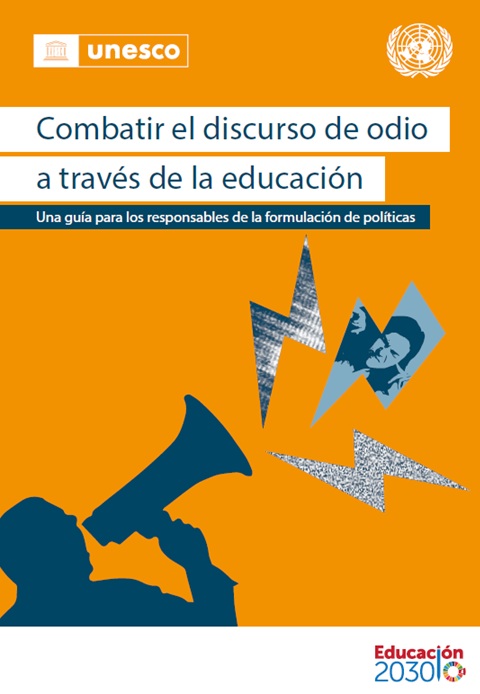 Combatir el discurso de odio a través de la educación: una guía para los responsables de la formulación de políticas Year of publication: 2024 Corporate author: UNESCO | UN. Office on Genocide Prevention and the Responsibility to Protect Como producto de las redes sociales y del aumento del populismo, el discurso de odio se está difundiendo más rápido y con mayor alcance que nunca. Ya sea en línea o no, se dirige a las personas sobre la base de quiénes son y tiene el potencial de incitar a la violencia, así como engendrar ideologías extremistas y violentas, crímenes atroces e incluso el genocidio. Además, discrimina, infringe derechos humanos individuales y colectivos y socava la cohesión social.La educación puede cumplir un papel fundamental en la lucha contra los discursos de odio y el surgimiento de la violencia dirigida a grupos específicos. Las respuestas educativas al discurso de odio y a todas las formas de comunicación relacionadas incluyen:• La capacitación de docentes y estudiantes sobre los valores y las prácticas que necesitan para ser ciudadanos y ciudadanas respetuosos a nivel global y en el ámbito digital;• La adopción de pedagogías y enfoques escolares integrales para el fortalecimiento del aprendizaje social y emocional;• La adopción y revisión del currículo y de los materiales educativos para que sean culturalmente sensibles e incluyan contenido que identifique la presencia del discurso de odio y promueva el derecho a la libertad de expresión.Esta guía para la formulación de políticas, elaborada por la Oficina de las Naciones Unidas para la Prevención del Genocidio y la Responsabilidad de Proteger (OSAPG) y la UNESCO, analiza en detalle estas y otras respuestas educativas con la intención de brindar a las y los formuladores de políticas las orientaciones y recomendaciones sobre cómo fortalecer los sistemas educativos para combatir el discurso de odio.