
Resources
Explore a wide range of valuable resources on GCED to deepen your understanding and enhance your research, advocacy, teaching, and learning.
65 Results found
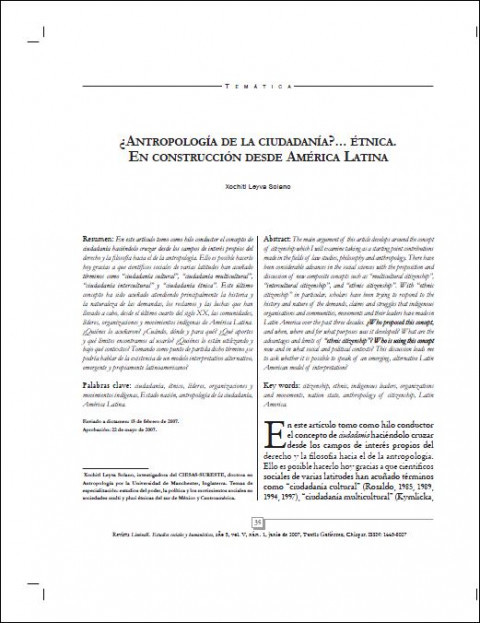 ¿Antropología de la Ciudadanía?... Étnica. En Construcción desde América Latina Year of publication: 2007 Author: Xochitl Leyva Solano En este artículo tomo como hilo conductor el concepto de ciudadanía haciéndolo cruzar desde los campos de interés propios del derecho y la filosofía hacia el de la antropología. Ello es posible hacerlo hoy gracias a que científicos sociales de varias latitudes han acuñado términos como “ciudadanía cultural”, “ciudadanía multicultural”, “ciudadanía intercultural” y “ciudadanía étnica”. Este último concepto ha sido acuñado atendiendo principalmente la historia y la naturaleza de las demandas, los reclamos y las luchas que han llevado a cabo, desde el último cuarto del siglo XX, las comunidades, líderes, organizaciones y movimientos indígenas de América Latina. ¿Quiénes lo acuñaron? ¿Cuándo, dónde y para qué? ¿Qué aportes y qué límites encontramos al usarlo? ¿Quiénes lo están utilizando y bajo qué contextos? Tomando como punto de partida dicho término ¿se podría hablar de la existencia de un modelo interpretativo alternativo, emergente y propiamente latinoamericano?
  Global citizenship in primary and secondary education in the Netherlands Year of publication: 2012 Author: Lette Hogeling Corporate author: National Committee for International Cooperation and Sustainable Development (NCDO) NCDO has examined the opinions and methods of teachers and directors with regard to global citizenship, as well as the obstacles and opportunities they experience around global citizenship in education. More than 1,500 teachers and almost 300 directors have participated in the research. A large majority of the teachers in primary and secondary education think that global citizenship is an important subject for Dutch education. Also, the majority of the teachers are of the opinion that it is important that the lessons link up with current events. Nevertheless, only a minority of the teachers in primary and secondary education believe that global citizenship should be a compulsory part of the curriculum. It is mainly teachers of geography, economics, cultural and social subjects who are of the opinion that global citizenship is an important theme. La citoyenneté mondiale dans l'enseignement primaire et secondaire aux Pays-Bas Year of publication: 2012 Author: Lette Hogeling Corporate author: National Committee for International Cooperation and Sustainable Development (NCDO) NCDO a examiné les opinions et les méthodes des enseignants et des administrateurs à l'égard de la citoyenneté mondiale, ainsi que les obstacles et les opportunités qu'ils rencontrent autour de la citoyenneté mondiale dans l'éducation. Plus de 1.500 enseignants et près de 300 directeurs ont participé à la recherche. Une grande majorité des enseignants dans l'enseignement primaire et secondaire pensent que la citoyenneté mondiale est un sujet important pour l'éducation néerlandaise. En outre, la majorité des enseignants sont d'avis qu'il est important que les leçons de lien avec l'actualité. Néanmoins, seule une minorité des enseignants dans l'enseignement primaire et secondaire croient que la citoyenneté mondiale devrait être une partie obligatoire du programme. Il est principalement les professeurs de géographie, l'économie, la culture et les sujets sociaux qui sont d'avis que la citoyenneté mondiale est un thème important.
 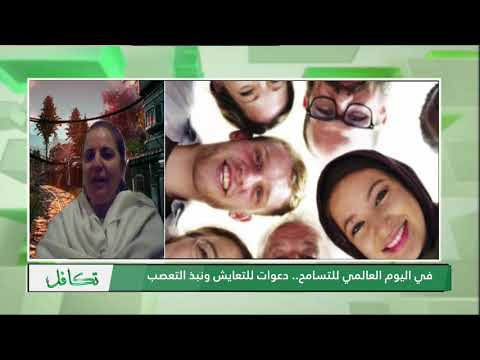 في اليوم العالمي للتسامح.. دعوات للتعايش ونبذ التعصب Year of publication: 2020 Author: Wijdan Alrubai Corporate author: Awraas TV في اليوم العالمي للتسامح، تستضيف المذيعة عبر البرنامج التلفزيوني بعض المتخصصين للتحدث عن التسامح ونبذ التعصب في الوطن العربي. من خلال البرنامج يظهر اختلاف مفهوم التسامح بين المتحدثين واثارته كقضية في الوطن العربي. On the International Day for Tolerance: Calls for Coexistence and the Rejection of Intolerance Year of publication: 2020 Author: Wijdan Alrubai Corporate author: Awraas TV On the International Day for Tolerance, the broadcaster on the TV program hosts some specialists to speak about tolerance and reject intolerance in the Arab world. Through the program, the difference in the concept of tolerance among the speakers is shown and raised as an issue in the Arab world.
  A Tree to Bloom Year of publication: 2023 Corporate author: Center for Memory, Peace and Reconciliation The Camino a Casa room of the Memory, Peace and Reconciliation Center is committed to memory processes that recognize children as active subjects with the full capacity to reflect and dialogue about the recent past of violence and struggles for the construction of democracy and peace. This document is written under the metaphor of a tree: it is proposed that change and movement become a possibility for continued growth, therefore the role of adults is related to being the nutrients of the tree. In so far as their daily work can contribute to other axes, which would be the branches. And finally, children play the role of caretakers of memory - they are the tree - based on their authenticity and creativity. Un árbol para florecer Year of publication: 2023 Corporate author: Center for Memory, Peace and Reconciliation La sala Camino a Casa del Centro de Memoria, Paz y Reconciliación apuesta por procesos de memoria que reconozcan en los niños y las niñas sujetos activos con capacidad plena para reflexionar y dialogar en torno al pasado reciente de violencias y luchas por la construcción de democracia y paz. Este documento está escrito bajo la metáfora de un árbol: se propone que el cambio y el movimiento se convierta en una posibilidad para que siga creciendo, por ello el papel de las personas adultas está relacionado con ser los nutrientes del árbol. En tanto su labor cotidiana pueden aportar a otros ejes, que vendrían siendo las ramas. Y por último, los niños y niñas cumplen el rol de cuidadores de la memoria -ellos son el árbol- a partir de su autenticidad y creatividad.
  Critical Interculturality and Anti-racism: Tackling Migration and Diversity With Young People Year of publication: 2023 Corporate author: Entreculturas | European Union (EU) Through this guide, educators, teachers, professionals who support youth groups, as well as anyone who works or wants to work with young people on this topic will be able to find useful tools to generate educational spaces from which to build more tolerant societies. It is available in Spanish and English, and in it readers will be able to find key concepts that will help them become familiar with the language and approaches used in matters of migration and diversity, practical tools for working with young groups, as well as self-assessment exercises and reflection questionnaires through which to review their own perspectives on cultural diversity and migration narratives. Interculturalidad crítica y antirracismo: Abordando las migraciones y la diversidad con jóvenes Year of publication: 2023 Corporate author: Entreculturas | European Union (EU) A través de esta guía, educadores, educadoras, docentes, profesionales que acompañan a grupos jóvenes, así como toda persona que trabaje o desee trabajar con jóvenes acerca de esta temática podrán encontrar herramientas de utilidad para generar espacios educativos desde los que construir sociedades más tolerantes. Está disponible en castellano e inglés, y en ella las personas lectoras podrán encontrar conceptos clave que ayudarán a familiarizarse con el lenguaje y enfoques utilizados en materia de migraciones y diversidad, herramientas prácticas para trabajar con grupos jóvenes. Así como ejercicios de autoevaluación y cuestionarios de reflexión mediante los cuales revisar las propias perspectivas en torno a la diversidad cultural y las narrativas migratorias.
  A Diverse World Year of publication: 2023 Corporate author: Entreculturas | European Union (EU) This publication is Entreculturas' pedagogical proposal to educate everyone in global citizenship. With it we intend to contribute to the training of people capable of exercising active and committed citizenship, of transforming their environment and of assuming as their own the global challenges of our time as well as the fulfillment of the 2030 Agenda and the Sustainable Development Goals. This publication collects activities from previous publications, with the difference that it has been adapted to an easy-to-read model to make it much simpler and more accessible for people with functional diversity. The activities address three major themes: 1.) Defense of the environment, 2.) Gender equality, and 3.) Interculturality. By addressing these topics we seek to promote reflection on the different global challenges that affect us and learn about the different ways to contribute to these causes.