
Resources
Explore a wide range of valuable resources on GCED to deepen your understanding and enhance your research, advocacy, teaching, and learning.
6 Results found
 Uzbekistan: Failure to Protect Women from Domestic Violence (CEDAW submission) Year of publication: 2022 Corporate author: International Partnership for Human Rights (IPHR) This piece focuses on the problem of domestic violence against women in Uzbekistan. It identifies protection gaps in both domestic law as well as in practice, and makes recommendations to the government of Uzbekistan in anticipation of the Committee on the Elimination of Discrimination against Women (CEDAW Discrimination against Women (CEDAW) periodic report of Uzbekistan on the implementation of Convention on the Elimination of All Forms of Discrimination against Women. Узбекистан: неспособность защитить женщин от домашнего насилия (представление CEDAW) Year of publication: 2022 Corporate author: International Partnership for Human Rights (IPHR) В этом материале основное внимание уделяется проблеме домашнего насилия в отношении женщин в Узбекистане. В нем выявляются пробелы в защите как во внутреннем законодательстве, так и на практике, и даются рекомендации правительству Узбекистана в преддверии рассмотрения Комитетом по Ликвидации Дискриминации Женщин (КЛДЖ) (Committee on the Elimination of Discrimination against Women (CEDAW)) периодического доклада Узбекистана о выполнении Конвенции о ликвидации всех форм дискриминации в отношении женщин.
 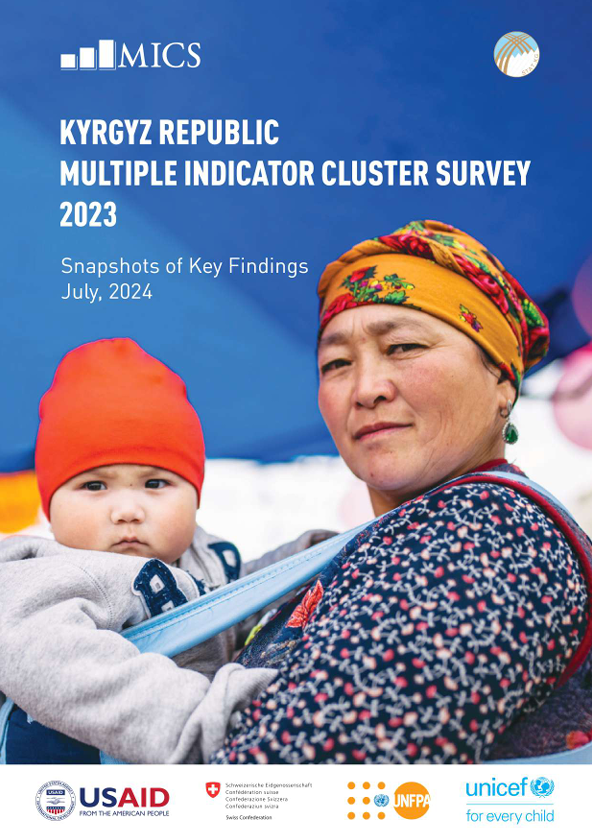 Kyrgyz Republic Multiple Indicator Cluster Survey 2023: Snapshots of Key Findings July, 2024 Year of publication: 2024 Corporate author: National Statistical Committee of the Kyrgyz Republic | UNICEF Kyrgyzstan | United Nations Population Fund (UNFPA) | United States Agency for International Development (USAID) | Government of Switzerland The 5th round of Multiple Indicator Cluster Survey (MICS) covers 7,200 households across Kyrgyzstan, measuring 185 indicators related to healthcare, education, and social protection for women and children. MICS 2023 produced data for 32 global Sustainable Development Goal (SDG) indicators, disaggregated by key characteristics such as gender, age, geographic location, income level and disability. Кластерное обследование по многим показателям в Кыргызстане 2023: Обзор основных статистических данных Июль 2024г. Year of publication: 2024 Corporate author: National Statistical Committee of the Kyrgyz Republic | UNICEF Kyrgyzstan | United Nations Population Fund (UNFPA) | United States Agency for International Development (USAID) | Government of Switzerland Национальный статистический комитет КР презентовал результаты нового Кластерного обследования по многим показателям (КОМП). В рамках исследования, было опрошено 7,2 тыс. домохозяйств по всему Кыргызстану по 185 показателям, связанных со здравоохранением, образованием и социальной защитой женщин и детей. В результате КОМП-2023 были собраны данные для 32 глобальных показателей Целей устойчивого развития (ЦУР), дезагрегированные по ключевым признакам, таким как пол, возраст, географическое положение, уровень дохода и наличие инвалидности.
 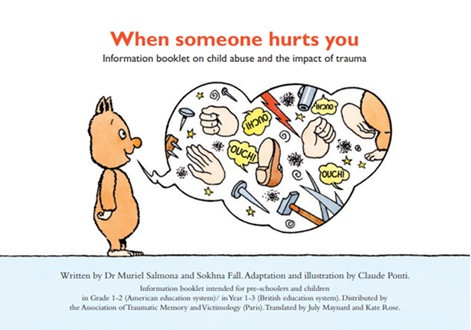 When Someone Hurts You: Information Booklet on Child Abuse and the Impact of Trauma Year of publication: 2022 Author: Muriel Salmona | Sokhna Fall Corporate author: UNICEF France | French Association for Traumatic Memory and Victimology This educational booklet is designed to help young children from kindergarten to Third grade to identify their feelings of unease following a situation of violence or threat of violence (physical, moral or sexual), understand the causes and consequences, and give advice on how to protect themselves and seek help. Quand on te fait du mal: Information sur les violences et leurs conséquences Year of publication: 2022 Author: Muriel Salmona | Sokhna Fall Corporate author: UNICEF France | French Association for Traumatic Memory and Victimology Ce livret pédagogique permet d’aider les plus petits de la maternelle au CE2, à identifier leur mal-être suite à une situation de violence ou menaces de violences (physiques, morales, sexuelles…), en comprendre les causes et les conséquences et donne des conseils pour apprendre à se protéger et demander de l’aide.