
Resources
Explore a wide range of valuable resources on GCED to deepen your understanding and enhance your research, advocacy, teaching, and learning.
20 Results found
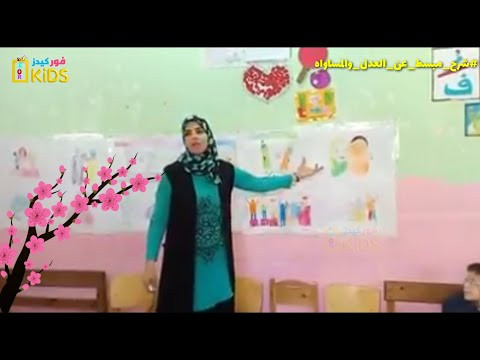 Justice and Equality Year of publication: 2019 Corporate author: For kids In this video, the teacher demonstrates through a mural the values of justice and equality. The video is directed as part of the preschool education curriculum. The teacher interacted through the murals with the students to illustrate the value of justice and equality. العدل والمساواة Year of publication: 2019 Corporate author: For kids في هذا الفيديو، تستعرض المعلمة من خلال لوحة جدارية قيم العدل والمساواة. الفيديو موجه كجزء من منهج تعليم الأطفال قبل المدرسة. تفاعلت فيه المعلمة من خلال الرسومات الجدارية مع الطلبة لتوضيح قيمة العدل والمساواة.
 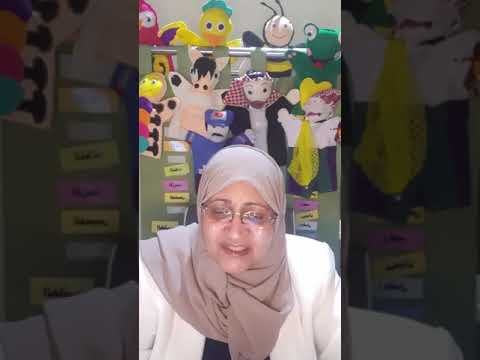 [فيديو] استراتيجية التعلم باللعب Year of publication: 2021 Author: Mama Fowzia تستعرض الأستاذة المختصة في التربية المبكرة استراتيجية التعلم باللعب المستخدمة في رياض الأطفال. تبدأ الأستاذة بالتعريف بالاستراتيجية. ومن ثم تعرض طرق وأساليب التعلم باللعب التي يمكن للمعلمات استخدامها. [Video] Learning by Playing Strategy Year of publication: 2021 Author: Mama Fowzia The teacher of early education reviews the play-learning strategy used in kindergarten. The teacher begins by introducing the strategy. Then it presents the ways and methods of learning through play that the teachers can use.
  استراتيجية التعلم باللعب Year of publication: 2021 Corporate author: Korea R. Ministry of Education الملف عبارة عن شرائح باوربوينت، يتم فيها استعراض استراتيجية التعلم باللعب. تبدأ الشرائح بذكر الأسس النفسية للألعاب التعليمية والمحاكاة. وبعدها يتم تفصيل أهداف الألعاب التربوية. ويستعرض بعدها الملف مجموعة من الأنواع من الألعاب التربوية. Learning by Playing Strategy Year of publication: 2021 Corporate author: Korea R. Ministry of Education The file is a PowerPoint slide, in which the strategy of learning by playing is demonstrated. The slides begin by mentioning the psychological underpinnings of educational and simulation games. Then the objectives of the educational games are detailed. The file reviews a group of types of educational games.
  Digital kids Asia-Pacific: insights into children’s digital citizenship Year of publication: 2019 Author: Taeseob Shin | Hyeyoung Hwang | Jonghwi Park | Jian Xi Teng | Toan Dang Corporate author: UNESCO Bangkok This report responds to the growing needs of Member States in the Asia-Pacific region to understand children’s knowledge, behaviour and attitudes in a hyper-connected digital world. It aims to create a data-driven, conducive educational and policy environment that maximizes opportunities that Information and Communications Technology (ICT) offers, while minimizing potential threats that the same may pose. The report was also developed in the context of the Education 2030 Agenda identifying digital skills as one of the key competencies for youth and adults to achieve and monitor until 2030.
 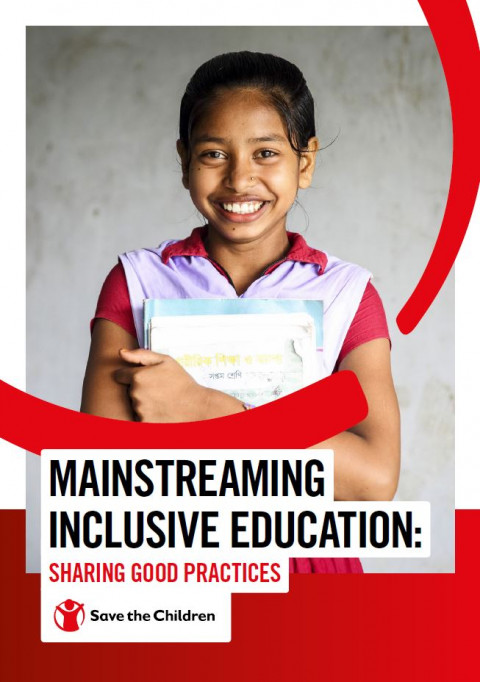 Mainstreaming Inclusive Education: Sharing Good Practices Year of publication: 2019 Corporate author: Save the Children The primary aim of this documentation is to provide a deeper understanding of how projects have applied more inclusive concepts in not only changing the lives of children with disabilities, those living in poverty or children from ethnic minority populations, their families and communities, but in catalysing changes in policies and practices to the education system to benefit all learners.The stories follow a common structure describing the background of the project, a description of an approach that has worked especially well in the project, followed by stakeholder and partner engagement, participation of children, key milestones and significant challenges, scalability and sustainability, recommendations for replication and contact links for project tools and materials. A selection of practical tools and models have been attached as annexes.
  La contribución de la educación inicial para una sociedad sustentable Year of publication: 2009 Corporate author: UNESCO This report originates from the international workshop, ‘The Role of Early Childhood Education for a Sustainable Society’, jointly organized in Göteborg, Sweden, by Göteborg University, Chalmers University of Technology and the City of Göteborg, from 2 to 4 May 2007. It was attended by thirty-five participants from sixteen different countries (see ‘List of Participants’). The workshop was a follow-up to the international conference on education for sustainable development, ‘Learning to Change Our World’, held in May 2004, in Göteborg. It was one of four preparatory workshops leading to another international conference on education for sustainable development, to be organized in 2008 or 2009, in the same city. The aim of the four workshops is to discuss promoters and barriers related to learning for sustainability, and to propose recommendations for the upcoming international conference. The present workshop was conceived for the following reasons. First, our societies urgently require new kinds of education that can help prevent further degradation of our planet, and that foster caring and responsible citizens genuinely concerned with and capable of contributing to a just and peaceful world. Second, these new kinds of education must be available to all – not only a handful of people – and take place in various settings, including families and communities. Third, they must begin in early childhood, as the values, attitudes, behaviours and skills acquired in this period may have a long-lasting impact in later life. Thus, early childhood education clearly has an important place in the efforts to bring about sustainable development.
  La contribution de l'éducation de la petite enfance à une société durable Year of publication: 2008 Corporate author: Organisation des Nations Unies pour l'éducation, la science et la culture (UNESCO) Ce rapport provient de l'atelier international, «Le rôle de l'éducation de la petite enfance pour une société durable», organisé conjointement à Göteborg, en Suède, par l'Université de Göteborg, Chalmers University of Technology et la ville de Göteborg, du 2 au 4 mai 2007. Il a réuni trente-cinq participants de seize pays différents (voir «Liste des participants»). L'atelier a été suivi à l'éducation de internationalconférenceon pour le développement durable, «Apprendre à changer notre monde», tenue en mai 2004, à Göteborg. Il était l'un des quatre ateliers préparatoires menant à une autre éducation internationalconférenceon pour le développement durable, qui sera organisée en 2008 ou 2009, dans la même ville. L'objectif des quatre ateliers est de discuter des promoteurs et des obstacles liés à l'apprentissage de la durabilité, et de proposer des recommandations pour la prochaine conférence internationale. Le présent atelier a été conçu pour les raisons suivantes. Tout d'abord, nos sociétés ont un besoin urgent de nouveaux types d'éducation qui peuvent aider à prévenir une nouvelle dégradation de notre planète, et qui favorisent les soins et les citoyens responsables véritablement concernés par et capables de contribuer à un monde juste et pacifique. Deuxièmement, ces nouvelles formes d'éducation doivent être aCECssibles à tous - non seulement une poignée de gens - et se déroulent dans divers milieux, y compris les familles et les communautés. Troisièmement, ils doivent commencer au début de l'enfance, comme les valeurs, les attitudes, les comportements et les compétences acquises dans cette période peuvent avoir un impact durable dans la vie plus tard. Ainsi, l'éducation de la petite enfance a clairement une place importante dans les efforts pour parvenir à un développement durable.