
Resources
Explore a wide range of valuable resources on GCED to deepen your understanding and enhance your research, advocacy, teaching, and learning.
39 Results found
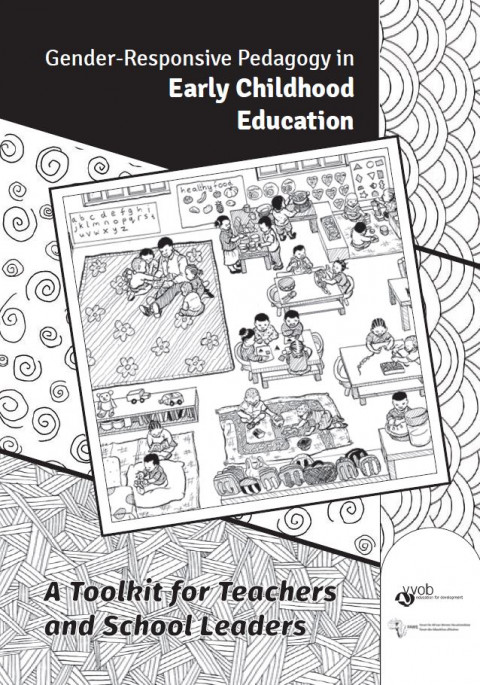 Gender-responsive Pedagogy for Early Childhood Education: A Toolkit for Teachers and School Leaders Year of publication: 2019 Corporate author: VVOB | Forum for African Women Educationalists (FAWE) The Gender-Reponsive Pedagogy for Early Childhood Education Toolkit targets early childhood education teachers and all other practitioners who deal with younger children. It is a practical guide that can be adapted to any context and the related needs as well as a source of ideas and resources that individual teachers and school leaders can put to immediate use in their classrooms and schools. The toolkit is also a useful resource for researchers, school-parent committees and governing bodies, civil society organisations, community leaders and education policy makers.
  دور رياض الأطفال في تعزيز ثقافة التعايش السلمي لدى طفل الروضة من وجهة نظر المعلمات (مجلة العميد; Vol. 12, No. 47) Year of publication: 2023 Author: Insaf Kamal Mansour Corporate author: Department of Cultural and Intellectual Affairs in the Holy Al-Abbas Shrine يهدف البحث الحالي إلى تعرف دور رياض الأطفال في تعزيز ثقافة التعايش السلمي لدى طفل الروضة من وجهة نظر معلمات رياض الأطفال، وقد اعتمد البحث المنهج الوصفي، وتكون مجتمع البحث من (273) معلمة في رياض الأطفال الحكومية في المديرية العامة لتربية بغداد الكرخ الثانية للعام الدراسي(2019-2020) اما عينة البحث فتكونت من (160) معلمة، ولتحقيق هدف البحث قامت الباحثة ببناء استبانة تضم (47) فقرة موزعة على ثلاثة مجالات (منهج وحدة الخبرة التفاعلي، الأنشطة التربوية، والمعلمة) وبخمسة بدائل إجابة هي (كبير جدا وكبير ومتوسط ومنخفض ومنخفض جدا) وبأوزان (5،4،3،2،1) على التوالي، وقد توصل البحث الى أن لرياض الأطفال دوراً كبيراً في تعزيز ثقافة التعايش السلمي لدى طفل الروضة من وجهة نظر معلمات رياض الأطفال، تتصل بمجالات دور المعلمة ودور الأنشطة التربوية ودور منهج وحدة الخبرة التفاعلي، إذ حصل كل من مجالات (دور المعلمة والأنشطة التربوية) على درجة تقدير كبير مع وجود ضعف في مفردات منهج وحدة الخبرة التفاعلي جعل من دوره (متوسطا). Role of Kindergarten in Solidifying Peaceful Coexistence for Children from the Perspectives of Teachers (Al-Ameed Journal; Vol.12, No.47) Year of publication: 2023 Author: Insaf Kamal Mansour Corporate author: Department of Cultural and Intellectual Affairs in the Holy Al-Abbas Shrine The current research aims to identify the role of kindergartens in promoting the culture of peaceful coexistence among kindergarten children from the point of view of kindergarten teachers. The research adopted the descriptive methodology, and the research community consists of (273) teachers in government kindergartens in the Directorate General of Education Baghdad Karkh II for the academic year (2019-2020), while the research was appointed by (160) teachers, To achieve the goal of the research, the researcher built a questionnaire comprising (47) paragraphs spread over three areas (interactive experience unit curriculum, educational activities, and teacher) and five alternatives to the answer are (very large, large, medium, low, very low) and weights (1, 2,3,4,5) respectively, the research found that kindergartens play a major role in promoting the culture of peaceful coexistence of kindergarten children from the point of view of kindergarten teachers, related to the areas of the role of the teacher, the role of educational activities and the role of the interactive experience unit curriculum, If each of the areas (the role of the teacher and educational activities) was highly appreciated with a weakness in the vocabulary of the interactive experience unit curriculum made its role (average)
 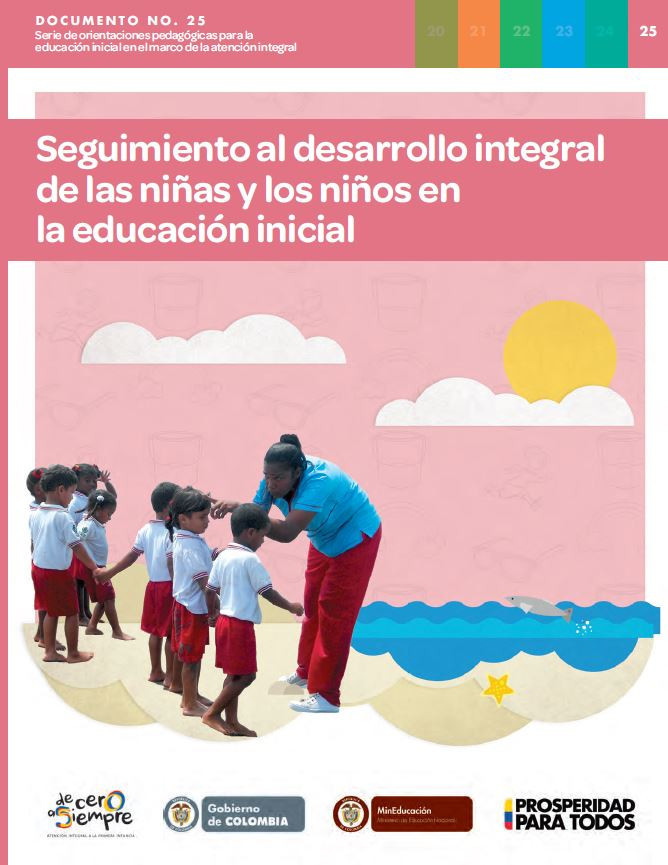 Tracing the Integral Development of Girls and Boys in Early Childhood Education Year of publication: 2014 Author: Sonia Marcela Tellez Corporate author: Colombia. Ministry of National Education This series of pedagogical guidelines for initial education takes up elements of the base document for the construction of the pedagogical guideline for initial education of the Ministry of National Education of Colombia and presents the technical line to favor the development and implementation of initial education within the framework of the Comprehensive care in a pertinent, timely and quality manner, through technical references. Seguimiento al desarrollo integral de las niñas y los niños en la educación inicial Year of publication: 2014 Author: Sonia Marcela Tellez Corporate author: Colombia. Ministry of National Education Esta serie de orientaciones pedagógicas para la educación inicial retoma elementos del documento base para la construcción del lineamiento pedagógico de educación inicial del Ministerio de Educación Nacional de Colombia y presenta la línea técnica para favorecer el desarrollo e implementación de la educación inicial en el marco de la atención integral de manera pertinente, oportuna y con calidad, a través de referentes técnicos.
  Save the Children's Education Strategic Direction, 2016-2018 Year of publication: 2016 Corporate author: Save the Children This presentation outlines the overall 2016-2018 strategic direction for Save the Children’s education work. This is an articulation of the role education will play in delivering Save the Children’s global strategy and achieving our breakthroughs. The strategic direction is the product of the strategy development work that has taken place over the last 18 months and which many people across the organisation have fed into. The strategic direction provides a framework to guide all Save the Children’s education work and should be adapted to meet the specific needs of different countries and contexts.
 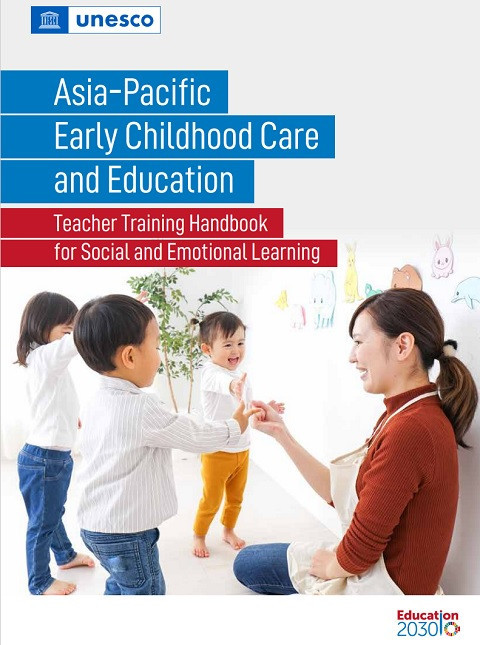 Asia-Pacific Early Childhood Care and Education: Teacher Training Handbook for Social and Emotional Learning Year of publication: 2022 Author: Monisha Singh Diwan Corporate author: UNESCO Bangkok The handbook was initiated by UNESCO Bangkok. This effort is in response to the widespread recognition of social and emotional learning (SEL)’s importance and the lack of robust and more contextually relevant and culturally sensitive SEL programme for teachers to effectively deliver SEL. With this, UNESCO Bangkok aims to support the Member States in the Asia-Pacific to equip their early childhood care and education (ECCE) teachers with SEL knowledge and skills, and to ensure that children develop pro-social and emotional skills and positive relationships within the early stage of the learning process, particularly in enhancing (1) knowledge about student SEL and classroom management; (2) strategies to apply in the classroom; and (3) teachers’ own social and emotional competence.The handbook provides the context and foundation for the programme. The background of the initiative that led to the regional handbook and training modules (Chapter 1), the introduction of the purpose and use of the handbook (Chapter 2), an overview of ECCE (Chapter 3), SEL (Chapter 4), teachers’ professional education, learning and development (Chapter 5), and APETT-SEL conceptual framework followed by an overview of the four themes and ten modules (Chapter 6). The Glossary provides definitions and/or explanations of key educational terminologies used to provide greater clarity. The ten comprehensive training modules aim to build capacity of pre-primary and early primary teachers, both pre- and in-service, across four themes. The first theme focuses on teachers and their well-being; the second equips teachers in building pro-social and responsive classrooms; the third focuses on diversity, inclusion, cultural responsiveness, and equity; and the fourth focuses on SEL measurement and assessment. Each training module consists of scripted sessions and activities, as well as reference materials included as handouts and additional readings.
  Building Resilience Through Social and Emotional Learning (SEL): Teacher Capacity-building for Sustainable Transformation of Education Systems Year of publication: 2024 Corporate author: UNESCO Bangkok Countries in the Asia-Pacific region are committed to improving the lives of young children. Despite the progress made so far in the Asia-Pacific region and being halfway to the target date of the 2030 Agenda for Sustainable Development, there are still significant gaps in fulfilling SDG Target 4.2: 'By 2030, ensure that all girls and boys have access to quality early childhood development, care and pre-primary education so that they are ready for primary education.' The UNESCO Regional Office in Bangkok (UNESCO Bangkok) has been advocating for SEL to fully become part of the ECCE system and supporting regional Member States in building teachers’ capacity to integrate SEL into children’s learning environments. With social skills and emotional intelligence taught in schools early, children will gain knowledge, skills, and attitudes to develop healthy identities, manage emotions, and achieve personal and collective goals. This can positively contribute to society and transformative resilience through enhancing civic engagement.
 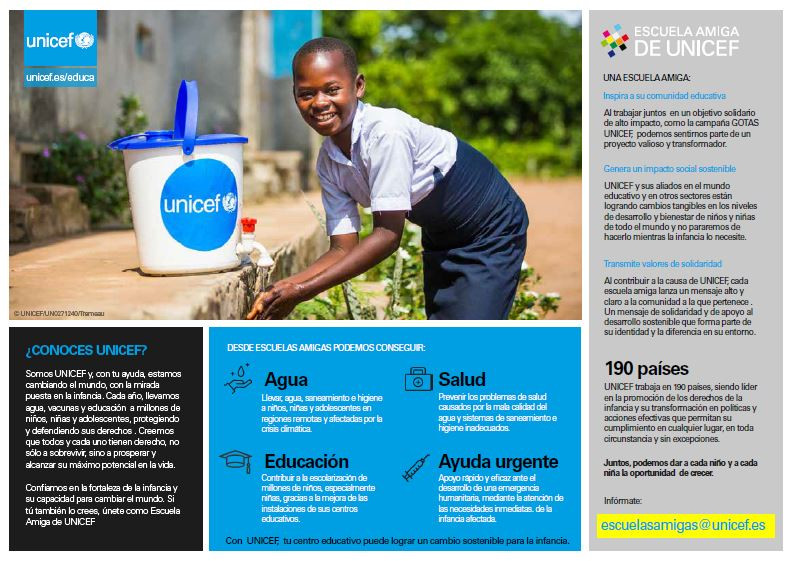 School Friend of UNICEF Year of publication: 2006 Corporate author: UNICEF Spain This infographic presents the program in which each school establishes a personalized commitment to UNICEF in the form of a collaboration agreement by which they undertake, depending on their circumstances, interests and capacity, to carry out different awareness-raising and fundraising activities throughout the school year. The activities can be framed within the GOTAS UNICEF school campaign or directed to an emergency humanitarian action campaign proposed by UNICEF. Escuela amiga de UNICEF Year of publication: 2006 Corporate author: UNICEF Spain Esta infografía presenta el programa en el que cada escuela amiga establece un compromiso personalizado con UNICEF en forma de convenio de colaboración por el que se compromete, en función de sus circunstancias, intereses y capacidad a la realización de diferentes actividades de sensibilización y captación de fondos a lo largo del curso escolar. Las actividades pueden enmarcarse dentro de la campaña escolar GOTAS UNICEF o dirigirse a una campaña de acción humanitaria de emergencias propuesta por UNICEF.