
Resources
Explore a wide range of valuable resources on GCED to deepen your understanding and enhance your research, advocacy, teaching, and learning.
249 Results found
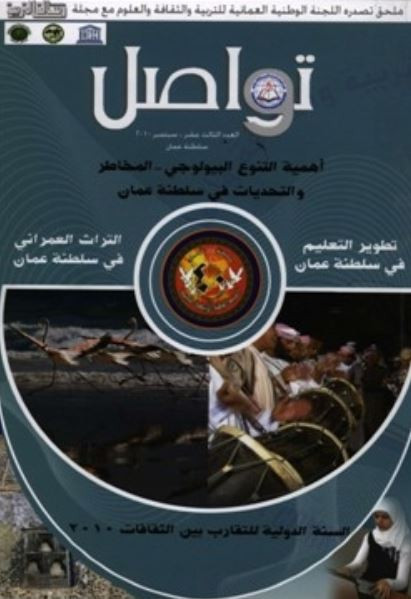 Education for Sustainable Development Conference in Support of Cultural and Biological Diversity, 24-26 January 2011 Year of publication: 2011 Author: Salem bin Hilal Al-Habsi | Mahmoud bin Abdullah Al-Abri Corporate author: Oman National Commission for Education, Culture and Science The text talks about a conference held in the Omani capital, Muscat. The conference focuses on sustainable development to support cultural and biological diversity. This conference comes to support international efforts and help educational systems understand diversity and its importance in the renaissance of peoples.
  The SDG second half: Ideas for doing things differently Year of publication: 2023 Author: Amar Bhattacharya | Margaret Biggs | Matthew Bishop | Caren Grown | George Ingram | Homi Kharas | John W. Mcarthur | Sarah E. Mendelson | Jane Nelson | Tony Pipa | Naheed Sarabi | Jacob Taylor | Priya Vora | Rebecca Winthrop Corporate author: Center for Sustainable Development at Brookings This short compendium captures a cross section of SDG-focused insights and recommendations from CSD-affiliated scholars. Each brief essay describes something with the potential to be done differently during the second half of the SDG era. Across a dozen contributions, topics range from reframing media coverage of the SDGs to measuring and elevating the role of the private sector; from participatory approaches to transforming education systems to new learning paradigms for human rights; from better risk-taking in fragile countries to improving infrastructure and services for care; from fit-for-purpose multilateral development banks to a purpose-driven fund to end extreme poverty; from turbo-charged Canadian SDG approaches to renewed American SDG leadership; from breakthroughs in digital public infrastructure to innovative frontiers in the digitally empowered methods of collective behavior science.
  Education for Sustainable Development Guidance: Executive Summary Year of publication: 2021 Corporate author: Quality Assurance Agency for Higher Education (QAA) | Advance HE How was the guidance developed?In March 2021, QAA and Advance HE launched revised guidance intended to help UK higher education institutions incorporate ESD within their curricula, following on from the first edition in 2014.QAA and Advance HE brought together a group of experts representing academic, business and student communities, with the aim of supporting all students to acquire the skills necessary to develop values and take actions to transition society towards a sustainable future. The guidance gives advice and support on curriculum design, as well as teaching, learning and assessment approaches.Who is the guidance for?This guidance is primarily aimed at staff involved in curriculum design and course management and delivery, to support them in designing ESD into their courses. However, it is also likely to be of value to senior management teams, those with responsibility for quality assurance and enhancement, and staff involved in directing teaching and learning. It may also prove useful to staff responsible for extracurricular activities.How to access the guidanceAn Executive Summary provides an overview of the content, with the full guidance available for any staff member or student at a QAA Member institution on our Membership Resources Site. Also available for members is a resource to support students in engaging with their institution about ESD.
  Global Monitoring of Target 4.7: Themes in National Curriculum Frameworks; Background Paper Prepared for the 2016 Global Education Monitoring Report Year of publication: 2016 Corporate author: UNESCO International Bureau of Education (IBE) This study is an initial attempt to monitor ESD and GCED content in curricula globally. The goal here is to analyse national curriculum documents to reveal if, how, and to what extent ESD and GCED content is present across the globe. For this purpose, the research team developed a coding scheme based on key ESD and GCED knowledge, skills, behaviours and pedagogies that was used in evaluating the various national curriculum documents for evidence of ESD and GCED content. In this paper, we present the study in the following order. Further explanation of ESD and GCED, and a discussion of issues relating to their implementation and monitoring will come first. Then we will review similar studies that have also attempted to monitor GCED and ESD through content analysis. The study’s methods and findings will then be presented, followed by a discussion of the challenges addressed in developing a coding system to monitor curricula effectively. Finally, we share a series of recommendations that will focus on ways for moving forward in monitoring GCED and ESD effectively, both at a curricular level and beyond.
 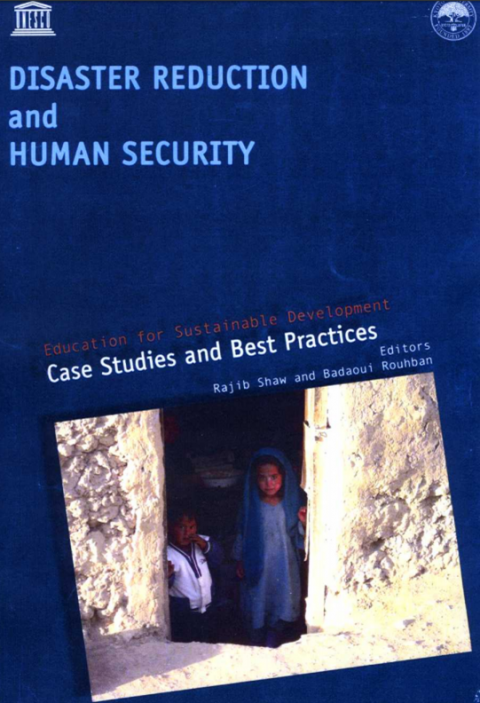 Disaster reduction and human security: education for sustainable development; case studies and best practices Year of publication: 2005 Corporate author: Kyoto University. Graduate School of Global Environmental Studies Disaster reduction, human security, education and sustainable development are the four key issues, which are considered in the current compilation. A quick glance of the case studies will tell us the varieties of focus areas. WCD R Thematic Cluster 3 (Knowledge, Innovation and Education: To Build a Culture of Safety and Resilience) identifies four themes under the cluster: Education, Research, Public Awareness and Community Empowerment. A majority of case studies focus on community activities, especially on ho w the communities were able to cope with different types of disasters in different socio-economic context. These are all learning processes for the community, especially to enhance the resilience among its members. A number of these studies include public awareness, training and capacity building programmes. Quite a number of case studies focus on professional expertise, like microzonation, mapping, planning, hazard assessment, and development of risk reduction tools. These are all related to education and research. There are some case studies, which focus on formal education at school and colleges, but are linked to practical learning exercise. Distance learning has appeared as one of the possible media to reach the global mass, and to reach the farthest and the most needy group. The link between on-site testing and on-line learning has been emphasized by several case studies.
 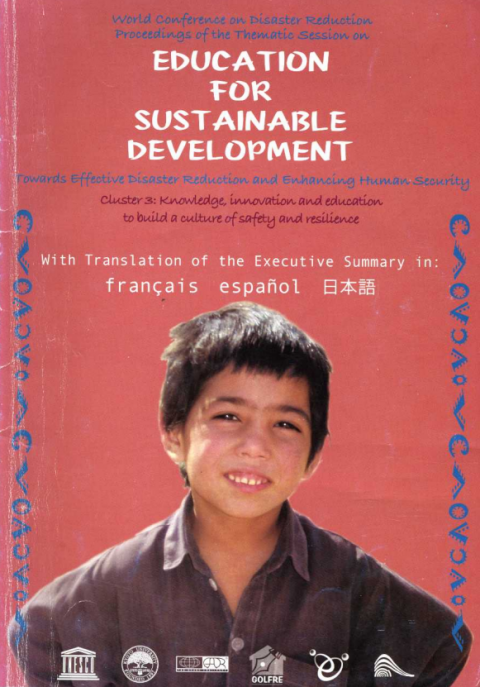 Proceedings of the thematic session on education for sustainable development: towards effective disaster reduction and enhancing human security; cluster 3: knowledge, innovation and education to build a culture of safety and resilience Year of publication: 2005 Author: Rajib Shaw | Badaoui Rouhban Corporate author: Kyoto University. Graduate School of Global Environmental Studies | Global Alliance for Disaster Reduction | Global Open Learning Forum on Risk Education | Disaster Reduction Alliance | International Institute of Earthquake Engineering and Seismology Ten years ago, the city of Kobe and its adjoining areas in Hyogo prefecture of Japan were hit by a strong earthquake, leaving behind a trail of death and destruction. This earthquake was a turning point in disaster reduction initiatives in Japan, resulting in two prominent changes: 1) a blending of technological and social issues in the field of research and application, and 2) an enhanced participation of civil society in disaster reduction Initiatives. Since Japan had long been one of the most developed countries in the field of earthquake engineering, the tragedy in Kobe posed a daunting question: 'how to fill the gap between knowledge and practice?' This question is not only for Japan, but is pertinent to many other countries. With the advancement of technology, the knowledge base is growing, and it is now time to tackle this question in order to save lives and properties from natural disasters. The World Conference on Disaster Reduction (WCDR), at the 10th anniversary of the Kobe earthquake, is therefore of special significance, providing an excellent platform to share experiences, expertise, and lessons from different parts of the world. The year 2005 is also the beginning of the United Nations Decade of Education for Sustainable Development (DESD: 2005-2014) which is led by UNESCO.
 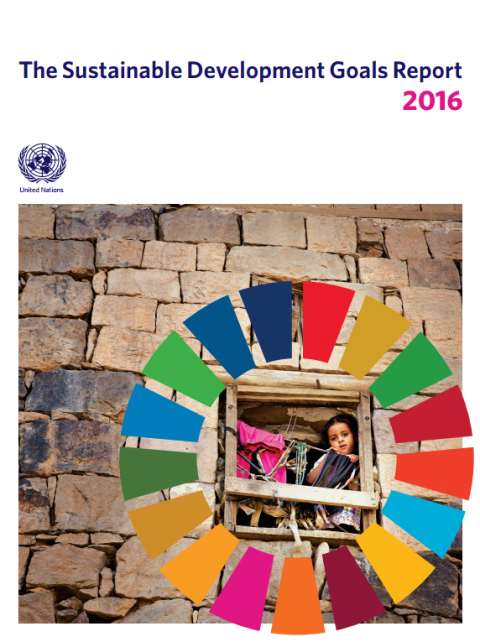 The Sustainable development goals report 2016 Year of publication: 2016 Corporate author: United Nations (UN) This inaugural report on the global Sustainable Development Goals (SDGs) is a first accounting of where the world stands at the start of our collective journey to 2030. The report analyses selected indicators from the global indicator framework for which data are available as examples to highlight some critical gaps and challenges. The list of SDG indicators agreed upon by the UN Statistical Commission in March 2016 will be subject to refinements and improvements as methods and data availability improve. Every journey has a beginning and an end. Plotting that journey and establishing key milestones along the way requires accessible, timely and reliable disaggregated data. The data requirements for the global indicators are almost as unprecedented as the SDGs themselves and constitute a tremendous challenge to all countries. Nevertheless, fulfilling these requirements through building national statistical capacity is an essential step in establishing where we are now, charting a way forward and bringing our collective vision closer to reality
 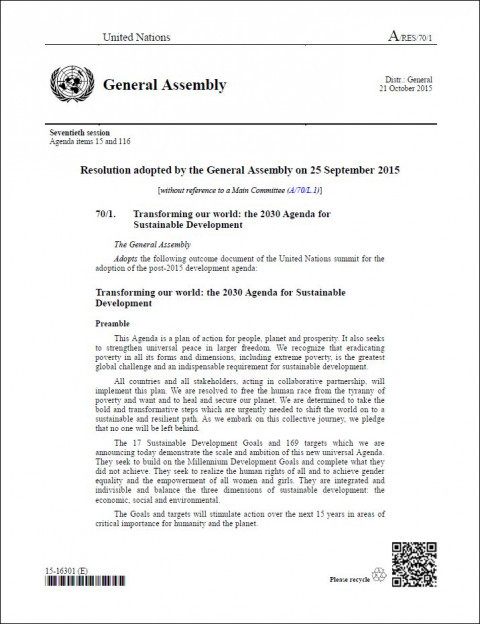 Transforming our world: the 2030 Agenda for Sustainable Development Year of publication: 2015 Corporate author: United Nations (UN) This Agenda is a plan of action for people, planet and prosperity. It also seeks to strengthen universal peace in larger freedom. We recognize that eradicating poverty in all its forms and dimensions, including extreme poverty, is the greatest global challenge and an indispensable requirement for sustainable development. All countries and all stakeholders, acting in collaborative partnership, will implement this plan. We are resolved to free the human race from the tyranny of poverty and want and to heal and secure our planet. We are determined to take the bold and transformative steps which are urgently needed to shift the world on to a sustainable and resilient path. As we embark on this collective journey, we pledge that no one will be left behind.The 17 Sustainable Development Goals and 169 targets which we are announcing today demonstrate the scale and ambition of this new universal Agenda. They seek to build on the Millennium Development Goals and complete what they did not achieve. They seek to realize the human rights of all and to achieve gender equality and the empowerment of all women and girls. They are integrated and indivisible and balance the three dimensions of sustainable development: the economic, social and environmental. The Goals and targets will stimulate action over the next 15 years in areas of critical importance for humanity and the planet.
  Address by Irina Bokova, Director-General of UNESCO, on the occasion of the Mahatma Gandhi Institute of Education for Peace and Sustainable Development; New Delhi, 11 November 2012 Year of publication: 2012 Corporate author: UNESCO. Director-General, 2009-2017 (Bokova, I.G.) This address was presented by Irina Bokova, Director-General of UNESCO on the occasion of the Mahatma Gandhi Institute of Education for Peace and Sustainable Development. Address by Irina Bokova, Director-General of UNESCO, on the occasion of the Inaugural Lecture on: Diverse Societies, Inclusive Democracies: New Skills for a Sustainable World, Organized by the Mahatma Gandhi Institute of Education for Peace Year of publication: 2014 Corporate author: UNESCO. Director-General, 2009-2017 (Bokova, I.G.) This document is the address of Irina Bokova, Director-General of UNESCO, on the occasion of the inaugural lecture on: Diverse Societies, Inclusive Democracies: New Skills for a Sustainable World, organized by the Mahatma Gandhi Institute of Education for Peace in Delhi, India, 25 November 2014. She insisted the importance of social integration, the human rights for all and education for sustainable development.