
Resources
Explore a wide range of valuable resources on GCED to deepen your understanding and enhance your research, advocacy, teaching, and learning.
526 Results found
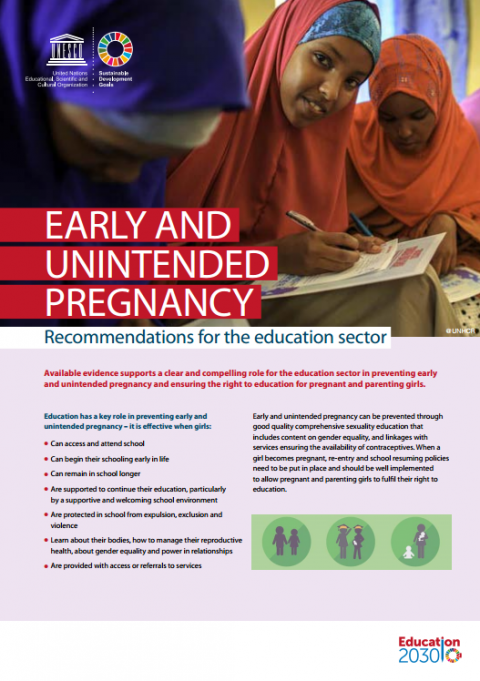 Early and unintended pregnancy: recommendations for the education sector Year of publication: 2017 Corporate author: UNESCO Early and unintended pregnancy (EUP) is a major concern in many countries. It has a major impact on the lives of adolescents – especially girls – in terms of their health, social, economic and education outcomes. This brief contains the summary of recommendations from an evidence review to support the education sector to prevent and respond to EUP.
 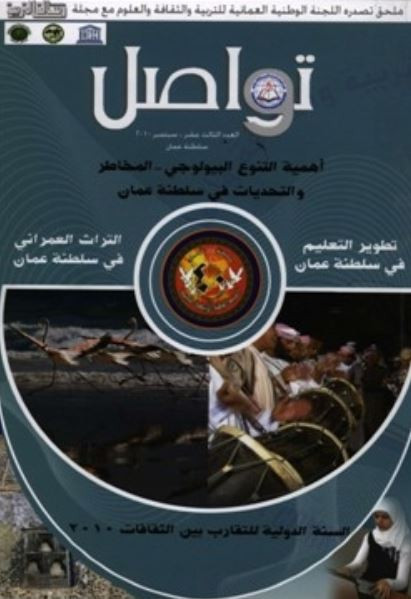 مؤتمر التربية من أجل التنمية المستدامة لدعم التنوع الثقافي والبيولوجي 24 - 26 يناير 2011م Year of publication: 2011 Author: Salem bin Hilal Al-Habsi | Mahmoud bin Abdullah Al-Abri Corporate author: Oman National Commission for Education, Culture and Science يتحدث النص عن مؤتمر تم إقامته في العاصمة العمانية مسقط، ويركز المؤتمر على التنمية المستدامة لدعم التنوع الثقافي والبيولوجي. ويأتي هذا المؤتمر لدعم الجهود الدولية ومساعدة الانظمة التعليمية في فهم التنوع وأهميته في نهضة الشعوب. Education for Sustainable Development Conference in Support of Cultural and Biological Diversity, 24-26 January 2011 Year of publication: 2011 Author: Salem bin Hilal Al-Habsi | Mahmoud bin Abdullah Al-Abri Corporate author: Oman National Commission for Education, Culture and Science The text talks about a conference held in the Omani capital, Muscat. The conference focuses on sustainable development to support cultural and biological diversity. This conference comes to support international efforts and help educational systems understand diversity and its importance in the renaissance of peoples.
  The Conceptualization of competencies related to sustainable development and sustainable lifestyles Year of publication: 2017 Author: Irmeli Halinen Corporate author: UNESCO International Bureau of Education (IBE) The education system of Finland has been developed soundly and steadily during the past 40 years. The guiding principles have been equity and equality in education as going hand in hand with the view to promote every individual’s life-long learning. Following these principles, it has strengthened the sustainability of the system itself. This report describes the role of sustainable development and the importance of learning a sustainable lifestyle in Finnish basic (primary and lower secondary) education. It highlights the goals, values, tasks, and the conceptualization of the competencies related to sustainability in the 2014 National Core Curriculum for basic education. In addition, it describes the sustainable nature of the curriculum reform process itself. The report examines the role and the contribution of various school subjects and key aspects, such as the school culture and the learning environment, in creating a strong knowledge base on which to build the values, attitudes, skills and the will needed for sustainable lifestyle, and in promoting sustainable ways of living. The report concludes with lessons drawn from the Finnish way of enhancing sustainability in education.
  Education Transforms Lives Year of publication: 2017 Corporate author: UNESCO This brochure explores UNESCO’s role in leading and coordinating the Education 2030 Agenda, which is part of a global movement to eradicate poverty through 17 Sustainable Development Goals by 2030. Education, essential to achieve all of these goals, has its own dedicated Goal 4, which aims to “ensure inclusive and equitable quality education and promote lifelong learning opportunities for all”. UNESCO is the United Nations’ specialized agency for education and the Education Sector provides global and regional leadership in education and responds to contemporary global challenges through education with a special focus on gender equality and Africa. L’éducation transforme la vie Year of publication: 2017 Corporate author: UNESCO Grâce au nouveau Programme audacieux de développement durable entériné par la communauté internationale en septembre 2015, le monde s’est fixé pour objectif d’éradiquer la pauvreté à l’horizon 2030 à travers 17 Objectifs de développement durable (ODD). Ces objectifs ambitieux ont été adoptés à l’unanimité par les 193 États membres de l’Organisation des Nations Unies. C’est à ces derniers qu’incombe en premier lieu la responsabilité de les réaliser. L’éducation, cruciale pour atteindre l’ensemble des ODD, bénéficie d’un objectif dédié, l’ODD 4, visant à « assurer l’accès de tous à une éducation de qualité, sur un pied d’égalité, et promouvoir les possibilités d’apprentissage tout au long de la vie ».L’UNESCO est la seule agence des Nations Unies chargée de tous les aspects de l’éducation et possède également un réseau mondial d’instituts et de bureaux spécialisés. C’est pourquoi elle s’est vue confier la direction et la coordination de cet objectif, aux côtés de ses partenaires, par le biais de l’agenda Éducation 2030.
 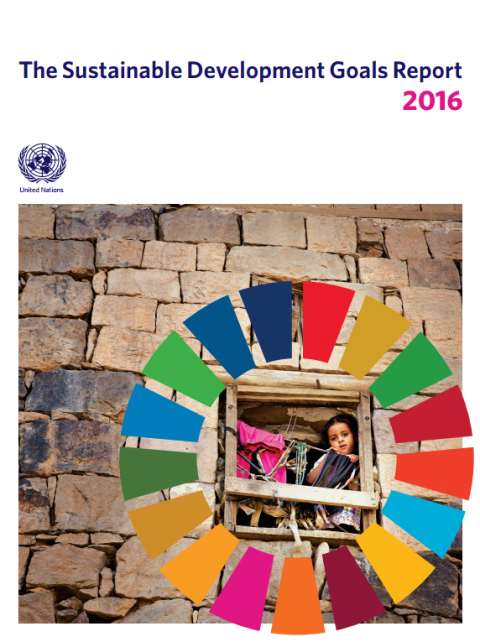 The Sustainable development goals report 2016 Year of publication: 2016 Corporate author: United Nations (UN) This inaugural report on the global Sustainable Development Goals (SDGs) is a first accounting of where the world stands at the start of our collective journey to 2030. The report analyses selected indicators from the global indicator framework for which data are available as examples to highlight some critical gaps and challenges. The list of SDG indicators agreed upon by the UN Statistical Commission in March 2016 will be subject to refinements and improvements as methods and data availability improve. Every journey has a beginning and an end. Plotting that journey and establishing key milestones along the way requires accessible, timely and reliable disaggregated data. The data requirements for the global indicators are almost as unprecedented as the SDGs themselves and constitute a tremendous challenge to all countries. Nevertheless, fulfilling these requirements through building national statistical capacity is an essential step in establishing where we are now, charting a way forward and bringing our collective vision closer to reality
  EIU Best Practices Series No. 9: Integrating Sacred Natural Sites Concept into Environmental Education Year of publication: 2008 Corporate author: APCEIU This monograph is one of APCEIU's EIU Best Practices Series, which aims to encourage educators, scholars, and activists to implement and share local initiatives on EIU. The Series No.9 introduces research on how educational content on sacred natural sites in Mongolia can lead to understanding of environment and sustainable development. Interviews and surveys conducted by local community teachers and students living in the Orkhon Valley Cultural Landscape, a World Heritage Site, indicate the importance of education in raising awareness of environmental and heritage protection.
 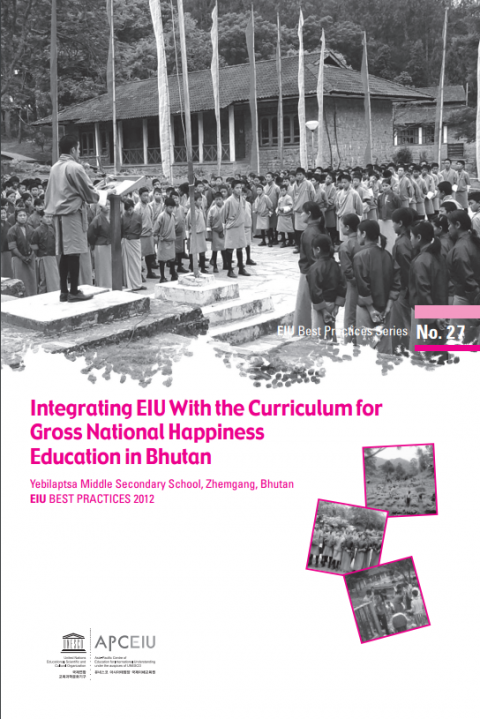 EIU Best Practices Series No. 27: Integrating EIU with the Curriculum for Gross National Happiness Education in Bhutan Year of publication: 2012 Author: Udhim Subba Corporate author: APCEIU This monograph is one of APCEIU's EIU Best Practices Series, which aims to encourage educators, scholars, and activists to implement and share local initiatives on EIU. The Series No.27 introduces Bhutan’s Yebilaptsa Middle Secondary School, in its effort to promote values of EIU as a complementary component of the Gross National Happiness Education efforts. Activities such as UNESCO club community activities, environmental learning, EIU cultural night, international exchange altogether exemplify effective ways to integrate EIU practices in the curriculum and extracurricular programs of schools.
  EIU Best Practices Series No. 19: Culture-Based Education Programme for Indigenous Children & Youth in the Philippines Year of publication: 2010 Author: Benjamin David Abadiano Corporate author: APCEIU This monograph is one of APCEIU's EIU Best Practices Series, which aims to encourage educators, scholars, and activists to implement and share local initiatives on EIU. The Series No.19 introduces the Pumulaan program, a successful culture-based education programme for indigenous children and youth in the Philippines. The program is similar to that of Tugdaan, a widely recognized education program that promote learning for the Indigenous people. The Pumulaan program focuses on providing culturally sensitive, appropriate, and relevant education to students in Mangyan Tribe in Mindoro and the Matigsalog Tribe in Mindanao, incorporating values of peace, harmony, and diversity within the education programs.