
Resources
Explore a wide range of valuable resources on GCED to deepen your understanding and enhance your research, advocacy, teaching, and learning.
526 Results found
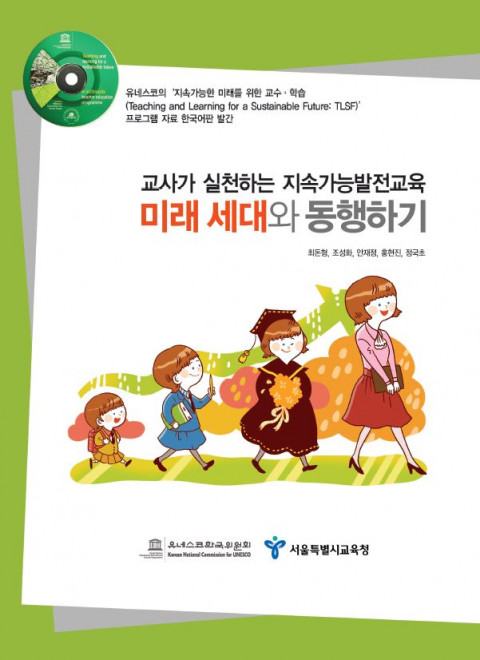 교사가 실천하는 지속가능발전교육: 미래 세대와 동행하기 Year of publication: 2011 Author: 최돈형 | 조성화 | 안재정 | 홍현진 | 정국초 Corporate author: 유네스코한국위원회 | 서울특별시교육청 이 책은 21세기 환경교육이 지향해야 할 지속가능발전교육(ESD)을 수행할 수 있는 환경교육 분야의 전문가를 양성하고자 국제적으로 활용되고 있는 유네스코 TLSF 프로그램의 27개 모듈을 한국어로 번안하고, 여기에 한국적 맥락의 사례를 추가해 한국 상황에서의 적합성 및 활용 가능성을 제고했다. 이 책은 27개의 모듈을 교육과정 이론(Curriculum Rationale), 교육과정에서의 지속가능발전(Sustainable Development Across the Curriculum), 현시대 쟁점들(Contemporary Issues), 교수 ․ 학습 전략(Teaching and Learning Strategies) 등 4개의 영역으로 분류, 약 120시간 분량으로 구성되어 있다.
 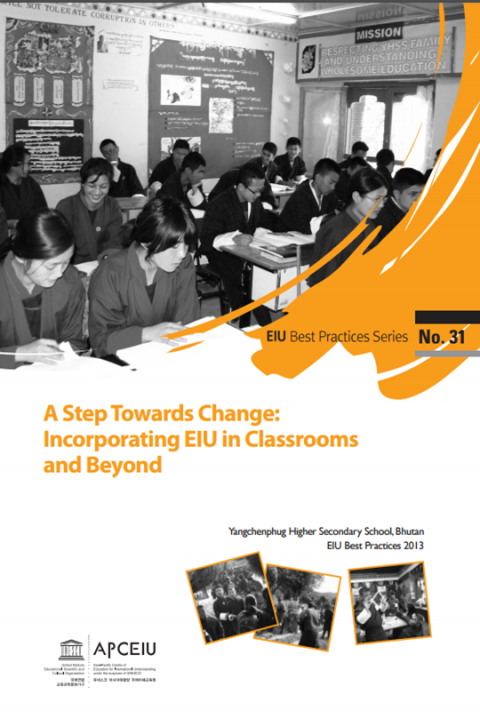 EIU Best Practices Series No.31: A Step towards Change: Incorporating EIU in Classrooms and Beyond Year of publication: 2013 Corporate author: APCEIU This monograph is one of APCEIU's EIU Best Practices Series, which aims to encourage educators, scholars, and activists to implement and share local initiatives on EIU. The Series No.31 introduces a case study in which Bhutanese school carried out activities and curriculum development to successfully promote EIU and ESD for students and teachers. While the school’s curriculum already embodies a degree of EIU, the school strived to be more creative in upholding the existing content by exploring newer issues of media ethics, human rights, culture, and environmental conservation for fruitful engagement. This in turn allowed the target audience to learn the values of EIU/ESD for a culture of peace.
 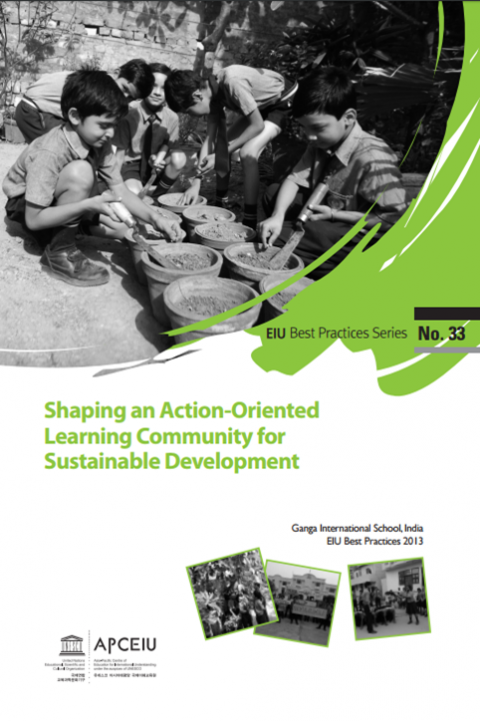 EIU Best Practices Series No.33: Shaping an Action-Oriented Learning Community for Sustainable Development Year of publication: 2013 Corporate author: APCEIU This monograph is one of APCEIU's EIU Best Practices Series, which aims to encourage educators, scholars, and activists to implement and share local initiatives on EIU. The Series No.33 introduces a program implemented at the Ganga International School in India to promote eco-friendly and multicultural society. Teachers, students, and local community members engaged in awareness raising events such as Recycled Paper Art exhibition, Tree Plantation Drive, and Anti-Malaria Project, allowing everyone to absorb the meaning of EIU and sustainable development. Furthermore, students partook in seed exchange program and video conferences to discuss environmental issues with students of partner schools, which amplified impact at local and global levels.
 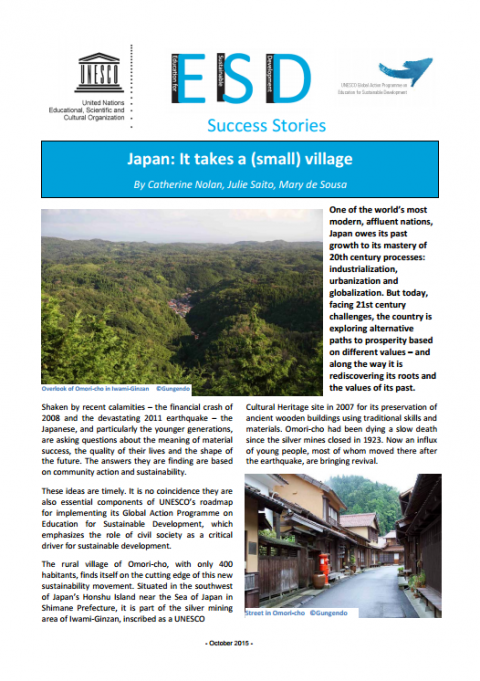 Japan: it takes a (small) village Year of publication: 2015 Author: Catherine Nolan | Julie Saito | Mary de Sousa Corporate author: UNESCO ESD Success Stories are showcasing compelling stories with a personal/human dimension from all five UNESCO regions (Africa, Arab States, Asia and Pacific, Europe & North America and Latin America & the Caribbean). The stories illustrate the wide diversity of ESD approaches and initiatives taking place in different parts of the world. They show how involvement with ESD has changed the lives of specific individual persons and how they have become more active in their community. Each story centers on one individual or a group of individuals.The small village of Omori-cho in Japan explores alternative paths to prosperity based on community action and sustainability. Japon: il suffit d'un (petit) village Year of publication: 2015 Author: Catherine Nolan | Julie Saito | Mary de Sousa Corporate author: UNESCO ESD Success Stories are showcasing compelling stories with a personal/human dimension from all five UNESCO regions (Africa, Arab States, Asia and Pacific, Europe & North America and Latin America & the Caribbean). The stories illustrate the wide diversity of ESD approaches and initiatives taking place in different parts of the world. They show how involvement with ESD has changed the lives of specific individual persons and how they have become more active in their community. Each story centers on one individual or a group of individuals.The small village of Omori-cho in Japan explores alternative paths to prosperity based on community action and sustainability. Japón: se necesita una (pequeña) aldea Year of publication: 2015 Author: Catherine Nolan | Julie Saito | Mary de Sousa Corporate author: UNESCO ESD Success Stories are showcasing compelling stories with a personal/human dimension from all five UNESCO regions (Africa, Arab States, Asia and Pacific, Europe & North America and Latin America & the Caribbean). The stories illustrate the wide diversity of ESD approaches and initiatives taking place in different parts of the world. They show how involvement with ESD has changed the lives of specific individual persons and how they have become more active in their community. Each story centers on one individual or a group of individuals.The small village of Omori-cho in Japan explores alternative paths to prosperity based on community action and sustainability.