
Resources
Explore a wide range of valuable resources on GCED to deepen your understanding and enhance your research, advocacy, teaching, and learning.
2 Results found
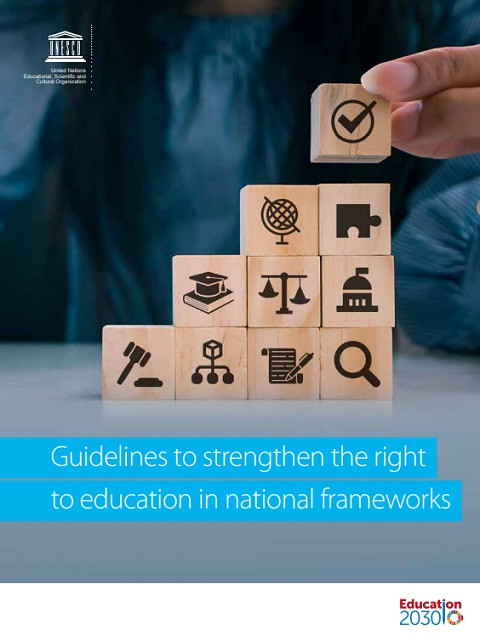 Guidelines to Strengthen the Right to Education in National Frameworks Year of publication: 2021 Corporate author: UNESCO These Guidelines aim to strengthen national frameworks by assisting countries and stakeholders in conducting an assessment of the compatibility of their national education legal and policy framework with international standard-setting instruments on the right to education, and in light of SDG 4 commitments. These Guidelines provide a hands-on approach aiming to assist in the review of national education legal and policy frameworks in view of:Developing practical knowledge on the right to education based on the Right to education handbook and supporting capacity developmentProviding operational tools to assess the status of the right to education at country level and its compatibility with international and regional human rights obligations and international commitments (notably SDG 4)Identifying legal and policy gaps in education at country level and resulting challengesMaking recommendations for the full alignment of national constitutions, legislation , singular and policies with international standards and provisionsProviding insights on how to implement the recommendations in view of necessary reforms.
 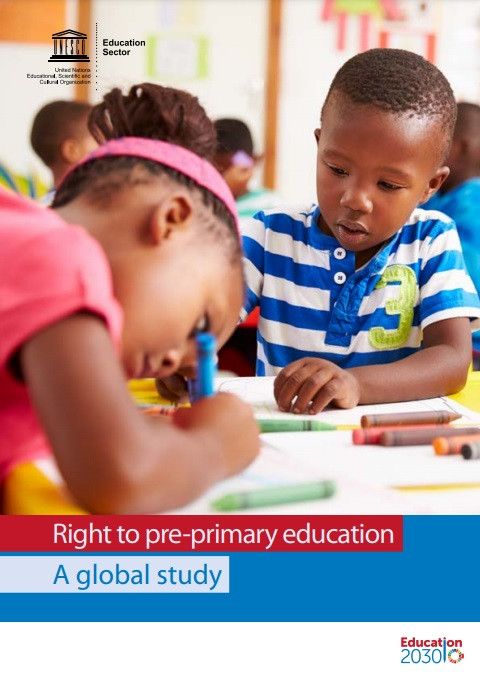 Right to Pre-Primary Education: A Global Study Year of publication: 2021 Corporate author: UNESCO Early childhood care and education is increasingly recognized as an essential element in realizing a wide range of educational, social and economic rights. Children from vulnerable households and communities stand to gain most from access to quality early learning opportunities. With about 50 per cent of children globally not yet enrolled in pre-primary education, enabling their inclusion remains a central question for education policymakers, stakeholders and parents.This Study provides a global overview and an analysis of the adoption of legal provisions for free and compulsory pre-primary education at national level. By offering a rights-based perspective to the implementation of pre-primary education, it aims to complement existing literature on SDG Target 4.2, which focuses mainly on policy outcomes.The results show that pre-primary education is a well determined and defined right in too few countries. Yet, the benefit of free and compulsory education observed is that children appear to have higher rates of early childhood well-being.In light of the research conducted and its main conclusions, a set of levers to promote the inclusion of early childhood and pre-primary education as a human right within long-term education and development objectives are presented in terms of governance and financing, legal framework, societal expectations, monitoring and evaluation and early childhood development overall. Prioritizing the needs of young children and the fulfilment of their right to free and compulsory pre-primary education is a critical opportunity for governments to make positive differences in children’s lives and to achieve broader national, social and economic goals.