
Resources
Explore a wide range of valuable resources on GCED to deepen your understanding and enhance your research, advocacy, teaching, and learning.
7 Results found
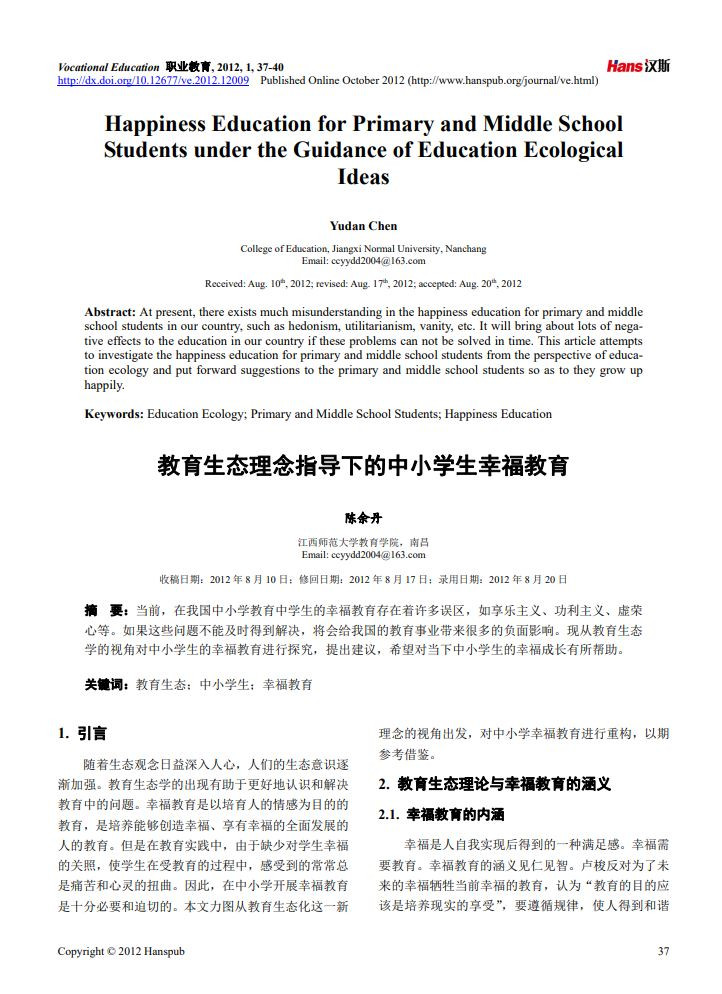 Happiness Education for Primary and Middle School Students under the Guidance of Education Ecological Ideas Year of publication: 2012 Author: Chen Yudan This paper discusses the issue of happiness education in primary and secondary education from the perspective of Educational Ecology, and provides suggestions for improvemet. 教育生态理念指导下的中小学生幸福教育 Year of publication: 2012 Author: Chen Yudan 本文从教育生态学的视角探讨中小学如何开展幸福教育,并给出相关建议。
 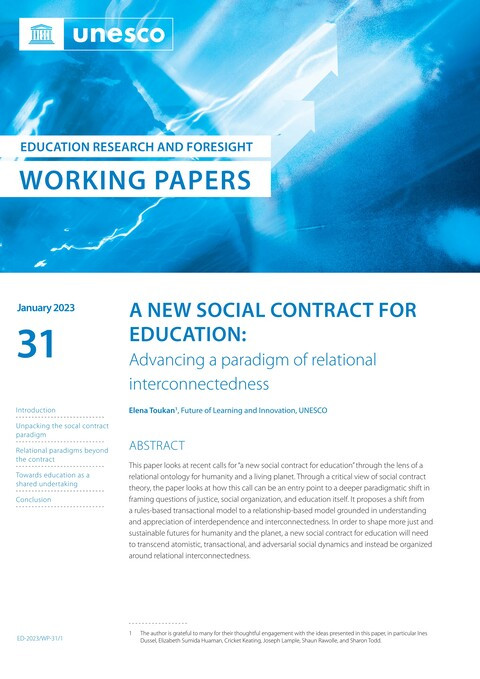 نحو عقد اجتماعي جديد للتربية والتعليم: الأخذ بترابط العلاقات نموذجاً فكرياً Year of publication: 2023 Author: Elena Toukan Corporate author: UNESCO إىل إبرام »عقد اجتماعي جديد للرتبية والتعليم« وذلك بمنظار تتناول هذه املقالة الدعوات الصادرة مؤخرا العالقات الوجودية بني البرش والكوكب الحي، وتفحص من خالل التحليل النقدي لنظرية العقد االجتماعي ً إىل إحداث تحول أعمق عىل مستوى النموذج الفكري عند تناول كيف يمكن أن توفر تلك الدعوات مدخال مسألة العدالة والتنظيم االجتماعي والتعليم بحد ذاته. وتقرتح املقالة التحول من نموذج املعامالت القائمة عىل قواعد محددة إىل نموذج قائم عىل العالقات يرتكز عىل إدراك عالقات الرتابط والتداخل وتقديرها حق ً للبرشية والكوكب، ال بد للعقد االجتماعي الجديد للرتبية ً واستدامة ً إىل بناء مستقبل أكثر عدال قدرها. وسعيا والتعليم من تجاوز الديناميات االجتماعية الفردية الذرية والقائمة عىل املعامالت والصدام، بل أن ينتظم حول ترابط العالقات املتشابكة. A New Social Contract for Education: Advancing a Paradigm of Relational Interconnectedness Year of publication: 2023 Author: Elena Toukan Corporate author: UNESCO This paper looks at recent calls for “a new social contract for education” through the lens of a relational ontology for humanity and a living planet. Through a critical view of social contract theory, the paper looks at how this call can be an entry point to a deeper paradigmatic shift in framing questions of justice, social organization, and education itself. It proposes a shift from a rules-based transactional model to a relationship-based model grounded in understanding and appreciation of interdependence and interconnectedness. In order to shape more just and sustainable futures for humanity and the planet, a new social contract for education will need to transcend atomistic, transactional, and adversarial social dynamics and instead be organized around relational interconnectedness. Un nuevo contrato social para la educación: promover un paradigma de interconexión relacional y los conocimientos Year of publication: 2023 Author: Elena Toukan Corporate author: UNESCO En el presente artículo se examinan los recientes llamamientos a “un nuevo contrato social para la educación” a través de la lente de una ontología relacional para la humanidad y un planeta vivo. Mediante una visión crítica de la teoría del contrato social, el artículo examina cómo este llamamiento puede ser un punto de partida hacia un cambio paradigmático más profundo a la hora de enmarcar cuestiones de justicia, organización social y la propia educación. Propone pasar de un modelo transaccional basado en normas a un modelo basado en relaciones y fundamentado en la comprensión y la apreciación de la interdependencia y la interconexión. Con miras a forjar futuros más justos y sostenibles para la humanidad y el planeta, el nuevo contrato social para la educación deberá trascender las dinámicas sociales atomistas, transaccionales y de confrontación y organizarse en torno a la interconexión relacional. Un nouveau contrat social pour l’éducation : promouvoir un paradigme d’interconnexion relationnelle Year of publication: 2023 Author: Elena Toukan Corporate author: UNESCO Le présent article examine les récents appels en faveur d’un « nouveau contrat social pour l’éducation » à travers le prisme d’une ontologie relationnelle au service de l’humanité et d’une planète vivante. Il se penche, en portant un regard critique sur la théorie du contrat social, sur la façon dont ces appels peuvent amorcer un changement de paradigme plus profond en ce qui concerne la façon d’aborder les questions de justice, d’organisation sociale et d’éducation. Il propose de passer d’un modèle transactionnel fondé sur les règles à un modèle relationnel qui repose sur la compréhension et la valorisation de l’interdépendance et de l’interconnexion. Afin de façonner des futurs plus justes et plus durables pour l’humanité et la planète, le nouveau contrat social pour l’éducation devra dépasser les dynamiques sociales atomistes, transactionnelles et antagonistes et se structurer autour de l’interconnexion relationnelle.
 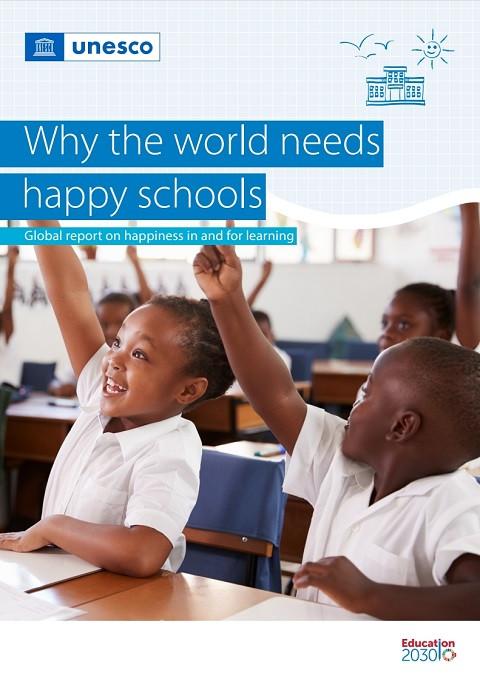 Why the World Needs Happy Schools: Global Report on Happiness In and For Learning Year of publication: 2024 Corporate author: UNESCO Seeing a teacher smile. Hearing students laugh. Feeling a hug from a friend. Smelling fresh air. Tasting a nutritious school meal. These five senses can stimulate happiness at school and improve the learning experiences, outcomes and well-being of students. Through the ‘Happy Schools’ initiative, UNESCO is placing happiness at the core of the transformation of education. It encourages education systems to recognize happiness as both a means to and a goal of quality learning. The initiative is informed by a growing evidence base linking happiness with better learning, teaching, well-being and overall system resilience. This report presents the UNESCO global Happy Schools framework consisting of 4 pillars – people, process, place and principles – and 12 high-level criteria to guide the transformation of learning. It offers a holistic model for embedding happiness into education policies and cultivating it in schools through systemic changes. The report illustrates how the ‘Happy Schools’ initiative aims to create top-down and bottom-up transformation, encouraging governments to recognize happiness as a core objective of education. It supports the scaling of promising practices of joyful learning from the school to the policy level.