
Resources
Explore a wide range of valuable resources on GCED to deepen your understanding and enhance your research, advocacy, teaching, and learning.
105 Results found
 Education for citizenship and coexistence: reference document Year of publication: 2014 Author: Iván Fernández Lefort Corporate author: Bogotá. District Secretariat of Education | Proyecto Educación para la Ciudadanía y la Convivencia (PECC) The Secretariat of Education of Bogotá has established education for citizenship and coexistence as one of the main topics of the Educative Sector Plan. The purpose is to strengthen the participatory, democratic and convivial processes that are developed at public schools. Therefore, the Secretariat of Education of Bogotá has created the Education for Citizenship and Civic Coexistence project. This document gathers the theoretical framework of citizenship and civic coexistence, orientated to the creation of curricula, learning communities and participatory spaces related to the development of civic capabilities that lead to a balance between academic knowledge and citizenship knowledge. It is mainly aimed for school managers, teachers and people interested in knowing the bases and orientations the project has, in order to be implemented at schools. Educational guideline: education for citizenship and coexistence Year of publication: 2014 Author: Adriana Carrillo Monsalve | Lizbeth Guerrero Cuan | Katherine Porras Torrent | Rigoberto Solano Salinas | Yudy Velásquez Hoyos Corporate author: Bogotá. District Secretariat of Education | Proyecto Educación para la Ciudadanía y la Convivencia (PECC) This document contains the pedagogical principles that make the Education for Citizenship and Civic Coexistence not just a project, rather a proposal of an education policy sustained in the transformation of society, human welfare and the development of citizenship skills. Therefore, it is directed mainly to School Directors, coordinators, educational mediators and facilitators of Citizenship and Civic Coexistence, who wish to start the processes of strengthening citizen capabilities in their educational communities. In this document you can find what we have called the Learning Citizenship Path, a pedagogical tool that identifies learning in citizenship for each of the educational cycles in three dimensions -Individual, Societal, systemic- This Learning Citizenship Path facilitates the curricular integration of citizenship learning in a pedagogical and practical framework, with transversal projects and educational practices, taking into account citizenship skills and new knowledge. Planning education with and for youth Year of publication: 2015 Author: Anja Hopma | Lynne Sergeant Corporate author: UNESCO International Institute for Educational Planning (IIEP) As a central stakeholder in education, young people should be involved in educational planning. This publication focuses on the rationale for and obstacles to youth involvement, as well as the efforts of ministries of education to engage youth in their planning work. It is based on discussions and recommendations that emerged from the high-level international policy forum on ‘Engaging youth in planning education for social transformation’ organized by the UNESCO International Institute for Educational Planning (IIEP) in Paris from 16 to 18 October 2012. This policy forum set out to explore the following broad themes: (i) youth engagement in planning education for conflict transformation and peace building; (ii) strengthening young people’s skills and opportunities for civic engagement within formal and non-formal education systems; and (iii) enhancing the relevance of education systems for young people in their transition to employment. This publication draws on the exchanges during the pre-forum online debates, discussions among participants during the forum, and testimonials from practitioners and youth. Advocacy kit for promoting multilingual education: including the excluded Year of publication: 2007 Corporate author: UNESCO Bangkok This kit was prepared for all of those who want to ensure that “Education for All” does, indeed, include everyone! The kit will be especially valuable for policy makers, education practitioners and specialists who want to improve access to and quality of education for those excluded by language. It will also be helpful for speakers of ethnic minority languages who want to improve the education situation in their own communities. This kit is designed to raise awareness on the importance of mother tongue-based multilingual education (MLE). It presents key arguments and facts about MLE and provides important insights about the value and benefits of providing education in learners’ mother tongue. The kit also presents ideas, research findings and concrete examples that you can use to think about your own situation and suggests steps for taking actions to make your school system more responsive to linguistic diversity. The kit is not a definitive textbook, and it will not have an answer for every problem that you might face. To help you as much as possible, at the end of each booklet we have included lists of references. In addition, each booklet contains a glossary of terms and, at the front of each booklet is a one-page summary of its contents. This kit contains three main booklets. Each booklet has a designated audience: 1) policy makers, 2) education programme planners and practitioners and 3) community members. Please remember that developing MLE requires contributions from everyone at all levels. For that reason, we encourage you to use all three booklets along with other available resources as you work together to plan, implement and sustain your MLE programmes. This kit can be used in many different ways. For those who are already involved in MLE programmes, you might use these ideas to help you to promote mother tongue instruction and strengthen your programme. Those who are not familiar with multilingual education but want to improve educational access for minority language students might use these booklets to identify specific points that they can investigate and discuss in their own contexts. Citizenship education and coexistence: workshop reports Year of publication: 2014 Corporate author: Bogotá. Secretaría de Educación del Distrito (SED) The present document contains the reports of the work and conclusions built during the Technical Workshop on Education for Citizenship and coexistence, for which were raised the following objectives:Assess the relevance of Education for Citizenship and coexistence proposed by the District Education Secretary,assess the training materials of the Toolbox produced for the implementation of Education for Citizenship and coexistence,and strengthen and consolidate this proposal.
  Schools for Conflict or for Peace in Afghanistan Year of publication: 2015 Author: Dana Burde The publication provides a systematic analysis of the relationship between education and conflict, tracing how different approaches have been applied in Afghanistan as the rationale for aid has shifted from a policy of benign neglect, to an effort to support war, to an effort to mitigate conflict. Using this history as a case study, the book explores how foreign intervention in education can contribute either to conflict or to peace..
 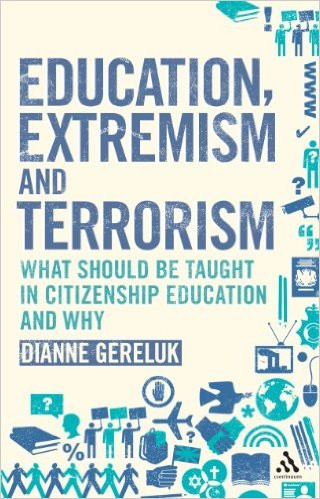 Education, Extremism and Terrorism: What should be Taught in Citizenship Education and Why Year of publication: 2012 Author: Dianne Gereluk Should educators be exploring terrorism and extremism within their classrooms? If so, what should they be teaching, and how? Dianne Gereluk draws together the diverging opinions surrounding these debates, exploring and critiquing the justifications used for why these issues should be addressed in schools. She goes on to consider the ways in which educators should teach these topics, providing practical suggestions. Education, Poverty and Terrorism: Is There a Causal Connection? Year of publication: 2003 Author: Alan B. Krueger | Jitka Maleckova Corporate author: American Economic Association In the authors' view, any connection between poverty, education and terrorism is indirect, complicated and probably quite weak. Instead of viewing terrorism as a direct response to low market opportunities or ignorance, the article suggests it is more accurately viewed as a response to political conditions and long-standing feelings of indignity and frustration that have little to do with economics. Case Study - Pakistan: Education, Religion and Conflict Year of publication: 2015 Author: Raza Rumi Corporate author: Tony Blair Faith Foundation | McGill University Pakistan is in the midst of crisis. It is threatened by virulent extremist groups and is suffering from a failing education system that is poorly funded and politically manipulated. It promulgates an undefined Islamo-nationalist ideology that lays the foundations for widespread acceptance of ideologically motivated violence. Reforms to the curriculum have been legislated but are badly implemented by the country's politicians; the international community has largely turned a blind eye to these shortcomings. Unless aid and advocacy are specifically focused on far-reaching educational reform that directly tackles extremism, the long-term consequences will be extremely severe.
  Homegrown terrorism and transformative learning: an interdisciplinary approach to understanding radicalization Year of publication: 2010 Author: Alex S. Wilner | Claire-Jehanne Dubouloz Since 2001, a preponderance of terrorist activity in Europe, North America and Australia has involved radicalized Westerners inspired by Al Qaeda. Described as ‘homegrown terrorism’, perpetrators are citizens and residents born, raised, and educated within the countries they attack. While most scholars and policy-makers agree that radicalization plays a central role in persuading Westerners to embrace terrorism, little research properly investigates the internal and cognitive processes inherent to radicalization. Transformative learning theory, developed from the sciences in education, health and rehabilitation, provides an unconventional and interdisciplinary way to understand the radicalization process. The theory suggests that sustained behavioural change can occur when critical reflection and the development of novel personal belief systems are provoked by specific triggering factors.