
Resources
Explore a wide range of valuable resources on GCED to deepen your understanding and enhance your research, advocacy, teaching, and learning.
105 Results found
 Engaging and Educating Women and Girls in the Prevention of Violent Conflict and Violent Extremism Year of publication: 2014 Author: Kathleen Kuehnast Corporate author: United States Institute of Peace (USIP) Dr. Kathleen Kuehnast, director of the Center for Gender and Peacebuilding at the U.S. Institute of Peace, testified on the importance of engaging and educating women and girls in conflict zones in order to prevent and mitigate violent conflict and violent extremism. Abu Dhabi Memorandum on Good Practices for Education and Countering Violent Extremism Year of publication: 2014 Author: Sara Zeiger Corporate author: Hedayah Foundation The contents of this brief are based on the discussions that occurred from 3 to 4 November 2014 at an expert workshop on Research Trends in Countering Violent Extremism hosted by Hedayah in Abu Dhabi, United Arab Emirates. The purpose of this two-day expert roundtable was to bring together researchers, policymakers and practitioners in a closed discussion of the current trends in CVE research. The goals at the meeting were to address the current research outcomes in countering violent extremism; determine the critical gaps in research on CVE; identify the new and emerging threats of violent extremism; and establish a recommended research agenda for Hedayah and CVE researchers in the coming two years. Gain or Drain: Understanding Public Private Partnerships in Education Year of publication: 2013 Corporate author: Asia South Pacific Association for Basic and Adult Education (ASPBAE) As a facilitating tool for education campaign coalitions and other education campaigners to begin to build deeper appreciation and understanding of the issue, this Primer specifically seeks to:• Contribute to achieving clarity on the origin, scope and context of PPPs in education• Provide a simple guideline in assessing PPP initiatives to measure how they relate to realising the right to education• Help education campaign coalitions and networks deepen their analyses and define their operational positions for policy engagement on PPP initiatives. International conference: reorienting TVET policy towards education for sustainable development: final report Year of publication: 2010 Corporate author: UNESCO International Centre for Technical and Vocational Education and Training (UNEVOC) | Internationale Weiterbildung und Entwicklung | Colombo Plan Staff College for Technician Education This publication reports on the ESD review-responsive and future-oriented programme on “Reorienting TVET Policy Towards Education for Sustainable Development”, jointly organized by the UNESCO-UNEVOC International Centre in Bonn, Germany, InWEnt – Capacity Building International, Germany and Colombo Plan Staff College for Technician Education in Manila, Philippines. Educação: um tesouro a descobrir, relatório para a UNESCO da Comissão Internacional sobre Educação para o Século XXI (destaques) Year of publication: 2010 Author: Jacques Delors Corporate author: UNESCO Brasilia Learning: The Treasure Within, commonly referred to as the 'Delors Report', proposes a holistic and integrated vision of education based on the paradigms of lifelong learning, and the four pillars of learning to be, to know, to do, and to live together.
 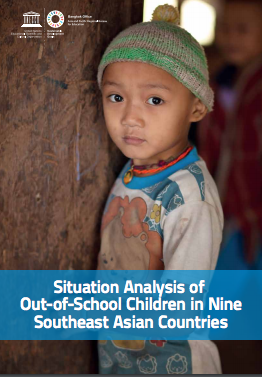 Situation analysis of out-of-school children in nine southeast Asian countries Year of publication: 2017 Corporate author: UNESCO Bangkok In a world that continually aspires for every child and youth to have access to education, there are still large numbers of out-of-school children (OOSC) who are yet to claim their right to basic education. In 2013, the number of children who are not in school, who have dropped out, and who have never been to school have risen to 124 million after seeing the numbers continuously drop for much of the first decade of the 21st century. In much of Southeast Asia, close to seven million children of both primary and lower secondary school-age find themselves in the same situation. In an effort to assist the countries in Southeast Asia to develop more robust policies and programmes for OOSC in their respective countries, this report was commissioned to map out the current legislations, policies, characteristics, and interventions on out-of-school children in nine countries across the region, which include Cambodia, Indonesia, Lao PDR, Malaysia, Myanmar, the Philippines, Thailand, Timor-Leste and Vietnam. Using a desk review of available and relevant secondary data, the study covered OOSC of primary and lower secondary school-age.
  LEARNING to Realize Education’s Promise Corporate author: World Bank The World Development Report 2018 (WDR 2018)—LEARNING to Realize Education’s Promise—is the first ever devoted entirely to education. And the timing is excellent: education has long been critical to human welfare, but it is even more so in a time of rapid economic and social change. The best way to equip children and youth for the future is to place their learning at the center. The 2018 WDR explores four main themes: 1) education’s promise; 2) the need to shine a light on learning; 3) how to make schools work for learners; and 4) how to make systems work for learning.
 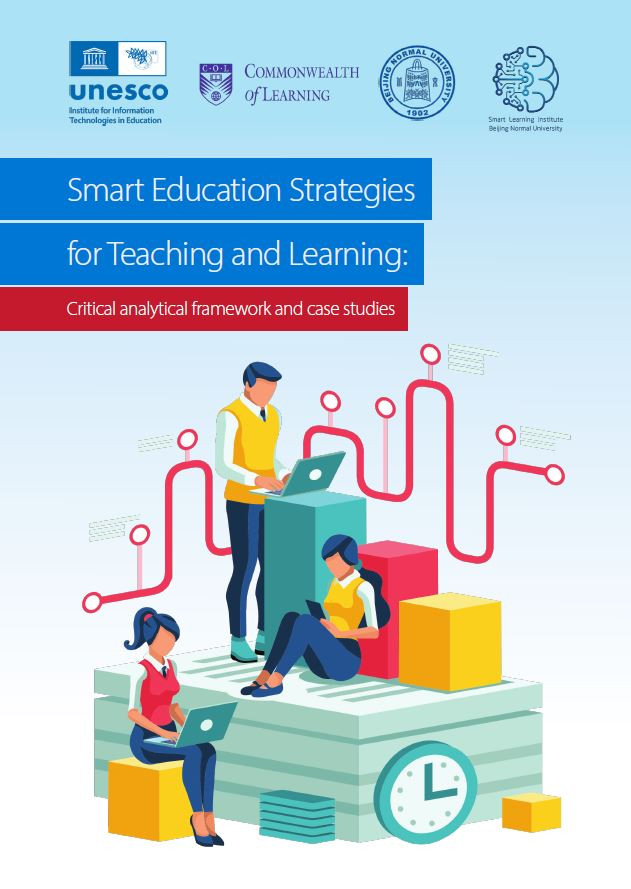 Smart Education Strategies for Teaching and Learning: Critical Analytical Framework and Case Studies Year of publication: 2022 Author: Shafika Isaacs | Sanjaya Mishra Corporate author: UNESCO Institute for Information Technologies in Education (IITE) | Beijing Normal University This electronic publication about smart education strategies for building the resilience of education and training systems in the postpandemic environment provides a framework to develop appropriate policy and strategy in existing and emerging forms of schooling, higher education, technical and vocational education, and training (TVET), adult education and lifelong learning, including formal, nonformal and informal educational environments. The publication reviews the status of smart education policies in 10 countries. It includes 15 case studies within the six policy themes: infrastructure, curriculum and pedagogy, digital education resources and platforms, skills and competencies, governance, management and administration, and partnership.
 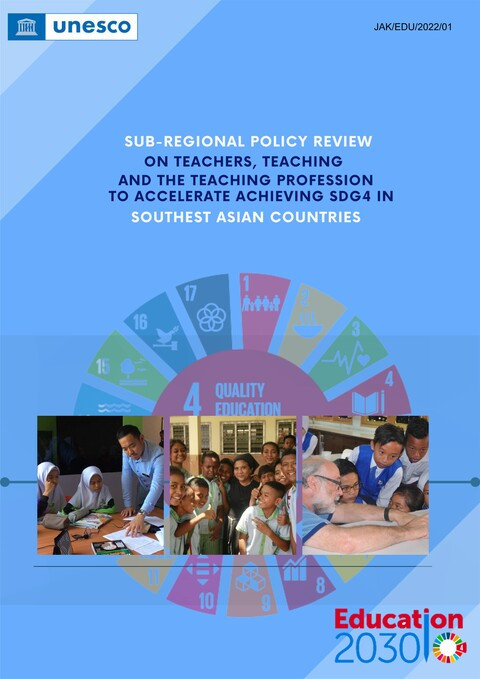 Sub-regional Policy Review on Teachers, Teaching and the Teaching Profession to Accelerate Achieving SDG4 in Southeast Asian Countries Year of publication: 2022 Author: Azlina Abdul Aziz | Kamisah Osman | Khairul Farhah Khairuddin | Meeyoung Choi Corporate author: UNESCO Jakarta The objectives of this report are to analyse existing national policies related to Teachers, Teaching and the Teaching Profession and examine their implementation in the five UNESCO cluster countries, namely Brunei, Indonesia, Malaysia, the Philippines and Timor-Leste. Eight themes have emerged from the systematic review of literature and they are i) Teacher Standard Competence, ii) Teacher professional Development, iii) Teacher Support, iv) Teaching Quality, v) Formative and Summative Assessment Framework on Teaching, vi) Showcasing and Rewarding Best Teaching Practices, vii) Teacher Professionalism and finally viii) Teacher Career Development.
  Languages in adult literacy: policies and practices during the 15 years of EFA (2000-2015) Year of publication: 2015 Author: Clinton Robinson Linguistic diversity characterises many countries with large literacy needs. Meeting these needs will require a multilingual approach based on learning initial literacy in the learner’s mother tongue, with other languages used subsequently. This paper identifies five major challenges in implementing multilingual programmes, and traces the international policy developments over the 15 years of the EFA period. Four case studies – Mexico, Morocco, Papua New Guinea and Senegal – illustrate a range of policies, showing differing approaches and levels of commitment in providing literacy acquisition based on the mother tongue. The paper concludes with six policy orientations to guide action as part of the post- 2015 agenda.