
Resources
Explore a wide range of valuable resources on GCED to deepen your understanding and enhance your research, advocacy, teaching, and learning.
6 Results found
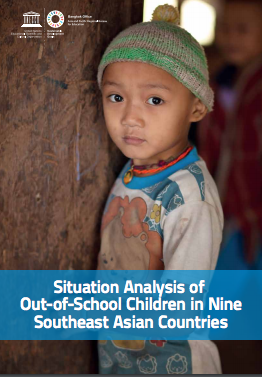 Situation analysis of out-of-school children in nine southeast Asian countries Year of publication: 2017 Corporate author: UNESCO Bangkok In a world that continually aspires for every child and youth to have access to education, there are still large numbers of out-of-school children (OOSC) who are yet to claim their right to basic education. In 2013, the number of children who are not in school, who have dropped out, and who have never been to school have risen to 124 million after seeing the numbers continuously drop for much of the first decade of the 21st century. In much of Southeast Asia, close to seven million children of both primary and lower secondary school-age find themselves in the same situation. In an effort to assist the countries in Southeast Asia to develop more robust policies and programmes for OOSC in their respective countries, this report was commissioned to map out the current legislations, policies, characteristics, and interventions on out-of-school children in nine countries across the region, which include Cambodia, Indonesia, Lao PDR, Malaysia, Myanmar, the Philippines, Thailand, Timor-Leste and Vietnam. Using a desk review of available and relevant secondary data, the study covered OOSC of primary and lower secondary school-age. Situation analysis of out-of-school children in nine southeast Asian countries Year of publication: 2017 Corporate author: UNESCO Bangkok In a world that continually aspires for every child and youth to have access to education, there are still large numbers of out-of-school children (OOSC) who are yet to claim their right to basic education. In 2013, the number of children who are not in school, who have dropped out, and who have never been to school have risen to 124 million after seeing the numbers continuously drop for much of the first decade of the 21st century. In much of Southeast Asia, close to seven million children of both primary and lower secondary school-age find themselves in the same situation. In an effort to assist the countries in Southeast Asia to develop more robust policies and programmes for OOSC in their respective countries, this report was commissioned to map out the current legislations, policies, characteristics, and interventions on out-of-school children in nine countries across the region, which include Cambodia, Indonesia, Lao PDR, Malaysia, Myanmar, the Philippines, Thailand, Timor-Leste and Vietnam. Using a desk review of available and relevant secondary data, the study covered OOSC of primary and lower secondary school-age. Situation analysis of out-of-school children in nine southeast Asian countries Year of publication: 2017 Corporate author: UNESCO Bangkok In a world that continually aspires for every child and youth to have access to education, there are still large numbers of out-of-school children (OOSC) who are yet to claim their right to basic education. In 2013, the number of children who are not in school, who have dropped out, and who have never been to school have risen to 124 million after seeing the numbers continuously drop for much of the first decade of the 21st century. In much of Southeast Asia, close to seven million children of both primary and lower secondary school-age find themselves in the same situation. In an effort to assist the countries in Southeast Asia to develop more robust policies and programmes for OOSC in their respective countries, this report was commissioned to map out the current legislations, policies, characteristics, and interventions on out-of-school children in nine countries across the region, which include Cambodia, Indonesia, Lao PDR, Malaysia, Myanmar, the Philippines, Thailand, Timor-Leste and Vietnam. Using a desk review of available and relevant secondary data, the study covered OOSC of primary and lower secondary school-age.
 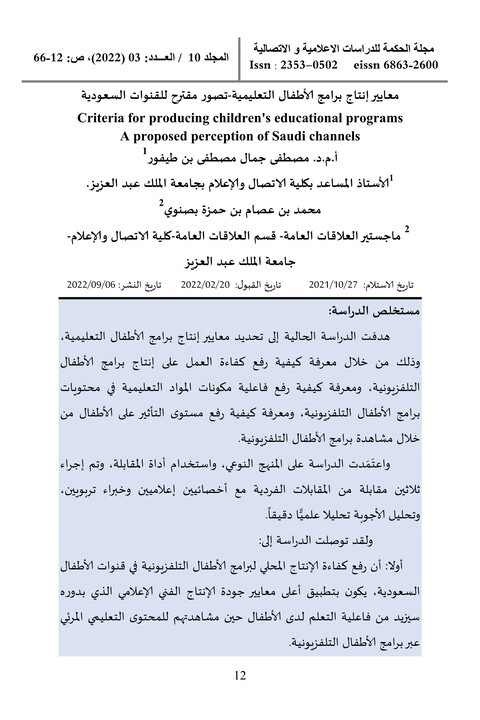 معايير إنتاج برامج الأطفال التعليمية: تصور مقترح للقنوات السعودية (مجلة الحكمة للدراسات الإعلامية والاتصالية؛ Vol.10, No.3) Year of publication: 2022 Author: Basnawi Muhammad مستخلص الدراسة هدفت الدراسة الحالية إلى تحديد معايير إنتاج برامج الأطفال التعليمية، وذلك من خلال معرفة كيفية رفع كفاءة العمل على إنتاج برامج الأطفال التلفزيونية، ومعرفة كيفية رفع فاعلية مكونات المواد التعليمية في محتويات برامج الأطفال التلفزيونية، ومعرفة كيفية رفع مستوى التأثير على الأطفال من خلال مشاهدة برامج الأطفال التلفزيونية. واعتَمَدت الدراسة على المنهج النوعي، واستخدام أداة المقابلة، وتم إجراء ثلاثين مقابلة من المقابلات الفردية مع أخصائيين إعلاميين وخبراء تربويين، وتحليل الأجوبة تحليلا علميًّا دقيقاً. ولقد توصلت الدراسة إلى: أولا: أن رفع كفاءة الإنتاج المحلي لبرامج الأطفال التلفزيونية في قنوات الأطفال السعودية، يكون بتطبيق أعلى معايير جودة الإنتاج الفني الإعلامي الذي بدوره سيزيد من فاعلية التعلم لدى الأطفال حين مشاهدتهم للمحتوى التعليمي المرئي عبر برامج الأطفال التلفزيونية. ثانياً: أنَّ الموضوعات ذات الأولوية الواجب توفرها في محتوى برامج الأطفال التعليمية هي: (التربية العقلية، التربية الأخلاقية، التنشئة الاجتماعية). ثالثاً: أنَّ استخدام الوسائل التربوية الحديثة في صناعة محتوى برامج الأطفال التعليمية وهي: (النمذجة، والقصة الدرامية، والمسابقات، والتكرار) ستزيد من فاعلية تأثيرها على محتويات برامج الأطفال في القنوات السعودية. وبناء على ما توصلت إليه الدراسة من نتائج فقد أوصى الباحث بتطبيق نموذج معايير إنتاج برامج الأطفال التعليمية المقترح عند صناعة برامج الأطفال التلفزيونية في القنوات السعودية. Criteria for Producing Children's Educational Programs A Proposed Perception of Saudi Channels (Al-Hikma Journal for Media and Communication Studies; Vol.10, No.3) Year of publication: 2022 Author: Basnawi Muhammad This study aimed to define the production criteria of children's educational programs, by knowing how to raise the work efficiency for the production of children's television programs, knowing how to raise the effectiveness of the components of educational materials in the contents of children's television programs, and knowing how to raise the influential levels on children by watching children's programs television. This study relied on the qualitative approach. By using the interview tool, thirty sessions of individual interviews were conducted with media specialists and educational experts; then the transcripts were scientifically analyzed. This study relied on the qualitative approach. By using the interview tool, thirty sessions of individual interviews were conducted with media specialists and educational experts; then the transcripts were scientifically analyzed. This study found: First: To increase the efficiency of local production of children’s television programs in Saudi children’s channels is by applying the highest quality standards of media artistic production, which, in turn, will increase the learning effectiveness of children when they watch visual educational content through children’s television programs. Secondly: The priority topics, which should be provided in the content of children’s educational programs, is: (Mental education, moral education,socialization). Third: The use of modern educational means in the content industry for children’s educational programs, which comprises (modeling, dramatic story, competitions, repetition) will increase the effectiveness of their impact on the contents of children's programs in Saudi channels. Based on the findings of this study, the researcher proposed an application model of the production criteria for children's educational programs when producing children's television programs on Saudi channels.
  Contributing to peace and human development in an era of globalization Year of publication: 2002 Corporate author: UNESCO The Medium-Term Strategy (2002-2007) for the countries of the Africa region is an essential programme axis of UNESCO’s new decentralization policy. It forms an integral part of the Organization’s overall strategic objectives defined by the Member States in the UNESCO MediumTerm Strategy for 2002-2007 (31 C/4), which aims to contribute to peace and human development through education, the sciences, culture and communication.