
Resources
Explore a wide range of valuable resources on GCED to deepen your understanding and enhance your research, advocacy, teaching, and learning.
103 Results found
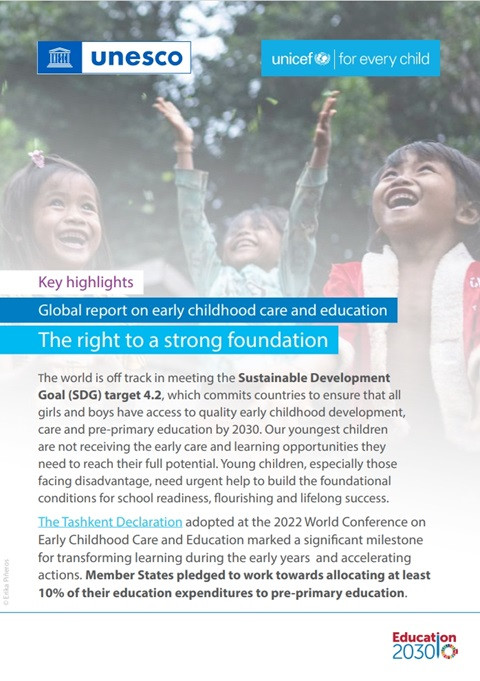 Rapport mondial sur l’éducation et la protection de la petite enfance : le droit à une base solide; points saillants Year of publication: 2024 Corporate author: Organisation des Nations Unies pour l'éducation, la science et la culture (UNESCO) | United Nations Children's Fund (UNICEF) Ce document présente les points clés du Rapport mondial sur l'éducation et la prise en charge de la petite enfance : Le droit à une base solide.
 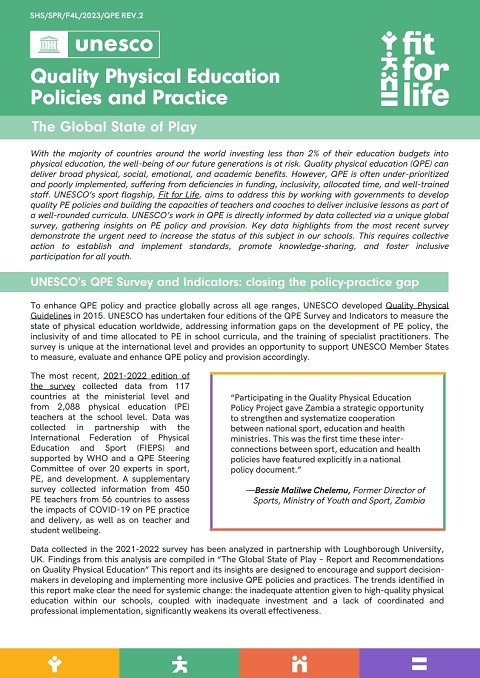 Quality Physical Education Policies and Practice: The Global State of Play Year of publication: 2023 Corporate author: UNESCO With the majority of countries around the world investing less than 2% of their education budgets into physical education, the well-being of our future generations is at risk. Quality physical education (QPE) can deliver broad physical, social, emotional, and academic benefits. However, QPE is often under-prioritized and poorly implemented, suffering from deficiencies in funding, inclusivity, allocated time, and well-trained staff. UNESCO’s sport flagship, Fit for Life, aims to address this by working with governments to develop quality PE policies and building the capacities of teachers and coaches to deliver inclusive lessons as part of a well-rounded curricula. UNESCO’s work in QPE is directly informed by data collected via a unique global survey, gathering insights on PE policy and provision. Key data highlights from the most recent survey demonstrate the urgent need to increase the status of this subject in our schools. This requires collective action to establish and implement standards, promote knowledge-sharing, and foster inclusive participation for all youth.
 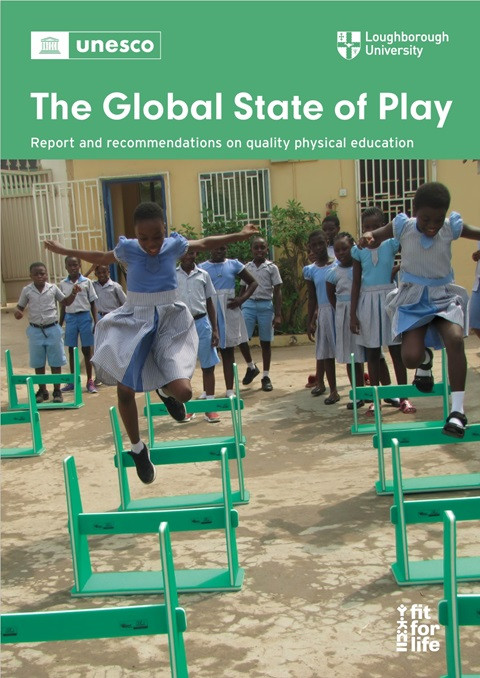 The Global State of Play: Report and Recommendations on Quality Physical Education Year of publication: 2024 Corporate author: UNESCO | Loughborough University Active lifestyles are key to ensuring both individual well-being and sustainable, social development. Quality Physical Education (QPE) plays a key role in achieving this by fostering lifelong physical activity, improving young people’s mental and emotional well-being, and developing critical life skills. UNESCO’s sport initiative, Fit for Life, advocates QPE as a cost-effective investment. Despite its potential as a core curricula subject, UNESCO data reveal that PE is often under-prioritized and due to a lack of investment in certain areas, such as staff training and facilities, potential benefits are not fully realised for students around the world. This investment gap connects directly to a delivery gap. Although 83% of countries worldwide report PE as compulsory in schools, there remain significant issues with the quality of delivery and the diversity of lesson planning within curricula:• Only 1 in 3 secondary school students worldwide meet the minimum requirement of 180 minutes of PE minutes per week set out in UNESCO’s Quality Physical Education Policy Guidelines.• Only 61.7% of schools fully include students with disabilities alongside their peers without disabilities in PE classes.• Only 7.1% of schools implement equal PE time for boys and girls, despite 54.5% of countries having policies or plans for it. Policymakers, PE practitioners and academia are encouraged to take action to implement PE policies, increase investment in PE, upskill PE teachers, enhance PE curricula and promote more equitable and inclusive PE environment.