
Resources
Explore a wide range of valuable resources on GCED to deepen your understanding and enhance your research, advocacy, teaching, and learning.
104 Results found
 Address by Irina Bokova, Director-General of UNESCO, on the occasion of the Opening Session of the 7th World Environmental Education Congress (WEEC); Marrakech, Morocco, 9 June 2013 Year of publication: 2013 Corporate author: UNESCO. Director-General, 2009-2017 (Bokova, I.G.) This address was given by Irina Bokova, Director-General of UNESCO on the occasion of the opening session of the 7th World Environmental Education Congress (WEEC).
  The Climate Dictionary: Speak Climate Fluently Year of publication: 2023 Corporate author: United Nations Development Programme (UNDP) The Climate Dictionary is a guide to understanding climate change. It aims to bridge the gap between complex scientific jargon and the general public, making climate concepts accessible and understandable to people of different backgrounds and levels of expertise. It is based on the belief that empowering people with knowledge is crucial to fostering collective action and responsibility in the face of climate change. Using a creative combination of engaging images, concise explanations and engaging storytelling, The Climate Dictionary effectively communicates complex climate concepts in a visual and easy-to-consume way.
  Environmental Education Toolkit Guide for Latin America and the Caribbean Year of publication: 2023 Author: Eloísa Tréllez Solís Corporate author: United Nations Environment Programme (UNEP) The Environmental Education Toolkit is aimed primarily at teachers, multipliers and facilitators in Latin America and the Caribbean (LAC), and aims to promote interdisciplinary approaches, with a view to the transversality of environmental education. In the new context of a post-COVID-19 health emergency world, this approach becomes more relevant and necessary to achieve a better vision and understanding of the relationships between humans and nature; between societies, cultures and with the ecosystems on which they depend. In the chapters that make up this publication, an approach is proposed through a methodological proposal for reflection and action, the Interdisciplinary Roundtables for Environmental Education towards Sustainability, whose main objective is to strengthen and complement the environmental education processes that are carried out both in educational centers and in community groups, from an interdisciplinary, transversal perspective and with systemic thinking.
 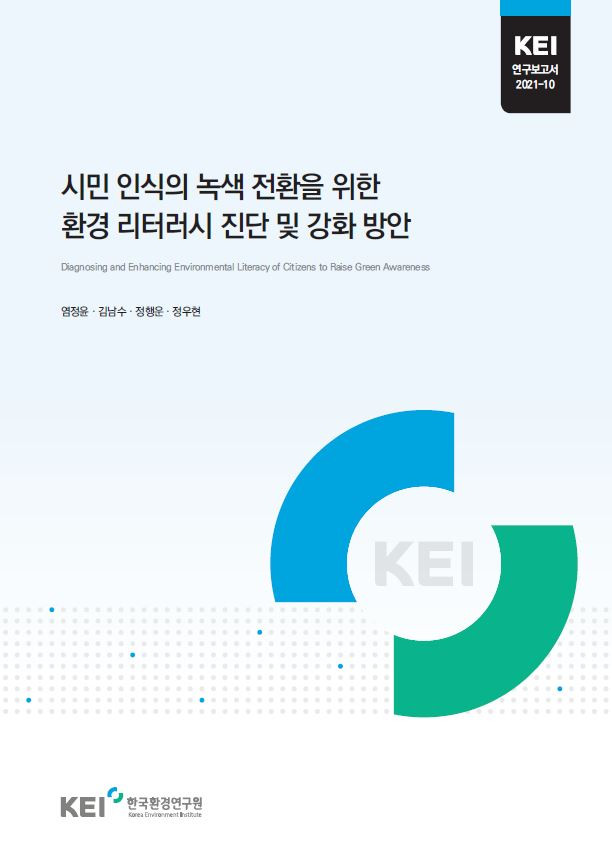 Diagnosing and Enhancing Environmental Literacy of Citizens to Raise Green Awareness Year of publication: 2021 Author: Jeongyoon Yeom | Namsoo Kim | Haengwoon Jeong | Woohyeon Jeong Corporate author: Korea Environment Institute (KEI) 1. Research purposeA nationwide consensus on the understanding on and necessity of the environmental policy is needed in order to successfully achieve the policy objectives.The necessity of environmental education is being highlighted but in reality, there is a lack of objectives and specific indicators to verify its effect.The goal of environmental education should be the expansion of environmental literacy and indicators to measure this should be developed. 2. Research scopeSummarize the concept of environmental literacy and develop the scales for adultsMeasure the level of environmental literacy of citizensConfirm the predictors and consequences of environmental literacyUnderstand citizen types via cluster analysis
 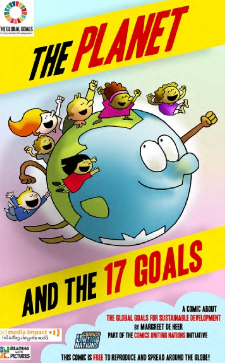 The Planet and the 17 Goals Author: Margreet De Heer Corporate author: United Nations Children's Fund (UNICEF) UNICEF has teamed up with the Comics UnitingNations initiative to use the creative and exciting medium of comics to bring the messages of sustainable development to comics fans globally! Comics have been developed by world renown illustrators, writers and comics developers from around the world.Dutch illustrator Margreet de Heer has lent her talents to the Comics United Nations project to help inform children and youth about the new global goals.
 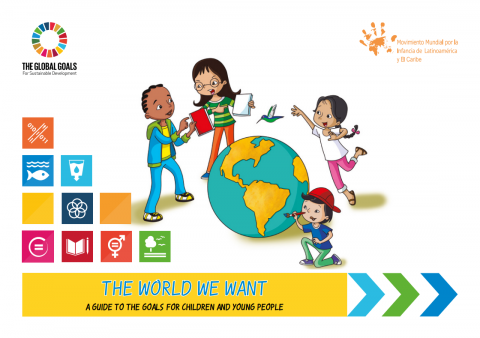 The World We Want: A Guide to the Goals for Children and Young People Year of publication: 2015 Author: Dora Bardales | Paola Arenas Corporate author: Global Movement for Children of Latin America and Caribbean | United Nations Children's Fund (UNICEF) The purpose of this guide is to help children and young people understand the Sustainable Development Goals, how they impact their life and what they can do every day to help their government achieve the Goals.
  The Road to the SDGs: A discussion with students Year of publication: 2015 Corporate author: United Nations Children's Fund (UNICEF) Animated video to help children learn about important concepts for people and planet as covered in the Sustainable Development Goals (SDGs) Mahatma Gandhi Institute of Education for Peace and Sustainable Development: a joint initiative by UNESCO and the government of India Year of publication: 2013 Corporate author: Mahatma Gandhi Institute of Education for Peace and Sustainable Development (MGIEP) The United Nations Educational, Scientific and Cultural Organization (UNESCO) and the Government of India are embarking on a major new partnership to create the Mahatma Gandhi Institute of Education for Peace and Sustainable Development. Through research and capacity-building, the Institute aims to develop and promote new approaches to education, empowering learners to transform their lives and build a more peaceful and sustainable world. Based in New Delhi, this will be the first UNESCO specialized education Institute in India, and the first in the Asia-Pacific region. It is particularly fitting that the Institute is hosted by India, the birthplace of Mahatma Gandhi and a country that has made a significant commitment to education over the past decades. International conference: reorienting TVET policy towards education for sustainable development: final report Year of publication: 2010 Corporate author: UNESCO International Centre for Technical and Vocational Education and Training (UNEVOC) | Internationale Weiterbildung und Entwicklung | Colombo Plan Staff College for Technician Education This publication reports on the ESD review-responsive and future-oriented programme on “Reorienting TVET Policy Towards Education for Sustainable Development”, jointly organized by the UNESCO-UNEVOC International Centre in Bonn, Germany, InWEnt – Capacity Building International, Germany and Colombo Plan Staff College for Technician Education in Manila, Philippines.
 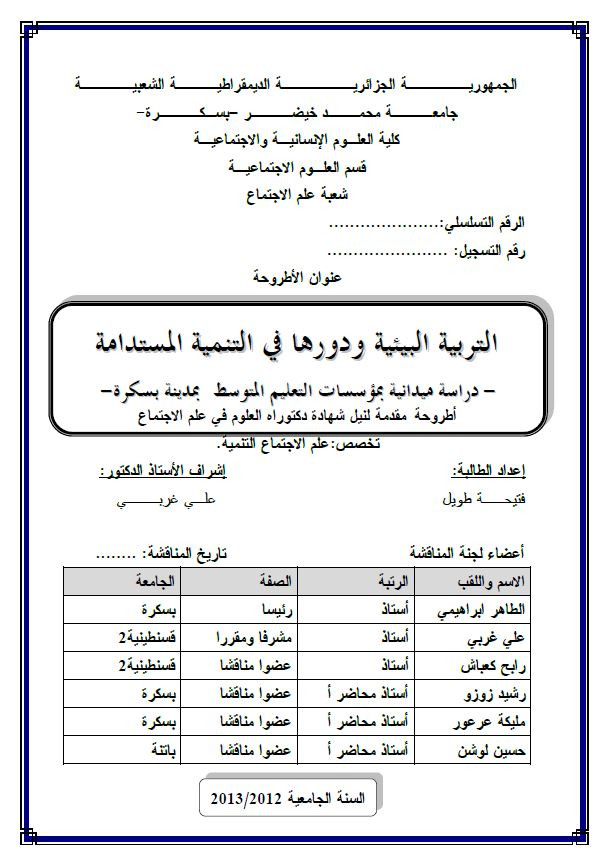 Environmental Education and Its Role in Sustainable Development: A Field Study in Intermediate Education Institutions in the City of Biskra Year of publication: 2013 Corporate author: University Mohamed Khider Biskra The file is a doctoral thesis in an Algerian university. The thesis discusses the role of environmental education in achieving sustainable development. The study used the descriptive approach and focused on the city of Biskra.