
Resources
Explore a wide range of valuable resources on GCED to deepen your understanding and enhance your research, advocacy, teaching, and learning.
43 Results found
 Méthode d’évaluation de l’état de préparation : un outil de la Recommandation sur l’éthique de l’intelligence artificielle Year of publication: 2023 Corporate author: Organisation des Nations Unies pour l'éducation, la science et la culture (UNESCO) En novembre 2021, les 193 États membres de l’UNESCO ont signé la Recommandation sur l’éthique de l’intelligence artificielle, premier instrument normatif de portée internationale consacré à cette question. La Recommandation établit un cadre opérationnel complet et fondé sur l’ensemble des droits de l’homme en vue du développement et de l’utilisation éthiques de l’IA. Elle accorde à cette fin une attention particulière à tous les stades du cycle de vie du système de l’IA. Au-delà de l'élaboration des valeurs et des principes qui devraient guider la conception, le développement et l'utilisation éthiques de l'IA, la Recommandation indique aux États membres les mesures à prendre pour garantir le respect de ces valeurs et principes en préconisant une réglementation efficace et en formulant des recommandations dans divers domaines stratégiques clés tels que le genre, l’environnement, la communication et l’information. Guidé par ces valeurs, principes et domaines stratégiques, le Secrétariat de l’UNESCO a conçu un programme de mise en œuvre de la Recommandation en s’attachant avant tout à renforcer les capacités nationales nécessaires pour donner suite aux mesures énoncées dans la Recommandation et renforcer les cadres réglementaires. Les Recommandation demande le développement de deux outils clés qui sont les principaux fondements sur lesquels repose la mise en œuvre : la méthode d’évaluation de l’état de préparation et l’évaluation de l’impact éthique. Ces outils visent tous deux à évaluer et à renforcer la résilience des lois, politiques et institutions en vigueur en vue de la mise en œuvre de l’IA dans le pays mais aussi à rendre les systèmes d’IA conformes aux valeurs et aux principes énoncés dans la Recommandation. Ce document a pour objet d’expliquer plus clairement la méthode d’évaluation de l’état de préparation, de présenter ses différentes dimensions et d’exposer en détail le plan de travail à l’intention des pays concernés, en précisant notamment le type d’entités appelées à intervenir, les responsabilités de chacune d’entre elles et le partage des tâches entre l’UNESCO et les pays participants.
  Ethical Impact Assessment: A Tool of the Recommendation on the Ethics of Artificial Intelligence Year of publication: 2023 Corporate author: UNESCO As stated in article 50 of UNESCO’s Recommendation on the Ethics of Artificial Intelligence (UNESCO, 2021), the goal of this instrument is to “identify and assess benefits, concerns and risks of AI systems, as well as appropriate risk prevention, mitigation, redressal and monitoring measures, among other assurance mechanisms. Such assessments should identify the impacts on human rights and fundamental freedoms, in particular but not limited to the rights of people in vulnerable and precarious situations, labour rights, the environment and ecosystems and ethical and social implications, and facilitate citizen participation in line with the values and principles set forth in this Recommendation”. This instrument is primarily designed to help government officials (individuals and teams) involved in the procurement of AI systems. The goal of the methodology is to equip procurement officers with the set of questions to ask in order to ensure that the AI systems they are purchasing are aligned with the ethical standards set out in the UNESCO Recommendation on the Ethics of AI.
  لتوصية الخاصة بأخلاقيات الذكاء الاصطناعي Year of publication: 2022 Corporate author: UNESCO تتناول هذه التوصية ما يندرج في نطاق مهمة اليونسكو من القضايا األخالقية المتعلقة بمجال الذكاء االصطناعي. ً ً معياريا وتبحث التوصية أخالقيات الذكاء االصطناعي بحثا ً يقوم على إطار كلي شامل ومتعدد الثقافات ومتغير منهجيا ِلقيم ومبادئ وإجراءات مترابطة يمكن أن ترشد المجتمعات فيما يخص التصدي بطريقة مسؤولة للعواقب المعروفة وغير المعروفة لوسائل تكنولوجيا الذكاء االصطناعي على البشر والمجتمعات البشرية، وكذلك على البيئة والنُظم اإليكولوجية؛ وترسي التوصية بالتالي األسس الالزمة التي يستطيع البشر االستناد إليها للحكم على وسائل تكنولوجيا الذكاء االصطناعي وقبولها أو رفضها. وتعتبر ً مرنة للتقييم المعياري والتوجيه ُسسا التوصية األخالقيات أ المعياري لوسائل تكنولوجيا الذكاء االصطناعي، وتستند إلى وجوب صون كرامة اإلنسان ووجوب ضمان السالمة والرفاهية ووجوب درء الضرر باعتبارها البوصلة التي يجب االسترشاد بها، وباعتبارها مبادئ راسخة في أخالقيات العلوم والتكنولوجيا.
  UNESCO’s Recommendation on the Ethics of Artificial Intelligence: Key Facts Year of publication: 2023 Corporate author: UNESCO This brochure is a summary of "Recommendation on the Ethics of Artificial Intelligence". The Recommendation addresses ethical issues related to the domain of Artificial Intelligence to the extent that they are within UNESCO’s mandate. With its unique mandate, UNESCO’s Social and Human Sciences Sector has led the international effort to ensure that science and technology develop with strong ethical guardrails for decades. AI technology brings major benefits in many areas, but without the ethical guardrails, it risks reproducing real world biases and discrimination, fueling divisions and threatening fundamental human rights and freedoms. The Recommendation establishes a set of values in line with the promotion and protection of human rights, human dignity, and environmental sustainability. It advances essential principles such as transparency, accountability, and the rule of law online. It also includes concrete policy chapters that call for better governance of data, gender equality, and important aspects of AI applications on education, culture, labour markets, the environment, communication and information, health and social well-being, and the economy. Unlike other international instruments, the Recommendation includes monitoring and evaluation chapters and means for implementation in the form of a Readiness Assessment and the Ethical Impact Assessment to ensure real change on the ground.
  Manuel de formation mondial: l'IA et l'état de droit pour le pouvoir judiciaire Year of publication: 2023 Author: Miriam Stankovich | Ivana Feldfeber | Yasmín Quiroga | Marianela Ciolfi Felice | Vukosi Marivate Corporate author: UNESCO Qu'est-ce que l'intelligence artificielle (IA) ? Comment ça marche ? Et plus important encore, comment trouve-t-elle sa place dans un contexte judiciaire ? Des technologies telles que l'IA existent depuis des décennies, mais elles n’ont commencé à être utilisées dans divers cadres judiciaires et exécutifs que très récemment. Bien que l'IA ait un immense potentiel pour le système judiciaire, pour aider les juges à prendre de meilleures décisions, améliorer leur efficacité, l'accessiblité, et pour aider à détecter et à prévenir la criminalité, elle soulève également des questions importantes parmi les acteurs judiciaires, alors qu'ils se préparent à un avenir où l'IA sera de plus en plus utilisée dans les systèmes judiciaires. En 2022, l'UNESCO a lancé deux évaluations des besoins. Tout d'abord, dans le cadre de l'enquête de l'UNESCO sur l'évaluation des besoins en matière d'intelligence artificielle en Afrique, 90 % des 32 pays interrogés ont demandé un soutien au renforcement des capacités du pouvoir judiciaire en matière d'IA. Dans le même temps, une deuxième enquête mondiale sur les acteurs judiciaires dans 100 pays a mis en avant la nécessité de mieux comprendre l'utilisation de l'IA dans l'administration de la justice et ses implications juridiques plus larges sur les sociétés. Cet ouvrage, « Manuel de formation mondial : l'IA et l'état de droit pour le pouvoir judiciaire », répond à ces besoins et fournit aux acteurs judiciaires (juges, procureurs, avocats, juristes, facultés de droit et établissements de formation judiciaire) les connaissances et les outils nécessaires pour comprendre les avantages et les risques de l'IA dans leur travail. Ce manuel de formation aidera les acteurs judiciaires à atténuer les risques potentiels de l'IA pour les droits humains en fournissant des conseils sur les lois, principes, règles et jurisprudences internationales pertinents en matière de droits humains qui sous-tendent l'utilisation éthique de l'IA.
  “I Don’t Have a Gender, Consciousness, or Emotions. I’m Just a Machine Learning Model” Year of publication: 2023 Corporate author: UNESCO | International Research Centre on Artificial Intelligence (IRCAI) An introduction to a forthcoming Gender bias in Artificial Intelligence report coming out on March 8, 2024. As we stand on the precipice of a technological revolution driven by Artificial Intelligence (AI), it is imperative to ensure that this future is shaped equitably, representing all genders. With this essay we are excited to announce our forthcoming in-depth report on Gender and Artificial Intelligence in a partnership between IRCAI and UNESCO, set for release on March 8, 2024. As we prepare for this milestone event, we extend an invitation to experts, scholars, and all interested stakeholders to join us in our research.
  Missing Links in AI Governance Year of publication: 2023 Corporate author: UNESCO | Mila – Quebec Artificial Intelligence Institute Over the next decade, Artificial Intelligence (“AI”) will continue to significantly impact societies. While these scientific and technological advances take place at an extraordinary pace, it is necessary that we simultaneously stimulate a global and inclusive conversation around their development and governance. It is in this context that Mila and UNESCO join forces to steer a collective work to identify and understand missing links in AI governance. This publication is a compilation of 18 selected submissions from a global open call for proposals launched in 2021. The works featured cross disciplinary and geographical boundaries, and include the perspectives of academics, civil society representatives, and innovators to help shift the conversation on AI from what we do know and foresee to what we do not, the missing links. The topics covered are wide ranging, including AI and Indigenous rights, Deepfakes, Third-Party Audits of AI Systems, AI alignment with SDGs, and the centralization of decision-making power AI allows. Policymakers and civil society members will benefit from the insightful perspectives brought forward to face the immense task they are presented with – which is to ensure the development of AI in a human-centred, responsible and ethical way, in accordance with human rights. Angles morts de la gouvernance de l’IA Year of publication: 2023 Corporate author: Organisation des Nations Unies pour l'éducation, la science et la culture (UNESCO) | Mila – Quebec Artificial Intelligence Institute Au cours de la prochaine décennie, l’intelligence artificielle (IA) continuera d’avoir une influence et un effet considérables sur nos sociétés. Alors que ces avancées scientifiques et technologiques se succèdent à un rythme soutenu, il est essentiel de poursuivre et accélérer la conversation mondiale et inclusive sur leur développement et leur gouvernance.C’est dans ce contexte que Mila et l’UNESCO unissent leurs forces pour mener un travail collectif pour cerner des questions importantes et novatrices quant à la gouvernance de l’IA. La présente publication est une compilation de 18 chapitres sélectionnés à la suite d’un appel à contributions lancé mondiale-ment en 2021. Les articles présentés traversent les frontières disciplinaires et géographiques en plus d’inclure différentes perspectives, incluant celles d’universitaires, de membres de la société civile et d’innovateurs et innovatrices. Cette publication vise à influencer la conversation sur l’IA pour que celle-ci porte moins sur ce que nous savons déjà que sur ce qui échappe à notre regard : les angles morts de l’IA. Les sujets abordés sont donc variés et incluent notamment la perspective du droit international et des droits des peuples autochtones, les audits des systèmes d’IA, l’alignement de ces technologies avec les objectifs de développement durable des Nations Unies et la centralisation du pouvoir décisionnel que permet cette technologie de rupture.Les membres des milieux politiques, de la recherche et de la société civile engagés dans cette conversation mondiale sur l’IA bénéficieront des perspectives présentées pour faire face à l’immense tâche qui leur incombe : assurer un développement de l’IA qui soit éthique, inclusif et conforme aux droits humains.« Les guerres prenant naissance dans l’esprit des hommes et des femmes, c’est dans l’esprit des hommes et des femmes que doivent être élevées les défenses de la paix »18 propositions sélectionnées offrant une approche pluraliste, informée et critique de la gouvernance de l’IA.
 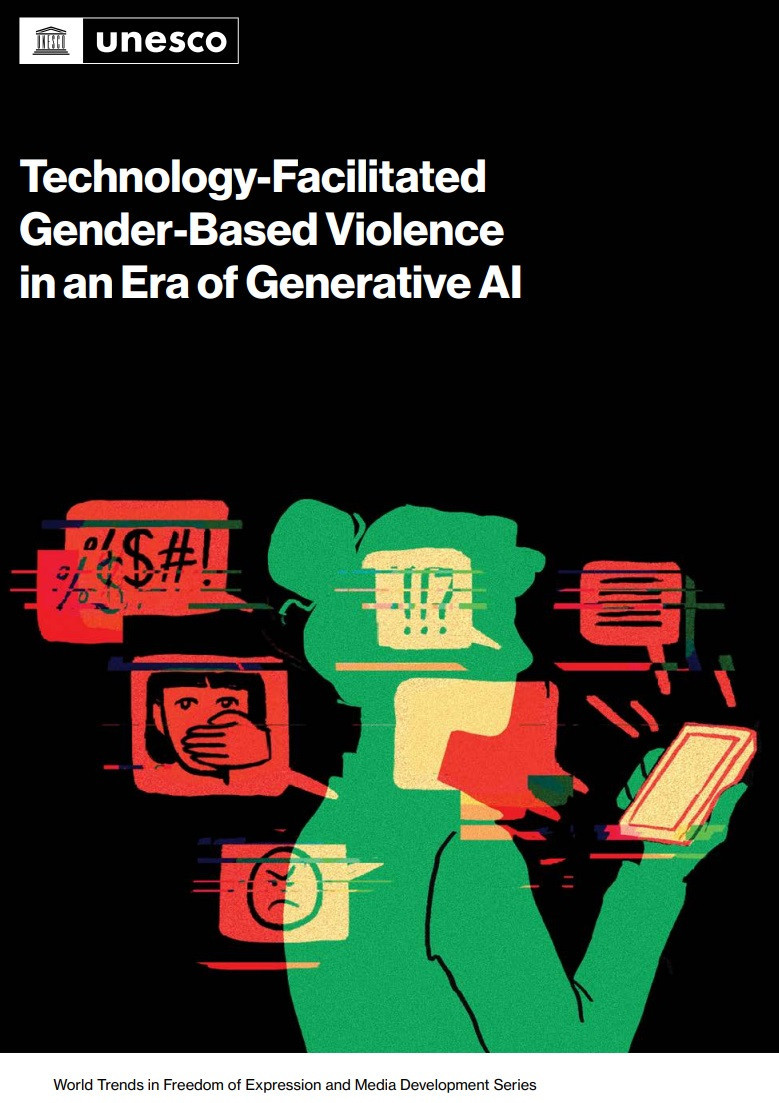 Technology-facilitated gender-based violence in an era of generative AI Year of publication: 2023 Corporate author: UNESCO <Short summary>Experiments reveal how generative AI facilitates gender-based violence Generative Artificial Intelligence (AI) — deep-learning models that create voice, text, and image — are revolutionizing the way people access information and produce, receive and interact with content. While technological innovations like ChatGPT, DALL-E and Bard offer previously unimaginable gains in productivity, they also present concerns for the overall protection and promotion of human rights and for the safety of women and girls.The arrival of generative AI introduces new, unexplored questions: what are the companies’ policies and normative cultures that perpetuate technology-facilitated gender-based violence and harms? How do AI-based technologies facilitate gender-specific harassment and hate speech? What “prompt hacks” can lead to gendered disinformation, hate speech, harassment, and attacks? What measures can companies, governments, civil society organisations and independent researchers take to anticipate and mitigate these risks?A combination of measures are proposed to be put in place by generative AI companies and the technology companies that platform them, regulators and policy makers, by civil society organisations and independent researchers, as well as users.
 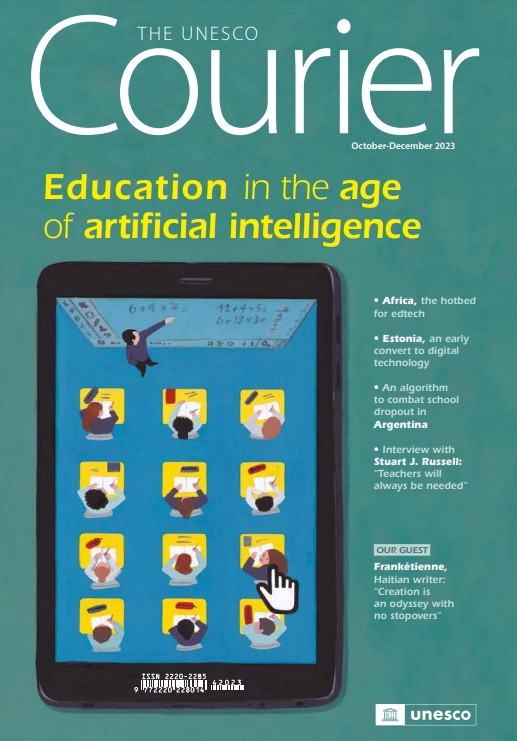 التعليم في عصر الذكاء الاصطناعي (رسالة اليونسكو، العدد 4، أكتوبر إلى ديسمبر 2023) Year of publication: 2023 Corporate author: UNESCO في وقت يشهد فيه مجال التعليم حالة من الاضطراب على مستوى العالم، استحوذت ظاهرة تعليمية واحدة على اهتمام ليس فقط المهنيين بل والعلمانيين أيضًا. هل يشير الابتكار المعني إلى الذكاء الاصطناعي، أم إلى استخدام الواقع المعزز في الفصول الدراسية؟ لا يشير أي منهما إلى أي منهما. هذا الاقتباس من مقال في The اليونسكو كوريير حول "آلات التدريس"، وهي مجموعة من البرامج التي تم تطويرها في الولايات المتحدة لتوجيه الطلاب في تعلمهم. يعود تاريخها إلى ... مارس 1965. وهو ما يوضح أن التفكير في دور أجهزة الكمبيوتر في التعلم ليس بالأمر الجديد. سواء تم الإشادة بها أو الاستهجان بها، أصبحت التكنولوجيا جزءًا متزايدًا من المشهد المدرسي، على الأقل في البلدان الصناعية. أصبحت ألعاب التعلم الرقمية أو البرامج التعليمية عبر الإنترنت أو الدورات التدريبية المفتوحة الضخمة عبر الإنترنت (MOOCs) حقيقة واقعة لعدد متزايد من التلاميذ والطلاب. لقد أدى جائحة كوفيد-19 إلى تسريع الظاهرة، مما أدى إلى ظهور شركات متخصصة في الخدمات التعليمية الرقمية، بما في ذلك في أفريقيا، أو ما يسمى بـ "التكنولوجيا التعليمية". ومع ذلك، وبغض النظر عن مدى تطور هذه التقنيات، فإنها لم تتحد المبدأ الأساسي للمعلم الذي يعطي درسًا في وقت واحد لمجموعة من الطلاب. يمكن أن يكون الذكاء الاصطناعي بمثابة تغيير لقواعد اللعبة. هل يعني وصول أدوات توليد المحتوى مثل ChatGPT والبرامج التعليمية الذكية أن الثورة التي غالبًا ما يتم الإعلان عنها قد بدأت؟ على أي حال، فإن استخدام الذكاء الاصطناعي التوليدي في التعلم يفرض تحديات غير مسبوقة على أنظمة التعليم. وكما يسلط تقرير اليونسكو العالمي لرصد التعليم لعام 2023 الضوء على أن هذه الأدوات الجديدة يمكن أن تثبت قيمتها في تقديم الدعم الشخصي للطلاب، وخاصة ذوي الإعاقة أو الذين يعيشون في مناطق نائية. لكنها تثير أيضًا تساؤلات حول الفجوة الرقمية وسرية البيانات وهيمنة الشركات العالمية الكبرى في هذا القطاع. وفي الوقت الحالي، هناك نقص في الضمانات. لذلك من الضروري اعتماد لوائح لضمان بقاء استخدام الذكاء الاصطناعي في التعليم متمركزًا حول الإنسان، لصالح الطلاب. ودعمًا لهذا، نشرت اليونسكو في سبتمبر/أيلول 2023 أول إرشادات على الإطلاق بشأن الذكاء الاصطناعي التوليدي في التعليم والبحث، والمصممة لمعالجة الاضطرابات الناجمة عن هذه التقنيات. وهي تكمل الأدوات الأخرى التي أنتجتها المنظمة، بما في ذلك التوصية بشأن أخلاقيات الذكاء الاصطناعي والإرشادات لصناع السياسات بشأن الذكاء الاصطناعي والتعليم، وكلاهما نُشر في عام 2021.