
Resources
Explore a wide range of valuable resources on GCED to deepen your understanding and enhance your research, advocacy, teaching, and learning.
23 Results found
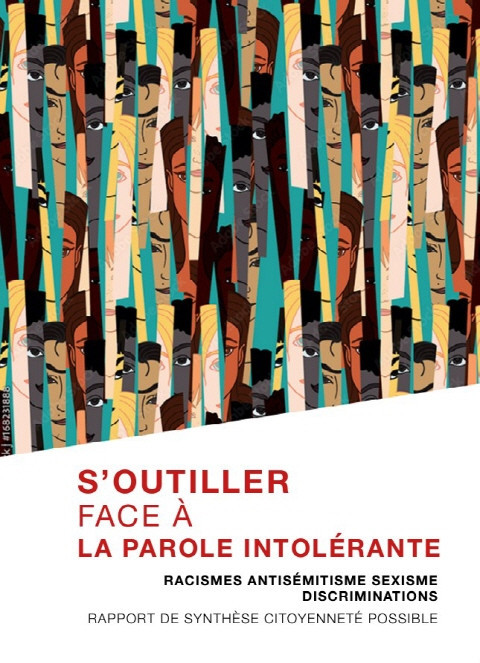 Equipping To Deal With Intolerant Speech: Racism, Antisemitism, Sexism, Discriminations Year of publication: 2023 Corporate author: Citoyenneté Possible In this report, NGO Citoyenneté Possible shares 18 years' experience in the field of anti-discrimination and dialogue. It provides both hands-on experience, with testimonials and tools, and in-depth reflection, analysis and sharing of experiences, practices and visions. It's possible to dare to engage in constructive dialogue on divisive issues, provided you have the intention to do so, and above all, the skills to do so. This report offers very concrete and detailed recommendations for professionals working with young people (teachers, educators, associations, etc.). S'outiller face à la parole intolérante: Racisme, antisémitisme, sexisme, discriminations Year of publication: 2023 Corporate author: Citoyenneté Possible L’association Citoyenneté Possible partage dans ce rapport 18 ans d’expérience de terrain dans la lutte contre les discriminations et pour le dialogue. Il livre à la fois une expérience de terrain, avec des témoignages, des outils, et une réflexion de fond, des analyses et points de partage d’expériences, de pratiques et de vision. Ne pas laisser passer, oser dialoguer sur des sujets clivants de manière constructive est possible, certes à condition d’en avoir l’intention, mais surtout d’en avoir acquis les compétences. Ce rapport propose des recommandations très concrètes et détaillées, pour les professionnels travaillant auprès d’un public jeune (enseignants, éducateurs, associations…)
  التنوع الاثني في العراق : سوسيولوجيا التعدد في الوحدة Year of publication: 2014 Author: Rasoul Mutlaq Corporate author: Baghdad University تتناول الدراسة ظاهرة التعددية الثقافية في العراق من خلال التركيز عل ثلاثة محاور وهي المفهوم و التكوين الاثني وطرق التخلص من الاختلاف والتمييز العرقي. وتنتهي الدراسة بأن التعددية تنبذ التعصب وأن التعددية في العراق يجب أن تحترم. Ethnic Diversity in Iraq: The Sociology of Pluralism in Unity Year of publication: 2014 Author: Rasoul Mutlaq Corporate author: Baghdad University This study deals with the phenomenon of multiculturalism in Iraq by focusing on three axes, which are the concept, ethnic composition, and ways to get rid of difference and ethnic discrimination. The study concludes that pluralism rejects intolerance and that pluralism in Iraq must be respected.
 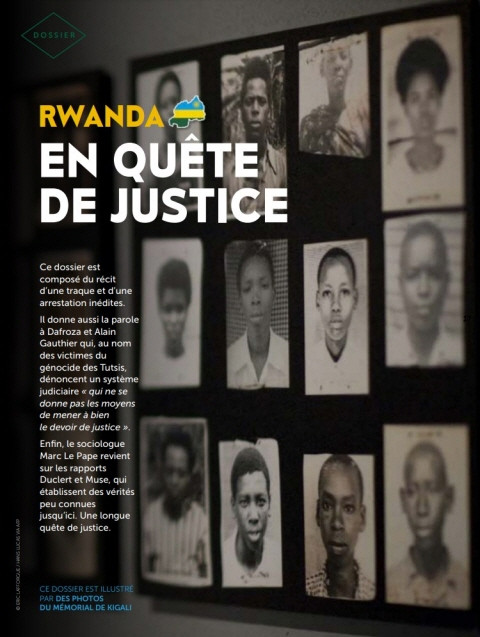 Rwanda: In Search of Justice(Humains; no.30) Year of publication: 2024 Corporate author: Action by Christians for the Abolition of Torture (ACAT France) On the thirtieth anniversary of the genocide of the Tutsis in Rwanda, ACAT-France looks back at this tragic event for human rights. Discover the dossier in the magazine Humains #32 devoted to this subject. Rwanda: En quête de justice (Humains; n° 30) Year of publication: 2024 Corporate author: Action by Christians for the Abolition of Torture (ACAT France) À l’occasion du trentième anniversaire du génocide des Tutsis au Rwanda, l’ACAT-France revient sur cet événement tragique pour les droits de l’Homme. Découvrez le dossier de la revue Humains #32 consacré à ce sujet.
  Genocide Timeline Year of publication: 2024 Corporate author: United States Holocaust Memorial Museum (USHMM) This timeline proposed by the United States Holocaust Memorial Museum shows the major conceptual and legal advances in the evolution of the term "genocide" . It does not seek to detail every case that could be considered genocide, but to show how the term has entered the political, legal and ethical vocabulary from 1900 to 2016 to express threats of violence against groups. Chronologie du génocide Year of publication: 2024 Corporate author: United States Holocaust Memorial Museum (USHMM) Cette chronologie proposée par le Musée du mémorial américain sur la Shoah montre les avancées conceptuelles et juridiques majeures dans l’évolution du terme « génocide » . Elle ne cherche pas à détailler tous les cas pouvant être considérés comme des génocides, mais à montrer comment le terme a intégré le vocabulaire politique, juridique et éthique de 1900 à 2016 pour exprimer les menaces de violences contre des groupes.
  Les clichés du gaming, comment chasser le racisme ou le patriarcat des jeux vidéos ? Year of publication: 2024 Corporate author: France Inter Produit phare de l’industrie culturelle, le jeu vidéo a, au même titre que le cinéma, une dimension politique et sociale. Certains titres, ont été jugés comme étant racistes. Alors, comment décoloniser le jeu vidéo ?A flagship product of the cultural industry, video games have, like cinema, a political and social dimension. Some titles, like Resident Evil 5, have been deemed racist. So how do we decolonize video games?
 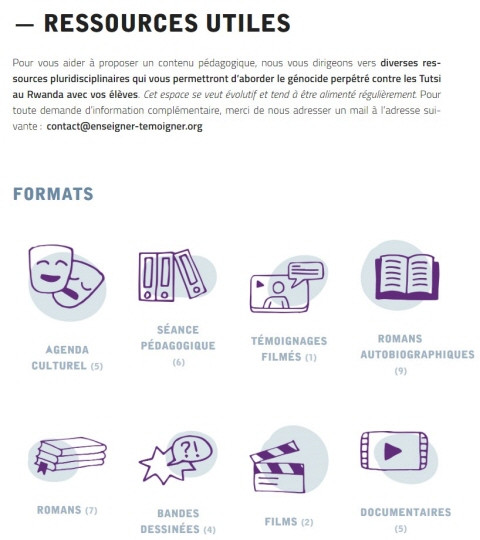 Enseigner Témoigner Year of publication: 2024 Corporate author: Ligue de l'enseignement, Fédération de Paris & Ibuka France En 1994, environ 1 million de Tutsi ont été tués au Rwanda. Le génocide perpétré contre les Tutsi au Rwanda constitue l’une des principales tueries du XXème siècle. Elle a été rendue possible par l’action d’extrémistes qui ont, pendant des années, attisé la haine anti-tutsi au sein de la population rwandaise à coup de préjugés, de fausses informations, d’accusations en miroir, de stratégie de manipulation et de conditionnement des esprits à la peur, à la haine et à la violence meurtrière.Avec l’inscription récente de son enseignement dans les programmes scolaires, de plus en plus d’enseignants travaillent avec leurs élèves sur cet événement majeur de l’histoire du XXème siècle. Parallèlement, des rescapés ressentent le besoin de témoigner pour partager leur histoire avec la jeune génération et prévenir ainsi les mécanismes qui ont rendu ce drame possible. Dans ce contexte, l’association Ibuka France et la Ligue de l’enseignement engagent une action commune pour proposer un accompagnement dans l’organisation et la gestion pédagogique d’une rencontre avec un témoin-rescapé en classe. Cet accompagnement vise à créer un cadre à la fois utile et sécurisant pour l’ensemble des acteurs engagés et impactés par le témoignage en classe. In 1994, around 1 million Tutsis were killed in Rwanda. The genocide perpetrated against the Tutsis in Rwanda is one of the major killings of the twentieth century. It was made possible by the actions of extremists who, for years, stirred up anti-Tutsi hatred among the Rwandan population by means of prejudice, false informations, mirror-image accusations, a strategy of manipulation and the conditioning of minds to fear, hatred and murderous violence.With the recent inclusion of the subject in school curricula, more and more teachers are working with their pupils on this major event in the history of the 20th century. At the same time, survivors are feeling the need to share their stories with the younger generation and prevent the mechanisms that made this tragedy possible. Against this backdrop, Ibuka France and the Ligue de l'enseignement have joined forces to offer support in organising and managing a meeting with a survivor-witness in the classroom. The aim of this support is to create a framework that is both useful and reassuring for all those involved and affected by the testimonial in the classroom.