
Resources
Explore a wide range of valuable resources on GCED to deepen your understanding and enhance your research, advocacy, teaching, and learning.
33 Results found
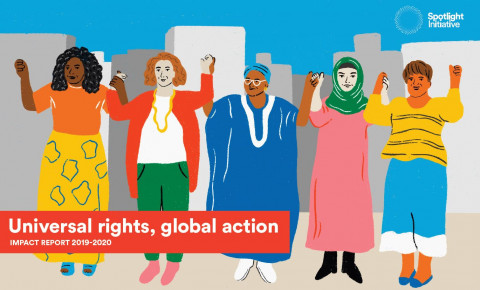 Universal Rights, Global Action: Impact Report 2019-2020 Year of publication: 2020 Corporate author: Spotlight Initiative Universal rights, global action is a shortened, visual adaptation of the 2019 Global Annual Narrative Progress Report. The Spotlight Initiative is a global, multi-year partnership between the European Union and the United Nations to eliminate all forms of violence against women and girls by 2030. This report outlines the Spotlight Initiative’s key signature results from 2019.The 32-page document highlights the ways the Spotlight Initiative country and regional programmes have meaningfully reached women and girls, including those facing multiple and intersecting forms of discrimination.
  Women’s Education: Promoting Development, Countering Radicalism Year of publication: 2014 Author: Hedieh Mirahmadi Corporate author: World Organization for Resource Development and Education (WORDE) Increasing access to quality secular education can create better jobs for women and reduce some of the economic drivers of radicalization. Educated women can in turn play a pivotal role in inoculating their children and communities against the radical narratives used to recruit followers. Women’s Education: Promoting Development, Countering Radicalism Year of publication: 2014 Author: Hedieh Mirahmadi Corporate author: World Organization for Resource Development and Education (WORDE) Améliorer l'accès à une éducation laïque de qualité peut contribuer à la création de meilleurs emplois pour les femmes et réduire certains facteurs économiques de la radicalisation. Les femmes éduquées peuvent à leur tour jouer un rôle essentiel en protégeant leurs enfants et les communautés contre les récits radicaux utilisés pour recruter des adeptes.
 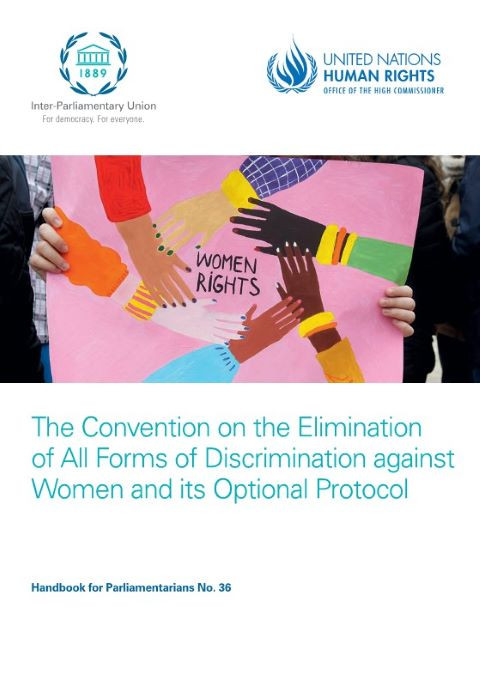 The Convention on the Elimination of All Forms of Discrimination against Women and its Optional Protocol: Handbook for Parliamentarians No. 36; Revised edition Year of publication: 2023 Corporate author: Inter-Parliamentary Union (IPU) | UN. Office of the United Nations High Commissioner for Human Rights (UN. OHCHR) More than four decades after its adoption, the Convention on the Elimination of All Forms of Discrimination against Women remains an essential and ambitious guide for achieving gender equality across the board – from the family and the classroom to executive boards and political leadership roles. Despite considerable progress since the Convention came into force, no country can yet claim to have fully achieved gender equality. This revised edition of The Convention on the Elimination of All Forms of Discrimination against Women and its Optional Protocol: Handbook for Parliamentarians is a joint collaboration undertaken by the Inter-Parliamentary Union (IPU) and the Office of the United Nations High Commissioner for Human Rights (OHCHR). La Convention sur l’élimination de toutes les formes de discrimination à l’égard des femmes et son Protocole facultatif: Manuel à l'intention des parlementaires; édition révisée Year of publication: 2023 Corporate author: Inter-Parliamentary Union (IPU) | UN. Office of the United Nations High Commissioner for Human Rights (UN. OHCHR) Plus de quarante ans après son adoption, la Convention sur l’élimination de toutes les formes de discrimination à l’égard des femmes reste un cadre essentiel et ambitieux de promotion de l’égalité des sexes dans tous les domaines – depuis le contexte familial et scolaire jusque dans les conseils d’administration et les sphères dirigeantes de la politique. Si des progrès considérables ont été accomplis depuis l’entrée en vigueur de la Convention, aucun pays ne peut encore prétendre avoir atteint une égalité pleine et entière entre les hommes et les femmes.Au cours des vingt dernières années, une relation très étroite s’est développée entre le Comité pour l’élimination de la discrimination à l’égard des femmes – organe conventionnel chargé de contrôler l’application de la Convention – et l’Union interparlementaire (UIP). Grâce à cette collaboration, des parlementaires du monde entier ont approfondi leur connaissance de la Convention et se sont, en nombre croissant, impliqués dans l’important exercice d’établissement du de rapports périodiques au Comité qui rend compte de la mise en œuvre de la Convention au niveau national. Nombre de parlementaires ont posé des questions au gouvernement, ont proposé ou modifié des lois, mené des opérations de sensibilisation dans leurs circonscriptions et se sont engagés auprès de l’Organisation des Nations Unies pour réduire l’écart entre les promesses de la Convention et la réalité qui est celle des femmes et des filles au quotidien.
 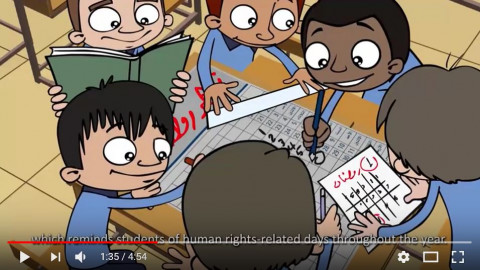 [Video] Equal rights between girls and boys Year of publication: 2015 Corporate author: United Nations Relief and Works Agency for Palestine Refugees in the Near East (UNRWA) Palestine refugee students of all ages learn about human rights in their everyday lives through the Human Rights, Conflict Resolution and Tolerance Education Programme, funded by the United States. In this short animation, young boys and girls learn to respect each other’s rights regardless of gender.
 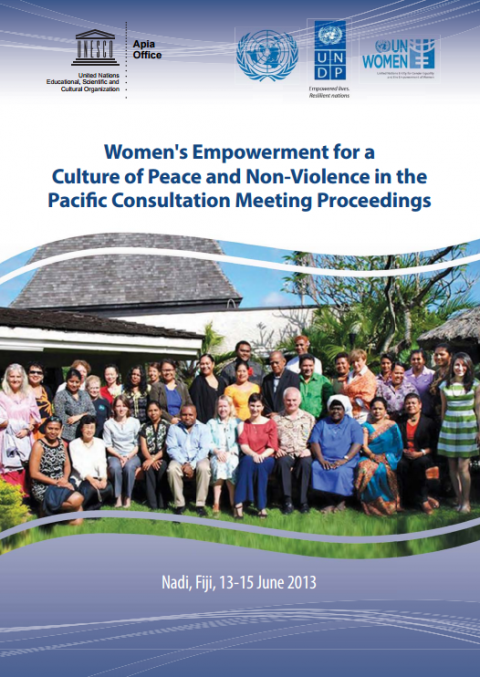 Women's empowerment for a culture of peace and non-violence in the pacific consultation meeting proceedings Year of publication: 2013 Corporate author: UNESCO Apia The Consultation on Women’s Empowerment for a Culture of Peace and Non Violence in the Pacific was held in Nadi, Fiji, from 13 to 15 June 2013. The consultation was an interagency collaboration between the United Nations Educational, Scientific and Cultural Organization (UNESCO), the United Nations Entity for Gender Equality and the Empowerment of Women (UN WOMEN) and the United Nations Development Programme (UNDP) Pacific Centre as part of the United Nations strategy “Delivering as One”. This collaboration focused on efforts to design, promote and strengthen a culture of peace in the Pacific at the country and regional levels. The consultation brought together 30 senior representatives, including development professionals and community members, from governments, regional organizations, women’s organizations, faith-based groups, academic institutions and development partners from the Cook Islands, Fiji, Kiribati, Palau, Papua New Guinea, Samoa, Solomon Islands, Tonga and Vanuatu. The consultation ended with an agreement on a range of actions that could be adopted at the local, national and regional levels to promote increased dialogue between leaders and policy makers on the contributions that culture and heritage can make to addressing issues of gender inequality and reducing GBV. The outcome statement identifies the importance of building positive cultural models, using a range of key factors, including female leaders, faith-based leaders and traditional leaders as well as political leaders and parties. The statement also emphasized education as a means of promoting a culture of peace and non-violence. The consultation’s outcome statement noted that the school curriculum should place a stronger emphasis on values, gender equality, sexual and reproductive health and rights, and the building of positive cultural models. The follow up actions identified include increasing public awareness on achieving equality for Pacific women, including women at the grassroots level, in bringing peace to conflict-affected communities; targeting young people as the next generation of leaders; using the arts and cultural and sports events to break down gender stereotypes; actions relating to economic empowerment, access to justice and service delivery; and intangible cultural heritage capacity building incorporating substantive gender equality components. L'autonomisation des femmes pour une culture de paix et de non-violence dans la procédure de réunion de consultation pacifique Year of publication: 2013 Corporate author: UNESCO Apia La Consultation sur l'Autonomisation des Femmes pour une Culture de la Paix et de la Non-Violence dans le Pacifique a eu lieu à Nadi, Fidji, du 13 au 15 Juin 2013. La consultation a été une collaboration interinstitutions entre la culture (UNESCO) Organisation des Nations Unies pour l'éducation, la science et l'Entité des Nations Unies pour l'égalité des sexes et l'autonomisation des femmes (ONU Femmes) et le Programme des Nations Unies pour le développement (PNUD) Centre du Pacifique dans le cadre de la stratégie des Nations Unies «Delivering as One». Cette collaboration a porté sur les efforts pour concevoir, promouvoir et renforcer une culture de paix dans le Pacifique au niveau national et régional. La consultation a réuni 30 représentants de haut niveau, y compris les professionnels du développement et des membres de la communauté, des gouvernements, des organisations régionales, des organisations de femmes, les groupes religieux, les institutions académiques et les partenaires de développement des îles Cook, Fidji, Kiribati, Palau, Papouasie-Nouvelle-Guinée, Samoa , Îles Salomon, Tonga et Vanuatu. La consultation a pris fin avec un accord sur une série d'actions qui pourraient être adoptées aux niveaux local, national et régional pour promouvoir le dialogue accru entre les dirigeants et les décideurs politiques sur les contributions que la culture et le patrimoine peuvent apporter à résoudre les problèmes d'inégalité entre les sexes et la réduction de GBV . L'énoncé de résultat souligne l'importance de la construction de modèles culturels positifs, en utilisant une gamme de facteurs clés, y compris les femmes leaders, des dirigeants religieux et les chefs traditionnels ainsi que des dirigeants et partis politiques. La déclaration a également souligné l'éducation comme un moyen de promouvoir une culture de paix et de non-violence. La déclaration des résultats de la consultation a noté que le programme scolaire devrait mettre davantage l'aCECnt sur les valeurs, l'égalité des sexes, la santé et les droits sexuels et de la reproduction, et la construction de modèles culturels positifs. Les actions de suivi identifiées comprennent la sensibilisation du public sur la réalisation de l'égalité pour les femmes du Pacifique, y compris les femmes au niveau local, pour ramener la paix dans les communautés touchées par le conflit; ciblant les jeunes comme la prochaine génération de leaders; en utilisant les arts et et des événements culturels de sport pour briser les stéréotypes de genre; les actions relatives à l'autonomisation économique, l'accès à la justice et la prestation des services; et immatériel renforcement des capacités du patrimoine culturel incorporant fond composantes égalité entre les sexes. La Convención sobre la eliminación de todas las formas de discriminación contra la mujer y su Protocolo Facultativo: Manual para Parlamentarios nº 36; edición revisada Year of publication: 2023 Corporate author: Inter-Parliamentary Union (IPU) | UN. Office of the United Nations High Commissioner for Human Rights (UN. OHCHR) Más de cuatro décadas después de su adopción, la Convención sobre la eliminación de todas las formas de discriminación contra la mujer continúa siendo una guía esencial y ambiciosa para lograr la igualdad de género de forma generalizada, desde la familia y las aulas hasta los consejos ejecutivos y los cargos de liderazgo político. Pese a los considerables avances que se han alcanzado desde la entrada en vigor de la Convención, ningún país puede reivindicar aún haber logrado plenamente la igualdad entre los géneros.Los progresos conseguidos en materia de derechos humanos de la mujer y de igualdad de género están en un grave riesgo de invertirse fruto de diversas crisis, que abarcan desde la pandemia de COVID-19 y la triple crisis planetaria relativa al cambio climático, la contaminación y la pérdida de biodiversidad, hasta los conflictos armados y el desplazamiento, y el alza del autoritarismo. La igualdad de género es un elemento fundamental del desarrollo sostenible y la paz. Las dificultades actuales no se pueden sortear si las mujeres —que constituyen la mitad de la población mundial— quedan excluidas de una participación y un liderazgo plenos y equitativos en los ámbitos económico, político y social. Por lo tanto, la Convención sigue actuando de pilar sólido para desarrollar un mundo más resiliente y sociedades más inclusivas.
  التمييز على أساس الجنس.. هل المرأة هي الضحية دوماً؟ Year of publication: 2017 Corporate author: DW TV بعد سنوات طويلة من الصمت أقدمت ممثلات وعارضات أزياء شهيرات على كسر حاجز الخوف وكشفن عن انتهاكات المنتج الشهير هارفي واينستين بحقهن. هذه الفضيحة دفعت بمئات الآلاف من النساء إلى نشر قصصهن المؤلمة في شبكات التواصل. فأين يبدأ التمييز الجنسي؟ وما مدى تفشي هذه الظاهرة في الواقع؟ وهل المرأة هي دائماً الضحية؟ هذه الأسئلة يتم مناقشها في هذا البرنامج.