
Resources
Explore a wide range of valuable resources on GCED to deepen your understanding and enhance your research, advocacy, teaching, and learning.
170 Results found
 Artificial Intelligence and Gender Equality: Key Findings of UNESCO’s Global Dialogue Year of publication: 2020 Corporate author: UNESCO The purpose of the UNESCO’s Dialogue on Gender Equality and AI was to identify issues, challenges, and good practices to help: Overcome the built-in gender biases found in AI devices, data sets and algorithms; Improve the global representation of women in technical roles and in boardrooms in the technology sector; and Create robust and gender-inclusive AI principles, guidelines and codes of ethics within the industry. This Summary Report sets forth proposed elements of a Framework on Gender Equality and AI for further consideration, discussion and elaboration amongst various stakeholders. It reflects experts’ inputs to the UNESCO Dialogue on Gender Equality and AI, as well as additional research and analysis. This is not a comprehensive exploration of the complexities of the AI ecosystem in all its manifestations and all its intersections with gender equality. Rather, this is a starting point for conversation and action and has a particular focus on the private sector. It argues for the need to 1. Establish a whole society view and mapping of the broader goals we seek to achieve in terms of gender equality;2. Generate an understanding of AI Ethics Principles and how to position gender equality within them; 3. Reflect on possible approaches for operationalizing AI and Gender Equality Principles; and4. Identify and develop a funded multi-stakeholder action plan and coalition as a critical next step.
  UNESCO Women for Ethical AI: Outlook Study on Artificial Intelligence and Gender Year of publication: 2024 Corporate author: UNESCO The gender chapter of the UNESCO Recommendation on the Ethics of AI is a concrete commitment by 194 Member States to advance gender equality in the AI ecosystem. To track progress in the implementation of the gender provisions of UNESCO’s Recommendation, and to assess the impacts of AI on gender equality, the UNESCO Women for Ethical AI (W4EAI) Platform has been established. This report advances the workstream through evidence-based insights in three critical areas: women’s participation in AI development and deployment, the inclusion of gender equality concerns in AI governance and the impact of AI on gender equality. It highlights the significant underrepresentation of women in AI, the lack of gender-disaggregated data, and the compounded challenges women face in the field. The report also addresses the neglect of gender dimensions in AI policy, the risks posed by AI systems to women, and the need for responsible and ethical AI governance to promote gender equality. Finally, it outlines actionable recommendations to enhance gender equality through and in AI, emphasizing the importance of comprehensive data collection, targeted interventions, and inclusive policy-making.
 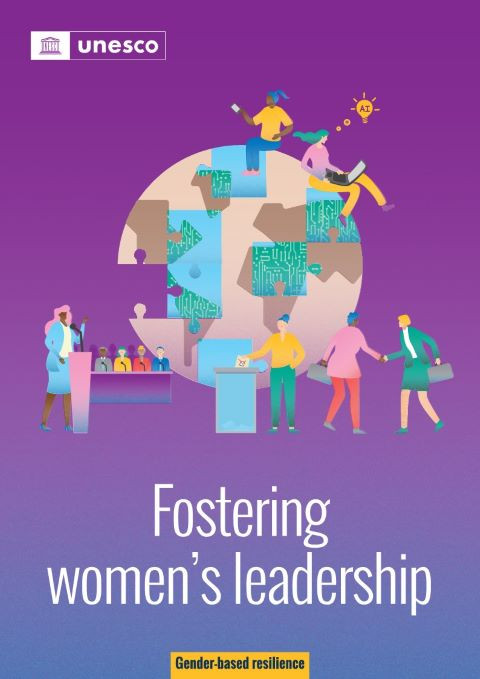 Fostering Women's Leadership Year of publication: 2024 Author: Mariagrazia Squicciarini | Anna Rita Manca | Garance Sarlat Corporate author: UNESCO No (leadership) share no gain (for societies and economies)! Leveraging UNESCO’s unique Gender-Based Resilience Framework, this report explores the role of women in leadership positions in both decision-making and high-tech, including in artificial intelligence-related innovations. It further highlights progress towards the G20 Brisbane Target, aimed to accelerate progress on gender equality by reducing the gender gap in labour market participation rates by 25% by 2025. Women remain underrepresented in decision-making, holding only about 26% of seats in national parliaments worldwide on average. In the world of work, female labour participation continues to lag behind men’s, at 47% for women against 72% for men on average. Despite progress by G20 members towards the Brisbane Target, a 2% average gap in absolute terms remained to be filled in 2022. In the high-tech world, women make up only 30% of AI professionals, and even less of leaders. Female inventors in AI account for about 37% of patents filed in 2022-23.
 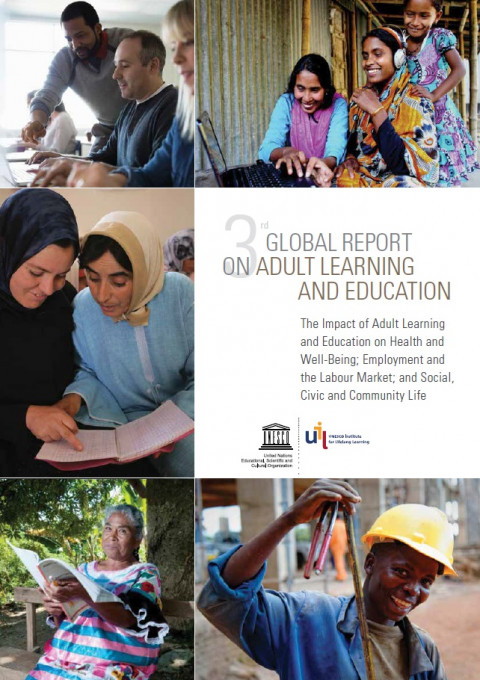 Third Global Report on Adult Learning and Education: The Impact of Adult Learning and Education on Health and Well-Being; Employment and the Labour Market; and Social, Civic and Community Life Year of publication: 2016 Corporate author: UNESCO Institute for Lifelong Learning (UIL) This Report on Adult Learning and Education (GRALE III) comes out as the international community works towards the 2030 Agenda for Sustainable Development. It is also reference and advocacy documents, providing information for analysts and policymakers, and reminding Member States of their commitment. Here policymakers will find high-quality evidence to support policies, strategies and budgets. Stakeholders will find compelling arguments for how adult learning and education promotes sustainable development, healthier societies, better jobs and more active citizenship. Researchers will find entry points and ideas for future research. Третий Глобальный доклад по обучению и образованию взрослых (ООВ) ий Влияние образования взрослых на здоровье и благополучие, занятость и рынок труда, социальную, гражданскую и общественную жизнь Year of publication: 2016 Corporate author: UNESCO Institute for Lifelong Learning (UIL) Данный доклад является результатом деятельности международного сообщества и связан с разработкой повестки дня в области устойчивого развития 2030 года, а также справочными и информационными документами, предоставляющими информацию для аналитиков и политиков, и напоминают государствам-членам об их обязательстве. Здесь политические деятели найдут веские доказательства в поддержку политики, стратегий и бюджетов. Заинтересованные стороны найдут убедительные аргументы того, как обучение и образование взрослых способствует устойчивому развитию, здоровому обществу, улучшению рабочих мест и более активной гражданской позиции. Исследователи найдут возможности и идеи для будущих исследований.
 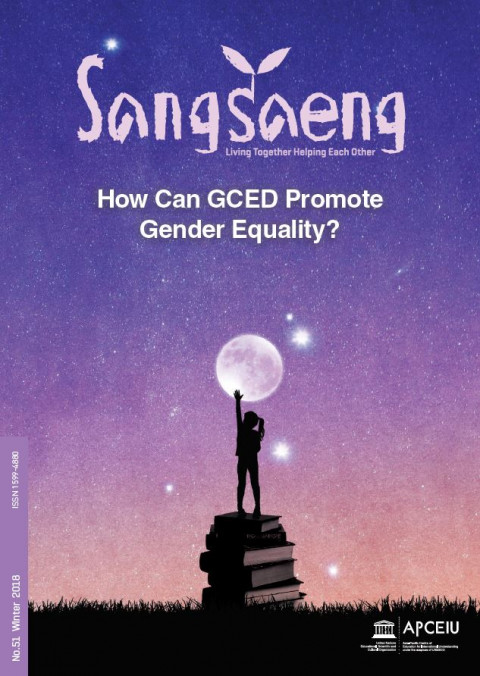 How Can GCED Promote Gender Equality? (SangSaeng no. 51 Winter 2018) Year of publication: 2018 Corporate author: APCEIU The 51th issue of SangSaeng, under the theme of “How Can GCED Promote Gender Equality?,” explores the role of GCED to bolster gender equality. In this issue, readers are reminded that GCED is not an abstract idea- rather, it is connected to real-life issues such as questioning gendered roles, expectations and stereotypes that are prevalent in many societies; and therefore, it can be a vital accelerator in building a more equitable world. 3 Director’s Message 4 Special ColmunTools that Promote Gender Equality 8 Focus : How Can GCED Promote Gender Equality?8 Bringing Gender Equality to Science World12 Women For Better World15 Setting GCED Principles to Promote Girls’ Education in Tado18 Path to Building Next Gen Men 22 Best Practice22 Using GCED to Promote Gender Equality in Senegal26 Adapting GCED into a Specific Learning Environment 29 Special ReportThe 3rd International Conference on GCED 32 InterviewGirls in GCED 35 Youth NetworkGlobal Citizenship Education in Refugee Crisis Relief 38 LetterPoetry - The Sword in Our Sheath 42 Peace In my MemoryBachcha Posh : An Inside Look 46 Understanding the Asia-Pacific RegionGrafting Human Rights Tree in Five ‘Stans’ 50 APCEIU in Action Comment l’ECM peut-elle promouvoir l’égalité des genres ? (SangSaeng N° 51 Hiver 2018) Year of publication: 2018 Corporate author: APCEIU SangSaeng (상생), mot coréen d’origine chinoise, se compose de deux caractères : Sang (相), qui signifie « mutual » (les uns les autres) et Saeng (生), qui signifie « vie ». Mis ensemble, ils signifient « vivre ensemble », « s’entraider ». C’est notre vision pour la région Asie-Pacifique. SangSaeng (相生) se veut une plateforme de débats constructifs sur les sujets, méthodes et expériences dans le domaine de l’éducation à la compréhension internationale. SangSaeng vise aussi à promouvoir l’Éducation à la citoyenneté mondiale, une des trois priorités de l’Initiative mondiale pour l’éducation avant tout, lancée par les Nations Unies en 2012. SangSaeng est publié deux fois par an par le Centre Asie-Pacifique d’éducation pour la compréhension internationale (APCEIU) sous l’égide de l’UNESCO. Version française produite par le Bureau régional de l'UNESCO pour l'Afrique de l'Ouest (Sahel) et édiitée avec l'appui de l'APCEIU. 3 MESSAGE DU DIRECTEUR4 RUBRIQUE SPECIALE Outils pour la promotion de l'égalité des genres8 FOCUS: COMMENT L'ECM PEUT-ELLE PROMOUVOIR L'ÉGALITÉ DES GENRES? 08 L'ÉGALITÉ DES GENRES DANS LE MONDE SCIENTIFIQUE 12 LES FEMMES POUR UN MONDE MEILLEUR 15 FIXER DES PRINCIPES D'ECM POUR PROMOUVOIR L'ÉDUCATION DES FILLES DES FILLES TADO 18 SUR LA VOIE DES HOMMES DE LA PROCHAINE GÉNÉRATION 22 BONNES PRATIQUES 22 Utiliser l'ECM pour promouvoir l'égalité des genres au Sénégal 26 Adapter l'ECM à un environnement d'apprentissage spécifique29 REPORTAGE SPÉCIAL La 3e Conférence internationale sur l’ECM: Une plate-forme durable et robuste pour l’ECM32 ENTRETIEN Les filles dans l'ECM35 RÉSEAU DE JEUNES L'éducation à la citoyenneté mondiale dans l'aide au réfugiés en situation de crise38 LETTRE Poésie - l'épée dans notre fourreau 42 LA PAIX DANS MA MÉMOIRE Bachcha Posh : Un regard intérieur46 COMPRENDRE LA REGION ASIE-PACIFIQUE Greffer l'arbre des droits de l'homme dans les cinq « Stans »50 APCEIU EN ACTION 어떻게 세계시민교육이 성 평등에 기여할 수 있을까? (상생 제51호 2018년 겨울호) Year of publication: 2018 Corporate author: APCEIU 상생 51호는 “어떻게 세계시민교육이 성 평등에 기여할 수 있을까?”라는 주제로 성 평등을 강화하기 위한 세계시민교육의 역할을 다룬다. 이번 호를 통하여 독자들은 세계시민교육이 추상적인 것이 아니라, 우리의 실제 삶과 관련이 있으며, 많은 사회에서 만연한 성 역할, 기대, 고정관념에 대해 의문을 던지는 교육이며, 더욱 평등한 사회를 만드는 데 기여하는 주요한 촉진제가 될 수 있음을 깨닫게 될 것이다. 3 발간사4 스페셜 칼럼 : 성 평등을 증진시키는 도구들 8 포커스: 어떻게 세계시민교육이 성 평등에 기여할 수 있을까?8 과학계에 도입하는 성 평등12 더 나은 세상을 위해 힘쓰는 여성들15 소녀 교육을 위한 Tado의 세계시민교육 원칙 세우기18 다음 세대의 남성들을 양성하는 길 22 모범 사례22 세계시민교육을 통한 세네갈의 성 평등 증진26 중앙아시아 학생들의 창의적이고 실제적인 능력 향상을 위한 세계시민교육 사례 연구29 스페셜 리포트 : 3차 세계시민교육 국제회의: 세계시민교육을 위한 탄탄하고 지속 가능한 플랫폼을 위하여 32 인터뷰 : 필리핀에서 여성 교육 향상에 힘쓰는 세 명의 젊은 연구자들과의 인터뷰35 유스 네트워크 : 위기 상황에 적용한 세계시민교육38 시 : 우리의 칼집에 꽂힌 검42 내 기억 속의 평화 : 성별을 숨기고 살아야 하는 아프가니스탄 소녀 이야기46 아시아-태평양 지역 이해하기 : 5개의 ‘스탄’ 국가에 인권의 나무를 접붙이다50 교육원 활동
 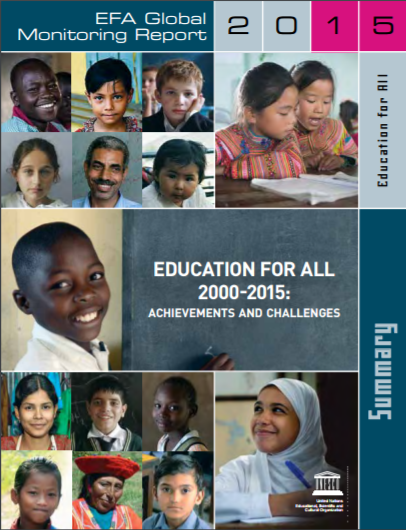 Education for All 2000-2015: Achievements and Challenges; EFA Global Monitoring Report, 2015; Summary Year of publication: 2015 Corporate author: UNESCO At the World Education Forum in Dakar, Senegal, in 2000, governments from 164 countries, together with representatives of regional groups, international organizations, donor agencies, non-government organizations (NGOs) and civil society, adopted a Framework for Action to deliver Education for All (EFA) commitments. The Dakar Framework comprised 6 goals and their associated targets to be achieved by 2015, and 12 strategies to which all stakeholders would contribute. The EFA Global Monitoring Report (GMR) has monitored progress on an almost annual basis towards the EFA goals and the two education-related Millennium Development Goals (MDGs). The 2015 GMR provides a complete assessment of progress since 2000 towards the target date for reaching the Dakar Framework’s goals. It takes stock of whether the world achieved the EFA goals and stakeholders upheld their commitments. It explains possible determinants of the pace of progress. Finally, it identifies key lessons for shaping the post-2015 global education agenda. Other lang. title: L'Education pour tous 2000-2015: progrès et enjeux, rapport mondial de suivi sur l'EPT, 2015, résumé; La Educación para Todos, 2000-2015: logros y desafíos, informe de seguimiento de la EPT en el mundo, 2015, resumen Year of publication: 2015 Corporate author: UNESCO At the World Education Forum in Dakar, Senegal, in 2000, governments from 164 countries, together with representatives of regional groups, international organizations, donor agencies, non-government organizations (NGOs) and civil society, adopted a Framework for Action to deliver Education for All (EFA) commitments. The Dakar Framework comprised 6 goals and their associated targets to be achieved by 2015, and 12 strategies to which all stakeholders would contribute. The EFA Global Monitoring Report (GMR) has monitored progress on an almost annual basis towards the EFA goals and the two education-related Millennium Development Goals (MDGs). The 2015 GMR provides a complete assessment of progress since 2000 towards the target date for reaching the Dakar Framework’s goals. It takes stock of whether the world achieved the EFA goals and stakeholders upheld their commitments. It explains possible determinants of the pace of progress. Finally, it identifies key lessons for shaping the post-2015 global education agenda.