
Resources
Explore a wide range of valuable resources on GCED to deepen your understanding and enhance your research, advocacy, teaching, and learning.
104 Results found
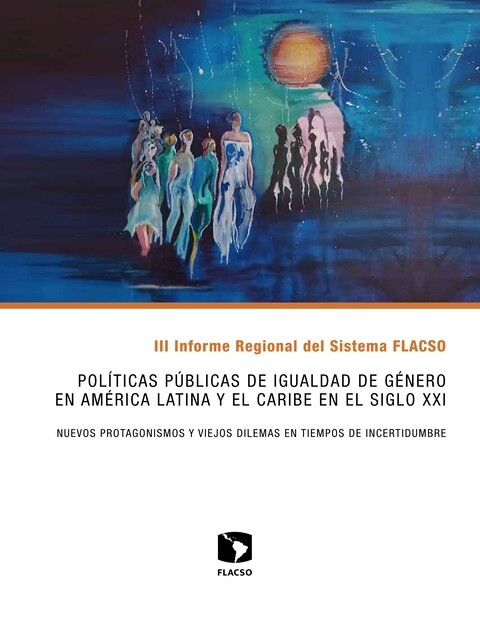 Public Policies on Gender Equality in Latin America and the Caribbean in the 21st Century: New Protagonisms and Old Dilemmas in Times of Uncertainty Year of publication: 2023 Author: Cinthya Fernández Lépiz | Esteban Zolezzi Corporate author: Latin American Council of Social Sciences (CLACSO) The III Report of FLACSO on Gender Issues is the result of a collaborative process among the Academic Units of FLACSO. Its chapters aim to identify the main challenges in each country regarding gender equality in the early 21st century and engage them in a dialogue with contributions from the academic community of FLACSO. They seek to provide a general characterization of each country, analyze the main challenges in terms of gender equality, as well as the critical contributions and limitations raised by gender and feminist studies in conjunction with the contributions made by FLACSO.
 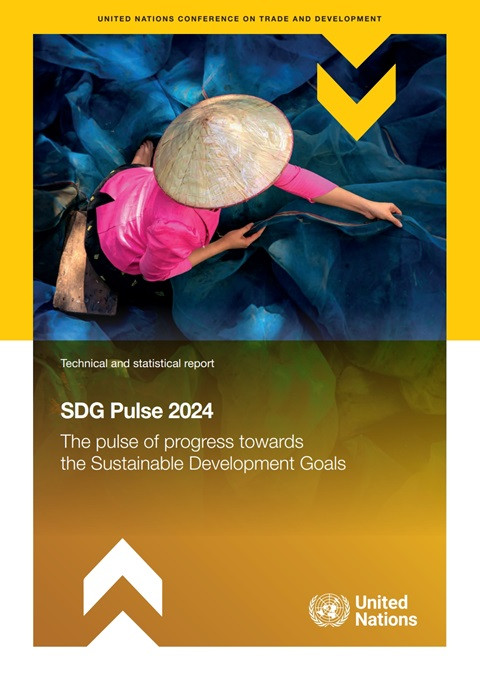 SDG Pulse 2024: The Pulse of Progress Towards the Sustainable Development Goals Year of publication: 2024 Corporate author: United Nations Conference on Trade and Development (UNCTAD) The SDG Pulse reveals progress in various areas, but setbacks continue to undermine momentum. Economic and social distress, particularly for those most in need, is exacerbated by the war in Ukraine, and in Gaza, leading to longer and more expensive trade routes, increased hunger and food insecurity, and rising CO2 emissions, impacting developing countries’ ability to meet the SDGs, and the need for reliable information becomes even more critical. SDG Pulse serves three main purposes: firstly, to update on the evolution of selected official SDG indicators and complementary data and statistics; second, to report on progress in developing new concepts and methodologies for SDG indicators for which UNCTAD is a global custodian; and third, to showcase UNCTAD’s support to member States in implementing the 2030 Agenda. Building on the previous edition, SDG Pulse continues to track progress according to four transformations identified at UNCTAD’s intergovernmental meeting in Bridgetown (UNCTAD, 2021). The report also delves into thematic issues relevant to the 2030 Agenda bringing to the forefront key messages related to trade and multilateralism, development finance, economic diversification, and sustainability and resilience. This year’s In-Focus topic explores gender equality in trade. Despite global advancements, gender inequality persists, affecting women's lives through economic participation, education, health, and political empowerment worldwide. UNCTAD’s new gender equality in trade indicator set helps illuminate gender gaps in trade to inform effective policy actions and accelerate just and equal development. This overview provides a glance at recent developments and analysis related to sustainable development.
 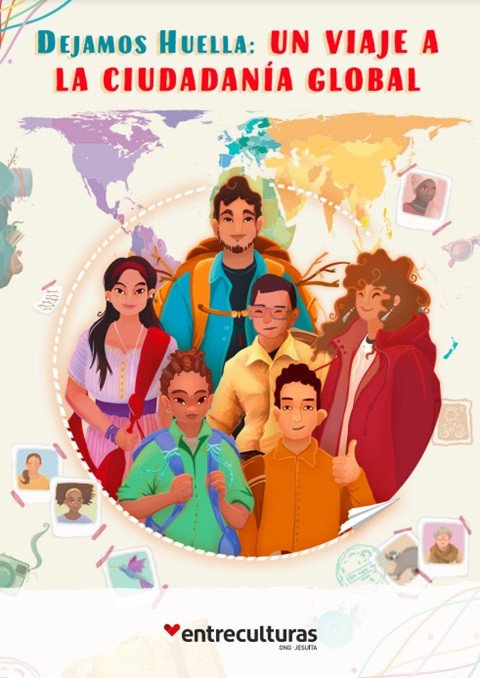 We Leave Our Mark: A Journey to Global Citizenship Year of publication: 2024 Corporate author: Entreculturas With this educational guide, students will be actively involved in exploring global and local issues with the aim of training agents of change in their own communities. They will take an educational journey through different themes (destinations) of Global Citizenship, such as gender equality, environmental protection, interculturality, inclusion, democratic participation, social justice and culture of peace. Each destination includes activities, games and practical exercises designed to raise students' awareness of the corresponding topic, using participatory dynamics such as games, puzzles, videos, and interactive simulations.
  Discrimination, Mobbing and Equality Corporate author: Amnesty International. Swiss Section These 7 education sheets(Stereotypes and Discrimination, Occupational Inequalities, Discrimination in Job Searching, Let’s Talk about Mobbing!, Conflict or Mobbing?, Declaration against Mobbing at School, Freedom from Discrimination) cover the themes of discrimination, equality and mobbing(conflictual relations in the workplace, both between colleagues and between superiors and subordinates), in relation to article 2 of the Universal Declaration of Human Rights.
 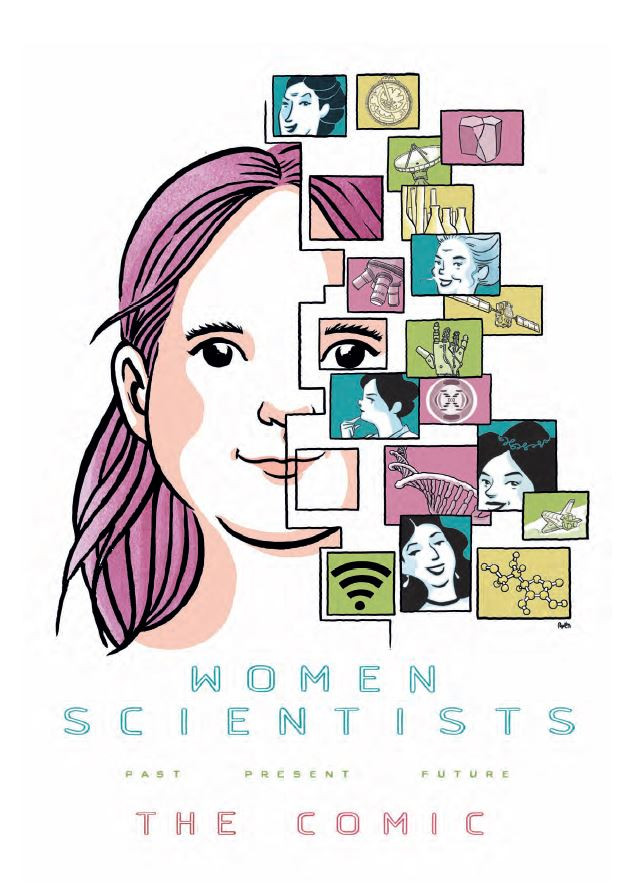 Women Scientists: Past, Present and Future Year of publication: 2019 Author: Raquel Gu | Francisco Vega Narváez Corporate author: ONCE Foundation This comic is the adaptation of the play Women scientists: past, present and future, an original idea by Francisco Vega Narváez with an original script by Isabel Fernández Delgado, Clara Grima Ruiz, maría José Jiménez Rodríguez, Adela muñoz Páez, maría del Carmen Romero Ternero and Francisco Vega Narváez. Both in the play and in the comic, female references are presented in the world of science so that girls do not feel that something is foreign to them simply because they are women and also so that boys have those same references. Achievements in science are made by people, it doesn't matter if they are women or men, their age, nationality...
  International Day of Women and Girls in Science Corporate author: Global Citizenship (Buenos Aires) Regarding the International Day of Women and Girls in Science, this infographic presents relevant information about the gaps in female participation in research and work on scientific topics. Includes links to support materials.
  Effectiveness of Integrating Reciprocal Teaching and Science Stations Strategies in Teaching Science on Developing Some Science Hand Skills among Eighth Grade Female Pupils in Thamar City (Arts for Educational & Psychological Studies; Vol.5, No.3) Year of publication: 2023 Author: Nabeeha Saleh Abdulmoghni, Mohammed Ebrahim Al-San Corporate author: Dhamar University This study aimed to identify the impact of integrating reciprocal teaching and science stations strategies in teaching science on developing some science hand skills among Eighth-grade female pupils in Thamar City. To achieve the study objectives, the descriptive analytical method and the quasi-experimental design of the two groups, with pre and post measurements, were used. The data collection tools included: a checklist for analyzing Unit 7 (Nutrition in Living Organisms), and unit 8 (The Relationship of what you eat to your Health) in the respective textbook; a checklist of science hand skills to be developed; and an observation sheet of the skills, covering three main skills: (carrying out scientific experiments correctly- designing and drawing shapes and illustrations correctly- following safety rules in the laboratory). After testing the validity and reliability of the tools, and administering them to the study sample, a number of results were revealed. More specifically, there were statistically significant differences between the mean scores of the pupils of the experimental and control groups in the science hand skills, attributed to the experimental group due to the integrative approach.
  Practical Legal Guide for Women in Algeria Year of publication: 2023 Author: Fériel Khelil | Saadia Gacem Corporate author: Fondation Friedrich-Ebert This practical legal guide, in Arabic and French, enables women in Algeria to find out about their rights, the laws that protect them, but also the legislative inequalities they will encounter in their life course, through tools for practical understanding of the laws. It was produced by Feriel Khelil, jurist with the Réseau Wassila/Avife association, and Saadia Gacem, doctoral student in anthropology and feminist activist, and supported by the Friedrich Ebert Foundation.
 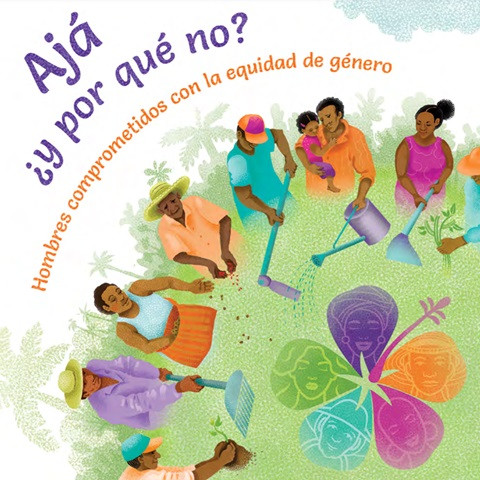 Aha, and Why Not? Men Committed to Gender Equality Year of publication: 2024 Author: María Camila Barrera Gutiérrez | Nyria Ramírez Ortega Corporate author: Center for Research and Popular Education / Program for Peace (CINEP/PPP) This political-methodological booklet has been prepared by the Caribbean Women's Coalition for Land and Territory within the framework of the Stand For Her Land – S4HL Colombia campaign. The purpose of this document is to make available to social organizations, popular educators, teachers, leaders, human rights defenders and facilitators of this training process that has been a communication and popular education initiative to promote community dialogues on non-violent masculinities. The strategy presented here is made up of two inputs: a sound series composed of five chapters and a methodological proposal to address them through community dialogue exercises.
  Working On Emotions, Advancing Equality: Learning Situations Year of publication: 2024 Author: Marta Álvarez | María Burgos | Ricardo Hurtado | Francisca Marañón | Laura Seoane Corporate author: InteRed This publication proposes several learning situations to be carried out in the classroom and in other socio-educational spaces with the aim of understanding and managing the emotions that underlie attitudes and behaviours that generate violence, discrimination and inequality. This proposal continues the work that we at InteRed have been doing to generate in people the capacities to position themselves in the current system of inequalities from a social justice perspective, without losing confidence that another model of development that is more fair, equitable and sustainable is possible. In this process of capacity building, we believe it is essential to address the management of emotions.