
Resources
Explore a wide range of valuable resources on GCED to deepen your understanding and enhance your research, advocacy, teaching, and learning.
104 Results found
 Gender and Recovery Toolkit: Advancing Gender Equality and Women’s Empowerment in Crisis and Recovery Settings; Updated 2024 Year of publication: 2024 Corporate author: United Nations Development Programme (UNDP) The Gender and Recovery toolkit is a practical resource in the hands of UNDP personnel to help government, civil society and other partners put gender equality at the core of immediate and long-term recovery processes. It shows how to incorporate gender perspectives and women’s participation throughout the recovery programme cycle – from assessment, strategic planning and framing of results to budgeting and implementation, and monitoring and evaluation.The toolkit emphasizes the need to address the root causes of gender inequality and fragility by transforming power dynamics. It advocates for approaches that go beyond increasing women’s representation, focusing on tackling masculinities and reshaping institutions, behaviors, and norms. It underscores the importance of holistic strategies to address the interconnected challenges of climate change, peacebuilding, and gender equality in crisis contexts, highlighting the role of technology and innovative programming in empowering women. The seven guidance notes and tip sheets incorporate recent updates to global policy frameworks with updated indicators and robust data sources. While primarily designed for UNDP practitioners, this resource is valuable for all partners in crisis and recovery settings.
  Towards More Gender Equality in Sport: Recommendations and Action Plan From the High Level Group on Gender Equality in Sport (2022) Year of publication: 2022 Corporate author: European Commission | European Union (EU) Gender equality is a fundamental European Union (EU) principle. Enshrined in the Treaties, it is something the EU is actively trying to achieve – most recently through its Gender Equality Strategy 2021-2025. The Strategy aims to give women, men, girls and boys, in all their diversity, the freedom to pursue their chosen path in life and equal opportunities to thrive and to participate in and lead European society. Looking back at the steps already taken, the ‘Gender equality in sport – Proposal for strategic actions 2014-2020’ has certainly led to achievements, but the pace of reforms needs to be accelerated. Firstly, the principle of gender equality now underpins all actions funded under Erasmus+ Sport and projects supporting women’s sport are actively encouraged. Secondly, awareness raising is at the core of EU action in this field, notably through studies or discussions, such as within the Commission Expert Group on Good Governance. Finally, initiatives such as the annual #BeInclusive EU Sport Awards recognise those organisations using sport to increase social inclusion, including gender equality. In 2020, Commissioner Gabriel announced the setting up of an expert group with the aim of discussing the way forward and proposing future actions in the area of gender equality in sport to the European Commission, EU Member States and sports organisations. The work of the experts will lead to the implementation of concrete actions at local, national and European level. This report is the result of the work of the European Commission High-Level Group (HLG) on Gender Equality in Sport. The 15 members of the HLG were appointed in December 2020. Work began in February 2021 and was completed in December 2021. Meetings focused on six areas of engagement identified by the experts. Scientists and practitioners shared findings of their research and good practices. Each meeting was followed by working sessions to summarise the presentations and formulate recommendations.
  Training for Citizenship in Gender Equality at Elementary Education(Sinéctica, Revista electrónica de educación; no. 60) Year of publication: 2023 Author: Denys Serrano Arenas | Azucena de la Concepción Ochoa Cervantes Corporate author: Sinéctica, Revista Electrónica de Educación Gender equality is a purpose from educational policies aimed to eliminating sociocultu-ral inequalities that limit the exercise of children's rights. At present, gender stereotypes that legitimize the roles exercised by girls and boys that limit the forms of participation persist, promoting different levels of exclusion in school life. The objective of this work is to analyze the perceptions of a group of sixth grade students, about how they consider they should participate in school dynamics due to their gender condition, to detect tho-se stereotypes that influence the practice of their participation. A descriptive study was carried out using a Likert-type questionnaire to 64 students. The results show that gen-der stereotypes are reproduced that provide children with greater ease and freedom to express themselves, as well as to make decisions. Modifications in the care roles were also identified, within which, they begin to have greater interference. In parallel, it was found that these stereotypes represent structural difficulties for the self-recognition of the par-ticipatory capacities of girls. It is recommended to take participation as a fundamental element for the exercise of citizenship in gender equality.
  Gender Inequality in Learning Achievement in Primary Education: What can TERCE Tell Us? Year of publication: 2016 Corporate author: UNESCO Santiago Existing research identifies several significant, subject-based gender inequalities in education. Male learners have significant advantages in mathematics and female learners have no less significant advantages in reading and writin. Such considerable differences in achievement may have important consequences for the future wellbeing of students. In order to shed light on this phenomenon in Latin America, this report analyzes the gender gaps in educational achievement in the Third Regional Comparative and Explanatory Study (TERCE) led by the Latin American Laboratory for Assessment of the Quality of Education (LLECE).
 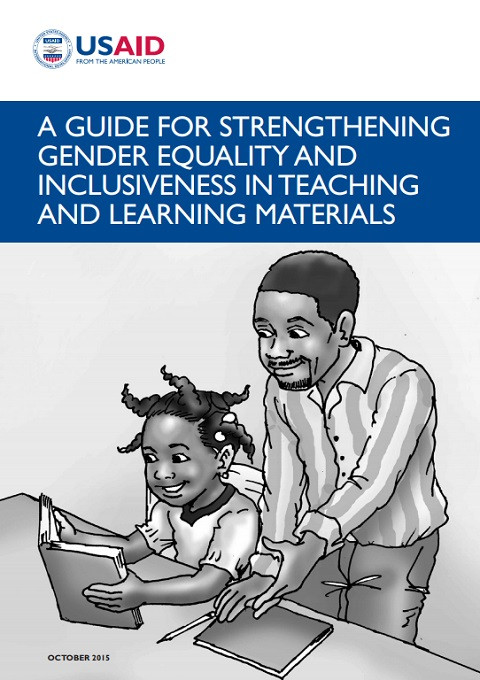 A Guide for Strengthening Gender Equality and Inclusiveness in Teaching and Learning Materials Year of publication: 2015 Corporate author: RTI International | United States Agency for International Development (USAID) The purpose of this guide is to provide guidance on how to represent members of all subgroups of a society in teaching and learning materials in equitable and non-stereotypical ways. Reviewers can use the strategies proposed in this guide to evaluate existing teaching and learning materials across primary and secondary levels. Authors or developers can employ the strategies to inform the development of new materials. This guide is organized according to themes that emerged from the review of relevant literature. Each theme reflects a particular type of bias that should be considered when evaluating or developing teaching and learning materials.
 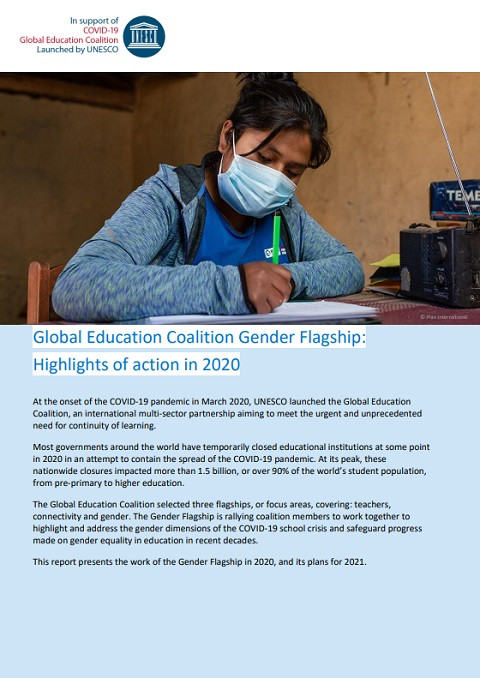 Global Education Coalition Gender Flagship: Highlights of Action in 2020 Year of publication: 2021 Corporate author: UNESCO | Global Education Coalition At the onset of the COVID-19 pandemic in March 2020, UNESCO launched the Global Education Coalition, an international multi-sector partnership aiming to meet the urgent and unprecedented need for continuity of learning.Most governments around the world have temporarily closed educational institutions at some point in 2020 in an attempt to contain the spread of the COVID-19 pandemic. At its peak, these nationwide closures impacted more than 1.5 billion, or over 90% of the world’s student population, from pre-primary to higher education. The Global Education Coalition selected three flagships, or focus areas, covering: teachers, connectivity and gender.The Gender Flagship is rallying coalition members to work together to highlight and address the gender dimensions of the COVID-19 school crisis and safeguard progress made on gender equality in education in recent decades.This report presents the work of the Gender Flagship in 2020, and its plans for 2021.
 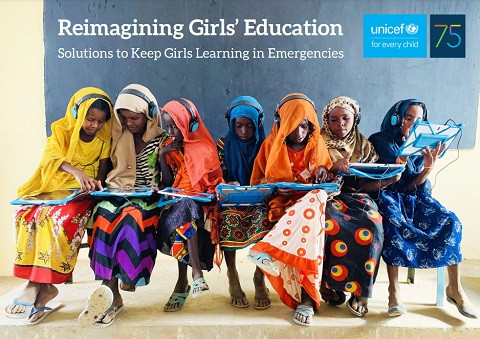 Reimagining Girls’ Education: Solutions to Keep Girls Learning in Emergencies Year of publication: 2021 Corporate author: United Nations Children's Fund (UNICEF) Reimagining Girls’ Education: Solutions to Keep Girls Learning in Emergencies presents an empirical overview of what works to support learning outcomes for girls in emergencies. Research shows that girls in emergencies are disadvantaged at all stages of education and are more likely to be out-of-school than in non-emergency settings. Girls are also struggling to learn.This solutions book seeks to highlight promising evidence-based actions in education for decision makers who are designing and implementing interventions to support girls’ education in low and middle-income country humanitarian settings and settings where education has been interrupted by the COVID‑19 pandemic. It documents practical examples of approaches that have been or are being tested, and from which lessons can be drawn.The overarching aim is that this evidence be used to inform programming in crises and support diverse stakeholders in mitigating the impact of emergencies on girls’ education.
  EiE-GenKit: A Core Resource Package on Gender in Education in Emergencies Year of publication: 2021 Corporate author: Education Cannot Wait (ECW) | Inter-agency Network for Education in Emergencies (INEE) | United Nations Girls' Education Initiative (UNGEI) When gender-responsive, quality education is available to all it has the potential to transform societies and build sustainable peace. A joint initiative from the Inter-agency Network for Education in Emergencies (INEE), Education Cannot Wait (ECW) and the UN Girls’ Education Initiative (UNGEI), the EiE-GenKit is a core resource package for gender in education in emergencies. The EiE-GenKit is the first resource of its kind, providing education practitioners with practical tools to promote gender-responsive programming from crisis to peace and sustainable development.The EiE-GenKit is based on extensive research and consultation with the latest resources, evidence, new tools and good practice available in one easy-to-use package. The EiE-GenKit builds on existing humanitarian processes for a streamlined approach to gender-responsive EiE. The EiE-GenKit offers tools for practical and immediate use including checklists, tipsheets and assessment templates supporting practitioners to ensure that each phase of an EiE intervention is gender-responsive. Bridging the gap between what we know about gender-responsive EiE and the tools we need to make it happen, the EiE-GenKit aims to promote improved gender and education outcomes of learners living in crises.
  In Solidarity With Girls: Gender and Education in Crisis (Policy Brief Series) Year of publication: 2020 Corporate author: United Nations Girls' Education Initiative (UNGEI) The In Solidarity With Girls: Gender and education in crisis policy brief series was developed through a series of intergenerational dialogues on gender, education and COVID-19. The contents of this paper and its recommendations belong to the young women activists featured in each brief. Drawing on the ‘build back equal’ principle, this brief contributes to policy dialogues and discussions on (1) how we can plan for and work towards more equal, gender-responsive school systems once restrictions are lifted, and (2) achieve this through meaningful partnership with youth and youth-led networks.
 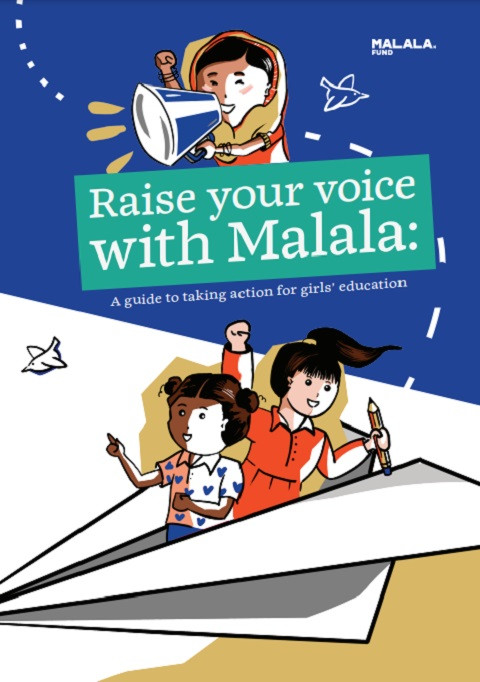 Raise Your Voice With Malala: A Guide to Taking Action for Girls’ Education Year of publication: 2018 Author: Emily Laurie | Eleanor Gall Corporate author: Malala Fund This guide gives young activists the tools to raise their voices and make change happen. Girls around the world are standing up in support of their out-of-school sisters and fighting to see every girl complete 12 years of free, safe, quality education. By taking action in their communities, girls can contribute to the peace and prosperity of our entire world. The guide includes real stories about girls around the world working to make sure all girls have the opportunity to go to school.