
Resources
Explore a wide range of valuable resources on GCED to deepen your understanding and enhance your research, advocacy, teaching, and learning.
104 Results found
 The right to higher education and gender equality: briefing note compendium Year of publication: 2023 Corporate author: UNESCO International Institute for Higher Education in Latin America and the Caribbean (IESALC) The right to higher education and gender equality Table of ContentsForeword ................................................................................................................................................................................4Introduction ..........................................................................................................................................................................5UNESCO and the right to higher education ..............................................................................................................5Aim of this compendium..................................................................................................................................................6Key findings...........................................................................................................................................................................7Gender equality in Higher Education - Maximising impacts– Gillian Cowell................................................8Gender equality and higher education: The Afghan case – Aisha Khurram............................................... 12An analysis of gender equality policies and practices in higher education institutions and their effectiveness in promoting gender equity – Angel Mbuthia........................................................ 14Gender identity and access to higher education – Martin Perea.................................................................... 16What can be done to ensure the right to higher education? – Bhavani Rao.............................................. 18Gender equality in higher education still a pending issue in Peru – Patricia Ruiz Bravo ....................... 22Gender equality in higher education: state of play and implications across OECD countries, and reflections on potential responses for policy and practice – François Staring.................................. 24
  Rising Beyond: Aiming towards a Brighter Future Year of publication: 2021 Author: Aarya Chavda As children, how do we truly define a better understanding towards the right to choose, right to dream and right to self-express? This book emphasizes on the true meaning that there is no duty more important than ensuring that children’s rights are respected.
 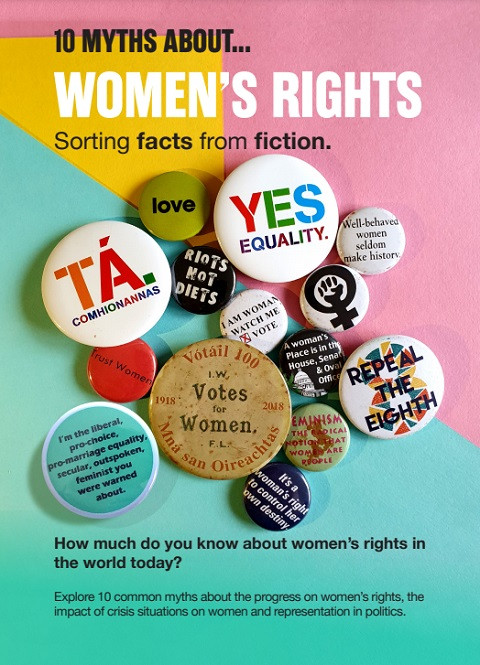 10 Myths About Women’s Rights: Sorting Facts From Fiction Year of publication: 2020 Author: Toni Pyke | Colm Regan Corporate author: DevelopmentEducation.ie Gender-based inequality is one of the most enduring and deep-seated discriminations. It affects all regions, classes and sectors. In most countries, it is maintained and defended in most of the same ways. One key component of that maintenance is a set of myths that are repeated time and time again.This pocket-size booklet includes:Why thinking about women’s rights matters10 short myths about progress on equality, who benefits from feminism, the realities of women’s health and the impact of COVID-19.Links to the Sustainable Development GoalsReferences per each myth following a fact or fiction approach and an explainerThe 10 Myths About…. series looks to sort facts from fiction on key global development, human rights and justice issues.Download 10 Myths About Women’s Rights PDFTest your knowledge and take the 10 Myths About Women’s Rights quiz or share with your group / class / friends For the latest fact checks and factsheets more on the fact checking project and development ideas, issues and debates, visit our What The Fact? project.
  Gender-Based Hate Crime Year of publication: 2021 Corporate author: Organization for Security and Co-operation in Europe (OSCE) Gender-based hate crimes are a consequence of gender inequalities and disproportionately affect women, as well as anyone perceived as not complying with prevailing gender norms. Gender-based hate crimes often seek to intimidate and suppress ways of life or expressions of identity that are perceived as not complying with traditional gender norms. They have a significant, long-lasting impact on the victims, and undermine security and social cohesion by perpetuating gender inequalities. The existence of such crimes also underscores wider trends of intolerance towards other groups. Everyone has a role to play in countering this and all forms of intolerance.
 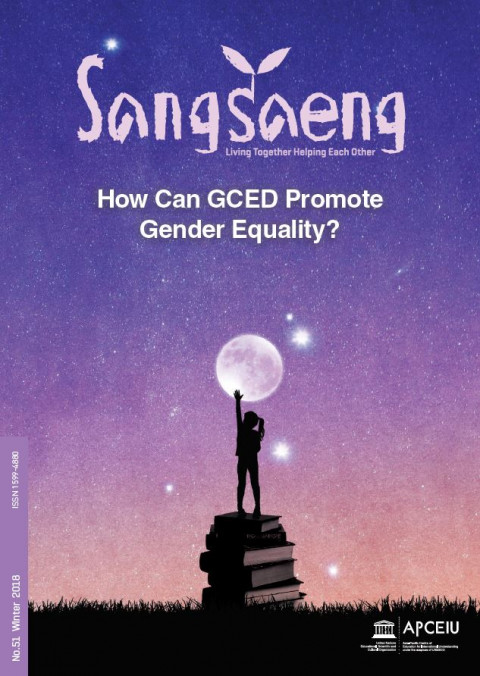 How Can GCED Promote Gender Equality? (SangSaeng no. 51 Winter 2018) Year of publication: 2018 Corporate author: APCEIU The 51th issue of SangSaeng, under the theme of “How Can GCED Promote Gender Equality?,” explores the role of GCED to bolster gender equality. In this issue, readers are reminded that GCED is not an abstract idea- rather, it is connected to real-life issues such as questioning gendered roles, expectations and stereotypes that are prevalent in many societies; and therefore, it can be a vital accelerator in building a more equitable world. 3 Director’s Message 4 Special ColmunTools that Promote Gender Equality 8 Focus : How Can GCED Promote Gender Equality?8 Bringing Gender Equality to Science World12 Women For Better World15 Setting GCED Principles to Promote Girls’ Education in Tado18 Path to Building Next Gen Men 22 Best Practice22 Using GCED to Promote Gender Equality in Senegal26 Adapting GCED into a Specific Learning Environment 29 Special ReportThe 3rd International Conference on GCED 32 InterviewGirls in GCED 35 Youth NetworkGlobal Citizenship Education in Refugee Crisis Relief 38 LetterPoetry - The Sword in Our Sheath 42 Peace In my MemoryBachcha Posh : An Inside Look 46 Understanding the Asia-Pacific RegionGrafting Human Rights Tree in Five ‘Stans’ 50 APCEIU in Action
 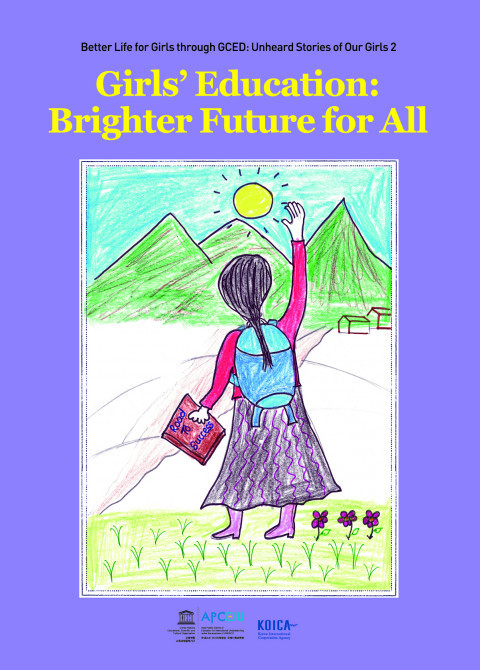 Better Life for Girls through GCED: Unheard Stories of Our Girls 2: Girl's Education: Brighter Future for All Year of publication: 2016 Corporate author: APCEIU The "Better Life for Girls through GCED: Unheard Stories of Our Girls" series depict stories of girls from different parts of the world. Coming from Africa and Asia, 25 educators have written stories about their girls during the programme to share with readers all over the world. As the title implies, these series are about real people living on the fringes of society especially girls in their neighbor having challenges on their way to access quality education.
 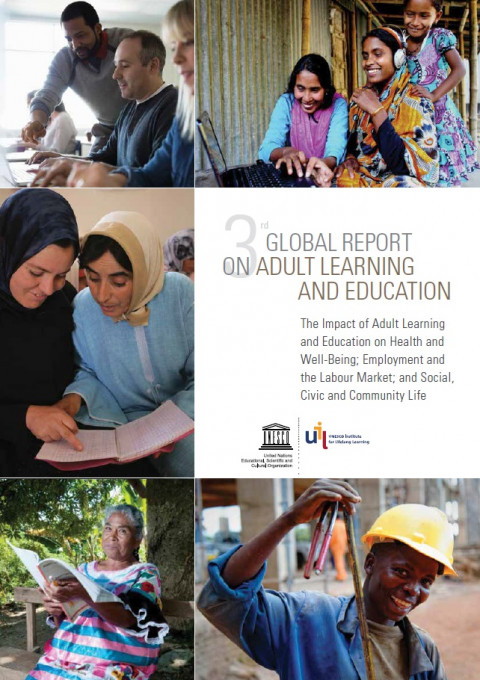 Third Global Report on Adult Learning and Education: The Impact of Adult Learning and Education on Health and Well-Being; Employment and the Labour Market; and Social, Civic and Community Life Year of publication: 2016 Corporate author: UNESCO Institute for Lifelong Learning (UIL) This Report on Adult Learning and Education (GRALE III) comes out as the international community works towards the 2030 Agenda for Sustainable Development. It is also reference and advocacy documents, providing information for analysts and policymakers, and reminding Member States of their commitment. Here policymakers will find high-quality evidence to support policies, strategies and budgets. Stakeholders will find compelling arguments for how adult learning and education promotes sustainable development, healthier societies, better jobs and more active citizenship. Researchers will find entry points and ideas for future research.
 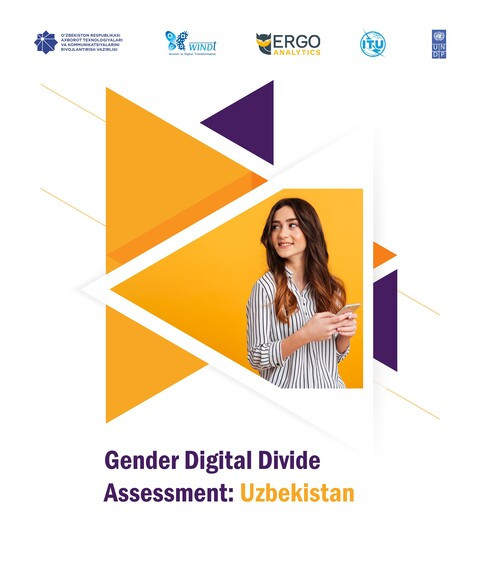 Gender Digital Divide Assessment: Uzbekistan Year of publication: 2023 Corporate author: UNDP Uzbekistan The Government of the Republic of Uzbekistan, realizing the negative impact of the gender digital divide on the development of the country, has included the issue of ensuring gender digital equality among its priorities. The United Nations Development Programme in Uzbekistan conducted an assessment to measure and analyze the main factors affecting the digital inclusion (or isolation) of women and girls, and recommended a number of actions that the Government can take to address existing gaps.
  Toolkit "Elections and Gender: International and National Practices of Supporting Women in Politics" Year of publication: 2021 Author: Denis A.S. Corporate author: UNDP Uzbekistan In the year of celebrating the 30th anniversary of state independence, cardinal transformations continue in Uzbekistan aimed at creating a New Uzbekistan, where human rights, freedom and legitimate interests are the highest value. In such an important process, special attention is paid to compliance of electoral legislation and practice with generally recognized international standards, full and broad ensuring of citizens' suffrage. Some key tasks are: achieving equal participation of women in the political sphere of Uzbekistan are raising awareness, providing public and civic education for women and men in order to improve their understanding of the importance of women's participation in political processes, and disseminating information on international and national commitments and agreements in the area of gender equality.
  Effective Employment Policy: Realizing Women's Work Opportunities Year of publication: 2013 Author: Inna Maltseva | Alexandr Navotniy | Yana Chicherina | Gulnora Marufova | Jamoliddin Ismailov | Sherzod Kudbiev | Khaydar Tashmuradov Corporate author: UNDP Uzbekistan The analytical report aims to analyze the current situation of women and men in the field of employment, to identify the key causes of gender differences in the labor market of the country and to develop proposals for improving the effectiveness of employment policies to promote the employment opportunities of women.