
Resources
Explore a wide range of valuable resources on GCED to deepen your understanding and enhance your research, advocacy, teaching, and learning.
17 Results found
 I Don’t Want… War! Year of publication: 2024 Corporate author: Amnesty International | Entreculturas | Mundo Cooperante | Save the Children On the occasion of the International Day of the Girl Child, which is commemorated on October 11, the organizations Amnesty International, Entreculturas, Mundo Cooperante and Save the Children, under the framework of the joint alliance NO QUIERO, denounce the serious consequences that armed conflicts have on girls and their integral development. Today, more than ever, it is urgent to address the effects of wars that prevent millions of girls from living a future free of violence, such as child and forced marriage or sexual violence.
  School Coexistence Toolkit: Prevention of Gender-Based Violence Corporate author: Ministry of Education of Colombia The infographics on the prevention of gender-based violence are intended precisely to raise awareness about this naturalized phenomenon so that families, children, adolescents and young people, and educators understand that this type of violence is not normal, it causes suffering and serious consequences for victims, and cannot be tolerated in any way. The infographics, based on the protocol, provide information in a simple and easy-to-understand way about what gender-based violence is, which can be sexual, physical, psychological or symbolic violence, how to prevent it, and what to do if you identify a victim or are a victim of this aggression.
  The Theme of Violence Against Women on the Internet Media of Uzbekistan: Content, Tools of Representation (PR and Advertising in a Changing World: Regional Aspect; No.28, 2023) Year of publication: 2023 Author: Я. М. Маматова In the context of the pandemic and post-pandemic in the media space of Uzbekistan, the flow of information about violence against women and girls, about cases of femicide and sexual violence has increased dramatically. In Uzbekistan, there are still few studies on the topic of coverage of this issue in the mass media, but they also mainly consider gender stereotypes, the aspect of violence in the processes of migration and trafficking.
  Inequalities and Gender Violence in Latin America and the Caribbean Year of publication: 2023 Author: Karina Batthyány Corporate author: Consejo Latinoamericano de Ciencias Sociales (CLACSO) The chapters of this book are the result of the powerful research work carried out within the framework of the call “Inequalities and gender violence in Latin America and the Caribbean", promoted by CLACSO. They seek, as a whole, to outline answers to these questions, through innovative methodologies that redefine conventional tools and give the texts great singularity. The point of view is, in all cases, novel and localized: territorially, but also in terms of theory and epistemology. The reading of This book manages to immerse the reader's gaze in a truly critical approach to the reality of the continent.
 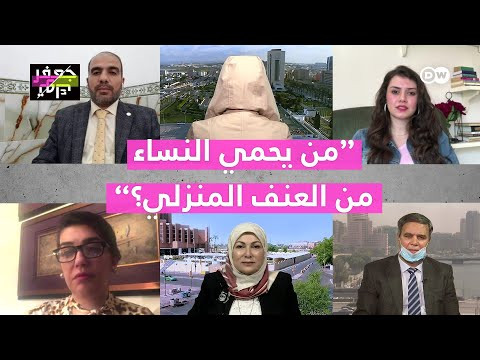 Domestic Violence Escalated in the Time of Corona ... Who Protects Women? Year of publication: 2020 Author: Jaafar Abdul Karim Corporate author: DW Jaafar Talk A program of DW TV broadcasting from Berlin. The program talks about the physical violence experienced by some women in the Arab world during the time of the new Corona virus. The program is characterized by its review of multiple cases of violence during quarantine, and seeks to discuss the causes and solutions to this issue.
  Policy Brief: The Impact of Covid-19 on Women Year of publication: 2020 Corporate author: United Nations Entity for Gender Equality and the Empowerment of Women (UN Women) | United Nations (UN) The year 2020, marking the twenty-fifth anniversary of the Beijing Platform for Action, was intended to be ground-breaking for gender equality. Instead, with the spread of the COVID-19 pandemic, even the limited gains made in the past decades are at risk of being rolled back. The pandemic is deepening pre-existing inequalities, exposing vulnerabilities in social, political and economic systems which are in turn amplifying the impacts of the pandemic.Across every sphere, from health to the economy, security to social protection, the impacts of COVID-19 are exacerbated for women and girls simply by virtue of their sex.This policy brief by the UN Secretary-General explores how women and girls’ lives are changing in the face of COVID-19, and outlines suggested priority measures to accompany both the immediate response and longer-term recovery efforts.
 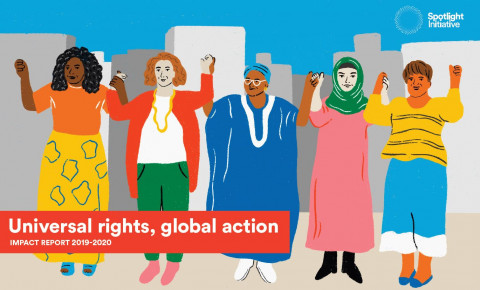 Universal Rights, Global Action: Impact Report 2019-2020 Year of publication: 2020 Corporate author: Spotlight Initiative Universal rights, global action is a shortened, visual adaptation of the 2019 Global Annual Narrative Progress Report. The Spotlight Initiative is a global, multi-year partnership between the European Union and the United Nations to eliminate all forms of violence against women and girls by 2030. This report outlines the Spotlight Initiative’s key signature results from 2019.The 32-page document highlights the ways the Spotlight Initiative country and regional programmes have meaningfully reached women and girls, including those facing multiple and intersecting forms of discrimination.
 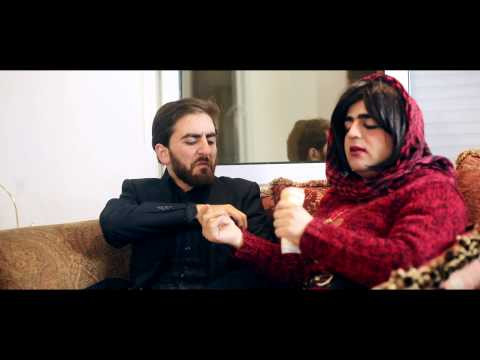 Violence Against Women Year of publication: 2015 Corporate author: Jordanian National Commission for Women A short drama film that reviews violence against women. This film was produced as part of the annual International Campaign Against Violence Against Women.
 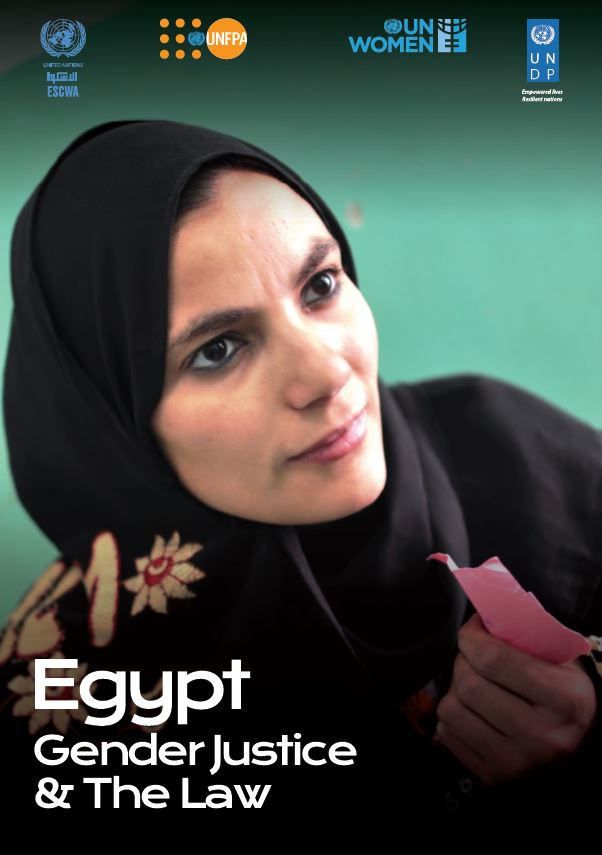 Egypt: Gender Justice and the Law Year of publication: 2018 Corporate author: United Nations Development Programme (UNDP) The United Nations Development Program, in cooperation with UN Women, the United Nations Population Fund and the Economic and Social Commission for Western Asia (ESCWA), has conducted a study on gender justice and the law. The study aims to provide an integrated assessment of laws and policies affecting gender justice and protection from gender-based violence. Gender in the Arab States Region This file focuses on Egypt.
 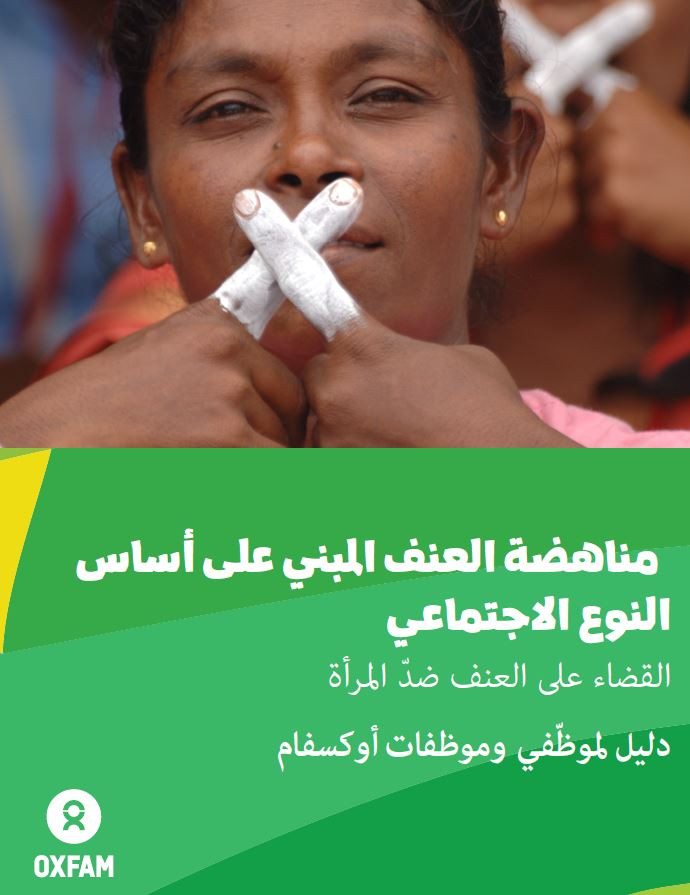 Combating Gender-Based Violence: Ending Violence Against Women Year of publication: 2012 Corporate author: Oxfam GB This file is a practical guide produced by Oxfam for its employees to combat gender-based violence, specifically violence against women. Oxfam works to eliminate violence against women because it is a violation of human rights and a major obstacle to human development. In order to achieve an effective intervention, violence against women must be defined and its root causes understood.