
Resources
Explore a wide range of valuable resources on GCED to deepen your understanding and enhance your research, advocacy, teaching, and learning.
123 Results found
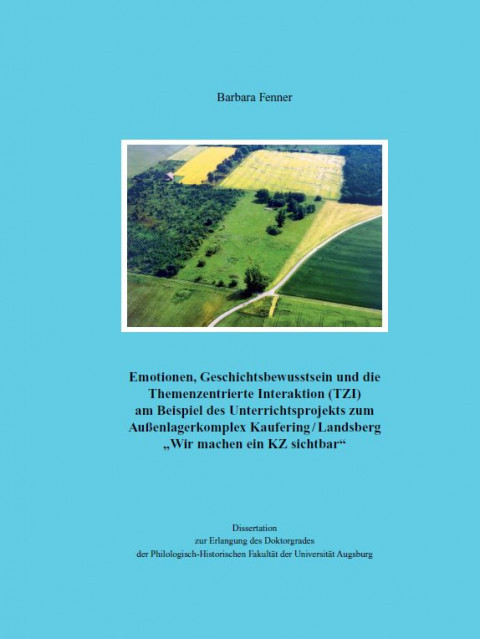 Emotionen, Geschichtsbewusstsein und die Themenzentrierte Interaktion (TZI) am Beispiel des Unterrichtsprojekts zum Außenlagerkomplex Kaufering/Landsberg: “Wir machen ein KZ sichtbar” Year of publication: 2012 Author: B. Fenner Corporate author: University of Ausgsburg Based on theme-centred interaction theory, the authors analyse a project in which a group of German 9th and 10th grade students participate in a project, “We make a Concentration Camp visible,” aimed at recreating the history of the so called Lager XI, one of the eleven satellite camp complexes of Dachau concentration camp, and make an exhibition about the camp. The above abstract is taken from the International Holocaust Remembrance Alliance Education Research Project. Please also consult the full list of abstracts in 15 languages and the accompanying publication Research in Teaching and Learning about the Holocaust: A Dialogue Beyond Borders. Ed: IHRA, Monique Eckmann, Doyle Stevick, Jolanta Ambrosewicz-Jacobs, 2017, Metropol Verlag at http://www.holocaustremembrance.com/publications.
  Jugendliche aus Einwandererfamilien und die Geschichte des Nationalsozialismus Year of publication: 2003 Author: V. B. Georgi Based on 55 interviews with young Germans with immigrant family background from the age of 15–20, Giorgi constructs a typology of how they position themesleves to the German Nazi past.
  Nationalsozialismus im Geschichtsunterricht: Beobachtungen unterrichtlicher Kommunikation Year of publication: 2002 Corporate author: Johann Wolfgang Goethe University This is a pilot study about the potential of history education about Nazism and the Holocaust. The aim is, 1) to establish whether it is possible to conduct empirical analysis about “Education after Auschwitz,” and 2) based on empircal observation improve the theoretical assumptions about the relationship between education and the specific theme of Nazism and the Holocaust. The empirical part consists of five case studies about different aspects of “Holocaust education” in two Upper Secondary schools in Frankfurt.The above abstract is taken from the International Holocaust Remembrance Alliance Education Research Project. Please also consult the full list of abstracts in 15 languages and the accompanying publication Research in Teaching and Learning about the Holocaust: A Dialogue Beyond Borders.Ed: IHRA, Monique Eckmann, Doyle Stevick, Jolanta Ambrosewicz-Jacobs, 2017, Metropol Verlag at http://www.holocaustremembrance.com/publications.
  Trauerimperativ: Jugendliche und ihr Umgang mit dem Holocaust (-Denkmal) Year of publication: 2013 Author: M. Klein Corporate author: Bundeszentrale für politische Bildung The author analyzes German student’s visit at the memorial for the murdered Jews in Berlin. Empirical qualitative study.The above abstract is taken from the International Holocaust Remembrance Alliance Education Research Project. Please also consult the full list of abstracts in 15 languages and the accompanying publication Research in Teaching and Learning about the Holocaust: A Dialogue Beyond Borders.Ed: IHRA, Monique Eckmann, Doyle Stevick, Jolanta Ambrosewicz-Jacobs, 2017, Metropol Verlag at http://www.holocaustremembrance.com/publications.
  Zwischen Vermittlungsanspruch und emotionaler Wahrnehmung: Die Gestaltung neuer Dauerausstellungen in Gedenkstätten für NS-Opfer in Deutschland und deren Bildungsanspruch Year of publication: 2009 Author: Thomas Lutz Over the last decade, as part of the federal concept for memorial sites, twenty new permanent exhibitions were developed. This dissertation undertakes to examine exhibitions created at memorial sites for victims of the Nazi regime from an educational and museological viewpoint. Expert interviews with exhibition curators serve as the basis for the empirical study. The author has worked for many years in the field of memorial museums education. He applied “action research,” developed in German-speaking countries under the term “Handlungsforschung.” The study analyzes the specific characteristics of the work conducted in museums, memorial sites and educational centres and also addresses the strained connection between commemoration and learning in the educational work of the memorial museums for the Nazi victims. The study also evaluates the practical impact of these aims. The very intense form of commemorative work that is conducted in Germany is justified by the nature of its subject matter: the stigmatization of specific victim groups during the Nazi era according to a system of political, racist-biological and social characteristics and the vast dimensions of the genocide. The socially and politically explosive nature of this task is manifested by the commemoration of the “other” victims as well as by the responsibility that Germany bears for addressing its “own” perpetrators in society. The central findings of the study show that the new exhibitions embrace a much more comprehensive foundation of historical material (historical knowledge, building history and archeological significance of the crime sites, written and audio-visual survival testimony and artifacts) as was previously the case. The professionalization of the “field of memorial museums” has led to a more intensively reflected and sensitive approach to handling documents, illustrations and objects on display in a museum. In particular, the significance of the relationship between the artifacts and their location, their sources, an appreciation for their origins and a critical reflection of what it is they convey is achieved. This also applies to photography. (Written by author) The above abstract is taken from the International Holocaust Remembrance Alliance Education Research Project. Please also consult the full list of abstracts in 15 languages and the accompanying publication Research in Teaching and Learning about the Holocaust: A Dialogue Beyond Borders.Ed: IHRA, Monique Eckmann, Doyle Stevick, Jolanta Ambrosewicz-Jacobs, 2017, Metropol Verlag at http://www.holocaustremembrance.com/publications.
  Message from Ms Audrey Azoulay, Director-General of UNESCO, on the occasion of International Day of Commemoration in Memory of the Victims of the Holocaust Year of publication: 2018 Corporate author: UNESCO. Director-General, 2009-2017 (Bokova, I.G.) This message was delivered by Audrey Azoulay, Director-General of UNESCO, on the occasion of International Day of Commemoration in Memory of the Victims of the Holocaust, on 27 January 2018. Message de la Directrice générale de l'UNESCO, Audrey Azoulay, à l'occasion de la Journée internationale dédiée à la mémoire des victimes de l'Holocauste Year of publication: 2018 Corporate author: UNESCO. Director-General, 2009-2017 (Bokova, I.G.) Ce message a été livré par la Directrice générale de l'UNESCO, Audrey Azoulay, à l'occasion de la Journée internationale dédiée à la mémoire des victimes de l'Holocauste, 27 janvier 2018.
  Holocaust and Other Genocides In this series of documents, the IHRA's Education Working Group offers ideas and recommendations to educators who wish to teach about the Holocaust and its relationship to other genocides and crimes against humanity.
  Human rights education at Holocaust memorial sites across the European Union : An overview of practices Year of publication: 2011 Corporate author: European Union Agency for Fundamental Rights Most European Union (EU) Member States have memorial sites and museums that both preserve the memory of the Holocaust and encourage visitors, in particular young people, to reflect on current human rights issues. In this handbook, the European Union Agency for Fundamental Rights (FRA) provides examples of the various ways in which memorial sites link the history of the Holocaust to human rights, ensuring that the past resonates in the present and its lessons are brought to bear on difficult contemporary issues against its backdrop. The report offers a sampling of educational programmes at selected historical sites and museums that either address human rights directly or approach, in a more general way, the dignity of human life and the equality of all human beings. (By the publisher)
  Education on the Holocaust and on Anti-Semitism : An overview and analysis of Educational Approaches Year of publication: 2006 Corporate author: OSCE. Office for Democratic Institutions and Human Rights (ODIHR) This study provides both the background on what is already being done in the field of Holocaust education and the identification of good practices to support future efforts by OSCE states and civil society. It also highlights new challenges that need to be addressed in education on both the Holocaust and on anti-Semitism. The first part of the study is based on information provided to the ODIHR by national ministries of education; national delegations of the Task Force for International Cooperation on Holocaust Education, Remembrance and Research (ITF); experts; educators; Jewish communities; and NGOs, in response to a questionnaire sent out by the ODIHR between December 2004 and April 2005. Comprehensive recommendations regarding Holocaust education conclude this first part of the overview. The second part of this report constitutes a first step in this regard: using country overviews on four OSCE states, it highlights the need to supplement Holocaust education in response to new forms of anti-Semitism and provides a number of relevant recommendations. (By the publisher)