
Resources
Explore a wide range of valuable resources on GCED to deepen your understanding and enhance your research, advocacy, teaching, and learning.
123 Results found
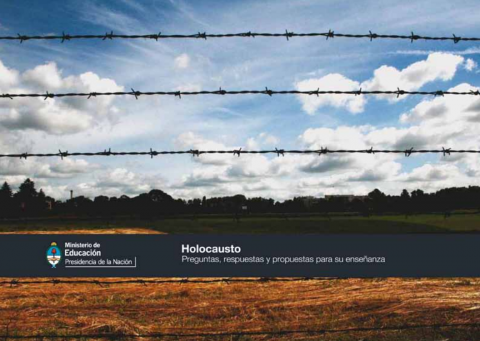 Holocausto : Preguntas, respuestas y propuestas para su ensenanza Year of publication: 2010 Corporate author: Argentina. Ministerio de Educacion This publication, released by the "Education and Memory" department of the Ministry of National Education of Argentina, is a handout to think about, debate and discuss some of the issues relevant to teaching about the Holocaust. Holocausto : Preguntas, respuestas y propuestas para su ensenanza Year of publication: 2010 Corporate author: Argentina. Ministerio de Educacion This publication, released by the "Education and Memory" department of the Ministry of National Education of Argentina, is a handout to think about, debate and discuss some of the issues relevant to teaching about the Holocaust. Holocauste: questions, réponses et propositions pour l'enseignement Year of publication: 2010 Corporate author: Argentina. Ministerio de Educacion Cette publication, publiée par le «Education et Mémoire » département du Ministère de l'Education Nationale de l'Argentine, est un document à réfléchir, débattre et discuter de certaines des questions relatives à l'enseignement de l'Holocauste.
  Educating Students about the Holocaust: A Survey of Teaching Practices More than half a century has passed since the horrific events of the Holocaust took place, but images of the state-sponsored, systematic persecution and annihilation of European Jewry by Nazi Germany are no less shocking than they were 60 years ago. Any discussion of the Holocaust inevitably leads to questions of not only how and why this event occurred in the modern era but, more importantly, how the legacy of the Holocaust can continue to raise international awareness of human rights abuses and genocide. One way of achieving this awareness is by providing holocaust education to the nation's young people. While this objective has obtained widespread support, there has been an absence of reliable nationwide information on how the Holocaust is actually taught in U.S. schools. This article attempts to fill that gap by presenting the results of a yearlong study commissioned by the United States Holocaust Memorial Museum of teaching practices in Holocaust education in the nation's secondary public schools in 2003-04. The study assessed secondary teaching practices in middle and high schools in the field of Holocaust education, and investigated teachers' rationales for teaching about the Holocaust. (By the publisher) United States Holocaust Memorial museum The website of the United States Holocaust Memorial Museum has extensive in-depth historical information about the Holocaust. It provides easy access to primary source documents, including photographs and maps that deal with the Holocaust. It also has broad information on genocide and mass atrocities.
 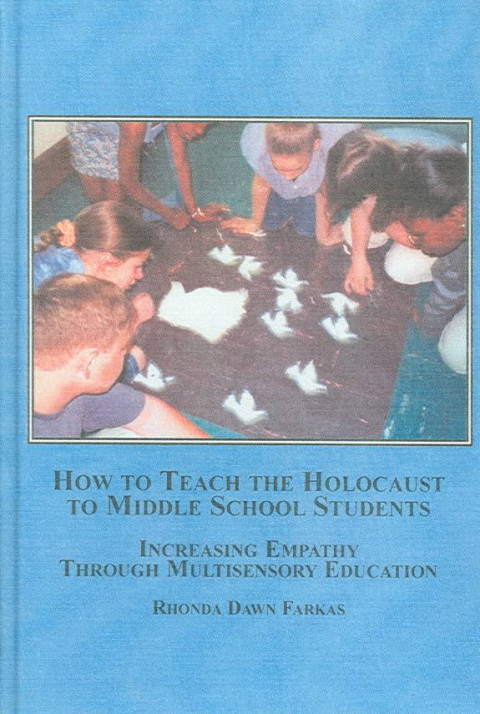 How to teach the Holocaust to Middle School Students : Increasing Empathy Through Multisensory Education This study examines the relationships among seventh-grade students' achievement scores, attitudes toward instructional approaches, empathy scales, and the transfer of skills between traditional versus multisensory education. The Learning Style Inventory (LSI) was employed to determine learning-style preferences. The data collected in this study was subjected to statistical analyses, supporting the use of a multisensory, rather than a traditional, approach for teaching lessons of the Holocaust. (By the publisher) Developing reflective citizens: The role of Holocaust education In what way can we best conceptualize the relationship of Holocaust education to the broader goal of developing reflective citizens? Keeping in mind the diversity of our audience while simultaneously recognizing the traditions of social studies education in the United States, the author argues that Holocaust education should be integrated within the rationale of educating young people to reflect upon issues that have direct relationships to (1) the development of values and (2) the fostering of behaviours emphasizing social responsibility. In short, Holocaust education ‒ meaning the design of curricula, creation of pedagogical strategies and evaluation of student performance ‒ can be a critical component in developing a citizenry who are capable of addressing global problems such as human rights violations and genocide by employing a reflective understanding of history and its relationships to present and future policies and practices, irrespective of national boundaries (By the author) Les élèves face à la Shoah : lieux, histoire, voyage Teaching the Holocaust is not easy. All teachers know it. In order to develop new forms of teaching, some have found a solution: leave the classroom and go with their students to visit places of memory. This approach, at a time when travel in general is developing, is increasingly popular. Its success has helped fuel a debate: what is the impact on students participating in these visits? What does the teacher need to do to prepare and to conduct such a trip to a memorial site? This books addresses the subject from the French perspective, and also from the English, Belgian, Spanish, Italian, Swiss, and Israeli point of view. Auschwitz is the main focus, but other places are also examined. (By the publisher - Translation)
  Contemporary Debates in Holocaust Education Holocaust education is a controversial and rapidly evolving field. This book, which critically analyses the very latest research, discusses a number of the most important debates which are emerging within it. Adopting a truly global perspective, Contemporary Debates in Holocaust Education explores both teachers' and students' levels of Holocaust knowledge as well as their attitudes and approaches towards the subject. Moreover, it employs a forward-looking perspective by thinking about how the subject will be taught when there are no survivors remaining and what challenges and opportunities digital technology, social media and online learning offer the modern teacher of the Holocaust. This book seeks to shift the parameters of existing debates and offer an insightful commentary on the nature, scope and direction of Holocaust education, which will be of great use to academics, teachers and policy-makers alike. (By the publisher) Mémoires à venir - Une enquête sur la mémoire du XXe siècle auprès de 31 172 jeunes de 16 a 29 ans, en 24 langues, dans 31 pays The Foundation for Political Innovation(Fondapol) and the Foundation for the Memory of the Shoah have carried out an international survey of the younger generations that reveals the memories and perceptions of youth regarding the major events of the twentieth and twenty-first centuries. The participants were 31,172 young people aged 16 to 29, surveyed in 24 different languages in 31 countries : Australia , Austria, Belgium , Canada, China , Croatia, Denmark , Estonia , USA , Finland, France , Greece, Hungary , India, Israel, Italy, Japan , Latvia, Lithuania , Netherlands , Poland, Czech Republic, Romania, United Kingdom , Russia, Serbia , Switzerland, Turkey and Ukraine. (By the publisher - Translation)