
Resources
Explore a wide range of valuable resources on GCED to deepen your understanding and enhance your research, advocacy, teaching, and learning.
362 Results found
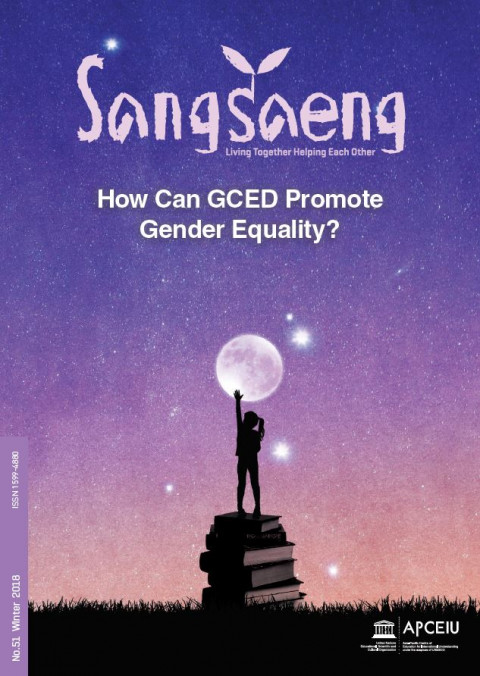 How Can GCED Promote Gender Equality? (SangSaeng no. 51 Winter 2018) Year of publication: 2018 Corporate author: APCEIU The 51th issue of SangSaeng, under the theme of “How Can GCED Promote Gender Equality?,” explores the role of GCED to bolster gender equality. In this issue, readers are reminded that GCED is not an abstract idea- rather, it is connected to real-life issues such as questioning gendered roles, expectations and stereotypes that are prevalent in many societies; and therefore, it can be a vital accelerator in building a more equitable world. 3 Director’s Message 4 Special ColmunTools that Promote Gender Equality 8 Focus : How Can GCED Promote Gender Equality?8 Bringing Gender Equality to Science World12 Women For Better World15 Setting GCED Principles to Promote Girls’ Education in Tado18 Path to Building Next Gen Men 22 Best Practice22 Using GCED to Promote Gender Equality in Senegal26 Adapting GCED into a Specific Learning Environment 29 Special ReportThe 3rd International Conference on GCED 32 InterviewGirls in GCED 35 Youth NetworkGlobal Citizenship Education in Refugee Crisis Relief 38 LetterPoetry - The Sword in Our Sheath 42 Peace In my MemoryBachcha Posh : An Inside Look 46 Understanding the Asia-Pacific RegionGrafting Human Rights Tree in Five ‘Stans’ 50 APCEIU in Action Comment l’ECM peut-elle promouvoir l’égalité des genres ? (SangSaeng N° 51 Hiver 2018) Year of publication: 2018 Corporate author: APCEIU SangSaeng (상생), mot coréen d’origine chinoise, se compose de deux caractères : Sang (相), qui signifie « mutual » (les uns les autres) et Saeng (生), qui signifie « vie ». Mis ensemble, ils signifient « vivre ensemble », « s’entraider ». C’est notre vision pour la région Asie-Pacifique. SangSaeng (相生) se veut une plateforme de débats constructifs sur les sujets, méthodes et expériences dans le domaine de l’éducation à la compréhension internationale. SangSaeng vise aussi à promouvoir l’Éducation à la citoyenneté mondiale, une des trois priorités de l’Initiative mondiale pour l’éducation avant tout, lancée par les Nations Unies en 2012. SangSaeng est publié deux fois par an par le Centre Asie-Pacifique d’éducation pour la compréhension internationale (APCEIU) sous l’égide de l’UNESCO. Version française produite par le Bureau régional de l'UNESCO pour l'Afrique de l'Ouest (Sahel) et édiitée avec l'appui de l'APCEIU. 3 MESSAGE DU DIRECTEUR4 RUBRIQUE SPECIALE Outils pour la promotion de l'égalité des genres8 FOCUS: COMMENT L'ECM PEUT-ELLE PROMOUVOIR L'ÉGALITÉ DES GENRES? 08 L'ÉGALITÉ DES GENRES DANS LE MONDE SCIENTIFIQUE 12 LES FEMMES POUR UN MONDE MEILLEUR 15 FIXER DES PRINCIPES D'ECM POUR PROMOUVOIR L'ÉDUCATION DES FILLES DES FILLES TADO 18 SUR LA VOIE DES HOMMES DE LA PROCHAINE GÉNÉRATION 22 BONNES PRATIQUES 22 Utiliser l'ECM pour promouvoir l'égalité des genres au Sénégal 26 Adapter l'ECM à un environnement d'apprentissage spécifique29 REPORTAGE SPÉCIAL La 3e Conférence internationale sur l’ECM: Une plate-forme durable et robuste pour l’ECM32 ENTRETIEN Les filles dans l'ECM35 RÉSEAU DE JEUNES L'éducation à la citoyenneté mondiale dans l'aide au réfugiés en situation de crise38 LETTRE Poésie - l'épée dans notre fourreau 42 LA PAIX DANS MA MÉMOIRE Bachcha Posh : Un regard intérieur46 COMPRENDRE LA REGION ASIE-PACIFIQUE Greffer l'arbre des droits de l'homme dans les cinq « Stans »50 APCEIU EN ACTION 어떻게 세계시민교육이 성 평등에 기여할 수 있을까? (상생 제51호 2018년 겨울호) Year of publication: 2018 Corporate author: APCEIU 상생 51호는 “어떻게 세계시민교육이 성 평등에 기여할 수 있을까?”라는 주제로 성 평등을 강화하기 위한 세계시민교육의 역할을 다룬다. 이번 호를 통하여 독자들은 세계시민교육이 추상적인 것이 아니라, 우리의 실제 삶과 관련이 있으며, 많은 사회에서 만연한 성 역할, 기대, 고정관념에 대해 의문을 던지는 교육이며, 더욱 평등한 사회를 만드는 데 기여하는 주요한 촉진제가 될 수 있음을 깨닫게 될 것이다. 3 발간사4 스페셜 칼럼 : 성 평등을 증진시키는 도구들 8 포커스: 어떻게 세계시민교육이 성 평등에 기여할 수 있을까?8 과학계에 도입하는 성 평등12 더 나은 세상을 위해 힘쓰는 여성들15 소녀 교육을 위한 Tado의 세계시민교육 원칙 세우기18 다음 세대의 남성들을 양성하는 길 22 모범 사례22 세계시민교육을 통한 세네갈의 성 평등 증진26 중앙아시아 학생들의 창의적이고 실제적인 능력 향상을 위한 세계시민교육 사례 연구29 스페셜 리포트 : 3차 세계시민교육 국제회의: 세계시민교육을 위한 탄탄하고 지속 가능한 플랫폼을 위하여 32 인터뷰 : 필리핀에서 여성 교육 향상에 힘쓰는 세 명의 젊은 연구자들과의 인터뷰35 유스 네트워크 : 위기 상황에 적용한 세계시민교육38 시 : 우리의 칼집에 꽂힌 검42 내 기억 속의 평화 : 성별을 숨기고 살아야 하는 아프가니스탄 소녀 이야기46 아시아-태평양 지역 이해하기 : 5개의 ‘스탄’ 국가에 인권의 나무를 접붙이다50 교육원 활동
  The Achievements and Tasks of the Global Citizenship Education University Course Development Project Year of publication: 2020 Author: Eegyeong Kim | Soobin Min | Semi Lee | Haeryun Kim Corporate author: Korean Society of Education for International Understanding (KOSEIU) This study seeks to analyze the achievements and tasks of the 「GCED University Course Development Project」 promoted by APCEIU. Using such research methods as literature review, workshops, and expert consultation, we analyzed the four-year project surrounding course providers, course contents, and student learning and satisfaction. The findings show that the project has heightened universities’ interest in GCED through 33 courses involving 1,572 students from 21 universities. It was also confirmed that a variety of supports allowed students to have meaningful learning experiences. However, large class sizes, disparity among universities, and the absence of performance measuring tools seemed to limit the success of the project. As a strategy for overcoming these limitations, we suggested the tasks in terms of both quantitative and qualitative aspects. 세계시민교육 대학 강좌개설 지원사업의 추진 성과와 과제 Year of publication: 2020 Author: 김이경 | 민수빈 | 이세미 | 김해련 Corporate author: 한국국제이해교육학회 본 연구는 대학 수준에서 세계시민교육 강좌가 개설되어야 한다는 필요에 부응하여, 유네스코 아시아태평양 국제이해교육원에 의해 4년 간 추진된「세계시민교육 강좌개설 지원사업」을 종합적으로 분석하고 과제를 탐색할 목적으로 수행되었다. 문헌 분석, 성과 공유 워크숍 참여, 전문가 자문 등의 연구 방법을 토대로 지원사업을 강좌 개설 측면, 강좌 운영 측면, 강좌의 학습효과 및 만족도 세 가지 영역으로 구분하여 실태와 성과 및 한계를 분석하였다. 연구 결과, 지원사업은 총 21개 대학의 학생 1,572명이 참여한 33개 강좌를 통해서 세계시민교육에 대한 대학들의 관심도를 제고하고, 다양한 주제와 교수진, 교수학습방법으로 학생들에게 의미 있는 학습 경험을 제공한 성과를 거둔 것으로 확인하였다. 그러나 강의 규모의 제약, 대학 간 격차, 학습효과 관리 도구의 미흡 등은 성과를 제약하는 한계점으로 분석되었다. 이후 세계시민교육이 지속가능한 방식으로 발전하기 위해 필요한 과제를 사업의 양적 확산 방안과 질적 내실화 방안으로 구분하여 제시하였다.
 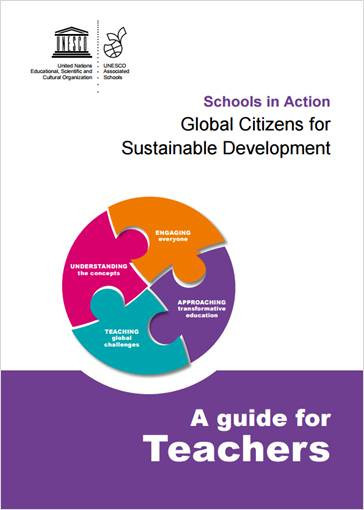 Le réSEAU en action: Citoyens du monde connectés pour le développement durable: guide à l'intention des enseignants Year of publication: 2016 Corporate author: UNESCO The Global Citizens for Sustainable Development Teachers’ guide aims to introduce teachers to Global Citizenship Education (GCED) and Education for Sustainable Development (ESD). It provides secondary school teachers with ideas and activities to help students become global citizens and sustainable development actors. The Teachers’ guide draws on the discussions and activities of almost 1,100 participants from 104 countries, including ASPnet National Coordinators, school principals, teachers, students and experts who contributed to the Online Collaborative Platform ASPnet in Action: Global Citizens Connected for Sustainable Development in 2014 and 2015 [http://en.unesco. org/aspnet/globalcitizens] with associated activities and initiatives. The Teachers’ guide provides: An overview of what it means for learners to become global citizens and of how learners can contribute to sustainable development. Ideas for classroom activities that can help secondary school students to develop knowledge, skills, values, attitudes and behaviours that promote GCED and ESD. Selected activities on GCED and ESD from ASPnet schools around the world.
  جهانی شدن و ضرورت آموزشهای شهروندی جهانی Year of publication: 2012 Author: Yousef Keshavarz Corporate author: Center for Strategic Studies of the Presidency Today, due to “Globalization”, the fate of all individuals, organizations and governments are more tied together and effects of this process in all areas of human activity is undeniable. By looking at the concept of “Global Citizenship” new expectations of education as a meaningful factor to people’s lives and a tool to develop human character and supplying the social needs, is formed. This paper aims to examine and discuss the characteristics and components of global citizenship, the role, importance and necessity of global citizenship education. If we accept that the current use of existing resources in the world is unfair and unacceptable and the gap between rich and poor (in all aspects) wide and widens, should ponder choice. Training and education of global citizens (especially children and young people) who wish the world as a place full of justice, equality, peace and sustainable development, respect and protection of racial diversity, religious etc… and also possess other characteristic features addressed in this paper seems to be a powerful tool and solution. In this frame work, poverty and identity crisis of Iranian youth and in the other hand being attracted to the Globalization culture of outsiders, are two points that reveal the necessity for paying more attention to the training of global citizens, to adopt a broad and enormous prospective to the global issues. Therefore, according to the valuable Islamic texts and outlined prominent place for human beings and human values, also with consideration to the rich Iranian culture and civilization in direction with an active role in global co-management, living such training in formal and informal education system and also establishment of a center as such in partnership and cooperation with other educational institutions in the country is suggested. جهانی شدن و ضرورت آموزشهای شهروندی جهانی Year of publication: 2012 Author: Yousef Keshavarz Corporate author: Center for Strategic Studies of the Presidency Aujourd'hui, en raison de «mondialisation», le sort de tous les individus, les organisations et les gouvernements sont plus attachés ensemble et les effets de ce processus dans tous les domaines de l'activité humaine est indéniable. En regardant le concept de "citoyenneté mondiale" nouvelles attentes de l'éducation comme facteur significatif pour la vie des gens et un outil pour développer le caractère humain et de fournir les besoins sociaux, est formé. Ce document vise à examiner et discuter des caractéristiques et des composantes de la citoyenneté mondiale, le rôle, l'importance et la nécessité de l'éducation à la citoyenneté mondiale.Si nous aCECptons que l'utilisation actuelle des ressources existantes dans le monde est injuste et inaCECptable, et l'écart entre les riches et les pauvres (dans tous les aspects) de large et élargit, devraient méditer choix. La formation et l'éducation des citoyens du monde (en particulier les enfants et les jeunes) qui souhaitent le monde comme un lieu plein de la justice, l'égalité, la paix et le développement durable, le respect et la protection de la diversité raciale, religieuse, etc ... et aussi possèdent d'autres caractéristiques abordées dans le présent papier semble être un outil et une solution puissante. Dans ce cadre de travail, la pauvreté et la crise de la jeunesse iranienne et dans l'autre main identité étant attirés par la culture de la mondialisation de l'extérieur, sont deux points qui révèlent la nécessité d'accorder plus d'attention à la formation des citoyens du monde, d'adopter une vaste et énorme prospective aux enjeux mondiaux. Par conséquent, selon les textes islamiques et une grande place de premier plan décrit pour les êtres humains et les valeurs humaines, également avec considération à la culture iranienne riche et la civilisation dans le sens d'un rôle actif dans la co-gestion globale, vivant une telle formation dans le système éducatif formel et informel et également la création d'un centre en tant que tel en partenariat et de coopération avec d'autres établissements d'enseignement dans le pays est suggéré.
 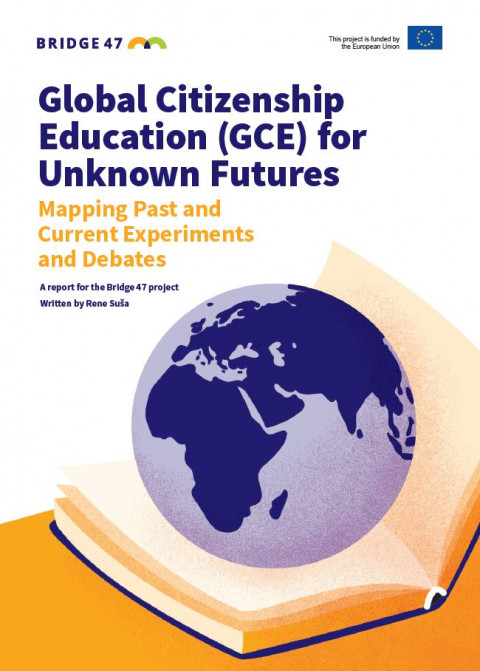 Global Citizenship Education (GCE) for Unknown Futures: Mapping Past and Current Experiments and Debates Year of publication: 2019 Author: Rene Suša Corporate author: Bridge 47 This Bridge 47-commissioned report by Rene Suša provides a thorough overview of current debates and opportunities within the field of Global Citizenship Education (GCE). The report addresses the following questions: 1) What is the benefit of GCE to our societies? 2) What is the impact of GCE to our societies? and 3) Why do we believe that GCE is the answer to global challenges?The publication also maps GCE-related or GCE-inspired initiatives, projects and partnerships, and offers key findings from a comparative study of these cases. Additionally, Susa also further builds on the recent work of Vanessa Andreotti by elucidating her taxonomy of soft, radical and beyond reform spaces for GCE, as well as relates these to current (international) policy developments in the field.
  Découvrir le monde, apprendre la solidarité Year of publication: 2018 Corporate author: UNICEF Belgique | Croix-Rouge Belgique | Îles de Paix | Oxfam | Plan International Belgique Destinée aux futur.e.s enseignant.e.s des Hautes Écoles pédagogiques, la brochure "Découvrir le monde, apprendre la solidarité" a été développée par sept organisations: l’UNICEF Belgique, la Croix-Rouge Belgique, les Îles de Paix, Oxfam magasin du monde, Oxfam solidarités, Quinoa et Plan International Belgique pour aborder l’éducation à la citoyenneté mondiale et solidaire en classe avec les élèves.