
Resources
Explore a wide range of valuable resources on GCED to deepen your understanding and enhance your research, advocacy, teaching, and learning.
362 Results found
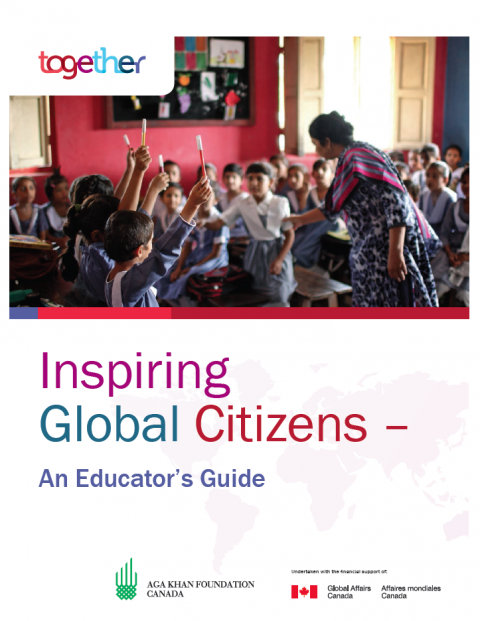 Inspiring Global Citizens - An Educator's Guide Year of publication: 2017 Corporate author: AGA Khan Foundation Canada This resource is intended for use by teachers of intermediate and secondary school grades to support education about global development and related themes such as global citizenship. The activities included in the resource are designed to assist students in increasing their understanding of the interconnectedness of the world, of the factors contributing to global inequalities, and of some effective and sustainable ways to help reduce global poverty. It is hoped that students will be inspired to take action to make their own contribution to improving lives everywhere.
  Envision 4.7: Bridge 47 Global Event; Helsinki, Finland 5–7 November 2019: Report Year of publication: 2019 Corporate author: Bridge 47 | Frinland. Ministry of Education and Culture | Finland. Ministry for Foreign Affairs Global event Envision 4.7 was held in Helsinki in November 2019. The event brought around 200 people together to discuss ways to take the SDG Target 4.7 forward. In this report you can find summaries of all the speeches, panel discussions, workshops and working groups that were held at the event, together with a summary of discussions around all the different topics. You can also find pictures and drawings from the event at the report.
  Herritartasun globalerako hezkuntza: Eztabaidak eta erronkak Year of publication: 2009 Author: Miguel Argibay | Gema Celorio | Juanjo Celorio Corporate author: Hegoa This publication is divided in four parts. The first part is a summary of the history of global citizenship and its role in education. It focuses on the education strategies put forth by the European Union to promote internal cohesion and responsible citizenship. The second part deals with education for development. It briefly describes the evolution of the concept and how in its last stage is a key element in the promotion of global citizenship. The third part presents an analysis on the specific requirements for Education for Global Citizenship, examples of experiences and implementation methods of pedagogical material on the subject. The last part proposes a regional study on formal, non formal and informal education in the Basque region. Éducation à la Citoyenneté Mondiale: Controverses et Défis Year of publication: 2009 Author: Miguel Argibay | Gema Celorio | Juanjo Celorio Corporate author: Hegoa Cette publication est divisée en quatre parties. La première résume l'histoire de la citoyenneté mondiale et son rôle dans l'éducation. Il met l'accent sur les stratégies d'éducation mises en avant par l'Union européenne pour promouvoir la cohésion interne et la citoyenneté responsable. La deuxième porte sur l'éducation pour le développement. Il décrit brièvement l'évolution du concept et dans sa dernière étape est un élément clé dans la promotion de la citoyenneté mondiale. La troisième partie présente une analyse sur les exigences spécifiques pour l'Éducation à la Citoyenneté Mondiale, des exemples d'expériences et la mise en œuvre du matériel pédagogique sur le sujet. La dernière partie propose une étude régionale sur l'éducation formelle, non formelle et informelle dans la région basque.
  Measuring Global Citizenship Education: A Collection of Practice and Tools Year of publication: 2017 Corporate author: Center for Universal Education at Brookings | UNESCO | UN Global Education First Initiative - Youth Advocacy Group (YAG) The idea of global citizenship has existed for several millennia. In ancient Greece, Diogenes declared himself a citizen of the world,1 while the Mahaupanishads of ancient India spoke of the world as one family.2 Today, education for global citizenship is recognized in many countries as a strategy for helping children and youth prosper in their personal and professional lives and contribute to building a better world.This toolkit is intended to shed light on one aspect of operationalizing global citizenship education (GCED): how it can be measured. This toolkit is the result of the collective efforts of the Global Citizenship Education Working Group (GCED-WG), a collegium of 90 organizations and experts co-convened by the United Nations Educational, Scientific, and Cultural Organization (UNESCO), the Center for Universal Education (CUE) at the Brookings Institution, and the United Nations Secretary General’s Global Education First Initiative’s Youth Advocacy Group (GEFI-YAG). To gather the measurement tools in this collection, the working group surveyed GCED programs and initiatives that target youth (ages 15–24).3 For the purposes of this project, GCED was defined as any educational effort that aims to provide the skills, knowledge, and experiences and to encourage the behaviors, attitudes, and values that allow young persons to be agents of long-term, positive changes in their own lives and in the lives of people in their immediate and larger communities (with the community including the environment).This toolkit begins with a brief review of opinions on why GCED is important and the variety of definitions of GCED. We follow the report with a catalog of 50 profiles of assessment efforts, each describing practices and tools to measure GCED at the classroom, local, and national levels. Note that the survey does not represent an exhaustive list but may be regarded as a living document that will grow as the field of GCED itself grows around the world.Broadly speaking, the assessment efforts in this survey may be categorized across achieving three goals: (1) fostering the values/attitudes of being an agent of positive change; (2) building knowledge of where, why, and how to take action toward positive change; and (3) developing self-efficacy for taking effective actions toward positive change.Today, global challenges such as climate change, migration, and conflict will require people to do more than just think about solutions. They will require effective action, by both individuals and communities. Education for global citizenship is one means to help young people develop the knowledge, skills, behaviors, attitudes, and values to engage in effective individual and collective action at their local levels, with an eye toward a long-term, better future at the global level. We offer this toolkit to provide guidance for educators, policymakers, non-governmental organizations, civil society, and researchers, and to inform this conversation.
  Education: global citizenship education in context Corporate author: Global Hive In a fast-changing and globalized reality, there are many who believe that education can, and should, help young people to meet the challenges they will confront now and in the future, and that educating for global citizenship is now more important and urgent than ever before. Upon reflection back over this decade of work, however, there is an indication that not a lot of progress has been made in expanding education for global citizenship (Schulz, 2007; Canadian Council for International Cooperation, 2004). In the early 1990s, with the financial assistance of the Canadian International Development Agency and inspired by visions of global solidarity, Canadian schools and community organizations joined together in efforts to educate students on global society, though since then funding has been cut drastically, and coordinated efforts across sectors have decreased, as schools and NGOs face their own budget cuts. In a recent poll conducted by VisionCritical and the Inter-Council Network of Provincial and Regional Councils for Global Cooperation, it was found that one third of Canadians rank global poverty (hunger in the world) among the first, second and third most concerning issues to them globally. Moreover, the majority of Canadians believe there is a human rights obligation to reduce global poverty, and believe there are significant benefits to doing so, including improving Canada’s international reputation, reducing global conflict, and reducing risks of pandemics. Global Citizenship Education is essential for the following reasons: Education for Global Citizenship gives young people access to the knowledge, understanding, skills, and values that they need to participate fully in ensuring their own and others’ well-being, and to make a positive contribution both locally and globally. Global Citizenship Education involves children and youth fully in their own learning through the use of a range of activities and participatory learning methods. This engages the learner, but also develops confidence, self-esteem, and skills of critical thinking, communication, cooperation and conflict resolution. Current use of the world’s resources is inequitable and unsustainable. As the gap between the rich and the poor widens, poverty continues to deny millions of people around the world their basic human rights. Education is a powerful tool for changing the world because tomorrow’s adults are the children and youth we are educating today. For teachers interested in promoting global citizenship, the next and most immediate question is how: How can I integrate and teach global citizenship education when I have so many other pressing curriculum requirements to get through with my students? How does Global Citizenship Education relate to English Language Arts or Physical Education? This toolkit seeks to provide information on how global citizenship education can be integrated into many areas of the curriculum, offer some tools and methods by which to do so, and present some illustrative case studies to provide inspiration and guidance.
 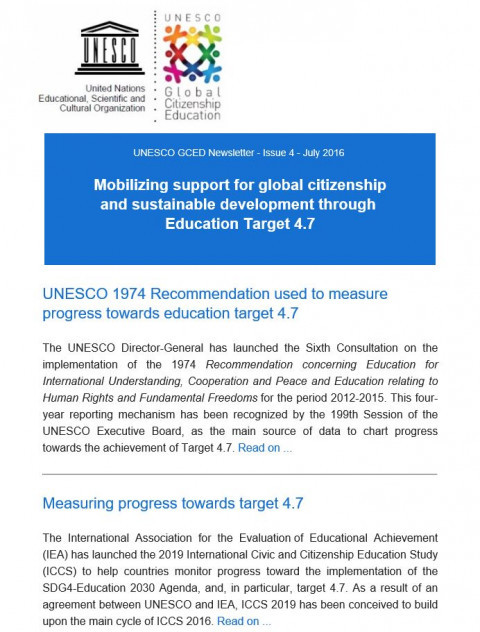 UNESCO GCED eNewsletter Issue 4 Year of publication: 2016 Corporate author: UNESCO Feature: Mobilizing support for global citizenship and sustainable development through Education Target 4.7 UNESCO 1974 Recommendation used to measure progress towards education target 4.7 Measuring progress towards 4.7 Gyeongju Action Plan: NGOs join UNESCO Global capacity-building workshop on GCED organized by APCEIU Southern Africa Regional Meeting on GCED convened in Johannesburg, South Africa UNESCO launches Teacher's Guide on the Prevention of Violent Extremism Expert meeting on the Prevention of Violent Extremism through Education European ministers back education for democracy to counter extremism and racaism UN discusses innovative solutions to prevent violent extremism through education UNESCO's YESPeace Network taps the power of youth worldwide to change the future GCED Topics and Learning Objectives available in seven languages.
 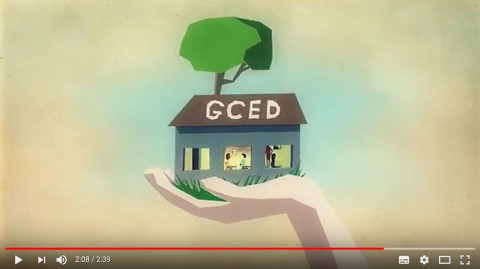 [Video] Learning to live together in peace through Global Citizenship Education Year of publication: 2016 Corporate author: UNESCO The UNESCO video on “Learning to live together in peace through Global Citizenship Education” explains the importance of Global Citizenship Education (GCED) in a globalized and increasingly interconnected and interdependent world. GCED is key to understand the interconnections between the local and the global and nurture a sense of belonging to a common humanity. It builds motivation to assume active roles to contribute to a more just, peaceful, tolerant and sustainable world. The video also illustrates how GCED can be delivered in and outside of schools. [Vidéo] Apprendre à vivre ensemble dans la paix par l’éducation à la citoyenneté mondiale Year of publication: 2016 Corporate author: UNESCO La vidéo de l'UNESCO sur le thème "Apprendre à vivre ensemble dans la paix par l’Éducation à la Citoyenneté Mondiale", explique l'importance de l'Éducation à la Citoyenneté Mondiale (ECM) dans un monde globalisé et de plus en plus interconnecté et interdépendant. ECM est essentiel de comprendre les interconnexions entre le local et le global et à favoriser un sentiment d'appartenance à une humanité commune. Il construit la motivation à assumer un rôle actif pour contribuer à un monde plus juste, pacifique, tolérante et durable. La vidéo montre également comment ECM peut être livré dans et à l'extérieur des écoles.
 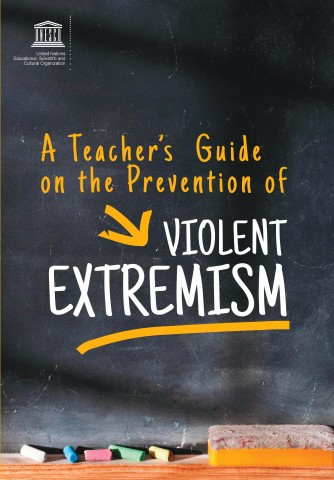 Методическое пособие по предотвращению насильственного экстремизма Year of publication: 2016 Corporate author: UNESCO Насильственный экстремизм и движущие факторы радикализации относятся к числу наиболее распространенных проблем нашего времени. Нельзя сказать, что насильственный экстремизм присущ только тому или иному возрасту либо полу, той или иной группе либо общине, однако перед идеями его сторонников и членов террористических организаций особенно уязвимы молодые люди.Сталкивающаяся с такими угрозами молодежь должна располагать возможностями для своевременного получения актуального образования, с тем чтобы овладеть знаниями, навыками и жизненными установками, которые могут помочь ей противостоять вышеупомянутой пропаганде.Развитие таких компетенций требует помощи со стороны квалифицированных преподавателей, пользующихся доверием и уважением со стороны молодых людей и поддерживающих с ними тесные контакты.Настоящее пособие разработано с учетом этой проблематики в помощь учителям старших классов начальной школы и младших и старших классов средней школы. Авторы пособия надеются, что оно поможет работе учителей в рамках как формального, так и неформального образования.