
Resources
Explore a wide range of valuable resources on GCED to deepen your understanding and enhance your research, advocacy, teaching, and learning.
362 Results found
 Educación para el desarrollo sostenible: aportes didácticos para docentes del Caribe Year of publication: 2008 Author: Gillian Cambers | Grace Chapman | Paul Diamond | Lorna Down | Anthony D. Griffith | Winthrop Wiltshire Corporate author: UNESCO Santiago The publication “Teachers’ Guide for Education for Sustainable Development in the Caribbean” is geared towards regional teacher-trainers and teachers active at every level of education. Its purpose is two-fold: contribute to the integration of education for sustainable development into teaching practices through education initiatives, originally implemented in the Caribbean that may be feasible to replicate in the various classrooms, schools and communities; promote reflection, discussion and creation of innovative practices that involve all teachers in Decade activities and contribute to the making of sustainable societies. This document illustrates how different wills can come together moved by a desire to materialise common projects. Thus, this effort represents the work of regional specialists working in close cooperation with UNESCO Regional Bureau for Education in Latin America and the Caribbean, as well as the financial support of the Government of Japan. Educación de adultos y desarrollo: La educación para la ciudadanía mundial (no 82, 2015) Year of publication: 2015 Corporate author: DVV International Issue 82/2015 of the international journal Adult Education and Development (AED) explores the topic global citizenship education.In the international debates, we are witnessing a growing interest in the concept of global citizenship education. It is one of the three pillars of the Global Education First Initiative (GEFI) launched by the United Nations Secretary-General in 2012 and is being internationally promoted by the work of UNESCO. According to the GEFI, education that fosters global citizenship “must fully assume its central role in helping people to forge more just, peaceful, tolerant and inclusive societies”. The 2030 Agenda for Sustainable Development, adopted by the United Nations General Assembly in September 2015, refers to global citizenship as one tool to “ensure that all learners acquire the knowledge and skills needed to promote sustainable development”.The ambitions are high, but the concrete understanding of global citizenship education and its implications differ widely. Is it just another abstract concept? What meaning can the word citizenship have if it does not refer to a specific nation? What do people in different parts of the world understand by global citizenship? And how can global citizenship education be put into practice?Adult Education and Development decided to engage in the debate and invited authors from different regions, backgrounds and disciplines to share their thoughts and experiences on the topic and related questions such as identity, migration, peace, the meaning of citizenship, globalisation and sustainable development.Irina Bokova, Director-General of UNESCO, explains the organisation’s understanding of global citizenship education, and why adult education and “learning beyond the classrooms” are crucial when it comes to promoting global citizenship. Canadian author and journalist Doug Saunders (“Arrival City: How the Largest Migration in History Is Reshaping Our World”) talks about the challenges and opportunities of what he refers to as the last great human migration, that from the countryside to the cities, and about the positive role adult education can play during this transition.In the section “Citizens’ voices” people from all over the world talk about what global citizenship means to them and in what ways they see themselves as global citizens. And photographer Viktor Hilitksi travelled through Belarus and captured with his camera how villages rediscover their local traditions and cultures. L'éducation des adultes et le développement: l'éducation à la citoyenneté mondiale (82, 2015) Year of publication: 2015 Corporate author: DVV International Problème 82/2015 de la revue internationale d'Éducation des Adultes et le Développement (EAD) explore l'éducation à la citoyenneté mondiale sujet.Dans les débats internationaux, nous assistons à un intérêt croissant pour le concept d'éducation à la citoyenneté mondiale. Il est l'un des trois piliers de la Première Initiative Mondiale pour l'éducation globale avant tout(GEFI) lancé par le Secrétaire général des Nations Unies en 2012 et est internationalement promu par le travail de l'UNESCO. Selon le GEFI, l'éducation qui favorise la citoyenneté mondiale "doit assumer pleinement son rôle central en aidant les gens à forger plus justes, des sociétés pacifiques, tolérantes et inclusives". L'Agenda 2030 pour le développement durable, adoptée par l'Assemblée générale des Nations Unies en Septembre 2015, se réfère à la citoyenneté mondiale comme un outil pour «faire en sorte que tous les apprenants à acquérir les connaissances et les compétences nécessaires pour promouvoir le développement durable». Les ambitions sont élevées, mais la compréhension concrète de L'éducation à la citoyenneté Mondiale (ECM) et ses implications diffèrent largement. Est-il juste un autre concept abstrait? Quel sens le mot citoyenneté peut avoir si elle ne se réfère pas à une nation spécifique? Que font les gens dans différentes parties du monde à comprendre par la citoyenneté mondiale? Et comment L'éducation à la citoyenneté Mondiale (ECM) être mis en pratique? Education des adultes et développement ont décidé de participer au débat et a invité les auteurs de différentes régions, milieux et disciplines à partager leurs réflexions et expériences sur le sujet et les questions connexes telles que l'identité, la migration, la paix, le sens de la citoyenneté, la mondialisation et le développement durable. Irina Bokova, Directrice générale de l'UNESCO, explique la compréhension de l'organisation de l'éducation à la citoyenneté mondiale, et pourquoi l'éducation des adultes et de «l'apprentissage au-delà des salles de classe" sont cruciales en matière de promotion de la citoyenneté mondiale. auteur canadien et journaliste Doug Saunders ( «Ville d'arrivée: Comment la plus grande migration dans l'histoire remodèle notre monde») parle des défis et des possibilités de ce qu'il désigne comme la dernière grande migration humaine, que de la campagne vers les villes, et sur le rôle positif l'éducation des adultes peut jouer au cours de cette transition. Dans la section «voix des citoyens" les gens de partout dans le monde parlent de ce que signifie la citoyenneté mondiale pour eux et de quelle manière ils se considèrent comme des citoyens du monde. Et le photographe Viktor Hilitksi a voyagé à travers le Bélarus et capturé avec sa caméra comment les villages redécouvrent leurs traditions et cultures locales.
 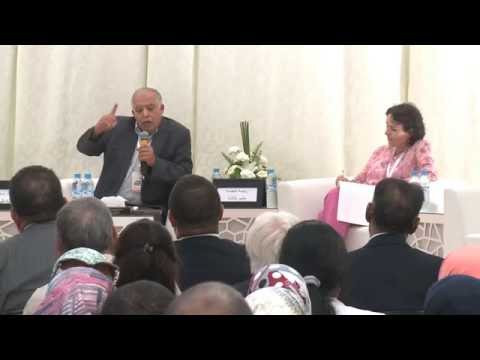 التعليم والمواطنة: الجامعة الصيفية 2016 Year of publication: 2016 Author: Abdullah Saaf Corporate author: General Delegation for Prison Administration and Reintegration (DGAPR) الفيديو عبارة عن محاضرة القت للسجينات في المغرب، وهو برنامج لاعادة التأهيل. المحاضرة للدكتور عبدالله ساعف يتحدث فيها عن المواطنة، والاندماج في المجتمع، ويناقش علاقة التعليم بالمواطنة. Education and Citizenship: Summer University 2016 Year of publication: 2016 Author: Abdullah Saaf Corporate author: General Delegation for Prison Administration and Reintegration (DGAPR) This video is a lecture given to women prisoners in Morocco, and it is a rehabilitation program. The lecture by Dr. Abdullah Sa`f talks about citizenship and inclusion in society, and discusses the relationship between education and citizenship.
 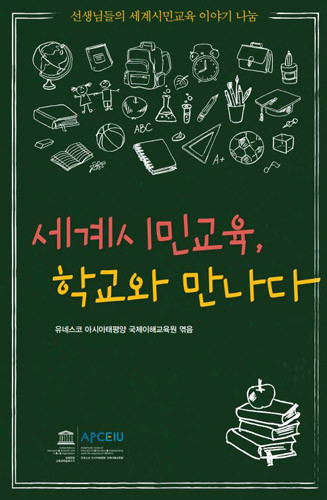 Rencontrant L'éducation à la Citoyenneté Mondiale (ECM) dans les Écoles: Histoires des enseignants sur ECM Year of publication: 2016 Corporate author: 유네스코 아시아태평양 국제이해교육원 Intitulée «Rencontrant L'éducation à la citoyenneté Mondiale (ECM) dans les écoles: Histoires des enseignants sur ECM », le livre comprend des histoires de 11 ECM enseignantes et enseignants leaders mettant l'accent sur la mise en œuvre pratique de l'ECM dans un cadre éducatif réel. Les lecteurs pourront apprendre des expériences de ces enseignants, qui ont travaillé à mettre en œuvre ECM dans le domaine de l'éducation. De plus, cette publication fournit une occasion pour les éducateurs de petites écoles primaires dans les zones rurales vers les écoles secondaires dans les grandes villes, à réfléchir sur les implications associées à ECM et comment ECM peut être utilisé pour les étudiants d'origines diverses et de divers âges. Les histoires inclus dans le livre sont les suivantes: • ECM commence à partir des relations horizontales • Pratiques ECM dans les petites écoles • Faire en apprentissage, apprentissage par la pratique • Pour afficher les questions sociales du point de vue des enfants • Vivre par la communication avec le peuple de la Terre • réunion des citoyens du monde à Jeju • Début de l'ECM avec les étudiants et les enseignants • a partir d'un changement lent: l'histoire d'une bougie • ECM avec les points de vue des enfants • un chemin vers l'avenir, Marcher avec les enseignants pour ECM • ECM est à la recherche pour les valeurs dans la vie quotidienne 세계시민교육, 학교와 만나다: 선생님들의 세계시민교육 이야기 나눔 Year of publication: 2016 Corporate author: 유네스코 아시아태평양 국제이해교육원 유네스코 아시아태평양 국제이해교육원은 “세계시민교육, 학교와 만나다”를 출간하였다. 이 책은 세계시민교육을 실천하고 있는 학교 선생님들의 현장 이야기를 담은 책으로, 세계시민교육 선도교사로 활동하고 있는 11명의 선생님들의 세계시민교육에 관한 진솔한 이야기를 만날 수 있다. 여는글수평적 관계 맺음으로 시작하는 세계시민교육 - 김동혁 (광주 문정여고)작은 학교에서 세계시민교육 실천하기 - 곽병남 (충북 영동초등학교)배움으로 행동하기, 행동으로 배우기 - 임영아 (울산 강남고등학교)아이들의 시선에서 사회적 문제 바라보기 - 이흥순 (인천 청일초등학교)지구인과 소통하며 살아가기 - 박범철 (서울 경문고등학교)제주에서 세계시민을 만나다 - 한상희 (제주 서귀중앙여자중학교)아이들과 함께, 선생님들과 함께 열어가는 세계시민교육 - 김민경 (인천 청량초등학교)스스로, 천천히, 하나의 변화로 시작하기: ‘촛불하나’ 이야기 - 최재화 (경기 신천고등학교)세계시민교육, 아이들과 눈맞춰 함께 가기 - 김양모 (안동 동부초등학교)미래로 가는 길, 선생님과 함께 걷는 세계시민교육 - 정애경 (서울 국제고등학교) 세계시민교육이란 일상에서 가치 찾기 - 조성준 (대전 복수고등학교) Encountering Global Citizenship Education in Schools: Stories of School Teachers on GCED Year of publication: 2016 Corporate author: 유네스코 아시아태평양 국제이해교육원 Titled “Encountering Global Citizenship Education in Schools: Stories of School Teachers on GCED,” the book includes stories of 11 GCED Lead Teachers focusing on the practical implementation of GCED in real educational setting. Readers will be able to learn from the experiences of those teachers, who worked to implement GCED in the field of education. Moreover, this publication provides an opportunity for educators from small primary schools in rural areas to the high schools in big cities, to think about the implications associated with GCED and how GCED can be used for students from diverse backgrounds and various ages. The stories included in the book are as follows: • GCED Starts from the Horizontal Relationships • GCED Practices in Small Schools • Doing by Learning, Learning by Doing • To View Social Issues from the Children's Perspective • Living through Communication with the People of Earth • Meeting Global Citizens in Jeju • Beginning of GCED with Students and Teachers • Starting with a Slow Change : The Story of a Candle • GCED with the views of the Children • A Path to the Future, Walking with Teachers to GCED • GCED is to Search for Values in Daily Lives
 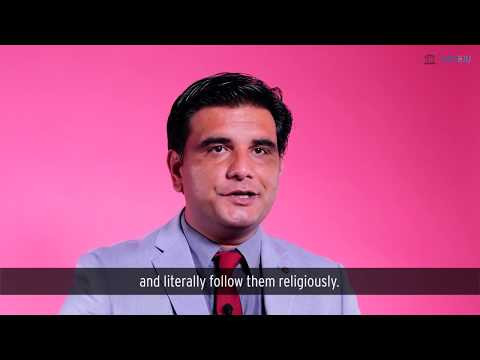 Why Contextualization is Critical for Global Citizenship Education Year of publication: 2019 Author: Waqar Shams Corporate author: APCEIU This video is an interview on "Why contextualization is Critical for Global Citizenship Education". It is also under UNESCO's APCEIU "Meet the Global Citizens" series.Do you want to know why Contextualization is Critical for GCED? Check out what Waqar has to say. This is a story of Waqar Shams from Pakistan.In this video you will learn why Contextualization is Critical for GCED and through it, learn to think globally but act locally. UNESCO - UCLA Chair in Global Learning and Global Citizenship Education Year of publication: 2016 Corporate author: HFP | global media Documentary Presentation of Dr. Carlos A. Torres as UNESCO-UCLA Chair in Global Learning and Global Citizenship Education.