
Resources
Explore a wide range of valuable resources on GCED to deepen your understanding and enhance your research, advocacy, teaching, and learning.
362 Results found
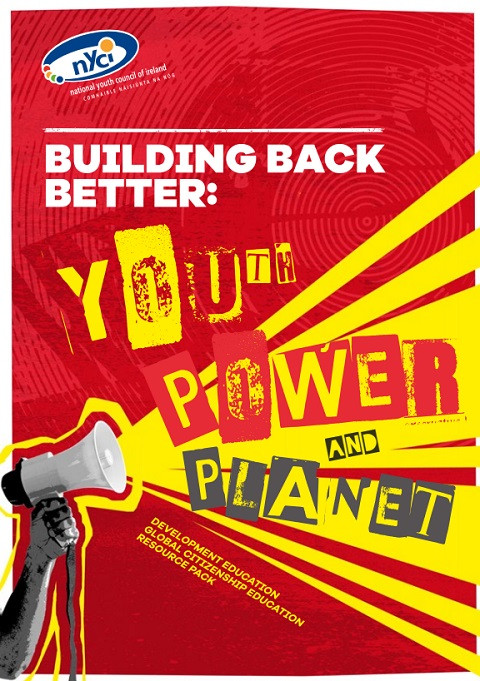 Building Back Better: Youth, Power and Planet Year of publication: 2020 Author: Valerie Duffy | Leo Gilmartin | Eva Janssens | Dermot O’Brien Corporate author: National Youth Council of Ireland (NYCI) This toolkit explores the issue of power and helps you make links to the Sustainable Development Goals.It is designed for global educators, youth workers, development education practitioners, trainers, climate activists, changemakers of all shapes and sizes but in particular those working with the current generation of young people.
 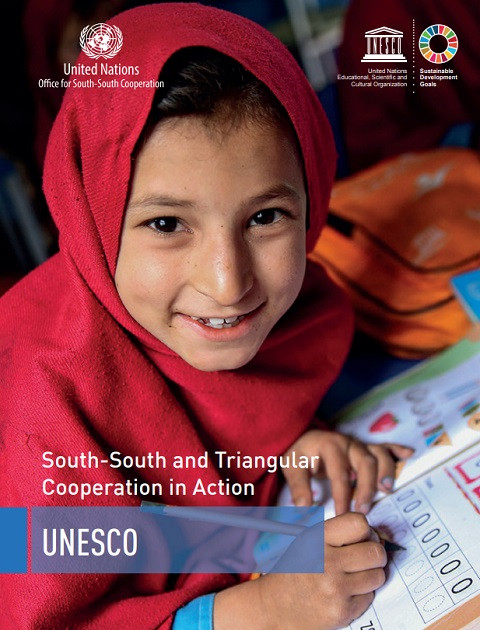 La coopération Sud-Sud et triangulaire en action Year of publication: 2018 Corporate author: UNESCO | UN. Office for South-South Cooperation (UNOSSC) La présente publication est le premier rapport de l’UNESCO qui traite de la coopération SudSud et de la coopération triangulaire. Elle brosse un tableau d’ensemble, illustré par des exemples particuliers, des progrès que ces modalités de coopération ont permis d’accomplir pour faciliter la coopération technique, le renforcement des capacités et le partage des connaissances dans les domaines de compétence de l’UNESCO, et ouvre la voie à de plus amples efforts en la matière.
 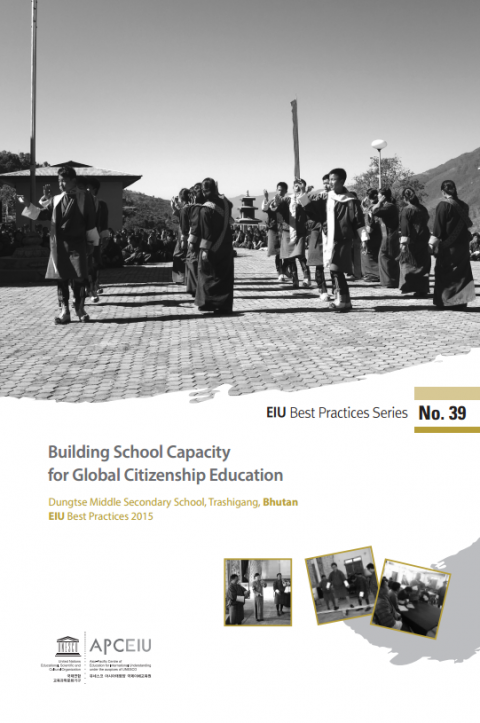 EIU Best Practices Series No. 39: Building School Capacity for Global Citizenship Education Year of publication: 2015 Corporate author: APCEIU This monograph is one of APCEIU's EIU Best Practices Series, which aims to encourage educators, scholars, and activists to implement and share local initiatives on EIU. The Series No.39 introduces the Training of Trainers (TOT) program, a workshop for teachers to better incorporate GCED/EIU concepts into respective curriculum and school environment. Upon participating in the APCEIU training workshop, Mr. Yeshi Dorji from Dungtse Middle Secondary School in Bhutan sought to create a forum in which teachers and school officials can learn to incorporate GCED. Such exemplary initiative not only enhances capacity building of educators in the school, but also has potential to have larger impact in the local and regional communities.
  Supporting Change in Practice: Case Studies on the Use of the ACER-APCEIU Global Citizenship Education Monitoring Toolkit; Country Case-Australia Year of publication: 2025 Author: Rachel Parker | Karena Menzie-Ballantyne Corporate author: APCEIU APCEIU published Supporting Change in Practice: Case Studies on the Use of the ACER-APCEIU Global Citizenship Education Monitoring Toolkit, which shares key findings from the research conducted in Australia and the Republic of Korea. The two reports, based on case studies from two countries, build upon the three-phase Asia-Pacific GCED Monitoring Project (2022–2024) jointly undertaken by ACER and APCEIU to strengthen monitoring and evaluation of GCED and support progress toward SDG 4.7 across the region. The three phases of the initiative identified enabling conditions for GCED, validated the regional GCED Monitoring Framework, and developed the ACER-APCEIU GCED Monitoring Toolkit. The reports for each phase can be found here: Phase I, Phase II, and Phase III.The reports move the project forward by examining how the Toolkit can be practically applied in real educational settings. The study aimed to examine how the Toolkit could be used to support collaboration among key education stakeholders—teachers, school leaders, and education supervisors—in 1) goal setting, 2) planning, 3) implementing, and 4) reflecting on GCED practices. Through this process, the research sought to understand how the Toolkit could help strengthen the connection between policy commitments and everyday educational practice, supporting teachers, school leaders, and system leaders to embed GCED more systematically and sustainably within their existing framework. Both studies conducted in Australia and the Republic of Korea have been guided by the following research questions: How does the GCED Monitoring Toolkit support key stakeholder groups to collaboratively embed GCED in policy and practice? a. What aspects of the Toolkit enable or challenge stakeholders to achieve their GCED goals and objectives? b. How do key stakeholders perceive its usefulness?Are there any aspects of the Toolkit that stakeholders would change to improve its usefulness in supporting the implementation and contextualisation of GCED in policy and practice?The reports demonstrate how a GCED Monitoring Toolkit can be translated into actionable processes within real educational settings. It offers valuable insights for policymakers, school leaders, teachers, and researchers aiming to monitor and strengthen GCED implementation and systematically embed GCED within their educational ecosystems.
 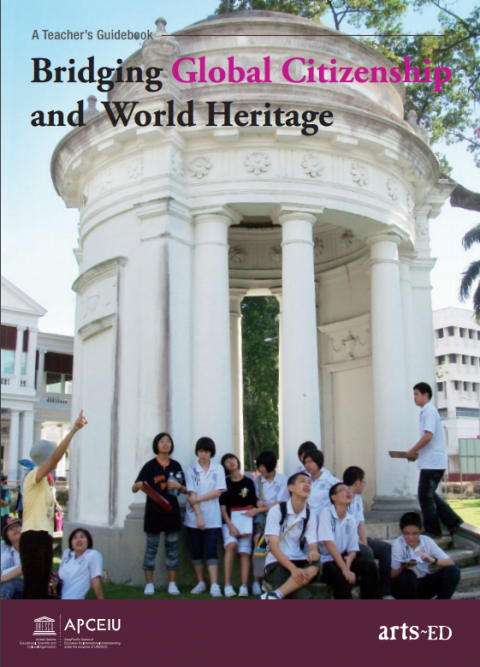 GCED Teacher's Guidebook Bridging Global Citizenship and World Heritage Year of publication: 2016 Corporate author: APCEIU APCEIU, in collaboration with Arts-ED Penang, a non-profit organisation for art and culture education, has published a Global Citizenship Education(GCED) Teacher’s Guidebook Bridging Global Citizenship and World Heritage. This guidebook was developed as a project of GCED Material Development on World Heritage, in order to promote awareness of cultural diversity as well as mutual understanding. This Teacher’s guidebook not only provides literature on both World Heritage in Malaysia and GCED but also gives case examples and lesson plans to provide teachers with practical assistance in designing and conducting GCED class utilizing World Heritage. <Contents>ForewordList of Figures and ImagesChapter 1. Introduction to the World Heritage Site of George Town and MelakaChapter 2. Global Citizenship Education: Empowering Citizens to Create a Better World TogetherChapter 3. How to Design Lessons Using Global Citizenship Education and Heritage ResourcesChapter 4. Case Examples and Lesson PlansReferences 세계문화유산 활용 세계시민교육 교사 지침서 Year of publication: 2016 Corporate author: APCEIU 문화다양성과 상호이해 증진을 위한 세계유산 활용 세계시민교육 자료개발 사업의 일환으로 발간된 이 교사 지침서는 말레이시아의 세계문화유산을 활용해 진행했던 실천사례와 수업예시 등을 담고 있어 일선 교사들이 향후 세계시민교육 수업을 구성하고 진행하는데 실질적인 도움을 줄 것으로 기대된다.<목차>발간사도표와 그림1장. 믈라카와 조지타운 세계유산 소개2장. 세계시민교육: 더 나은 세상을 함께 만들기 위한 시민의 역량을 기르다.3장. 세계유산과 세계시민교육을 활용한 수업 구성하기4장. 실천 사례 및 수업 교안참고자료 South-South and Triangular Cooperation in Action Year of publication: 2018 Corporate author: UNESCO | UN. Office for South-South Cooperation (UNOSSC) This publication is UNESCO’s first dedicated report on South-South cooperation and triangular cooperation. It presents an overall picture of the progress achieved to support technical cooperation, capacity building and knowledge sharing through South-South and triangular cooperation in UNESCO’s areas of competence with highlights of specific examples. It paves the way for deepening future cooperation in this area. La cooperación Sur-Sur y la cooperación triangular en acción Year of publication: 2018 Corporate author: UNESCO | UN. Office for South-South Cooperation (UNOSSC) Esta publicación es el primer informe específico de la UNESCO sobre la cooperación Sur-Sur y la cooperación triangular. Se presenta un panorama general de los avances en la cooperación técnica, la creación de capacidades y el intercambio de conocimientos mediante la cooperación SurSur y la cooperación triangular en las esferas de competencia de la UNESCO y se mencionan ejemplos concretos. Se allana el camino para profundizar la cooperación en este ámbito en el futuro.
  세계시민 양성을 위한 교육과정 모형 개발 연구: 2015 개정교육과정 성취기준 분석을 중심으로 Year of publication: 2017 Author: 강혜영 | 장준호 | 하은나 | 양은주 | 임윤정 | 최은정 | 최윤경 | 하승관 | 홍근태 Corporate author: 인천교육과학연구원 교육정책연구소 세계시민교육에 대한 중요성이 점차 강조되고 있음에도 현재 단위학교 현장에서는 세계시민교육의 개념과 관점이 혼재되어 있고 이를 교육과정 속에서 운영하는 사례도 부족한 실정이다. 이에 세계시민교육에 대한 방향을 제시하고 교육 현장에 보편적 가치를 반영하면서도 국가와 지역의 특수성을 기반으로 하는 경험중심의 세계시민교육이 뿌리 내릴 수 있도록 다양한 연구와 함께 시도교육청 차원의 노력이 시도되고 있다.인천광역시 교육청 역시 이러한 노력의 일환으로 다양한 연구를 수행하였고 본 연구는 학교가 교육과정 내에서 세계시민을 양성할 수 있는 교육과정 모형으로서 국가수준 교육과정에 해당하는 2015 개정교육과정의 성취기준 분석과 수업설계방법에 대한 제안을 목적으로 하고 있다.
  A Critically Informed Teacher Education Curriculum in Global Citizenship Education: Training Teachers as Field Experts and Contributors to Assessment and Monitoring of Goals (Journal of International Cooperation in Education; Vol.22-2/23-2) Year of publication: 2020 Author: Susan Wiksten Corporate author: CICE Hiroshima University A global market of education development has grown since the 1990s. As the circumstances and contexts of education change globally, there is both a need for shared references in teacher education as well as good reasons for contesting unitary efforts to implement policy goals. Specifically, shared global references for teacher education that can be used by teacher education programs, NGOs and civil society for responding to target 4c. of SDG 4.7 are needed. Accordingly, this article proposes guiding principles and outlines a teacher education curriculum for Global Citizenship Education (GCED) that can be adapted to low-income country contexts as well as high-income contexts. Some of the challenges, possibilities and limitations in the preparation of teachers with the skills needed for supporting the development of the next generation of global citizens are described. The analysis presented draws on data from the UNESCO Institute for Statistics, the OECD teacher survey, indicators developed by the World Bank, and policy efforts to develop a definition of global competence, among other sources. The concluding discussion proposes that an important possibility presents itself in efforts to involve teachers in the monitoring and evaluation of education development goals.