
Resources
Explore a wide range of valuable resources on GCED to deepen your understanding and enhance your research, advocacy, teaching, and learning.
10 Results found
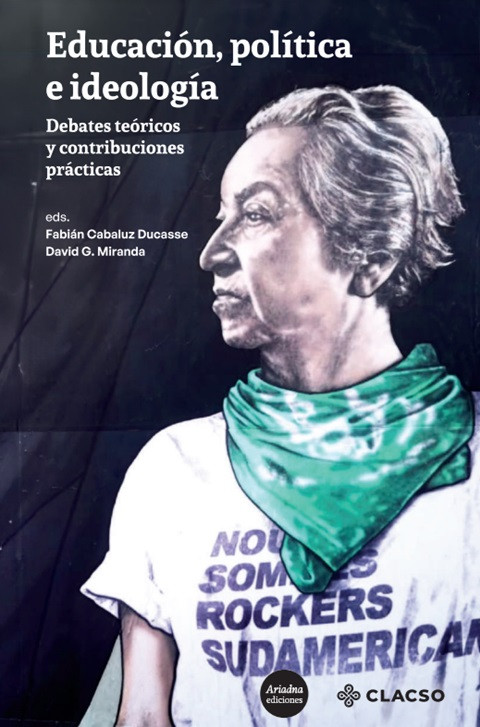 Education, Politics and Ideology: Theoretical Debates and Practical Contributions Year of publication: 2024 Author: David G. Miranda | Jorge Fabián Cabaluz Ducasse Corporate author: Latin American Council of Social Sciences (CLACSO) This book, "Education, Politics and Ideology: Theoretical Debates and Practical Contributions", is a work by the Latin American Pedagogies Research Group at the University of Playa Ancha, which is positioned from a critical perspective in the educational and pedagogical field. This currently implies, among other things, the relevance of discussing, polemizing and confronting those perspectives that have technified and instrumentalized pedagogy, reducing it to a merely practical, technical field, unrelated to epistemological, ethical, philosophical and/or political issues. In this direction, the essays that make up the book distance themselves substantially from those perspectives that conceive our field as a terrain that must advocate for neutrality, impartiality, and asepsis; and they propose clear and explicit positions with respect to social justice, democracy, equality, and dignity. Educación, política e ideología: Debates teóricos y contribuciones prácticas Year of publication: 2024 Author: David G. Miranda | Jorge Fabián Cabaluz Ducasse Corporate author: Latin American Council of Social Sciences (CLACSO) Este libro "Educación, política e ideología: debates teóricos y contribuciones prácticas", surge desde el Grupo de Investigación de Pedagogías Latinoamericanas de la Universidad de Playa Ancha, el cual se encuentra posicionado desde las perspectivas críticas del campo educativo y pedagógico, lo que implica en la actualidad, entre otras cosas, la relevancia de discutir, polemizar y confrontar aquellas perspectivas que han tecnificado e instrumentalizado la pedagogía, reduciéndola a un campo meramente práctico, técnico, ajeno a cuestiones epistemológicas, éticas, filosóficas y/o políticas. En esta dirección, los ensayos que componen el libro se distancian sustancialmente de aquellas perspectivas que conciben nuestro campo como un terreno que debe abogar por la neutralidad, la imparcialidad, la asepsia; y proponen posicionamientos claros y explícitos con respecto a la justicia social, la democracia, la igualdad, la dignidad.
 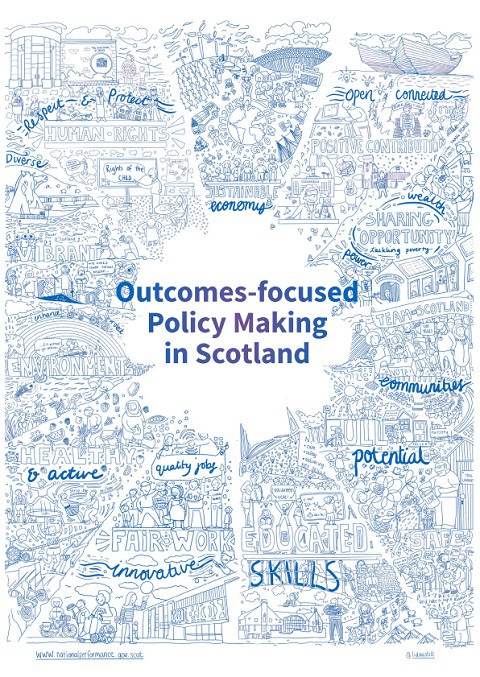 Outcomes-Focused Policy Making in Scotland Year of publication: 2021 Corporate author: Government of Scotland | Scotland's International Development Alliance | SDG Network Scotland | Oxfam Scotland | International Development Education Association Scotland (IDEAS) | Bridge 47 Scotland’s International Development Alliance has co-created a new Scottish policy making guide focused on the Sustainable Development Goals (SDGs) and the National Performance Framework (NPF). The guide supports holistic policy making that reflects our interconnected world & addresses the need to better navigate its complexities.The resource is the result of a partnership between the Scottish Government’s National Performance Framework team, the International Development Education Association of Scotland (IDEAS) Network, Scotland’s International Development Alliance, the SDG Network Scotland and Oxfam Scotland. The partnership was initiated, supported and funded by the Bridge 47 – Building Global Citizenship project and special thanks go to Northern Star Associates for their work developing the content.What is the resource?The National Performance Framework (NPF) is Scotland’s way of localising the Sustainable Development Goals (SDGs). The 17 different goals and 11 NPF National Outcomes are key measures of how Scotland can move towards a more just and sustainable future. The resource has two main parts. The first half features a general overview of the United Nations Sustainable Development Goals (SDGs), Scotland’s National Performance Framework (NPF) and how the two are interlinked. The second half provides practical, interactive activities to explore how to apply the NPF and SDGs in the policy making process.Why is this resource important?Policy is a mechanism for creating change. Ensuring that the policy produced in Scotland is inclusive and takes a holistic view of systemic problems will have a positive impact for both people and planet.This resource comes at a critical juncture. The Covid-19 pandemic has emphasised local-global interconnections and the difficulties posed by complex global problems. They require us to be holistic in our policy making and understand we are part of a bigger system, where the decisions we make and the actions we take have an impact on others locally and globally, now and in the future.How was the resource created?The guide was co-created by a partnership between the NPF team at the Scottish Government and civil society stakeholders including the SDG Network Scotland, Scotland’s International Development Alliance and the EU project, Bridge 47. The development of the resource was funded through the Bridge 47 – Building Global Citizenship project, which is based at the International Development Education Association of Scotland (IDEAS) network. As a project, Bridge 47 supports building partnerships across different sectors with the aim of raising awareness of the SDGs and the transformative power of education as outlined in SDG Target 4.7.
  Regulatory Authorities for Electronic Media and Media Literacy: Comparative Analysis of the Best European Practices Year of publication: 2018 Author: Robert Tomljenović Corporate author: Council of Europe Information event for stakeholders of the media community in Serbia on presentation of the Study “Regulatory Authorities for Electronic Media and Media Literacy - Comparative analysis of the best European practices” was organized by the Council of Europe Office in Belgrade, JUFREX Programme and the Embassy of Finland in Serbia, on 20 December 2018, in order to jointly point out the importance of the development of media literacy in Serbia and the Western Balkans region.The study analyzes and indicates challenges and issues that come with living in a digitalized, hypertechnological mediated world, in which we are faced with countless information, issues of disinformation and fake news, algorithmic separation in ideological echo chambers, hate speech, clickbait journalism, and decreased trust in both mainstream media and the level of journalistic professionalism. With such a media ecosystem, it is vital to define the position of a regulatory authority for electronic media as well as its responsibilities and obligations, and stress the regulator's role in promoting and developing media literacy, one of the key skills for living in the 21st century and the answer to many questions and challenges that come with the modern era."The Council of Europe considers media literacy one of the main tools for strengthening media pluralism and the quality of media content. All media actors in Serbia have the responsibility to promote media literacy to enable understanding and critical analysis of content offered by traditional and digital media. Especially children have the right to a safe and stimulating media environment" said Head of the Council of Europe Office in Belgrade, Tobias Flesenkemper.The study emphasizes that a prerequisite for every democratic process is a well-informed citizen. The Study presents several examples of best European practices and how to engage regulatory bodies and all other relevant actors to increase media literacy, with a particular focus on the Finnish model in this area. Media education is implemented in Finland wherever there are children and youth, not only in kindergartens and schools, but also in libraries, playrooms, youth centers, even in virtual communities and digital games.As pointed out by the Ambassador of Finland in Belgrade, Perti Ikonen, the high level of media literacy of citizens is what the media in Finland forces to adhere to high professional standards, and basically the work of the institutions responsible for the promotion of media literacy. Finland took over the chairmanship of the Committee of Ministers of the Council of Europe in November this year, and during its term of office, until May 2019, the priorities of the Finnish Presidency will be to strengthen the human rights and rule of law system in Europe, support equality as well as inclusiveness with a particular focus on youth and the prevention of radicalization.The study was developed within the framework of the Joint European Union and the Council of Europe Programme "Strengthening the Judicial Expertise on Freedom of Expression and Media in South-East Europe (JUFREX)".
  Public Policies on Gender Equality in Latin America and the Caribbean in the 21st Century: New Protagonisms and Old Dilemmas in Times of Uncertainty Year of publication: 2023 Author: Cinthya Fernández Lépiz | Esteban Zolezzi Corporate author: Latin American Council of Social Sciences (CLACSO) The III Report of FLACSO on Gender Issues is the result of a collaborative process among the Academic Units of FLACSO. Its chapters aim to identify the main challenges in each country regarding gender equality in the early 21st century and engage them in a dialogue with contributions from the academic community of FLACSO. They seek to provide a general characterization of each country, analyze the main challenges in terms of gender equality, as well as the critical contributions and limitations raised by gender and feminist studies in conjunction with the contributions made by FLACSO. Políticas públicas de igualdad de género en América Latina y el caribe en el siglo XXI: Nuevos protagonismos y viejos dilemas en tiempos de incertidumbre. Year of publication: 2023 Author: Cinthya Fernández Lépiz | Esteban Zolezzi Corporate author: Latin American Council of Social Sciences (CLACSO) El III Informe Regional de la FLACSO sobre el tema de Género es el resultado de un proceso colaborativo entre las Unidades Académicas de la FLACSO. Sus capítulos se proponen identificar cuáles son las principales problemáticas en cada país en materia de igualdad en el comienzo del siglo XXI y ponerlas en diálogo con los aportes que se vienen realizando desde la comunidad académica de FLACSO. Procuran dar cuenta de una caracterización general de cada uno de los países, el análisis de las principales problemáticas que se presentan en materia de igualdad de género, así como los aportes críticos y limitaciones que se plantean desde los estudios de género y feministas con los aportes realizados desde la FLACSO.
 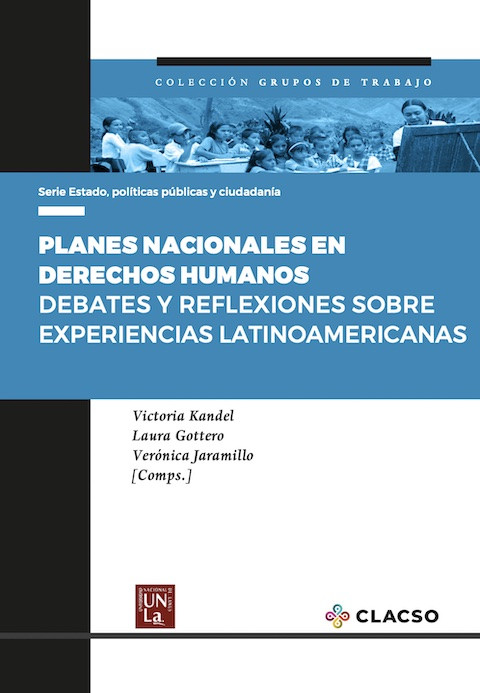 National Plans on Human Rights: Debates and Reflections on Latin American Experiences Year of publication: 2021 Author: Laura Pautassi | Mariela Alejandra Acevedo | Felicitas Acosta | Myriam Feldfeber | Pablo Imen | María Mercedes Palumbo | Fernanda Saforcada | Soledad Vercellino Corporate author: Consejo Latinoamericano de Ciencias Sociales (CLACSO) The texts gathered in this book reflect the tensions and challenges involved in creating inclusive human rights public policies that respond to effective and impactful citizen participation. They also highlight the tension—once again—between the short and long term: the temporalities of governments and states. Furthermore, these writings incorporate an analysis of contexts and policies from a human rights perspective, revealing that, very often, plans of this nature—as tools provided by international protection bodies—are not fully implemented at the national or subnational level. Instead, they are frequently constructed as ways to appease international agendas rather than as means of engaging and engaging communities in collective initiatives for transformation. Therefore, we try to build interpretive proposals that allow us to critically analyze—and also strengthen—human rights plans in these ambiguous paths of formulation, implementation, and evaluation, because we believe that these comprehensive and cross-cutting policies are, or can be, instruments for building more just and inclusive societies, but they require long-term work and commitment. Planes nacionales en derechos humanos: Debates y reflexiones sobre experiencias latinoamericanas Year of publication: 2021 Author: Laura Pautassi | Mariela Alejandra Acevedo | Felicitas Acosta | Myriam Feldfeber | Pablo Imen | María Mercedes Palumbo | Fernanda Saforcada | Soledad Vercellino Corporate author: Consejo Latinoamericano de Ciencias Sociales (CLACSO) En este libro se presentan las experiencias en Chile, Colombia, Ecuador, Brasil, Uruguay, Perú y México, en cuanto a la elaboración e implementación de los Planes Nacionales de Derechos Humanos como herramienta de política pública recomendada en la Segunda Conferencia Mundial de Derechos Humanos, celebrada en Viena en 1993. Los textos reunidos en este libro dan cuenta de las tensiones y desafíos a la hora de generar políticas públicas en derechos humanos que sean inclusivas, que respondan a parámetros de participación ciudadana eficaces y con incidencia.
 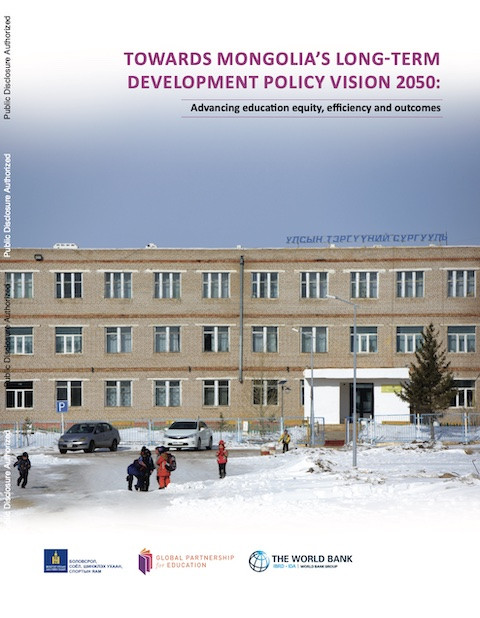 Towards Mongolia’s Long-Term Development Policy Vision 2050: Advancing Education Equity, Efficiency and Outcomes Year of publication: 2020 Corporate author: Mongolia Ministry of Education, Culture, Science and Sports | World Bank This report seeks to synthesize and analyze education outcomes with a view of identifying the main priorities for strengthening the education sector in support of Mongolia’s Sustainable Development Vision 2050. The report highlights data and findings generated from a series of source reports (see bibliography) related to the goals and targets set out in the Vision 2050. The report is composed of six thematic chapters: Access; Equity; Internal Efficiency, Education Cost and Finance; External Efficiency; Management. Each chapter will include an overview of the current situation and recent development with a focus on, key achievements and persistent challenges. As a synthesis report, the information on each topic is not exhaustive but rather seeks to present key findings. Specific activities highlighted in the Vision 2050 have been included at the beginning of each chapter and a complete mapping by activity is annexed (Annex 1. Vision 2050 Chapter mapping). This synthesis report draws on conclusions, finding, data and surveys produced in collaboration with MECSS by the Asian Development Bank, the Global Partnership for Education and the World Bank. The synthesis also draws from key UNESCO reports. The scope, research, and focus of the source reports differ, and precise findings are, on occasions, incongruent however the overall conclusions are fundamentally compatible. Whereas most of the source reports focus on one or two key stages, the synthesis report seeks to extract cross-cutting and/or recurring challenges that have an impact, positive or negative, on equity, efficiency and outcomes which ultimately may contribute to the implementation of Vision 2050. Mongolia’s State Education Policy (2014-2024) states: ‘Education is the main key factor of each citizen’s lifelong support and guarantee of life quality, and of the State’s societal and economical, science and technological development, and guarantee of national independence and security. Mongolian State shall develop education as a leading sector in society’.
  Background Document: National Media and Information Literacy (MIL) Policies and Strategies in Albania; 2020-2021 Year of publication: 2021 Corporate author: Albanian Media Institute This background study was conducted in the framework of the project "Building trust in the media in Southeast Europe and Turkey, phase II" supported by UNESCO and the European Union and implemented by the Albanian Media Institute. The project, at this stage of implementation, aims to increase the skills of young people for media and information literacy (MIL) through the integration of the MIL curriculum in the formal education system in Albania. The implementation of the project started in June 2020 and will last until 2022.This document suggests objectives for MIL policies and strategy, which should be extended to formal education (university and pre-university level); in non-formal and informal education thus affecting all members of society with the aim of increasing the level of education on media and information in Albania.