
Resources
Explore a wide range of valuable resources on GCED to deepen your understanding and enhance your research, advocacy, teaching, and learning.
53 Results found
 Fighting Against Disinformation and Hate Speech Year of publication: 2024 Corporate author: Association of Guinean Bloggers (ABLOGUI) This online MOOC is completely free. It is offered by the Association des Blogueurs de Guinée (ABLOGUI) through the IMPACT project (Implication of Digital Media in the Active Prevention of Conflicts and Tensions). It aims at raising awareness among young Guineans of the dangers of misinformation and hate speech, and to equip them with the knowledge and skills they need to combat information disorder in a digital world. Lutte contre la désinformation et les propos haineux Year of publication: 2024 Corporate author: Association of Guinean Bloggers (ABLOGUI) Ce MOOC en ligne est entièrement gratuit. Il est proposé par l'Association des Blogueurs de Guinée (ABLOGUI) dans le cadre du projet IMPACT (Implication des médias numériques dans la prévention active des conflits et des tensions). Il vise à sensibiliser les jeunes Guinéens aux dangers de la désinformation et des discours de haine, et à les doter des connaissances et des compétences nécessaires pour lutter contre le désordre de l'information dans un monde numérique.
 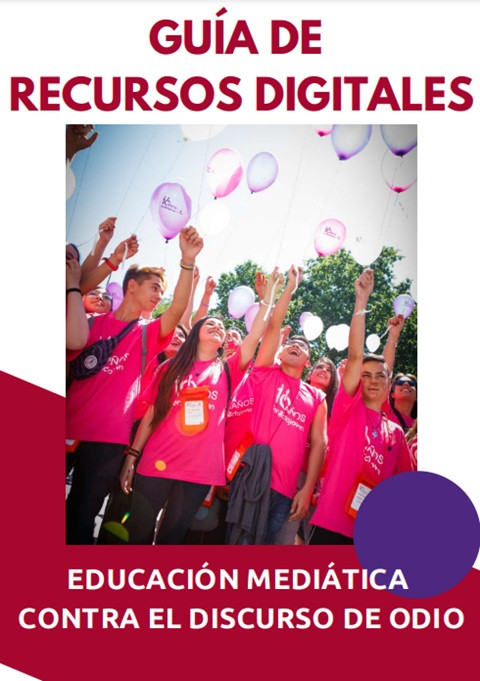 Digital Resource Guide: Media Education Against Hate Speech Year of publication: 2022 Corporate author: Esplai Foundation We could define hate speech as the set of communicative actions aimed at defending, promoting or instigating hatred, humiliation or contempt of a person or group of people. Although hate speech is not something exclusive to the Internet, but is part of the reality beyond the networks, it is true that the potential of the networks facilitates the movement of communication flows, because it facilitates both the production and the creation of messages. Hate speech has also benefited from this and, in addition, has found in the networks other characteristics such as anonymity, brevity, free messaging services or legitimacy granted by the number of followers. With this guide we want to provide digital tools for the creation of this counter-discourse that allows for the creation of messages that offer a positive alternative to extremist propaganda. Guía de recursos digitales: Educación mediática contra el discurso de odio Year of publication: 2022 Corporate author: Esplai Foundation Podríamos definir el discurso de odio como el conjunto de acciones comunicativas orientadas a la defensa, promoción o instigación al odio, la humillación o el menosprecio de una persona o grupo de personas. Si bien el discurso de odio no es algo exclusivo de Internet, sino que es parte de la realidad más allá de las redes, es cierto que el potencial de las redes facilita el movimiento de los flujos comunicativos, porque facilita tanto la producción como la creación de mensajes. Los discursos de odio también se han visto beneficiados por esto y, además, han encontrado en las redes otras características como el anonimato, la brevedad, los servicios gratuitos de mensajería o la legitimidad otorgada por número de seguidores. Con esta guía queremos aportar herramientas digitales para la creación de ese contradiscurso que permita realizar mensajes que ofrecen una alternativa positiva a la propaganda extremista.
  United Nations Strategy and Plan of Action on Hate Speech: Detailed Guidance on Implementation for United Nations Field Presences Year of publication: 2020 Corporate author: United Nations (UN) The Strategy and Plan of Action acknowledges that hate speech has the potential to incite violence and undermine social unity. It recognizes that hate speech has been a precursor to atrocity crimes, including genocide, over the past 75 years. This approach to coordinating efforts across the UN system to identify, prevent and confront hate speech is grounded in international human rights standards, including the right to freedom of opinion and expression, principles of equality and non-discrimination, as well as other fundamental rights. The Strategy aims to give the United Nations the room and the resources to address hate speech, which poses a threat to UN principles, values and programmes. It guides the UN system on how to address hate speech and includes ways to support United Nations Resident Coordinators’ action in addressing and countering hate speech on the ground.
  The “Hate Speech” Policies of Major Platforms during the COVID-19 Pandemic Year of publication: 2021 Corporate author: UNESCO Montevideo This document reports an increase in so-called “hate speech” posts on Facebook, Twitter, and YouTube after the onset of the COVID-19 pandemic. Although dissimilar, such an increase can be observed in the transparency reports of the different platforms and the surge in content moderation since March 2020.During the same period—as a result of the lockdown measures adopted in most countries around the world—platforms increased the use of AI tools for content moderation. Therefore, we can’t fully say whether the interannual growth is linked to increased posts or changes in monitoring systems. Las políticas de las grandes plataformas sobre discurso de odio durante el Covid-19 Year of publication: 2021 Corporate author: UNESCO Montevideo Este documento da cuenta de un aumento de posteos considerados discurso de odio a partir de la llegada de la pandemia COVID-19 en Facebook, Twitter y YouTube. Aunque dispar, ese aumento puede establecerse a partir de los informes de transparencia de las distintas plataformas y los crecimientos registrados en la moderación de esos contenidos a partir de marzo de 2020.Dado que en ese mismo período, y como consecuencia de las medidas de aislamiento tomadas ven la mayoría de los países del mundo, las plataformas tomaron la decisión de aumentar el uso de herramientas de inteligencia artificial en sus procesos de moderación no es posible asegurar a ciencia cierta que ese crecimiento se haya registrado por un aumento en la creación y publicación de mensajes o a partir de un cambio en los sistemas de detección que afectó los resultados entre un año y otro.
  Words that Heal: The Role of Young People in Addressing Hate Speech (EPDF Policy Brief No. 2) Year of publication: 2024 Corporate author: International Dialogue Centre (KAICIID) In the ‘post-truth era’, polarised opinions and knowledge fragmentation make it particularly challenging for young people to orient themselves and make sense of the world. Biased narratives and expressions of hate, exacerbated by echo chambers and artificial intelligence, significantly increase the risk that young social media users create or spread discriminatory content or become victims of hate speech. This can lead to long-lasting psychological and physical harm. Derogatory language often targets religious or ethnic communities, further inflamed by structural discrimination and boosted by the vicious spirals of algorithms. Based on experiences across Europe, this policy brief reflects on how to prevent young people from becoming involved in hate speech, both as victims and perpetrators, thanks to renewed alliances between secular and religious actors. Policymakers and faith leaders are encouraged to resort to interreligious and intercultural dialogue as a powerful tool that promotes mutual understanding and appreciation over mistrust and harmful stereotypes. Les politiques des grandes plateformes sur le discours de haine pendant la COVID-19 Year of publication: 2021 Corporate author: UNESCO Montevideo Ce document fait état d’une augmentation des messages considérés comme des discours de haine sur Facebook, Twitter et YouTube, depuis l’avènement de la pandémie de COVID-19. Bien qu’inégale, cette augmentation peut être établie à partir des rapports de transparence des différentes plateformes et de la croissance enregistrée dans la modération de ces contenus à partir de mars 2020. Étant donné qu’au cours de la même période, et en conséquence des mesures d’isolement prises dans la plupart des pays du monde, les plateformes ont décidé d’accroître l’utilisation d’outils d’intelligence artificielle dans leurs processus de modération, il n’est pas possible d’être certain que cette croissance est due à une augmentation de la création et de la publication de messages ou à un changement dans les systèmes de détection qui a affecté les résultats d’une année à l’autre.
  How to Prevent Hate Speech? Year of publication: 2022 Author: Adrián Vives Corporate author: Assembly of Cooperation for Peace The guide “How to prevent hate speech?” is aimed at teaching staff and aims to serve as a support document for working to eradicate hate speech in and through the classroom. In this guide we aim to offer some keys to working against hate speech in and through the educational field, understanding that prevention is essential to ending it. To do so, it is necessary to address it directly, as we do in the first block; but also through intercultural education that eliminates stereotypes and prejudices, as we explain in the second block; and through practical activities that we present in the last block.