
Resources
Explore a wide range of valuable resources on GCED to deepen your understanding and enhance your research, advocacy, teaching, and learning.
29 Results found
 Nationalsozialismus im Geschichtsunterricht: Beobachtungen unterrichtlicher Kommunikation Year of publication: 2002 Corporate author: Johann Wolfgang Goethe University This is a pilot study about the potential of history education about Nazism and the Holocaust. The aim is, 1) to establish whether it is possible to conduct empirical analysis about “Education after Auschwitz,” and 2) based on empircal observation improve the theoretical assumptions about the relationship between education and the specific theme of Nazism and the Holocaust. The empirical part consists of five case studies about different aspects of “Holocaust education” in two Upper Secondary schools in Frankfurt.The above abstract is taken from the International Holocaust Remembrance Alliance Education Research Project. Please also consult the full list of abstracts in 15 languages and the accompanying publication Research in Teaching and Learning about the Holocaust: A Dialogue Beyond Borders.Ed: IHRA, Monique Eckmann, Doyle Stevick, Jolanta Ambrosewicz-Jacobs, 2017, Metropol Verlag at http://www.holocaustremembrance.com/publications.
  Zwischen Vermittlungsanspruch und emotionaler Wahrnehmung: Die Gestaltung neuer Dauerausstellungen in Gedenkstätten für NS-Opfer in Deutschland und deren Bildungsanspruch Year of publication: 2009 Author: Thomas Lutz Over the last decade, as part of the federal concept for memorial sites, twenty new permanent exhibitions were developed. This dissertation undertakes to examine exhibitions created at memorial sites for victims of the Nazi regime from an educational and museological viewpoint. Expert interviews with exhibition curators serve as the basis for the empirical study. The author has worked for many years in the field of memorial museums education. He applied “action research,” developed in German-speaking countries under the term “Handlungsforschung.” The study analyzes the specific characteristics of the work conducted in museums, memorial sites and educational centres and also addresses the strained connection between commemoration and learning in the educational work of the memorial museums for the Nazi victims. The study also evaluates the practical impact of these aims. The very intense form of commemorative work that is conducted in Germany is justified by the nature of its subject matter: the stigmatization of specific victim groups during the Nazi era according to a system of political, racist-biological and social characteristics and the vast dimensions of the genocide. The socially and politically explosive nature of this task is manifested by the commemoration of the “other” victims as well as by the responsibility that Germany bears for addressing its “own” perpetrators in society. The central findings of the study show that the new exhibitions embrace a much more comprehensive foundation of historical material (historical knowledge, building history and archeological significance of the crime sites, written and audio-visual survival testimony and artifacts) as was previously the case. The professionalization of the “field of memorial museums” has led to a more intensively reflected and sensitive approach to handling documents, illustrations and objects on display in a museum. In particular, the significance of the relationship between the artifacts and their location, their sources, an appreciation for their origins and a critical reflection of what it is they convey is achieved. This also applies to photography. (Written by author) The above abstract is taken from the International Holocaust Remembrance Alliance Education Research Project. Please also consult the full list of abstracts in 15 languages and the accompanying publication Research in Teaching and Learning about the Holocaust: A Dialogue Beyond Borders.Ed: IHRA, Monique Eckmann, Doyle Stevick, Jolanta Ambrosewicz-Jacobs, 2017, Metropol Verlag at http://www.holocaustremembrance.com/publications.
  Message from Ms Audrey Azoulay, Director-General of UNESCO, on the occasion of International Day of Commemoration in Memory of the Victims of the Holocaust Year of publication: 2018 Corporate author: UNESCO. Director-General, 2009-2017 (Bokova, I.G.) This message was delivered by Audrey Azoulay, Director-General of UNESCO, on the occasion of International Day of Commemoration in Memory of the Victims of the Holocaust, on 27 January 2018. Message de la Directrice générale de l'UNESCO, Audrey Azoulay, à l'occasion de la Journée internationale dédiée à la mémoire des victimes de l'Holocauste Year of publication: 2018 Corporate author: UNESCO. Director-General, 2009-2017 (Bokova, I.G.) Ce message a été livré par la Directrice générale de l'UNESCO, Audrey Azoulay, à l'occasion de la Journée internationale dédiée à la mémoire des victimes de l'Holocauste, 27 janvier 2018.
  Address by Irina Bokova, Director-General of UNESCO, on the occasion of the reception hosted by Ambassador Ronald Lauder, President of the World Jewish Congress Year of publication: 2017 Corporate author: UNESCO. Director-General, 2009-2017 (Bokova, I.G.) This address was delivered by Irina Bokova, Director-General of UNESCO, on the occasion of the reception hosted by Ambassador Ronald Lauder, President of the World Jewish Congress; New York, 17 September 2017.
 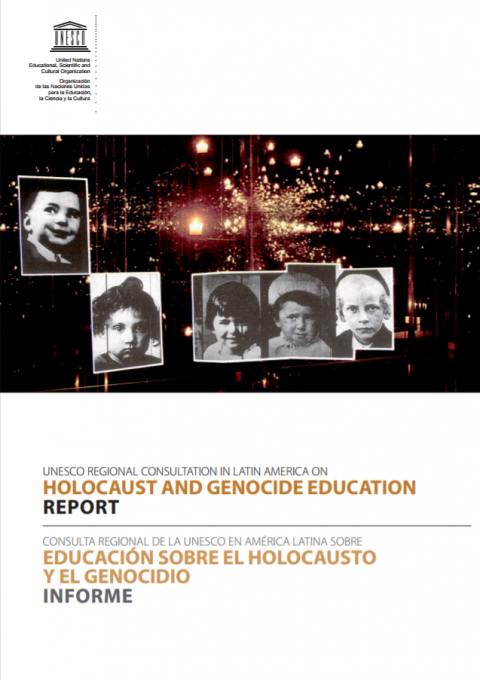 Consulta regional de la UNESCO en América Latina sobre educación sobre el Holocausto y el genocidio: informe Year of publication: 2014 Corporate author: UNESCO Santiago This consultation with Latin American Member States sought to raise awareness amongst policymakers and education specialists of the region about the history of the Holocaust, as it can contribute to the prevention of genocide, following United Nations General Assembly resolution 60/7 on Holocaust remembrance. The meeting also aimed at fostering concrete cooperation between UNESCO and Member States on education about the history of genocide and mass atrocities, notably the Holocaust, with a view of introducing the subject in the curriculum and of developing relevant educational programmes in the region. The overall objectives of the project were as follows:▶ Strengthen educational leaders’ awareness and support for Holocaust remembrance and education about the history of genocide and mass atrocities, in line with regional efforts to foster education for peace and human rights.▶ Increase the implementation of education programmes about the history of the Holocaust and other genocides, and support interested Ministries of Education to introduce these subjects in the curriculum.▶ Foster regional exchanges about this topic and facilitate access to good practices regarding Holocaust and genocide related issues and peace education. UNESCO regional consultation in Latin America on Holocaust and genocide education: report Year of publication: 2014 Corporate author: UNESCO Santiago This consultation with Latin American Member States sought to raise awareness amongst policymakers and education specialists of the region about the history of the Holocaust, as it can contribute to the prevention of genocide, following United Nations General Assembly resolution 60/7 on Holocaust remembrance. The meeting also aimed at fostering concrete cooperation between UNESCO and Member States on education about the history of genocide and mass atrocities, notably the Holocaust, with a view of introducing the subject in the curriculum and of developing relevant educational programmes in the region. The overall objectives of the project were as follows:▶ Strengthen educational leaders’ awareness and support for Holocaust remembrance and education about the history of genocide and mass atrocities, in line with regional efforts to foster education for peace and human rights.▶ Increase the implementation of education programmes about the history of the Holocaust and other genocides, and support interested Ministries of Education to introduce these subjects in the curriculum.▶ Foster regional exchanges about this topic and facilitate access to good practices regarding Holocaust and genocide related issues and peace education.
 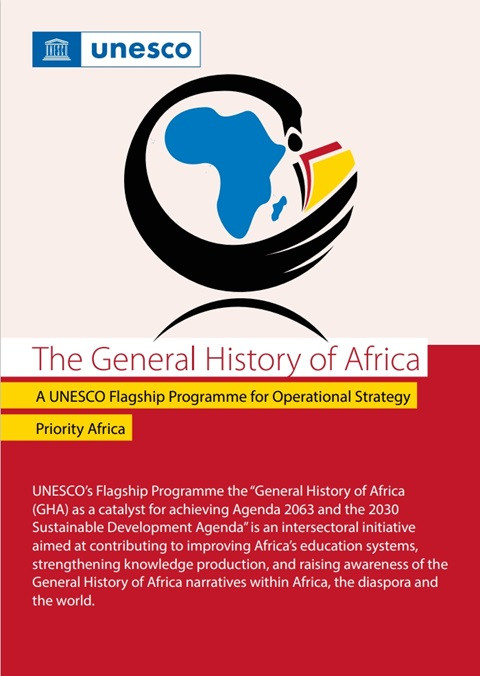 The General History of Africa: A UNESCO Flagship Programme for Operational Strategy Priority Africa Year of publication: 2024 Corporate author: UNESCO As part of UNESCO’s Operational Strategy for Priority Africa (2022 – 2029), the General History of Africa (GHA) Flagship Programme responds to the challenge of reconstructing Africa and its diaspora historical memory and conscience by revisiting Eurocentric and colonial biases in the representation of their history and societies. It aims to advance a common identity and pride in Africa’s heritage, progress towards greater justice and an inclusive and fair future through the reappropriation and production of knowledge on Africa and its diaspora history in a manner that could contribute to the transformation of education in Africa and beyond. The GHA is aligned with the African Union Agenda 2063, The Africa We Want, the Charter for African Cultural Renaissance, and the United Nations 2030 Agenda for Sustainable Development.
 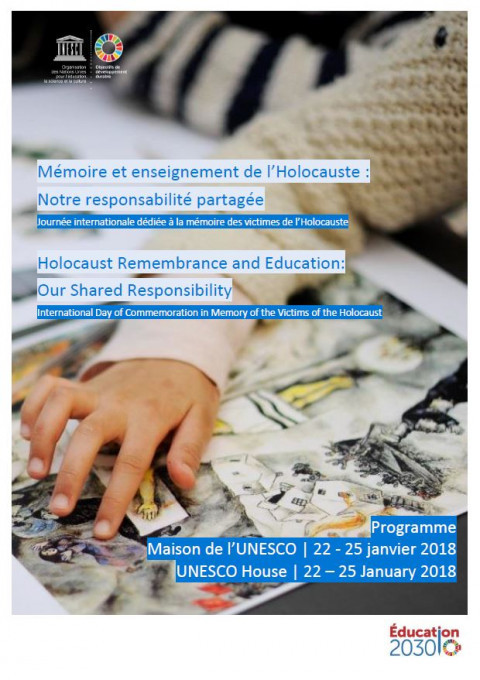 Holocaust Remembrance and Education: Our Shared Responsibility; International Day of Commemoration in Memory of the Victims of the Holocaust Year of publication: 2018 Corporate author: 联合国教科文组织 (UNESCO) This brochure describes the occasion "International Day of Commemoration in Memory of the Victims of the Holocaust". For this occasion, from 22nd to 25th January, UNESCO, in partnership with the Shoah Memorial, has organised a series of events: a screening of Claude Lanzmann’s Four Sisters, a round table, an official ceremony, and exhibitions.
 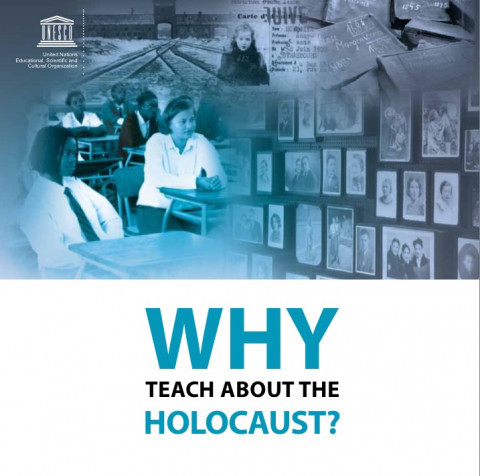 Why Teach about the Holocaust? Year of publication: 2014 Corporate author: UNESCO The Holocaust was a turning point in human history. Understanding the genocide of the Jewish people and other crimes perpetrated by the Nazi regime remains of great signi cance in the modern world.Regardless of where we live or who we are, learning about this universal history can help engage students in a critical re action about the roots of genocide and the necessity to nurture peace and human rights to prevent such atrocities in the future.This short introduction provides an essential overview on education about the Holocaust that can support policymakers, educators and students alike in their understanding of genocide and why it is vital that we continue to teach about the Holocaust today.