
Resources
Explore a wide range of valuable resources on GCED to deepen your understanding and enhance your research, advocacy, teaching, and learning.
276 Results found
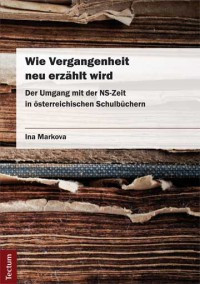 Wie Vergangenheit neu erzählt wird - Der Umgang mit der NS-Zeit in österreichischen Schulbüchern Which past should be remembered, and which is better forgotten? Ina Markova studies how the Nazi period is thematized or ignored in Austrian history textbooks. Especially the question about Austrian complicity in genocide and the war of annihilation was long ignored. Instead, positive – and thereby identity shaping – aspects of history were thematized. Ina Markova carefully analyses continuities and breaks, departures and "areas of silence", and pursues a number of larger questions: Which are the key images of Austrian memory? Do they fix authoritative perspectives on Austrian national identity? (By the publisher)
  National Socialism and the Holocaust in West German school books The author differentiates five phases of representation of the Holocaust in West German history books and lessons. Attempts to deal with the subject in a serious and comprehensive way in some post-war school textbooks were repressed in the 1950s. The students' movement, intensive research work and increased political attention on right-wing tendencies brought a change in the 1960s. New didactic methods such as source work and regional historical approaches were adopted, intended to give pupils greater insight into the individual areas of dictatorship and enable them to form their own opinion of the activities at that time. In the meantime, National Socialism is usually the area of German 20th century history dealt with in the most detail. The increasing distance in time to the period in question, the dissolution of the Socialist bloc, reunification and the multicultural nature of school classes have produced new teaching conditions, which on the one hand create a greater distance from the subject but on the other hand call for comparison of genocide, war and exile in the present time or from the history of other peoples. (By the author) Switzerland and the Holocaust: teaching contested history This study is about a history textbook which introduces the new transnational master‐narrative of Holocaust memory into the classrooms of the German‐speaking part of Switzerland. The script of the book entails a replacement of the formerly dominant view of Switzerland as a neutral nation resisting evil in favour of an image that aligns Switzerland with other nations that accept the Holocaust as part of their national history, and combine their efforts to prevent such crimes in the future. However, this process cannot be seen as hegemonic or total since it is fragmented at various levels. On the level of state power, there is no uniform vision of the nation’s history. Therefore, the book needed to accommodate its critics to a certain extent. Furthermore, there are institutional rules of history education that restrict a direct transmission of knowledge and promote teaching youths to develop their own views. And then there are the teachers, who have their part in shaping history. (By the publisher) Naming and misnaming the nation. Ambivalence and national belonging in German textbook representations of the Holocaust At a time when the power of schools and both state and federal education authorities to guide young people’s sense of belonging is being challenged by multilingualism, by the claims of supra- and subnational regions and minorities, by memories of national catastrophes and crimes, and by out-of-school educational media, this collection of essays provides an apposite exploration of the ways in which shared narratives continue to be transmitted and learned. Its authors, whose work emerged from a series of conferences organized by the French National Institute for Pedagogical Research in Lyon, Barcelona and Paris in 2010, demonstrate not only ways in which multiple disciplines (including history, literature, social and language studies) address young people’s sense of attachment, but also how challenges to educational policy are reflected in school textbooks and curricula in Algeria, Bulgaria, Catalonia, France, Galicia, Germany, Quebec, Senegal and the USA. These studies about the role of education in relation to largely tenacious but shifting national identities should appeal to specialists of education, nationalism studies, history and political science. (By the author) A ‘Curtain of Ignorance’: An Analysis of Holocaust Portrayal in Textbooks from 1943 through 1959 If textbooks are supposed to be an honest and impartial portrayal of historical events, they should remain the same over time. However, when examining one event across different editions of the same textbook, it becomes apparent that this is not the case. This study seeks to examine how the beginnings of the Cold War may have influenced how the Holocaust was discussed during the 1940s and 1950s. Results indicate that as Germany transformed from an enemy to be defeated into an ally needed to stop the advance of Communism, discussion of the Holocaust became more muted. While the beginnings of the Cold War may not be the only factor in this phenomenon, the results of this study indicate a methodological process in which textbooks could be used to create critical and historical thinking in today's classroom. (By the author) Die Darstellung des Faschismus und Nationalsozialismus in deutschen, österreichischen und italienischen Schulbüchern Textbooks are often held to be official representations of history. Contrary to many other products of historical culture, they are subject to state control and approval. Yet, especially against this background, the question remains which historical theories and which history didactical concepts are being offered for students’ processing of this period in secondary school level I. How are the dictatorships evaluated and which possibilities are the students offered to deal with the didactically prepared material? Recent Italian, Austrian, and German history textbooks are analysed to see how Italian Fascism and German National Socialism are narratively conceptualized and to what extent students are offered the chance to make an independent evaluation of this recent history. The study tries above all to build a bridge to the contemporary debate about competences in the didactics of history and civics, related to the domain-specific competences students should acquire during their time in school. This is particularly interesting with respect to the two dictatorships, as it comes to determine to what extent the processing of the two dictatorships, in the sense of the acquisition of a reflective and (self-)reflexive historical consciousness, something which today is considered by the majority to be the goal of history education, is at the centre for these three democracies (By the publisher)
  Holocaust education in the primary school: Some reflections on an emergent debate Recent years have witnessed the beginnings of a debate over whether the Holocaust should be taught in primary schools. In this article the claims advanced in favour of the proposal are shown to be plausible but lacking in empirical support, while the counter-claims are considered either peripheral, contentious or contrary to established research. It is argued that some key omissions in the debate, such as the way primary school pupils conceptualize Jewish culture and identity, significantly strengthen the case against introducing young children to the Holocaust. (By the author) Feature or footnote ? Teacher's attitudes toward the teaching of the Holocaust in primary schools in Scotland The question of teaching controversial and difficult issues in primary schools remains itself controversial. This article discusses the area of teaching the Holocaust in primary schools in Scotland by examining its relevance to the primary curriculum and reporting on survey and interview research amongst a sample of primary teachers in Scotland. Based on limited research, this paper suggests that the Holocaust is appropriate for primary pupils, provides insight into the reactions of parents and colleagues and shows that Holocaust history in Scottish primary schools is set firmly within the contexts of Anne Frank and World War Two. We find that there are significant barriers to its teaching, yet most of these can be successfully overcome. (By the author)
  Holocaust & Human rights education center This curriculum guide was developed by a group of master teachers who have studied and taught the Holocaust in the context of history and the language arts. The New York State Core Curriculum and Learning Standards in English Language Arts and Social Studies have guided our selection of activities, historical documents and assessment tools. All materials and activities have been field-tested; they are challenging, age-appropriate and well suited to the needs of a diverse student population. Centre d'éducation Holocauste et Droits de l'homme Ce guide pédagogique a été développé par un groupe de maîtres enseignants qui ont étudié et enseigné l'Holocauste dans le contexte de l'histoire et les arts du langage. Le curriculum de l'État de New York de base et les normes d'apprentissage en English Language Arts et études sociales ont guidé notre sélection d'activités, des documents historiques et des outils d'évaluation. Tous les matériaux et les activités ont été testées sur le terrain; ils sont difficiles, adaptés à l'âge et bien adapté aux besoins d'une population étudiante diversifiée.