
Resources
Explore a wide range of valuable resources on GCED to deepen your understanding and enhance your research, advocacy, teaching, and learning.
232 Results found
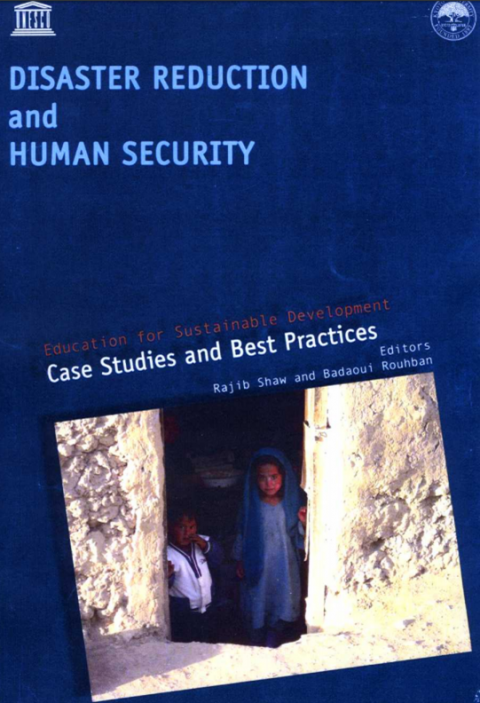 Disaster reduction and human security: education for sustainable development; case studies and best practices Year of publication: 2005 Corporate author: Kyoto University. Graduate School of Global Environmental Studies Disaster reduction, human security, education and sustainable development are the four key issues, which are considered in the current compilation. A quick glance of the case studies will tell us the varieties of focus areas. WCD R Thematic Cluster 3 (Knowledge, Innovation and Education: To Build a Culture of Safety and Resilience) identifies four themes under the cluster: Education, Research, Public Awareness and Community Empowerment. A majority of case studies focus on community activities, especially on ho w the communities were able to cope with different types of disasters in different socio-economic context. These are all learning processes for the community, especially to enhance the resilience among its members. A number of these studies include public awareness, training and capacity building programmes. Quite a number of case studies focus on professional expertise, like microzonation, mapping, planning, hazard assessment, and development of risk reduction tools. These are all related to education and research. There are some case studies, which focus on formal education at school and colleges, but are linked to practical learning exercise. Distance learning has appeared as one of the possible media to reach the global mass, and to reach the farthest and the most needy group. The link between on-site testing and on-line learning has been emphasized by several case studies.
  Teaching respect for all: activity 2: mapping of existing materials and practices in cooperation with universities and research centres; final report Year of publication: 2013 Author: Peter G. Kirchschlaeger | Stefanie Rinaldi | Franziska Brugger | Tanja Mitrovic Corporate author: University of Teacher Education (Switzerland). Centre of Human Rights Education The constant rise of racism, xenophobia and intolerance despite the renewed commitments made by the international community is giving the United Nations Educational, Scientific and Cultural Organisation (UNESCO) a reason to consider education as key to strengthen the foundations of tolerance, reducing discrimination and violence and learning to live together. It is required to cultivate respect for all people regardless of colour, gender, descent or national, ethnic or religious identity. The project “teaching respect for all” aims at reducing intolerance, violence and discrimination trough education. The project is founded on the universal values and common core principles promoted by UNESCO, even though UNESCO is aware, that the countries differ from one another in dealing with issues related to anti-racism and tolerance in education according to each country’s history and culture. Human rights education in Russia: analytical report Year of publication: 2008 Author: Anatoly Azarov Corporate author: Moscow School of Human Rights The book examines the status, trends, and issues of human rights education, including HIV/AIDS prevention education in the Russian Federation. It spans the period from the early 1990s to December 2008, analyzing both positive preconditions for the spread of human rights and freedoms knowledge in Russia and obstacles encountered in the process. A special focus is on laws, regulations and standards applicable to higher education. The book describes the activities of the primary social institutions engaged in HRE: comprehensive schools and universities, human rights commissioners, NGOs. It shows examples of international humanitarian law teaching; offers an evaluation of HRE literature for Russian universities; offers a concept of Science and Discipline of Human Rights. The book also examines the condition of HIV/AIDS prevention education within the context of human rights observance. The authors’ conclusions and judgments are supported with a special opinion poll. Address by Mr Koïchiro Matsuura, Director-General of UNESCO, on the occasion of the Award Ceremony of the 2004 UNESCO Prize for Human Rights Education; Bangkok, Thailand, 23 March 2005 Year of publication: 2005 Corporate author: UNESCO. Director-General, 1999-2009 (Matsuura, K.) This speech was given by Mr Koïchiro Matsuura, Director-General of the United Nations Educational, Scientific and Cultural Organization (UNESCO) on the occasion of the Award Ceremony of the 2004 UNESCO Prize for Human Rights Education.
 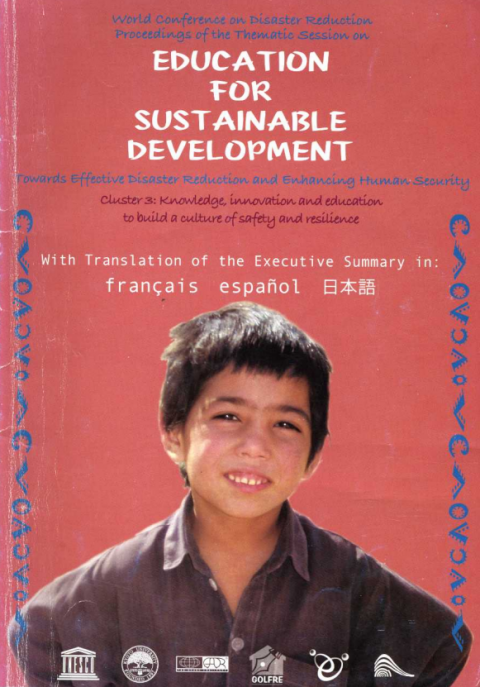 Proceedings of the thematic session on education for sustainable development: towards effective disaster reduction and enhancing human security; cluster 3: knowledge, innovation and education to build a culture of safety and resilience Year of publication: 2005 Author: Rajib Shaw | Badaoui Rouhban Corporate author: Kyoto University. Graduate School of Global Environmental Studies | Global Alliance for Disaster Reduction | Global Open Learning Forum on Risk Education | Disaster Reduction Alliance | International Institute of Earthquake Engineering and Seismology Ten years ago, the city of Kobe and its adjoining areas in Hyogo prefecture of Japan were hit by a strong earthquake, leaving behind a trail of death and destruction. This earthquake was a turning point in disaster reduction initiatives in Japan, resulting in two prominent changes: 1) a blending of technological and social issues in the field of research and application, and 2) an enhanced participation of civil society in disaster reduction Initiatives. Since Japan had long been one of the most developed countries in the field of earthquake engineering, the tragedy in Kobe posed a daunting question: 'how to fill the gap between knowledge and practice?' This question is not only for Japan, but is pertinent to many other countries. With the advancement of technology, the knowledge base is growing, and it is now time to tackle this question in order to save lives and properties from natural disasters. The World Conference on Disaster Reduction (WCDR), at the 10th anniversary of the Kobe earthquake, is therefore of special significance, providing an excellent platform to share experiences, expertise, and lessons from different parts of the world. The year 2005 is also the beginning of the United Nations Decade of Education for Sustainable Development (DESD: 2005-2014) which is led by UNESCO.
 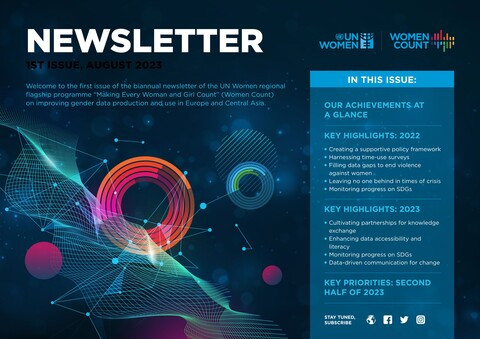 Making Every Woman and Girl Count in Europe and Central Asia Year of publication: 2023 Corporate author: United Nations Entity for Gender Equality and the Empowerment of Women (UN Women) The Women Count newsletter provides the latest updates on improving gender data production and use in the region. It highlights the programme's achievements, including key events, new publications and inspiring stories that underscore the importance of gender data in shaping policies and programs to promote gender equality and achieve the Sustainable Development Goals (SDGs).
 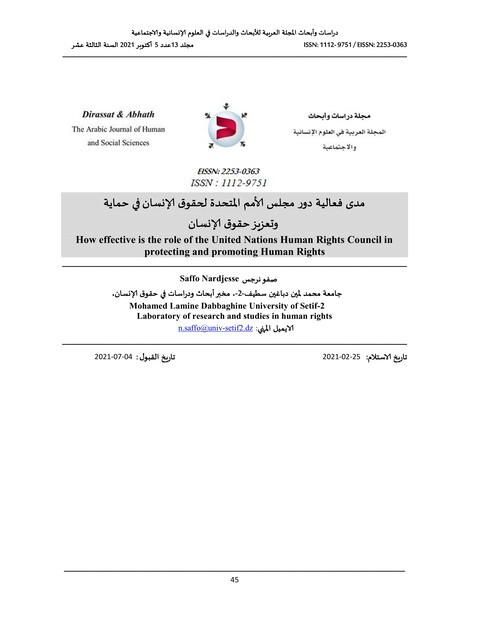 How Effective Is the Role of the United Nations Human Rights Council in Protecting and Promoting Human Rights (The Arabic Journal of Human and Social Science; Vol.13, No.5) Year of publication: 2021 Author: Saffo Nardjesse Corporate author: University of Djelfa The issue of human rights remained the first in the list of human concerns and hopes, and one of the priorities that emerged on the shoulders of the United Nations within its established and difficult-to-reach programs and goals. There is no doubt that the most important causes of its emergence are attributable to those flagrant violations of human rights, especially those linked to war crimes and others against humanity, which prompted the major countries specifically to consider establishing a body concerned with the first of all the maintenance of international peace and security and the protection and promotion of human rights. , Through the Commission on Human Rights as one of the sub-committees established by the Economic and Social Council, which is tasked with preserving the sanctity of these rights. However, it soon proved ineffective due to the control of states violating human rights on the one hand and the politicization of their role on the other hand. Over the years, the committee dealt with human rights issues in ways that some commentators described as unsatisfactory and more sterile. As a result, the new body was established under the name of the "Human Rights Council" by General Assembly Resolution 60/251, and was considered the largest international body entrusted with the responsibility of promoting global respect. Human rights and fundamental freedoms for all without discrimination of any kind and in a just and equitable manner. Did the new mechanism, with its newly created composition, adequately address the weaknesses of the Commission on Human Rights? In other words, has the Human Rights Council added from its inception to today a greater value and contribution to the ؟protection and promotion of human rights?
 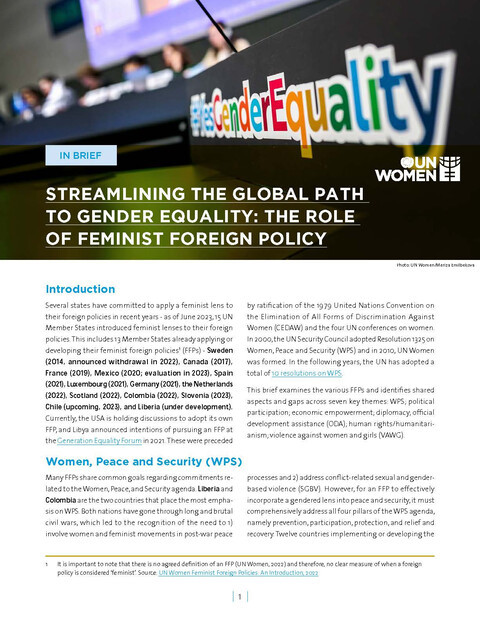 Streamlining the Global Path to Gender Equality: The Role of Feminist Foreign Policy Year of publication: 2023 Corporate author: UN WOMEN Europe and Central Asia As of June 2023, 15 UN Member States introduced feminist lenses to their foreign policies (FFPs). The policy brief examines the various FFPs and identifies shared aspects and gaps across seven key themes: WPS, political participation, economic empowerment, diplomacy, official development assistance, human rights/humanitarianism, violence against women and girls.
 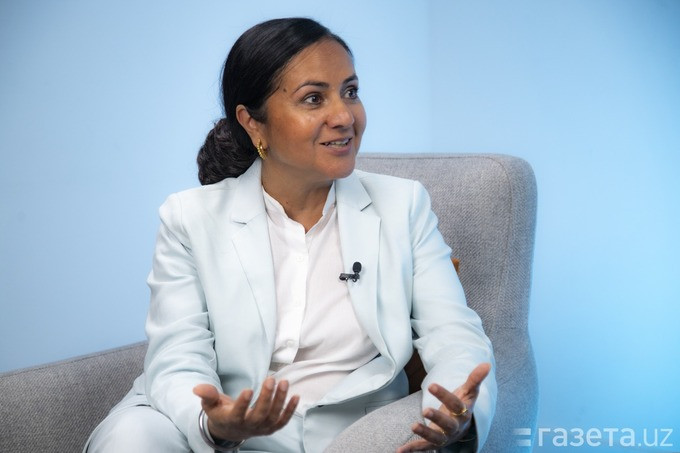 "Creating Equal Opportunities is the Responsibility of the Government.": A Conversation with Anjali Kaur from USAID Year of publication: 2023 Corporate author: Gazeta.uz Anjali Kaur, the deputy assistant administrator of the US Agency for International Development(USAID) for Asia, gave an interview during her visit to Uzbekistan "Газете.uz ". She spoke about the activities of USAID, the importance of creating equal opportunities for all and the responsibility of government, business and citizens. She spoke about the goals and activities of USAID in Uzbekistan, the importance of Uzbekistan for the agency, the need for equal access to education and other services for both boys and girls, as well as the responsibility of the state in ensuring such access.
 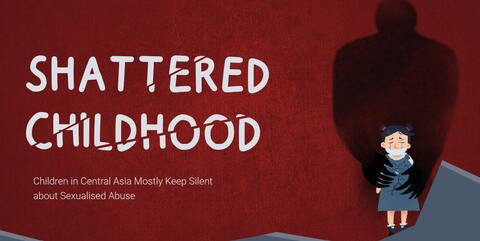 Shattered Childhood: Children in Central Asia Mostly Keep Silent about Sexualised Abuse Author: Katerina Afanasieva | Aleksandra Vasilkova | Mazkhab Dzhumaev | Aida Dzhaksybaeva Corporate author: Central Asian Bureau for Analytical Reporting (CABAR) No one really knows the scope of sexualised abuse of children in Central Asia. According to estimates of human rights activists, only one case of 10 goes reported to law enforcement bodies at best. Once it is reported, the investigation and courts often cause another trauma to children, while proceedings may take years.