
Resources
Explore a wide range of valuable resources on GCED to deepen your understanding and enhance your research, advocacy, teaching, and learning.
232 Results found
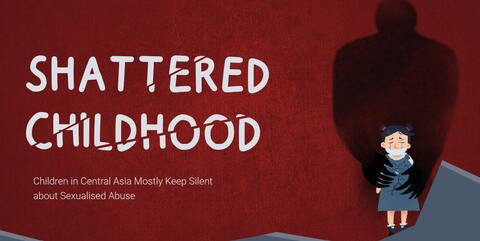 Shattered Childhood: Children in Central Asia Mostly Keep Silent about Sexualised Abuse Author: Katerina Afanasieva | Aleksandra Vasilkova | Mazkhab Dzhumaev | Aida Dzhaksybaeva Corporate author: Central Asian Bureau for Analytical Reporting (CABAR) No one really knows the scope of sexualised abuse of children in Central Asia. According to estimates of human rights activists, only one case of 10 goes reported to law enforcement bodies at best. Once it is reported, the investigation and courts often cause another trauma to children, while proceedings may take years.
  Singapore’s educational reforms toward holistic outcomes: (Un)intended consequences of policy layering Year of publication: 2023 Author: Dennis Kwek | Jeanne Ho | Hwei Ming Wong Corporate author: Center for Universal Education at Brookings In the transition from economic imperatives to holistic drivers, there has been a gradual move over five policy phases (from 1965 to 2022 and beyond) toward curriculum and school diversification to cater to different students, with more autonomy given to schools to innovate their pedagogy and improve instructional quality to meet their students’ unique needs. Importantly, there has been a shift in policy rhetoric from focusing on educational structures to focusing on pedagogy and instructional quality. To shift pedagogy from being mainly didactic in nature—with emphasis on preparing students for national examination—the Singapore government recognized the need to focus on school leaders’ and teachers’ capacity building to enable new curricula and teaching practices. The school cluster structure was initiated in 1997 to enable collaboration and learning among school leaders, key personnel, and teachers. Opportunities for collaborative teacher learning are provided at different ecological levels: professional learning communities (PLCs) within schools and networked learning communities (NLCs) across schools. Beyond the education system, the Singapore government works with other ministries and community organizations, such as ethnic self-help organizations, to tackle educational equity issues. Ultimately, even though the official policy narrative post-1997 has been a de-emphasis on examination results and educational infrastructure to help improve the instructional quality in schools toward holistic outcomes and improved student well-being have been developed, education systems building co-exists with an alternative underlying shadow education system valued by parents who continue to chase narrow academic outcomes. Tuition and enrichment centers in Singapore constitute the shadow education system.
  The rights of political women in Islam and their role in the political sphere Year of publication: 2020 Author: Hussein Zubair Thalj Al-Fahdawi | Mayada Ali Abdel Nabi Karim Praise be to God, who by His grace the righteousness is fulfilled and the pitfalls are forced and the honorees and may God’s prayers be granted to the foreboding Bashir and the enlightening OS and all his family and companions.And it was from the success of God Almighty for me to reach, through this study, some results. I summarize it as follows:Islam honored the humanity of man, so he raised it to the highest ranks and did not differentiate between it between a man and a woman. Rather, he made a man (a man and a woman) the most important thing in this universe. Human dignity, and Islam. A man and a woman are obligated to learn and understand everything and agree in religion and science, and commit them to peaceful jihad to spread the supreme belief and meanings both in the field in which he can work.It was clear from the previous presentation that the increased participation of women in political work is a pivotal factor for the advancement of gender equality and women's empowerment, as women participate in political action.And that all areas of political work are legally permissible to be assumed by whoever is her family, man or woman, just as the view of Islam for women is derived from the view of Islam for the honorable man, so there is no distinction or difference, and the provisions of the Sharia in which equality and justice are established and the origin is equal for women and men in the origin of creation and costs Legitimacy, and what is different between them is an exception to the original, and what was an exception, it is not correct to measure it.Finally, what is right in this research is from God Almighty, and all the defects and shortcomings in it are from myself and from Satan, and I cannot conclude this humble research except that Ahmed is the Most High, praise be to God, Lord of knowledge and prayer and peace be upon our Prophet Muhammad and his family and companions and from his family to the Day of Judgment.
  A Geographical - Political Analysis of the Determinants of women's empowerment in Iraq Year of publication: 2020 Author: Zainab Ali Mazloum, Lateef Kamel Kelaiwy Empowering women is one of the modern topics that geopolitics is concerned with, especially after the United Nations adopted in the eighties of the twentieth century the strategy of empowering women against the background of discrimination against them on the basis of gender and depriving them of equal opportunities compared to males in the fields of learning and work as well as drawing state policy, that empowerment The political status of women is based on two main variables: the first is the removal of legislative, administrative, and social determinants that hinder women's political participation, and the second is the creation of political measures and measures that support women's participation and increase their effectiveness by developing their capabilities, nah As for employing those capabilities in the institutional framework of political units, so states at various levels and orientations, including Iraq, are keen to eliminate gender differences and women's empowerment through achieving comprehensive development in general and political development in particular because they mimic political empowerment, however Iraq has said a lot in this field by doing The many political transformations and wars that affected the state, as well as the great challenges that faced and still face the Iraqi political decision-maker with its various political, security, economic and social dimensions.
  The Comprehensive Learning Diagnosis: Chile’s approach to assess socio-emotional learning in schools Year of publication: 2023 Author: José Weinstein | Juan Bravo Corporate author: Center for Universal Education at Brookings Education in Chile has important challenges of quality, equity, and social integration. For decades, policies tried to respond to these concerns with a high-stakes accountability institutional framework, which has not had success. The underlying vision of educational quality was limited. The assessment system in place privileged cognitive and academic dimensions of educational results. Socio-emotional learning had been neglected or considered secondary, without an infrastructure of assessment tools that allowed teachers and principals to diagnosis students’ situations and monitor their progress. The COVID-19 crisis was an opportunity for change: Students’ socioemotional needs were a main concern for schools and society, and the regular accountability system based on standardized tests was interrupted. Subsequently, the Comprehensive Learning Diagnosis (DIA) was launched by the Education Quality Agency. The DIA is a voluntary assessment tool made available to all Chilean schools. The DIA promotes the comprehensive development of students, providing timely information and guidance to internally monitor students’ learning in the academic and socio-emotional domains at several points during the school year. Specifically, with respect to socio-emotional learning, three areas were considered: personal, community, and citizenship. In each of these areas, a set of socioemotional skills were defined, operationalized, and became possible to monitor by school communities. The DIA also collects students’ opinions of school management practices regarding socio-emotional skills. The DIA has received a wide acceptance in school communities. Despite being voluntary, an ample majority of schools decided to participate. The information collected from the DIA allows for practical use by principals and teachers. Moreover, the DIA provides the opportunity for students to inform school management. The new Chilean government has decided to strengthen DIA as an important component in a four-year national plan for reactivating academic and socio-emotional learning in schools. The previous high-stakes accountability system, which involved external assessments, has been suspended and is under discussion. The DIA experience has shown that critical social and educational situations can provide fertile ground to motivate deep and rapid transformation, if an educational actor (in this case the Education Quality Agency) is capable of enacting a pertinent, timely, and practical response to school needs. The DIA is not only an example of productive uses of students´ assessment by schools, but also a demonstration that it is possible to build an institutional arrangement among local, intermediate, and national levels of school systems, where a vertical hierarchy is changed by a collaborative relationship based on local agency, mutual trust, and differentiated technical contributions.
  Legal Mechanisms for Participation of Legal Minorities in Tajikistan and Their Implementation: Comparison of the Framework Convention and Tajikistan’s Legislation Year of publication: 2022 Author: Berdikulov A. Corporate author: Central Asian Bureau for Analytical Reporting (CABAR) The policy analyzes the legal framework and provisions aimed at protecting the rights of national minorities in Tajikistan, and also provides a comparison of Tajik and European legislation regarding national minorities. Particular emphasis is placed on what legislative and legal practices from the European experience can be used as examples in the Tajik context in order to improve national legislation for the protection of national minorities and their rights. Recommendations are formulated for a number of ministries and the government of Tajikistan, for international donors, as well as for representatives of national minorities.
 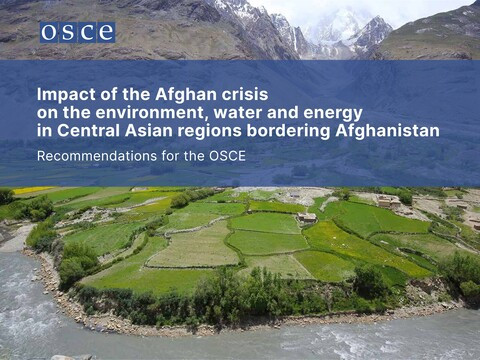 Impact of the Afghan Crisis on the Environment, Water and Energy in Central Asian Regions Bordering Afghanistan Year of publication: 2023 Corporate author: Organization for Security and Co-operation in Europe (OSCE) Development projects in Central Asia are diverse. In 2021, the Interstate Commission on Sustainable Development of Central Asia adopted the Central Asian Sustainable Development Program till 2030, while a regional climate adaptation strategy is being developed. Afghanistan is not involved in regional environmental and water processes. The results and lessons from the development projects could be useful in tackling the effects of the Afghan crisis.
  Statistics of the Sustainable Development Goals in Kazakhstan Year of publication: 2023 Corporate author: ООН-женщины | Бюро национальной статистики Агентства по стратегическому планированию и реформам Республики Казахстан The publication reflects data on the current state and progress in the field of sustainable development based on available official data and statistics on the SDGs, taking into account gender aspects. The collection was presented at the national seminar on the dissemination of official statistics organized by the Bureau of National Statistics of Kazakhstan and the United Nations Economic Commission for Europe (UNECE) on October 19-21, 2022.
  Central Asia, the South Caucasus, Eastern Europe and Mongolia: Mapping of Women’s Resource Centres and Other Integrated Service Providers for Survivors of Gender-Based Violence Year of publication: 2022 Corporate author: Организация по безопасности и сотрудничеству в Европе (ОБСЕ) The Gender Issues Programme of the OSCE Office of the Secretary General conducted a comprehensive mapping of Women’s resource centres and other integrated service providers for survivors of gender-based violence (GBV) in Central Asia, the South Caucasus, Eastern Europe and Mongolia as part of the WIN Project. The mapping aimed to collect extensive information on existing services and mechanisms for direct assistance to and protection of survivors of GBV, to assess the main gaps and the need for capacity-building and knowledge-sharing in counteracting GBV, and to identify promising approaches and good practices across the OSCE region.
  Inclusion of Women and Girls and Ensuring Their Rights: A Toolkit for Arab Cities Year of publication: 2023 Corporate author: UNESCO Cairo | European Training and Research Centre for Human Rights and Democracy (Austria) Even though women and girls represent close to or more than half of the population of most Arab cities, they are one of the groups that are historically and structurally excluded from decision-making and development planning in the cities. They face many barriers in accessing cities services, and inequality participating in cities activities. Developed on the basis of a virtual regional consultation workshop, as well as in-depth interviews with cities officials and representatives from the Coalition of Arab Cities against Racism, Discrimination, Xenophobia and Intolerance, this Toolkit provides tools and practical advice to enable Arab cities achieve a better inclusion of women and girls, and ensure their full right to benefit from local development programs. The toolkit mainly targets local authorities in Arab cities including Mayors, Members of Municipality Councils, Municipal executives, and Entities concerned with the design, implementation, follow-up, and evaluation of local projects and programs. “Since wars begin in the minds of men andwomen it is in the minds of men and womenthat the defences of peace must be constructed”Inclusion of women and girls in Arab cities: challenge or opportunity?This publication is the result of a joint effort involving the European Training and Research Centre for Human Rights and Democracy in Graz, UNESCO Coalition of Arab Cities against Racism, Discrimination, Xenophobia and Intolerance, and UNESCO Cairo Office.