
Resources
Explore a wide range of valuable resources on GCED to deepen your understanding and enhance your research, advocacy, teaching, and learning.
232 Results found
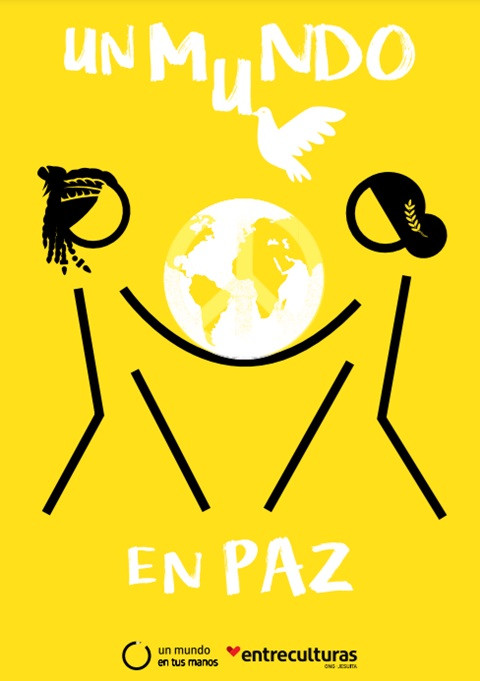 A World at Peace Year of publication: 2022 Corporate author: Entreculturas A world in peace is part of “A world in your hands”, Entreculturas’ pedagogical proposal to educate in global citizenship. With it we aim to contribute to the training of people capable of exercising active and committed citizenship, of transforming their environment and of assuming as their own the global challenges of our time such as the fulfillment of the 2030 Agenda and the Sustainable Development Goals. In this publication we collect proposals to work on the culture of peace and develop knowledge, values and social and civic skills that allow people who work on them to actively commit to coexistence, conflict resolution and the creation of a culture of peace in their environments and at a global level.
  Summit of the Future Outcome Document: Pact for the Future, Global Digital Compact and Declarations on Future Generations Year of publication: 2024 Corporate author: United Nations (UN) World leaders adopt a Pact for the Future that includes a Global Digital Compact and a Declaration on Future Generations (A/RES/79/1). The Pact covers a broad range of themes including peace and security, sustainable development, climate change, digital cooperation, human rights, gender, youth and future generations, and the transformation of global governance.
  Culture of Peace and Education for Democratic Citizenship Year of publication: 2006 Author: Jose Tuvilla Rayo The Culture of Peace understood as the synthesis concept - sum of human rights, democracy, disarmament and sustainable human development - demands, as a humanizing response of globalization, important efforts of educational systems towards the achievement of four world social contracts ( Lisbon Group, 1995): the contract of basic needs aimed at suppressing inequalities, the cultural contract aimed at promoting tolerance and dialogue between cultures, the contract of democracy aimed at a system of world government; and, the Earth contract to promote stable and lasting human development. To do this - remembering Juan Carlos Tedesco (2001) - learning to live together, one of the pillars of 21st century education, can not be maintained in the exclusive domain of merely rhetorical adherence.
  Message from Ms Audrey Azoulay, Director-General of UNESCO, on the occasion of International Day of Peace, 21 September 2018 Year of publication: 2018 Corporate author: UNESCO. Director-General, 2017-2025 (Azoulay, A.) This message was delivered by Audrey Azoulay, Director-General of UNESCO, on the occasion of the International Day of Peace, on 21 September 2018.
 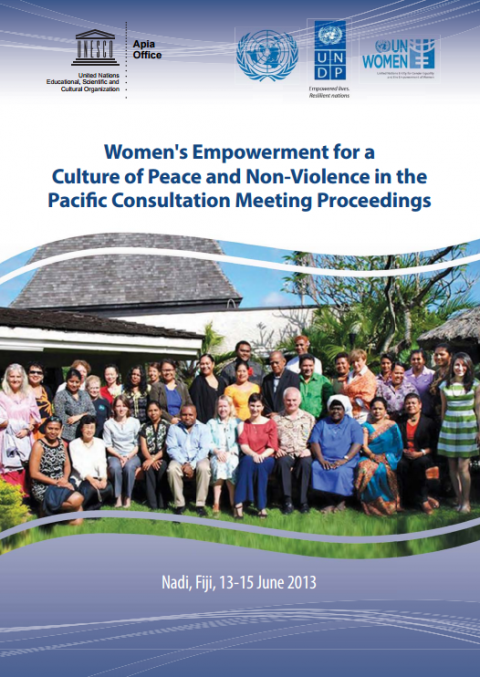 Women's empowerment for a culture of peace and non-violence in the pacific consultation meeting proceedings Year of publication: 2013 Corporate author: UNESCO Apia The Consultation on Women’s Empowerment for a Culture of Peace and Non Violence in the Pacific was held in Nadi, Fiji, from 13 to 15 June 2013. The consultation was an interagency collaboration between the United Nations Educational, Scientific and Cultural Organization (UNESCO), the United Nations Entity for Gender Equality and the Empowerment of Women (UN WOMEN) and the United Nations Development Programme (UNDP) Pacific Centre as part of the United Nations strategy “Delivering as One”. This collaboration focused on efforts to design, promote and strengthen a culture of peace in the Pacific at the country and regional levels. The consultation brought together 30 senior representatives, including development professionals and community members, from governments, regional organizations, women’s organizations, faith-based groups, academic institutions and development partners from the Cook Islands, Fiji, Kiribati, Palau, Papua New Guinea, Samoa, Solomon Islands, Tonga and Vanuatu. The consultation ended with an agreement on a range of actions that could be adopted at the local, national and regional levels to promote increased dialogue between leaders and policy makers on the contributions that culture and heritage can make to addressing issues of gender inequality and reducing GBV. The outcome statement identifies the importance of building positive cultural models, using a range of key factors, including female leaders, faith-based leaders and traditional leaders as well as political leaders and parties. The statement also emphasized education as a means of promoting a culture of peace and non-violence. The consultation’s outcome statement noted that the school curriculum should place a stronger emphasis on values, gender equality, sexual and reproductive health and rights, and the building of positive cultural models. The follow up actions identified include increasing public awareness on achieving equality for Pacific women, including women at the grassroots level, in bringing peace to conflict-affected communities; targeting young people as the next generation of leaders; using the arts and cultural and sports events to break down gender stereotypes; actions relating to economic empowerment, access to justice and service delivery; and intangible cultural heritage capacity building incorporating substantive gender equality components.
  Address by Irina Bokova, Director-General of UNESCO, on the occasion of the Inaugural Lecture on: Diverse Societies, Inclusive Democracies: New Skills for a Sustainable World, Organized by the Mahatma Gandhi Institute of Education for Peace Year of publication: 2014 Corporate author: UNESCO. Director-General, 2009-2017 (Bokova, I.G.) This document is the address of Irina Bokova, Director-General of UNESCO, on the occasion of the inaugural lecture on: Diverse Societies, Inclusive Democracies: New Skills for a Sustainable World, organized by the Mahatma Gandhi Institute of Education for Peace in Delhi, India, 25 November 2014. She insisted the importance of social integration, the human rights for all and education for sustainable development.
  The State of the World’s Human Rights: April 2024 Year of publication: 2024 Corporate author: Amnesty International Le Rapport d’Amnesty International décrit la situation des droits humains dans le monde en 2023 dans 155 pays différents. Les équipes de journalistes et d’enquêteurs de l'ONG peignent un portrait plutôt sombre, avec notamment un recul du droit des femmes, les conséquences dramatiques du réchauffement climatique sur les populations les plus vulnérables, le recul du droit de manifester, ou encore la prolifération de la haine en ligne dans le monde. La multiplication des conflits armés et le choc du 7 octobre ont également eu des conséquences dramatiques. Cependant, quelques bonnes nouvelles sont aussi à noter, avec des avancées pour les droits des personnes LGBTI par exemple. Amnesty International Report describes the human rights situation worldwide in 2023 in 155 different countries. TheNGO's teams of journalists and investigators paint a rather gloomy picture, with, in particular, a decline in women's rights, the dramatic consequences of global warming on the most vulnerable populations, a decline in the right to protest, and the proliferation of online hate around the world. The multiplication of armed conflicts and the shock of October 7 have also had dramatic consequences. However, there is some good news too, with advances in LGBTI rights for example.
  World Migration Report 2024 Year of publication: 2024 Corporate author: Organisation Internationale pour les Migrations (OIM) The World Migration Report 2024 provided by the IOM aims at providing a better understanding of the migration phenomenon through a series of key questions: What is the proportion of migrants in the world? Are most migrants men or women? Which are the main host countries? The interactive edition presents only some of the key information contained in the full report.
  Protection of Victims of Sexual Violence in Côte d'Ivoire: Progress Made, but Many Gaps Remain (FIDH; no. 818f) Year of publication: 2023 Author: Alice Mogwe | Eléonore Morel Corporate author: International Federation for Human Rights (FIDH) The International Federation for Human Rights (FIDH) has published a follow-up report on sexual violence protection measures in Côte d'Ivoire, in association with several other local associations. The aim of this note is to study these new measures in the light of the recommendations in the FIDH report, in order to gain an overall view of the situation, draw up an initial assessment of the progress made, and highlight the points to be strengthened in order to improve the status of women in the country.
  From Civic Education to Citizenship Education: Citizenship Values in the Geography Curriculum; The Problem of Understanding and Downloading (International Journal of Educational and Psychological Studies; vol. 6, no. 17) Year of publication: 2022 Author: Al-Hassan Farkakoum Corporate author: Democratic Arab Center This paper aims to contribute to revealing the extent to which the values of citizenship and human rights are present in the social studies lesson in Moroccan public schools, specifically in the middle school education curriculum. The inclusion of human rights values at this level raises several problems that lead to two complementary trends: The first is related to the didactics of human rights and citizenship education, and the second trend is related to the extent of the learner’s ability to acquire and represent the values of citizenship and transform them into automatic daily behaviors and practices in the school environment and then after that in daily public life and private transactions.