
Resources
Explore a wide range of valuable resources on GCED to deepen your understanding and enhance your research, advocacy, teaching, and learning.
232 Results found
 Paris Agreement Year of publication: 2015 Corporate author: United Nations (UN) The Paris Agreement is a legally binding international treaty on climate change. It was adopted by 196 Parties at the UN Climate Change Conference (COP21) in Paris, France, on 12 December 2015. It entered into force on 4 November 2016.Its overarching goal is to hold “the increase in the global average temperature to well below 2°C above pre-industrial levels” and pursue efforts “to limit the temperature increase to 1.5°C above pre-industrial levels.”
 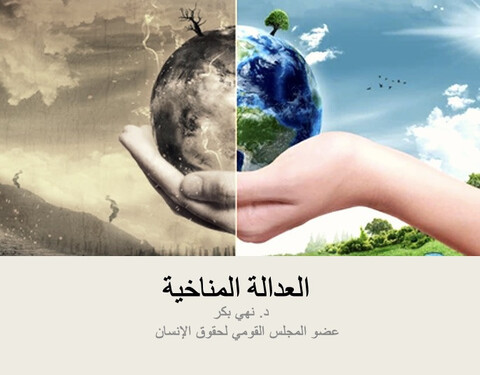 Climate Justice and Human Rights Year of publication: 2022 Author: Noha Bakr Climate justice is linking the impacts of global warming with principles of justice, specifically environmental justice and social justice, by exploring issues resulting from global warming such as equality, human rights, collective rights, and historical responsibilities.
  Global Status Report on Preventing Violence Against Children 2020: Executive Summary Year of publication: 2020 Corporate author: World Health Organization (WHO) The Global status report on preventing violence against children 2020 charts countries’ progress towards the SDGs aimed at ending violence against children. Jointly published by WHO, UNICEF, UNESCO, the UN Secretary-General’s Special Representative on Violence against Children, and the Global Partnership to End Violence against Children, it collates inputs from over 1000 decision-makers in 155 countries who assessed their violence prevention status against the evidence-based approaches set out in INSPIRE: Seven strategies for ending violence against children. The report shows that while many of the participating countries are taking some action, government officials from these same countries acknowledge that their efforts are clearly insufficient to achieve the SDG targets. The report concludes with recommendations for boosting INSPIRE implementation efforts and accelerating national progress.
 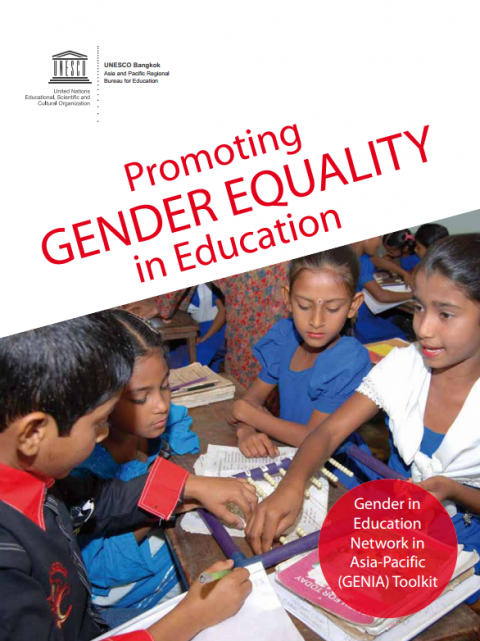 Promoting gender equality in education Year of publication: 2009 Corporate author: UNESCO Kathmandu This publication was originally designed in 2003 when the Gender in Education Network in Asia-Pacific (GENIA) was established. Few gender in education resources were available at that time, and until the 2006 version, documents were mainly intended to be used by GENIA members, who are representatives (gender focal points) from ministries of education in the Asia-Pacific region. GENIA members have been using the Toolkit to sensitize and train their national counterparts ever since. However, the Toolkit has not only been distributed and used by gender focal points, but also by other people who have heard about GENIA, and/or who were interested in the resource materials published by UNESCO Bangkok. For this reason, the Toolkit has been accessible via the UNESCO Bangkok website1 since 2006. As a result, anyone searching the Web for information on gender equality can easily access the Toolkit. This fourth edition of the Toolkit, thus, expands the scope of the target audience. The content has likewise been adapted accordingly in order to meet the needs of all who could potentially access it. The Toolkit also integrates existing information and tools designed by other national or international organizations dedicated to promoting and providing training on gender equality in education and other sectors. Further information from these sources is obtained by consulting the references section at the end of the Toolkit. The Toolkit is designed as a user-friendly resource. As such, a matrix is provided on pages 4 and 5 to indicate each tool’s potential for use, based on its relevance to each prospective user group. Still, every tool will have relevance to many contexts or situations and, therefore, we encourage you to make use of all the materials by adapting them to your country context.
  Girl Rising Year of publication: 2014 Corporate author: Girl Rising Suma's is one of Girl Rising's 9 remarkable stories. Though her brothers went to school, she was forced into bonded labor at age 6, like many other Nepali girls. Watch this chapter of Girl Rising to see how Suma gained her freedom and how she uses her education in a fight to free other girls. Written by Manjushree Thapa and voiced by Kerry Washington.
  Sharing Malaysian experience in participation of girls in STEM education Year of publication: 2016 Corporate author: UNESCO International Bureau of Education (IBE) The Malaysia government has placed STEM as a focus in developing the country towards achieving the status of a developed nation. The government acknowledges the role of women as equal partners in nation building. Thus, various policies ranging from economy, education, women’s welfare and human resources have been formulated through the years. These policies have resulted in among others, the increase in women researchers from 35.8% in 2004 to 49.9% in 2012 as well as more women’s participation in selected STEM courses at the tertiary level. A total of 84 girls’ day schools with 6 of them as residential STEM Girls’ schools have been built since 1939. There are many female role models in STEM for the girls to emulate. This has been made possible by the successful implementation of the various policies related to women in STEM as well as innovative measures in facing the continuing challenges in STEM education.
  Nepal: lessons from integrating peace, human rights, and civic education into social studies curricula and textbooks Year of publication: 2015 Author: Melinda Smith Corporate author: UNESCO International Institute for Educational Planning (IIEP) | United Nations Children's Fund (UNICEF) | Education Above All (Qatar) This case study examines the process undertaken by the Ministry of Education (MoE) in collaboration with development partners to revise the social studies curriculum in Nepal. The aim was to promote education for peace, human rights, and civic education (PHRCE) in the wake of a 10-year Maoist insurgency and the transition to a democratic republic. It provides a critical analysis of the process, synthesizing information from two assessments of the initiative, and makes recommendations for the future based on challenges and gaps identified by stakeholders. The study also provides recommendations to countries in post-conflict transition which are interested in undertaking similar curriculum reform initiatives.Information is drawn from a number of reports and programme documents developed by the implementing partners, as well as 12 interviews with individuals involved in the process of curriculum reform. Interviewees included representatives of the major agencies involved in the revision process: the MoE’s Curriculum Development Centre, the National Centre for Education Development, Save the Children, UNESCO, and UNICEF. In addition, interviews were conducted with representatives of civil society and non-governmental agencies supporting peace education and representing marginalized groups, and the external international consultant who provided technical assistance. National identity and xenophobia in an ethnically divided society Year of publication: 2005 Author: Noah Lewin Epstein | Asaf Levanon Corporate author: UNESCO Recent studies have suggested that national identity is empirically related to negative sentiments of individuals towards foreigners. This type of analysis has hitherto been based on the notion that xenophobia is shaped by the specific nature of national identity in a given society. Representing a stronger and more exclusive perception of national identity, ethnic national identity (compared with civic national identity) is expected in this line of research to result in less favourable perceptions of immigrants. In this paper we expand this approach by arguing that, in deeply divided societies, national identity itself may have different meanings among different social groups.
  Education for 'global citizenship': a framework for discussion Year of publication: 2013 Author: Sobhi Tawil Corporate author: UNESCO The notion of ‘global citizenship’ has recently gained prominence in international development discourse with the recently-adopted United Nations Secretary-General’s Global Education First Initiative (2012). Among the three priority areas outlined in this global initiative, the third aims to ‘foster global citizenship’. Education must fully assume its central role in helping people to forge more just, peaceful, tolerant and inclusive societies. It must give people the understanding, skills and values they need to cooperate in resolving the interconnected challenges of the 21st century. The notion of ‘global citizenship’, however, remains very broad, if not contested, and consequently difficult to operationalize in education. There are two possible reasons for this. Firstly, it is unclear whether the very notion of ‘global citizenship’ is a metaphor, a contradiction of terms, or an oxymoron (Davies, 2006). What does ‘global citizenship’ possibly imply both from a legal perspective, as well as from that of collective identity, sense of belonging, and civic engagement? Secondly, when applied to education, the notion of ‘global citizenship’ implies a certain degree of confusion. Is ‘global citizenship education’ (or ‘education for global citizenship’) merely an expression of a fundamental purpose of education systems? Does it also refer to a broad area of teaching and learning? If so, what are the contours of this domain? How does it relate to other often overlapping areas of learning associated with civic and political socialization?
  From words to action; Des paroles aux actes Year of publication: 2014 Corporate author: UNESCO Since its creation in 1945, UNESCO has been working to enhance mutual understanding between peoples, founded on an ever more subtle knowledge of cultures in their rich diversity in order to promote the dignity of all through the affirmation of the principles, rights and values of our common humanity. The era of globalization characterizes our societies, in a cultural landscape which, more than ever, is permeated with diversity because of the mutual influences of peoples, communities, and of their cultural and religious practices. A major issue remains: the need to demonstrate the benefits of promoting both respect for human rights and cultural diversity, recognizing the importance of genuine intercultural dialogue in order to fight against new forms of racism, discrimination, intolerance, extremism and radicalization. UNESCO, with lengthy practical experience as an international laboratory of ideas, monitors respect for universal values, in particular by initiating research and producing various kinds of teaching tools designed for the acquisition of intercultural skills. Which skills should be mobilized or acquired in order to be able not only to respect but also to appreciate the Other in all his or her diversity. How many of these skills can be useful on both a collective level and an individual one in order to protect cultural rights, protect oneself from, or to transcend prejudice? Intercultural sensibility and aptitudes have to be explored since they refer to the willingness and capacity of people to step outside of their own logic and systems of thought in order to engage with others, and appreciate different cultural narratives especially if they are not equally valorized or recognized in a given societal context. This portfolio proposes a basic tool for capacity building in support of exchange, communication and cooperation beyond cultural, religious and national borders, allowing the emergence of a global citizenship in a safer world for all. In this perspective, this set of key resources consists of papers by international experts exploring the linkage between respect for cultural diversity and human rights, with all that that implies. It brings together other publications such asIntercultural Competences, Conceptual and Operational Framework, published by UNESCO in 2013, and documents such as Dire la Tolérance (Defining Tolerance), published in 1997 and translated into English and into Arabic, and, finally, UNESCO’s Programme of Action for a Culture of Peace and Non-Violence, A Vision in Action, published in English in 2012 and in French in 2013. Symbolically released on 10 December 2014, Human Rights Day, this multilingual and evolving publication is designed primarly to be an Open Access tool, a flagship project of the International Decade for the Rapprochement of Cultures (2013-2022). In the same spirit, its content will be enriched and developed in an e-learning format, throughout the Decade.