
Resources
Explore a wide range of valuable resources on GCED to deepen your understanding and enhance your research, advocacy, teaching, and learning.
232 Results found
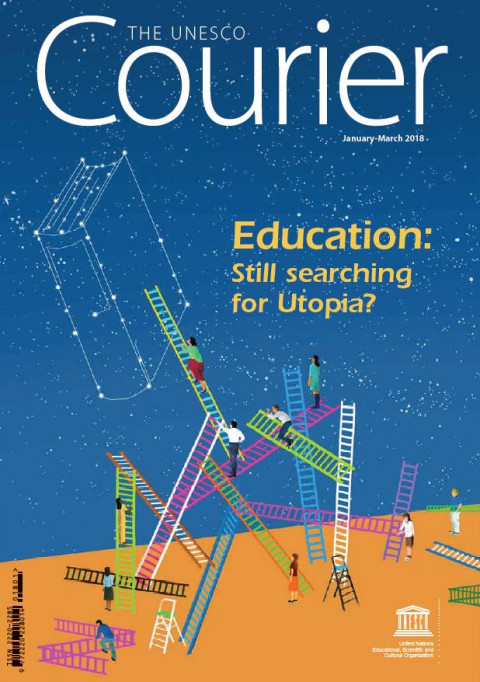 Education: Still Searching for Utopia? (The UNESCO Courier no. 1, January-March 2018) Year of publication: 2018 Corporate author: UNESCO At a time of heightened global tension, when human rights, freedom of speech, peace and the future of the planet itself may seem challenged as never before, the transformational power of education is of critical importance.In Learning: The Treasure Within, the landmark Report to UNESCO by the International Commission on Education for the Twenty-first Century in 1996, Jacques Delors, then Chairman of the Commission (1992 to 1996), spoke of education as “the necessary Utopia” and “an indispensable asset in its attempt to attain the ideals of peace, freedom and social justice.”Education was held up as neither miracle nor magic, but rather the best means to foster a climate where humanity would be improved −. and where the rich potential for learning, inherent in every individual, would be tapped. Our humanity is confronted with a very strange paradox: the world’s population has never been better educated, and yet, according to the UNESCO Institute for Statistics, 263 million children and young people are out of school, 617 million children and adolescents worldwide do not meet the minimum threshold for literacy and mathematics, at least 750 million adults are illiterate, and girls remain more likely than boys to never set foot in a classroom. Yet education is still called upon to address inequalities, poverty, terrorism and conflict. It is seen as one of the keys to global citizenship and sustainable development, two of UNESCO’s fields of action. The Organization is also mandated to lead the Education 2030 global agenda with a special focus on ensuring that no one is left behind. Under the title, “Education: Still searching for Utopia?”, the UNESCO Courier evaluates the state of global education and explores how it responds to some of the main challenges we face.
 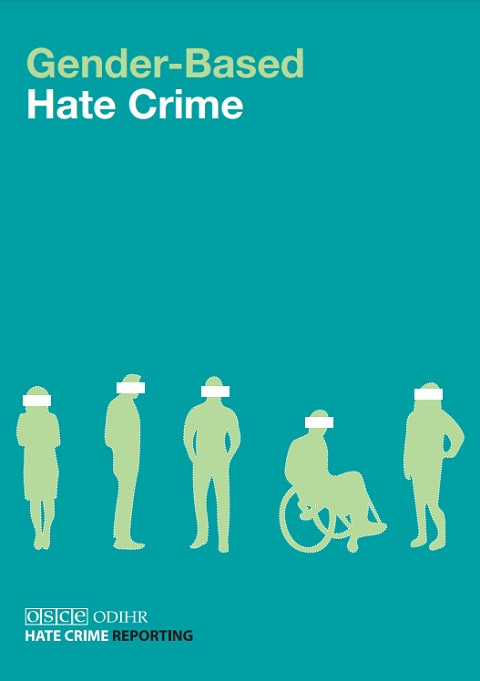 Gender-Based Hate Crime Year of publication: 2021 Corporate author: Organization for Security and Co-operation in Europe (OSCE) Gender-based hate crimes are a consequence of gender inequalities and disproportionately affect women, as well as anyone perceived as not complying with prevailing gender norms. Gender-based hate crimes often seek to intimidate and suppress ways of life or expressions of identity that are perceived as not complying with traditional gender norms. They have a significant, long-lasting impact on the victims, and undermine security and social cohesion by perpetuating gender inequalities. The existence of such crimes also underscores wider trends of intolerance towards other groups. Everyone has a role to play in countering this and all forms of intolerance.
  New Citizenship, Culture of Peace and Democratic Integration: Pedagogical Guidelines and Didactic Proposals Year of publication: 2015 Corporate author: Argentina. Ministry of Education | Chile. Ministry of Education This document is an input that, in the form of a guide of pedagogical guidelines and teaching proposals, seeks to support the development of the objectives of the New Citizenship, Culture of Peace and Democratic Integration Program, promoted by the Ministry of Education of Argentina and the Ministry of Education of Chile. The first section corresponds to an introductory section, which communicates the principles on which the program is based. The second section is made up of the axes and chapters that structure the guide. Each axis (four in total) is subdivided into two chapters, articulated around the topic that the axis addresses and which is briefly presented at the beginning of it.
 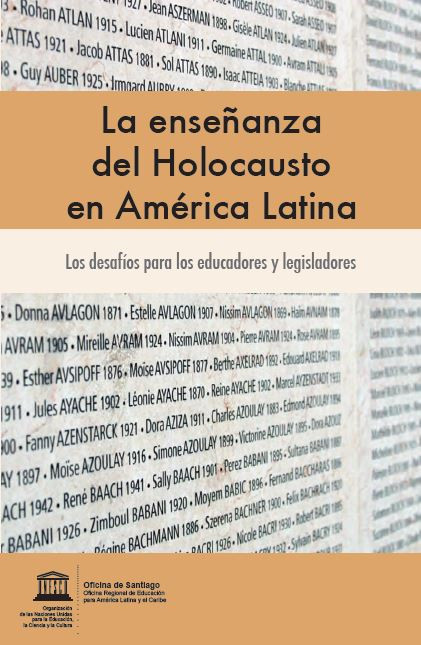 The Teaching of the Holocaust in Latin America the Challenges for Educators and Legislators Year of publication: 2017 Author: María Celeste Adamoli | Emmanuel Kahan, Pablo Luzuriaga | Ministerio de Educación Corporate author: UNESCO Santiago This book provides an overview of opportunities that may arise from educating about the Holocaust in diverse cultural contexts and educational situations, with a special focus on Latin American countries. We can actually be away from the places where the genocide against the Jewish people was perpetrated, but Latin America is still taking charge of its own past of violence and crimes against humanity. With this publication, Latin American educators will have at their fingertips an updated account of the most outstanding topics that are discussed on pedagogy and policy making. You can also explore how, even today in Europe, education about the Holocaust shapes a culture of memory. On the other hand, you can see how in other places the memory of the Holocaust can be a starting point to relate to other difficult pasts. UNESCO is convinced that the prevention of genocide begins at school. In a world where mass violence is possible, this publication will show the importance of teaching young people about the Holocaust and about other genocides in history. It is a condition to prevent similar crimes from happening in the future.
  Saudi University Students’ Attitude Towards a Culture of Peace Year of publication: 2019 Author: Rowaidah Abdulhameed Saman Corporate author: University of Jordan The aim of this study is to identify the attitudes of Saudi Universities’ students towards peace culture. The descriptive surveying approach was used on a sample of 1643 students. The frequency, percentages, arithmetic mean, Kay-box test, and T-test were used in the analysis. The results showed that Saudi students have a positive attitude towards (human rights, disarmament, conflict resolution skills, peace culture) while their attitudes were negative towards transferring bomb-making experience to Islamic countries. Also, females had more positive attitudes towards disarmament than male students.
  Dialogue Protocols (Fawaz and Nora Series, Episode 29) Year of publication: 2018 Corporate author: Tatweer Company | Saudi Arabia. Ministry of Education The clip is a short video that talks about etiquette of dialogue between children. The teacher enters the classroom and finds quarrels between the children and begins to teach them etiquette of dialogue.
 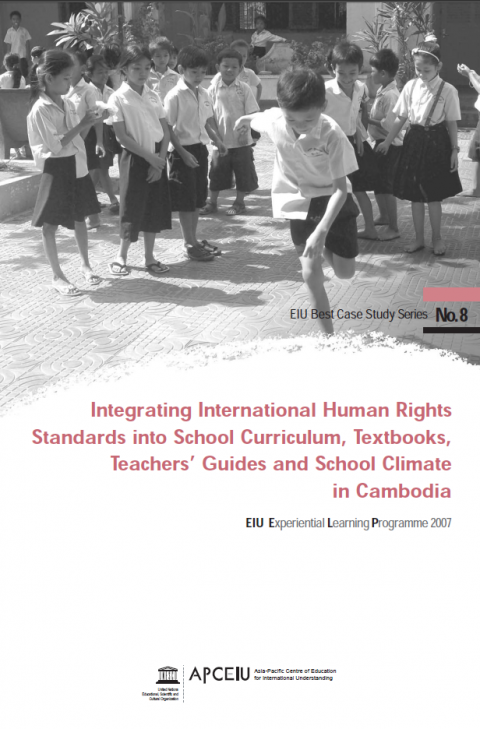 EIU Best Practice Series No.8: Integrating international human rights standards into school curriculum, textbooks, teachers' guides and school climate in Cambodia Year of publication: 2007 Author: Seungmi Lee | Hyewon Jung Corporate author: APCEIU It goes without saying that the aftermath of the war brings various challenges such as poverty, displacement, disability, destroyed culture, etc. and it is of critical importance that it should be well-remedied to preclude its recurrence. In this regard, value education and human rights education are considered crucial and to my mind, so is the educational role that religion can play. Although religions have harmonized the impaired society, but generally they have not been appreciated by their ignorant disciples or followers. Thus, value education is considered to be able to play a crucial role. It is in this context that human rihts education is gaining currency in Cambodia in recent years and has been implemented gradually.
  Two concepts, one goal: education for international understanding and education for sustainable development Year of publication: 2007 Corporate author: APCEIU | UNESCO Bangkok EIU and ESD are not dogmas but evolving concepts that can contribute to social learning and transformation. EIU and ESD share many common issues, supporting each other’s scope of work and focus. This series of information sheets has been prepared to highlight key complementary areas and synergies.
  EIU Best Practice Series No. 5: Peace and human rights education through education for sustainable development: lessons from four case studies in the Philippines Year of publication: 2007 Corporate author: APCEIU The four case studies showed that EIU through peace and human rights education in the context of education for sustainable development can build a critical mass of Filipinos who will reject wars and promote social security. Education can play a role to direct the children, youth, and adults toward peace building and better understanding of cultural differences. It should also be noted that when institutions adopt a peace culture, establishing local and international organizations and putting up resources for various peace-building initiatives become possible. Educational intervention can effect changes in the minds of men and build a lasting and substantive foundation for peace based on justice and respect for human rights.
 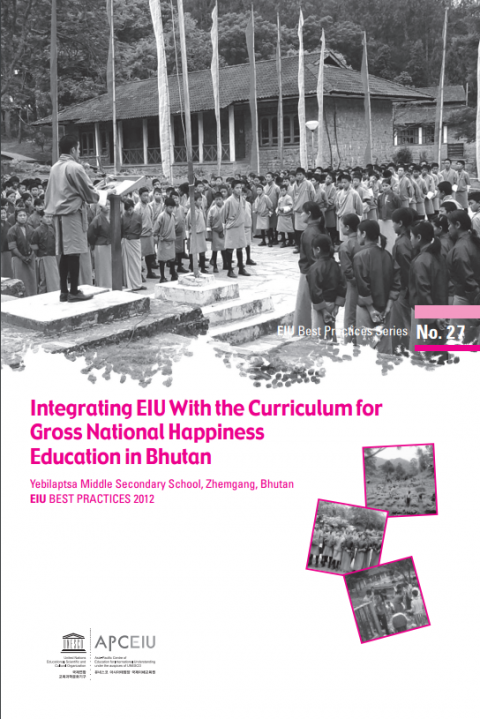 EIU Best Practices Series No. 27: Integrating EIU with the Curriculum for Gross National Happiness Education in Bhutan Year of publication: 2012 Author: Udhim Subba Corporate author: APCEIU This monograph is one of APCEIU's EIU Best Practices Series, which aims to encourage educators, scholars, and activists to implement and share local initiatives on EIU. The Series No.27 introduces Bhutan’s Yebilaptsa Middle Secondary School, in its effort to promote values of EIU as a complementary component of the Gross National Happiness Education efforts. Activities such as UNESCO club community activities, environmental learning, EIU cultural night, international exchange altogether exemplify effective ways to integrate EIU practices in the curriculum and extracurricular programs of schools.